Azin Asro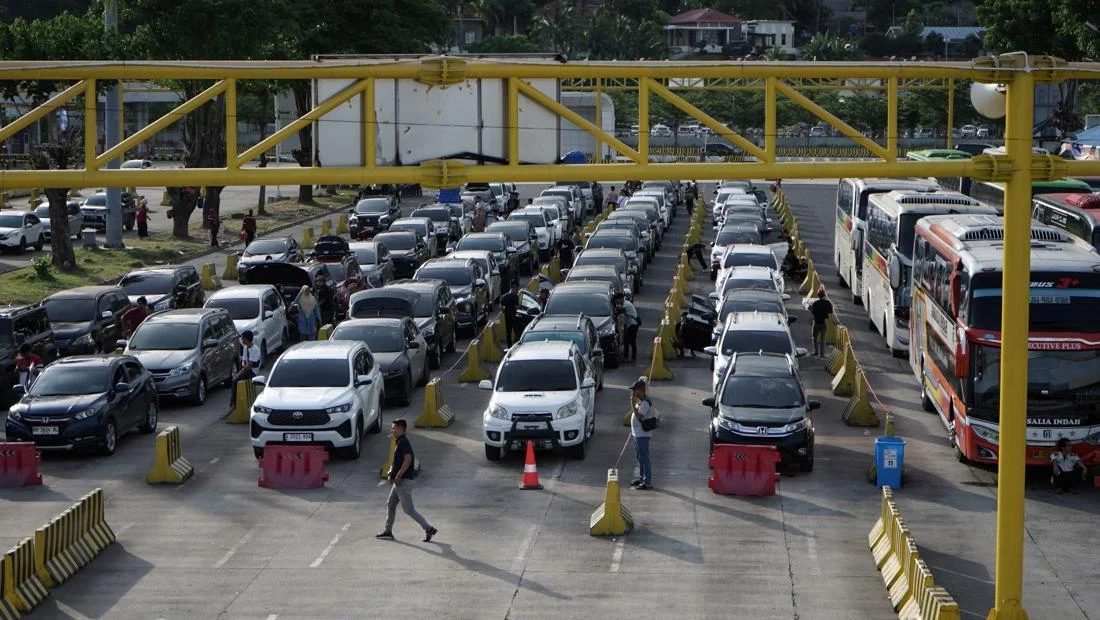
The conclusion of the 2026 Eid al-Fitr holiday season marks the beginning of a massive logistical undertaking as millions of Indonesians prepare to return to urban centers from their hometowns. To prevent catastrophic traffic congestion across the nation’s primary transport arteries, particularly the Trans-Java Toll Road, the Indonesian government has formulated a comprehensive strategy involving staggered return phases, aggressive traffic engineering, and the implementation of remote work policies. Without meticulous planning and public adherence to official recommendations, the risk of gridlock remains high as the "Arus Balik" (return flow) reaches its zenith.
The National Police Traffic Corps (Korlantas Polri), in coordination with the Ministry of Transportation (Kemenhub), has officially predicted that the 2026 return flow will occur in two distinct stages. The first stage of the peak return flow is expected to begin on Tuesday, March 24, 2026. The second stage is projected to occur over the weekend of March 28–29, 2026. This bifurcated prediction is based on an extensive analysis of traveler behavior and the unique calendar alignment of 2026, which sees the Eid al-Fitr holidays closely trailing the Balinese Day of Silence (Nyepi).
Inspector General Agus Suryonugroho, Head of the National Police Traffic Corps, emphasized that the two-stage approach is a deliberate attempt to distribute the traffic load. By identifying these peak periods early, authorities hope to encourage travelers to choose alternative dates, thereby flattening the curve of vehicle volume. "Based on the results of our joint analysis and evaluation with stakeholders, the return flow is estimated to be divided into two stages. With this pattern, we expect the density of the return flow to be dispersed, ensuring that journeys remain manageable and smooth," stated Irjen Agus Suryonugroho during a press briefing in Jakarta.
The Strategic Implementation of Work From Anywhere (WFA)
A cornerstone of the 2026 traffic management strategy is the formal integration of "Work From Anywhere" (WFA) protocols for both the public and private sectors. For travelers heading back to the Greater Jakarta area (Jabodetabek), the government has strongly recommended a specific travel window—Wednesday, March 25, through Friday, March 27, 2026—as the optimal time to avoid the heaviest congestion.
This recommendation is supported by legal frameworks issued by the Ministry of Administrative and Bureaucratic Reform (PANRB) and the Ministry of Manpower. Circular Letter No. 2/2026 from the Minister of PANRB outlines the adjustment of work duties for State Civil Apparatus (ASN) following the national holidays and collective leave for Nyepi and Eid al-Fitr 1447 Hijriah. The circular authorizes WFA for ASNs from March 25 to March 27, 2026, effectively allowing government employees to delay their physical return to the capital without neglecting their professional responsibilities.
Simultaneously, the Minister of Manpower issued Circular Letter Number M/2/HK.04/II/2026, which encourages private sector employers to implement similar WFA arrangements for their workers during the same period. By providing a three-day buffer of remote work, the government aims to reduce the immediate pressure on the toll road networks immediately following the first peak on March 24. This policy reflects a modern approach to infrastructure management, utilizing digital flexibility to solve physical capacity constraints.
Traffic Engineering: One-Way, Contraflow, and Odd-Even Schemes
To facilitate the movement of hundreds of thousands of vehicles simultaneously, Korlantas Polri has scheduled a series of rigorous traffic engineering interventions. These measures are designed to maximize the capacity of the Trans-Java Toll Road, which serves as the primary corridor for travelers moving from Central and East Java toward Jakarta.
A primary component of this plan is the "One-Way" system. On the predicted peak day of March 24, authorities plan to implement a national one-way policy stretching from KM 414 of the Kalikangkung Toll Gate (Semarang) to KM 70 of the Cikampek Utama Toll Gate. This drastic measure effectively doubles the lane capacity for westbound traffic, though it requires careful coordination to manage vehicles traveling in the opposite direction via alternative arterial roads.
Irjen Agus Suryonugroho noted that localized traffic engineering might begin as early as March 22 or 23. "We have been taking strategic steps since the 22nd. We are currently formulating whether we will implement a partial or ‘sepenggal’ one-way system as a first stage on March 23, depending on the real-time volume of vehicles," he explained.
In addition to one-way systems, "Contraflow" and "Odd-Even" (Ganjil-Genap) regulations will be strictly enforced. According to data provided by the Ministry of Transportation via their official social media channels, the Odd-Even regulation will be in effect from Monday, March 23, 2026, at 00:00 WIB, until Sunday, March 29, 2026, at 24:00 WIB. This policy will apply to several critical segments, including:
- The Semarang-Batang Toll Road (KM 414) to the Jakarta-Cikampek Toll Road (KM 47).
- The Tangerang-Merak Toll Road (KM 98 to KM 31), facilitating the flow of travelers arriving from Sumatra via the Merak ferry terminal.
The enforcement of the Odd-Even policy is a vital tool for demand management, as it theoretically reduces the potential vehicle volume on the road by nearly 50% on any given day. Electronic Traffic Law Enforcement (ETLE) cameras will be the primary method of monitoring compliance, with fines being issued automatically to violators to avoid the need for physical roadside stops that could further impede traffic flow.
Contextual Background: The 2026 Holiday Convergence
The 2026 "Mudik" (exodus) and "Arus Balik" season is particularly complex due to the proximity of two major religious observances. The Hindu Day of Silence, Nyepi, occurs shortly before the Islamic Eid al-Fitr. This convergence resulted in an extended period of national holidays and collective leave, leading to an unprecedented number of citizens traveling simultaneously.
Historically, the Eid migration in Indonesia is one of the largest annual human movements globally. In previous years, the number of travelers has exceeded 190 million people. The Trans-Java Toll Road, while a modern marvel of Indonesian infrastructure, often reaches its "V/C ratio" (volume to capacity ratio) limit during these peaks. A V/C ratio exceeding 0.8 generally indicates unstable flow, while a ratio of 1.0 represents total saturation. The government’s goal for 2026 is to maintain a V/C ratio below 0.7 through the aforementioned staggered travel and traffic engineering.
Broader Economic and Safety Implications
The management of the return flow is not merely a matter of convenience; it has significant economic implications. Prolonged traffic jams result in millions of liters of wasted fuel and a substantial increase in carbon emissions. Furthermore, the logistics industry, which relies on the timely movement of goods, faces disruptions during the holiday period. While heavy goods vehicles (logistics trucks) are typically restricted during the peak of Mudik and Arus Balik, the efficiency with which the passenger vehicle flow is handled determines how quickly normal commercial operations can resume.
From a public safety perspective, the "Zero Accident" objective remains the highest priority for Korlantas Polri. Fatigue is a leading cause of accidents during the return flow, as drivers often push themselves to return in time for work. The WFA policy serves as a critical safety valve in this regard, as it removes the "deadline pressure" from the journey, allowing drivers to take necessary breaks at rest areas or stay overnight in transit cities if they feel exhausted.
Authorities have also urged travelers to ensure their vehicles are in peak condition before embarking on the hundreds of kilometers of the Trans-Java route. This includes checking tire pressure, engine fluids, and ensuring that electronic toll cards (e-toll) are sufficiently topped up. Insufficient e-toll balances at toll gates are a frequent cause of localized bottlenecks, which can ripple back for kilometers.
Official Guidance and Public Cooperation
The success of the 2026 return flow operation hinges on public cooperation. The Ministry of Transportation has emphasized that travelers should not wait until the final day of the holiday to begin their journey. By utilizing the March 25–27 window and taking advantage of the WFA provisions, the public can contribute to a safer and more comfortable travel environment for everyone.
The Ministry has also deployed thousands of personnel from the Transportation Agency (Dishub), alongside the military (TNI) and health services, to man "Posko" (monitoring posts) along the route. ini posts provide medical assistance, rest areas, and real-time traffic updates.
In conclusion, the 2026 Eid return flow represents a sophisticated test of Indonesia’s integrated transportation policy. By combining physical traffic engineering (One-Way, Contraflow, Odd-Even) with digital labor policies (WFA) and data-driven peak predictions, the government is attempting to modernize the way the nation handles its most significant annual cultural event. As the first stage of the peak begins on March 24, all eyes will be on the Trans-Java artery to see if these strategic measures can successfully turn a potential logistical nightmare into a smooth transition back to daily life. Travelers are urged to stay updated via official government channels, such as the @kemenhub151 and @ntmc_polri social media accounts, to receive the latest information on road conditions and policy adjustments.