Nila Kartika Wati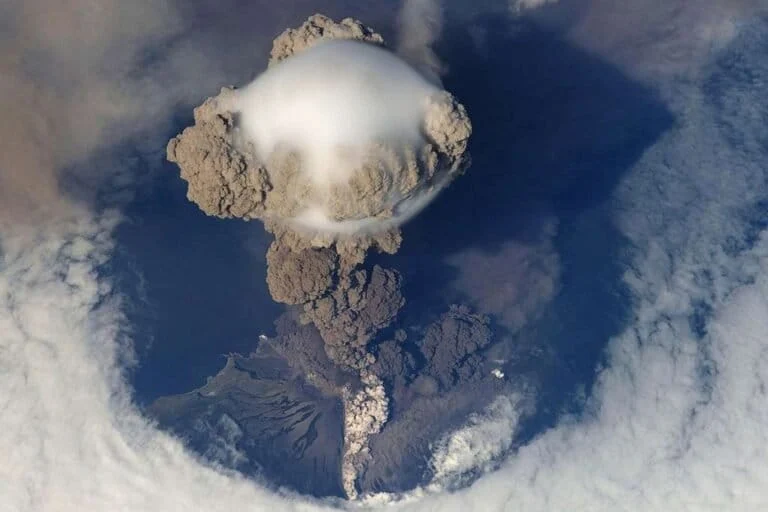
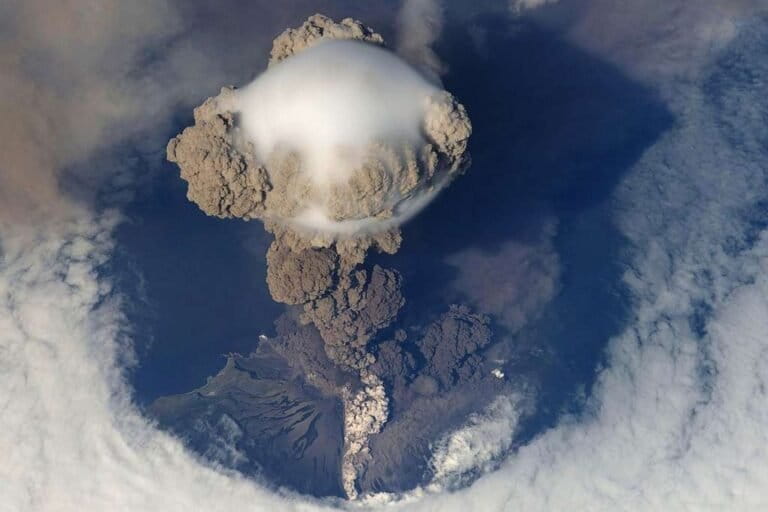
The eruption of the Toba supervolcano approximately 74,000 years ago stands as one of the most cataclysmic geological events in the history of the Cenozoic era. Located in present-day Sumatra, Indonesia, the explosion released an estimated 2,800 cubic kilometers of volcanic material into the atmosphere, triggering a "volcanic winter" that many scientists previously believed brought humanity to the brink of extinction. For decades, the "Toba Catastrophe Theory" suggested that the global cooling and environmental devastation caused by the eruption resulted in a genetic bottleneck, reducing the human population to fewer than 1,000 breeding pairs. However, groundbreaking new research from an archaeological site in the Horn of Africa is fundamentally rewriting this narrative, suggesting that far from being decimated, early humans demonstrated an extraordinary capacity for adaptation and innovation in the face of environmental collapse.
A multi-disciplinary study published in the journal Nature has unveiled evidence from the Shinfa-Metema 1 site in the lowlands of northwestern Ethiopia. This site, located along a tributary of the Blue Nile, provides a high-resolution window into the lives of Middle Stone Age humans during the exact period of the Toba eruption. The findings indicate that while the eruption did indeed cause a period of extreme aridity and environmental stress, the local human populations did not perish. Instead, they adapted their foraging strategies, developed new hunting technologies, and utilized the changing landscape in ways that may have ultimately facilitated the expansion of modern humans out of Africa and across the globe.
The Scale of the Toba Catastrophe
To understand the significance of the findings at Shinfa-Metema 1, one must first grasp the magnitude of the Toba event. Geologically classified as a Volcanic Explosivity Index (VEI) 8 eruption, the Toba blast was thousands of times more powerful than the 1980 eruption of Mount St. Helens. The resulting ash cloud covered much of the Indian Ocean and the South Asian subcontinent, while sulfurous gases reached the stratosphere, reflecting sunlight and causing global temperatures to plummet by several degrees Celsius for nearly a decade.
In the decades following the proposal of the Toba Catastrophe Theory by Stanley Ambrose in 1998, the scientific community remained divided. While some genetic data pointed toward a population squeeze around that time, archaeological evidence remained sparse. Critics of the theory argued that if the eruption was so devastating, there should be clear signs of abandonment or mass mortality in the African archaeological record, where Homo sapiens were most concentrated. The discovery at Shinfa-Metema 1 provides the most robust evidence yet that humans were not only present but thriving in the wake of the disaster.
Evidence from the Dust: Identifying the Toba Timeline
The research team, led by John Kappelman, a professor of anthropology and geological sciences at the University of Texas at Austin, employed a meticulous methodology to link the Ethiopian site directly to the Toba eruption. The key lay in "cryptotephra"—microscopic shards of volcanic glass that are too small to be seen by the naked eye but carry a unique chemical signature.
By analyzing sediment samples from Shinfa-Metema 1, the researchers identified shards of glass that matched the chemical composition of the Toba eruption. Because these shards settle through the atmosphere in a matter of weeks or months, they serve as a "geological instant," allowing researchers to synchronize archaeological layers with the volcanic event with unprecedented precision. This marked the first time that evidence of the Toba eruption had been found in direct association with a continuous record of human occupation in this region of Africa.
Adaptation Through Dietary Shifts
The most striking revelation from the site was how the inhabitants changed their diet to survive the post-eruption drought. Through the analysis of oxygen isotopes found in the remains of ostrich eggshells and the teeth of fossilized mammals, the team reconstructed the ancient climate. The data confirmed a period of intense seasonal aridity following the arrival of the Toba ash.
Before the eruption, the archaeological record shows a varied diet consisting of terrestrial game such as antelopes and small mammals. However, as the environment grew drier and the Shinfa River ceased to flow continuously, the dietary patterns shifted dramatically. The proportion of fish remains in the archaeological layers surged from approximately 14 percent to over 52 percent.
As the river dried up, it likely transformed into a series of disconnected, shallow pools. For the humans of the Middle Stone Age, this environmental crisis became a caloric opportunity. Large numbers of fish were trapped in these shrinking ponds, making them easy to harvest without the need for complex nets or boats. This "seasonal opportunistic foraging" allowed the group to maintain a stable food supply even when traditional land-based prey became scarce or migrated elsewhere in search of water.
Technological Innovation: The Birth of the Bow and Arrow?
The stressors of the Toba-induced drought also appear to have spurred technological advancement. Excavations at Shinfa-Metema 1 yielded a significant number of small, symmetrically shaped stone points. These points are characterized by a triangular geometry and evidence of "impact fractures," which occur when a projectile hits a hard target.
The researchers suggest that these points are among the oldest known examples of arrowheads, used for archery. The development of the bow and arrow would have provided a massive advantage for hunters during a drought. In an environment where water sources are limited, hunters could wait in ambush near the remaining water holes, using the increased range and stealth of the bow to take down prey from a distance. This shift from heavy spears to lightweight, high-velocity projectiles represents a leap in cognitive and technical flexibility, proving that environmental pressure can act as a catalyst for human ingenuity.
Rethinking the "Green Corridor" Migration Theory
Perhaps the most significant implication of the Shinfa-Metema 1 study concerns the migration of Homo sapiens out of Africa. For years, the prevailing theory was the "Green Corridor" model, which posited that humans expanded into Eurasia during "pluvial" or wet periods when the Sahara and Arabian deserts were lush and traversable.
The Ethiopian evidence suggests an alternative: the "Blue Highway" or "Arid Corridor" model. If humans were capable of surviving—and even flourishing—along seasonal riverbeds during periods of extreme drought, these rivers could have served as pathways during dry intervals. As one water hole or river segment dried up, human groups would naturally move along the dry bed to the next available pool. This "constriction-driven" movement would have pushed populations further along river systems, such as the Nile and its tributaries, eventually leading them toward the Sinai Peninsula and into the Levant.
This finding suggests that the dispersal of modern humans was not a single event dependent on "good" weather, but a series of flexible adaptations to "bad" weather. The ability to exploit aquatic resources and adapt to arid conditions may have been the very trait that allowed our ancestors to colonize the diverse and often harsh environments of the Middle East, Europe, and Asia.
Expert Analysis and Global Implications
Archaeologists and paleoanthropologists have reacted to the study with a mixture of excitement and cautious validation. Dr. Michael Petraglia, an expert on human evolution who was not involved in the study, noted that the findings "effectively dismantle the idea that Toba was a total extinction event for humans." He emphasized that the study highlights the "behavioral plasticity" of Homo sapiens—the ability to change behavior rapidly in response to new challenges.
From a broader perspective, the resilience shown at Shinfa-Metema 1 offers a lesson in human survival. The Toba eruption was a "black swan" event—an unpredictable catastrophe with extreme consequences. The fact that small bands of humans in East Africa were able to pivot their entire survival strategy from terrestrial hunting to intensive fishing and projectile technology speaks to the inherent problem-solving nature of our species.
The study also raises questions about other sites across Africa and Asia. If the Toba eruption did not cause a population collapse in Ethiopia, did it have a different effect in Southern Africa or India? The use of cryptotephra as a dating tool is now expected to be applied to other major archaeological sites, potentially revealing a much more complex and nuanced map of human survival during the Late Pleistocene.
Conclusion: A Legacy of Resilience
The story of the Toba supervolcano is no longer just a story of a near-miss with extinction. Instead, it has become a testament to the endurance of the human spirit and the flexibility of the human mind. The inhabitants of Shinfa-Metema 1 did not just survive the volcanic winter; they innovated their way through it.
By turning to the rivers when the forests failed and developing the tools necessary to master a changing world, these early humans laid the groundwork for the global expansion that would follow. The "Blue Highway" discovered in the Ethiopian lowlands serves as a reminder that humanity’s greatest leaps forward often occur not during times of plenty, but during the most challenging eras of our history. As modern researchers continue to peel back the layers of ash and stone, the image of our ancestors as fragile survivors is being replaced by one of masters of adaptation, capable of turning even a global catastrophe into a path toward the future.