Bambang Pamungkas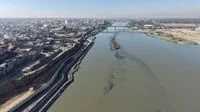
The lifeblood of one of humanity’s earliest and most influential civilizations, the Euphrates and Tigris rivers, are now teetering on the brink of ecological collapse, with projections indicating they could run dry as early as 2040. This looming environmental catastrophe threatens the livelihoods of an estimated 60 million people across Turkey, Syria, and Iraq, nations intricately linked by these historic waterways. The potential desiccation of these rivers, which birthed cities like Uruk and Babylon in the region known as Mesopotamia, carries profound implications for regional stability, food security, and cultural heritage, a crisis so significant it resonates with ancient prophecies revered by millions.
The Cradle of Civilization Under Threat
For millennia, the fertile crescent cradled between the Euphrates and Tigris rivers served as the crucible of human civilization. It was here, in Mesopotamia, that the Sumerians, Akkadians, Babylonians, and Assyrians forged the first cities, developed writing, codified laws, and advanced agricultural techniques that allowed for sedentary living and complex societal structures. The rivers provided the essential water for irrigation, transforming arid landscapes into productive farmlands that sustained burgeoning populations. Cities like Uruk, often cited as the world’s first true city, and the legendary Babylon, renowned for its Hanging Gardens, flourished on the banks of the Euphrates. The Tigris, slightly shorter but faster-flowing, was equally crucial, providing vital transportation routes and water for settlements like Nineveh. This historical legacy underscores the immense tragedy unfolding today, as the very sources of this ancient prosperity now face obliteration, an ironic twist of fate that sees the architects of early civilization battling to preserve its foundational water supply.
Dire Projections: A 2040 Deadline
The stark warning regarding the rivers’ future was formally articulated in a 2021 report by Iraq’s Ministry of Water Resources. This comprehensive assessment projected that both the Euphrates and Tigris could be completely dry by 2040 if current rates of water depletion and environmental degradation persist. The report cited a confluence of factors, primarily a drastic decline in water levels due to climate change-induced drought and increasingly unsustainable water management practices across the basin. Data from various sources, including satellite imagery analysis, supports these alarming findings. For instance, a study published in the journal Water Resources Research in 2013, utilizing data from NASA’s Gravity Recovery and Climate Experiment (GRACE) satellites, revealed that the Tigris and Euphrates river basins lost 144 cubic kilometers of freshwater between 2003 and 2013. To put this immense volume into perspective, 144 cubic kilometers is roughly equivalent to the entire water capacity of the Dead Sea or more than twice the volume of Lake Tahoe, vanishing in just a decade. This staggering loss, driven by both natural phenomena and human activity, highlights the urgency of the crisis. The total flow in the Euphrates and Tigris system has reportedly decreased by nearly half in just a few decades, an unprecedented reduction that has left vast stretches of formerly vibrant wetlands and agricultural lands parched and barren.
Interconnected Threats: Climate Change, Damming, and Mismanagement
The impending desiccation of the Euphrates and Tigris is not attributable to a single cause but rather a complex interplay of environmental and anthropogenic factors.
Climate Change: The Middle East is disproportionately affected by global warming. The region has experienced a significant increase in average temperatures, leading to higher rates of evaporation from rivers, lakes, and reservoirs. Concurrently, precipitation patterns have shifted dramatically, with a notable decrease in rainfall and snowfall in the mountainous headwaters of the rivers in Turkey and Iran. This reduction in snowmelt, which historically fed the rivers during warmer months, directly contributes to diminished flow. Extended and more frequent droughts have become the new normal, further exacerbating water scarcity and pushing ecosystems to their limits. The increasing frequency of dust storms, driven by drying soils and desertification, further impacts air quality and public health.
Upstream Damming and Water Politics: A significant and contentious factor is the construction of numerous large-scale dams in the upstream riparian countries, particularly Turkey. Turkey’s ambitious Southeastern Anatolia Project (GAP), initiated in the 1970s, involves the construction of 22 dams and 19 hydroelectric power plants on the Euphrates and Tigris rivers and their tributaries. The Atatürk Dam on the Euphrates, for example, is one of the largest in the world, capable of storing vast quantities of water. While these projects aim to provide irrigation, hydroelectric power, and economic development for Turkey, they severely restrict the downstream flow to Syria and Iraq. Syria has also constructed its own dams, such as the Tabqa Dam on the Euphrates, further reducing water availability for Iraq. These unilateral water resource development projects, often undertaken without comprehensive basin-wide agreements, have become a source of intense geopolitical tension, embodying the concept of "hydro-hegemony" where upstream nations control critical water resources to the detriment of downstream states.
Inefficient Water Management: Within Iraq and Syria, outdated and inefficient water management practices compound the crisis. Traditional flood irrigation techniques, which lead to significant water loss through evaporation and seepage, are still prevalent. Much of the existing irrigation infrastructure is old and dilapidated, resulting in substantial leakage. Furthermore, the burgeoning populations in these countries have increased demand for agricultural, industrial, and domestic water use, often without corresponding improvements in water conservation or recycling technologies. Water pollution from agricultural runoff, industrial discharge, and untreated sewage further degrades the quality of the remaining water, making it unusable for many purposes and adding to the overall water stress.
The Human Cost: A Looming Humanitarian Crisis
The direct consequence of the rivers’ decline is a humanitarian crisis of immense proportions. An estimated 60 million people across the basin, primarily in Turkey, Syria, and Iraq, depend directly on the Euphrates and Tigris for their daily needs, including drinking water, agriculture, and livestock.
Impact on Livelihoods: Farmers, particularly in Iraq’s southern marshes, once thriving ecosystems, are losing their land as irrigation canals run dry and fertile soil turns to dust. This loss of agricultural productivity directly impacts food security, forcing communities to abandon traditional farming practices and seek alternative, often precarious, livelihoods. Fishermen, once reliant on the rivers and their associated wetlands, find their catches dwindling or disappearing entirely. The displacement of these populations creates a new class of "environmental refugees," contributing to internal migration and putting pressure on urban centers already struggling with infrastructure and resources.
Food Security and Economic Strain: The fertile crescent, historically a breadbasket, is rapidly losing its capacity to feed its own population. Crop failures due to water scarcity lead to increased reliance on expensive food imports, placing immense economic strain on already fragile economies. Livestock, crucial for many rural communities, suffer from lack of water and pasture, leading to widespread animal deaths and further economic hardship. The overall economic stability of the region is threatened, as agriculture forms a significant component of the GDP in many areas.
Health and Social Instability: Water scarcity has direct health implications. Communities with limited access to clean water often resort to unsafe sources, leading to an increase in waterborne diseases such as cholera and typhoid. Poor sanitation, exacerbated by water shortages, further compounds public health risks. Beyond direct health impacts, the struggle for dwindling water resources can ignite social unrest and exacerbate existing ethnic and sectarian tensions. There is growing concern that water could become a significant flashpoint for conflict, both within and between nations, further destabilizing a region already grappling with political complexities and post-conflict recovery. Some analysts even link the severe drought in Syria prior to 2011 as a contributing factor to rural displacement and the subsequent civil war.
The Prophetic Dimension: A Warning from the Past
Adding another layer of profound significance to this environmental crisis is a centuries-old Islamic prophecy. As mentioned in the original article, a Hadith (a saying or action attributed to Prophet Muhammad, PBUH) warns: "The Hour will not be established until the Euphrates uncovers a mountain of gold, for which people will fight. Ninety-nine out of every hundred will die, and every man among them will say, ‘Perhaps I may be the one who will be saved and possess it.’" (Sahih Muslim No. 2894).
For many Muslims globally, this prophecy serves as a potent spiritual warning. While the "mountain of gold" is often interpreted literally by some, many scholars and commentators view it metaphorically. It could represent invaluable resources that emerge as the river recedes, sparking intense conflict—perhaps even the very water itself, or other precious commodities like oil or fertile land exposed by the drying riverbed. The Hadith’s depiction of extreme conflict and loss of life resonates deeply with fears of regional wars over diminishing resources. The current reality of the Euphrates’ receding waters and the escalating tensions over water sharing lend a chilling contemporary relevance to this ancient prophecy, deepening the spiritual and cultural gravity of the unfolding crisis for a significant portion of the world’s population. It transforms a purely environmental problem into one imbued with profound eschatological implications.
International and Regional Responses: A Call for Cooperation
Addressing the multi-faceted crisis of the Euphrates and Tigris requires unprecedented levels of international and regional cooperation. The current challenges are immense, primarily due to the absence of comprehensive and binding transboundary water-sharing agreements among Turkey, Syria, and Iraq. Decades of geopolitical tensions, conflicts, and mutual distrust have hampered effective dialogue and collaborative management of shared water resources.
International organizations and NGOs have repeatedly called for urgent action. The Food and Agriculture Organization (FAO) of the United Nations, alongside the United Nations Environment Programme (UNEP), has highlighted the need for sustainable water management practices, investment in modern irrigation technologies, and climate change adaptation strategies. However, these calls often fall on deaf ears amidst competing national interests.
Potential solutions involve a combination of policy changes, technological advancements, and diplomatic initiatives:
- Basin-Wide Agreements: Establishing legally binding water-sharing agreements that ensure equitable distribution and sustainable management of the rivers’ flow, taking into account the needs of all riparian states and the environment.
- Modernization of Infrastructure: Investing in advanced irrigation systems, such as drip irrigation and sprinkler systems, to minimize water waste in agriculture. Repairing and upgrading aging water distribution networks to reduce leakage.
- Water Recycling and Desalination: Exploring water recycling for non-potable uses and, where economically feasible, investing in desalination plants, particularly for coastal areas or regions with access to brackish groundwater.
- Climate Resilience: Developing and implementing climate change adaptation strategies, including drought-resistant crops, early warning systems for droughts, and wetland restoration projects to enhance natural water purification and storage.
- International Aid and Diplomacy: The international community has a crucial role to play in facilitating diplomatic solutions, providing financial and technical assistance for water infrastructure projects, and supporting research into sustainable water management in arid regions.
Looking Ahead: Implications and Future Outlook
The year 2040 looms as a critical deadline for the Euphrates and Tigris. The implications of these rivers running dry extend far beyond the immediate region, potentially triggering cascading effects on global food prices, international migration patterns, and geopolitical stability. Without a dramatic shift in policy, investment, and cross-border collaboration, the worst-case scenario—widespread famine, mass displacement, and intensified conflict over dwindling resources—becomes increasingly probable.
Conversely, an unprecedented commitment to regional cooperation, coupled with significant international support, could chart a different path. This would involve a paradigm shift from viewing water as a national asset to be hoarded, to recognizing it as a shared resource vital for the collective well-being and stability of the entire basin. The fate of the Euphrates and Tigris is not merely an environmental concern; it is a test of humanity’s capacity for foresight, cooperation, and sustainable stewardship of the planet’s most precious resource. The silence of these ancient rivers would not only signify the loss of a natural wonder but also the erosion of a heritage that shaped the very trajectory of human civilization. The time for action is now, before the cradle of civilization becomes its tomb.