Nila Kartika Wati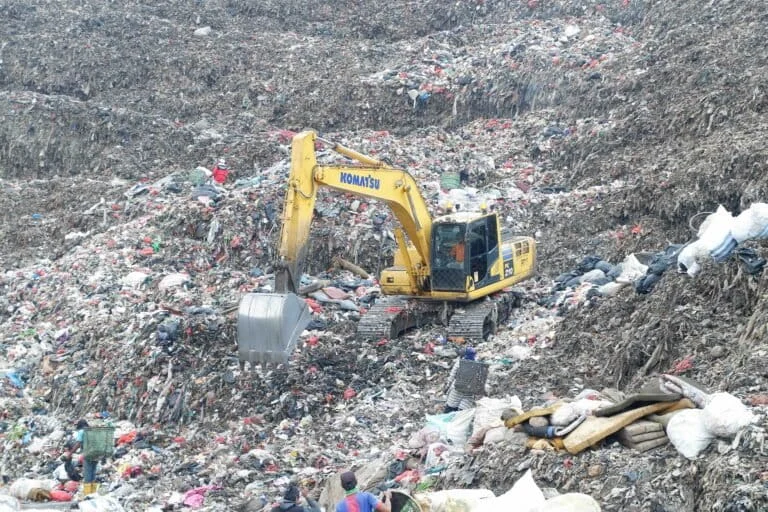
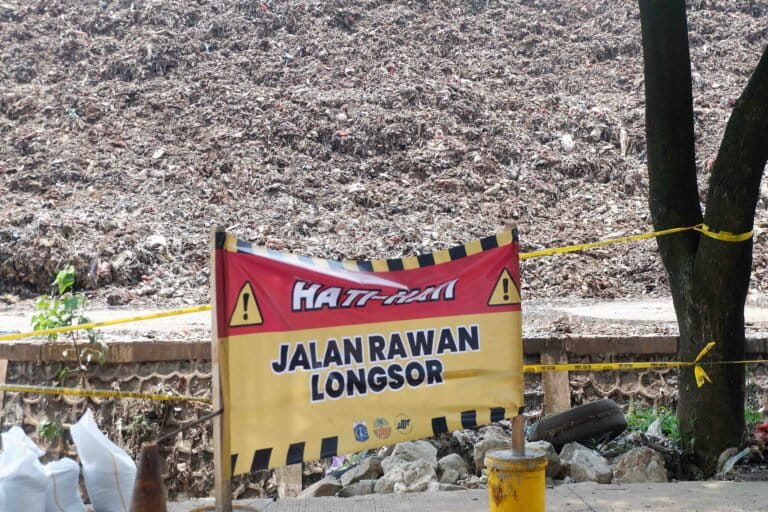
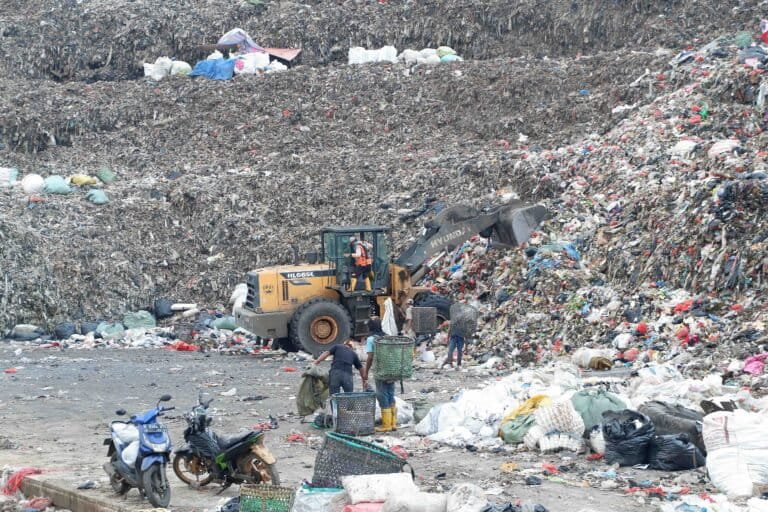
On the afternoon of March 8, the sprawling landscape of the Bantargebang Integrated Waste Treatment Site (TPST) in Bekasi transformed from a site of daily labor into a scene of catastrophic destruction. What began as a routine day for Darja, a local scavenger sorting through mountains of plastic and glass, ended in a lethal landslide that claimed seven lives and underscored the systemic failures of waste management in Indonesia’s capital. The collapse of a 50-meter-high mountain of refuse in "Small Zone 4" sent shockwaves through the community, drawing immediate scrutiny from the Ministry of Environment and highlighting a decades-long history of negligence, technical mismanagement, and underfunding.
The disaster at Bantargebang is not merely an isolated accident; it is a symptom of a "mountain of debt" that Jakarta owes to its environment. As the facility nears its absolute capacity, holding over 80 million tons of waste accumulated over nearly four decades, the recent landslide serves as a grim reminder that the current model of waste disposal is not only unsustainable but increasingly deadly.
A Chronology of Chaos: The Afternoon of March 8
The events leading up to the tragedy were deceptively ordinary. Darja, a seasoned scavenger from Indramayu, was positioned near the Small Zone 4 area, meticulously separating plastic bottles under a blue tarpaulin makeshift shelter. Just three meters away, he noticed a young boy placing sorted items near a slope that appeared unstable, showing signs of previous minor erosions. Darja shouted a warning, sensing the precariousness of the terrain.
Across from Darja’s station, a small kiosk operated by Sumine and her daughter-in-law, Enda Widayanti, served refreshments to truck drivers waiting in the long queue to dump their loads. As Darja returned to his work, using scissors to split open a heavy sack, the silence of the afternoon was shattered by a piercing scream from Enda.
"Mang, iku!" (Uncle, look!) she cried out, pointing toward the massive waste embankment.
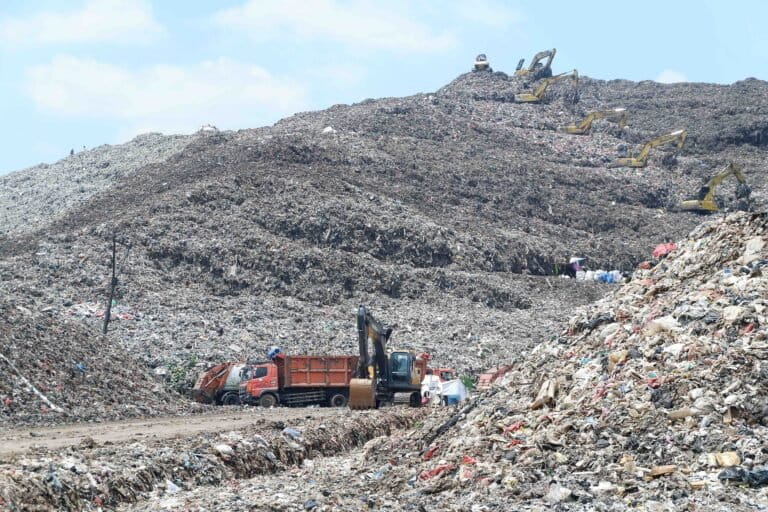
Darja turned to see a wall of refuse descending with the force of a tidal wave. The landslide was massive in scale, sweeping away several heavy-duty garbage trucks and pushing them toward the Ciketing River. In the frantic seconds that followed, Darja began to run, his feet barely touching the shifting ground as he dodged "waves" of trash. Enda briefly grabbed his hand in a desperate attempt to keep pace, but the grip was severed when her legs were suddenly engulfed by the sliding debris. Darja leaped repeatedly, narrowly escaping the perimeter of the slide until he reached higher, stable ground.
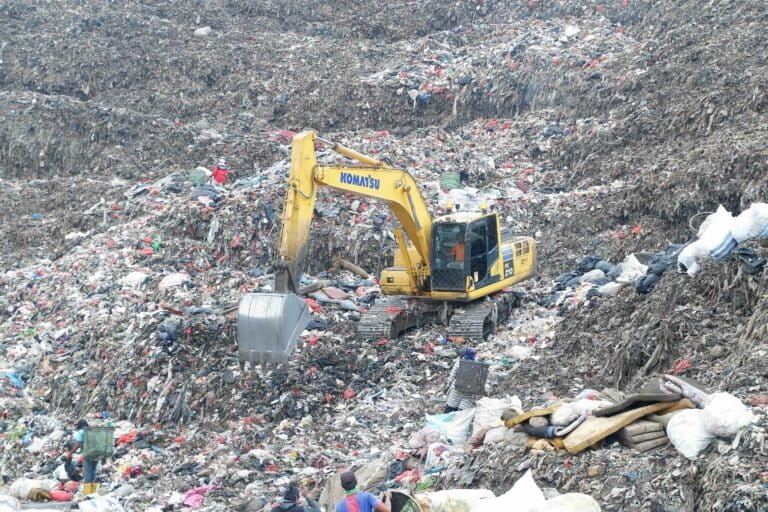
When the dust settled and the roar of the sliding trash subsided, the landscape had been irrevocably altered. The kiosk and Darja’s sorting station were gone, buried under meters of waste. Out of the silence, Darja began to scream for help. Search and Rescue (SAR) teams arrived shortly after, utilizing heavy machinery to excavate the site. Because Darja was the sole witness to the exact location where the victims were last seen, he played a critical role in mapping the search area.
The recovery was somber. Sumine and Enda were the first to be found, their bodies discovered within minutes of each other. By the end of the operation, the death toll had risen to seven. The victims included the two women, four Jakarta waste truck drivers—Dedi Sutrisno, Irwan Supriatin, Riki Supiadi, and Hardianto—and another scavenger named Jussova Situmorang.
Technical Failures and the Myth of Safety
The collapse of Zone 4 has brought the technical operations of TPST Bantargebang under intense scrutiny. Experts and former employees point to a fundamental failure in how waste is layered and compacted. Bagong Suyoto, a representative of the National Waste Coalition and a former worker at the site, noted that landslides are often the result of improper "peeling" or excavation of old waste layers.
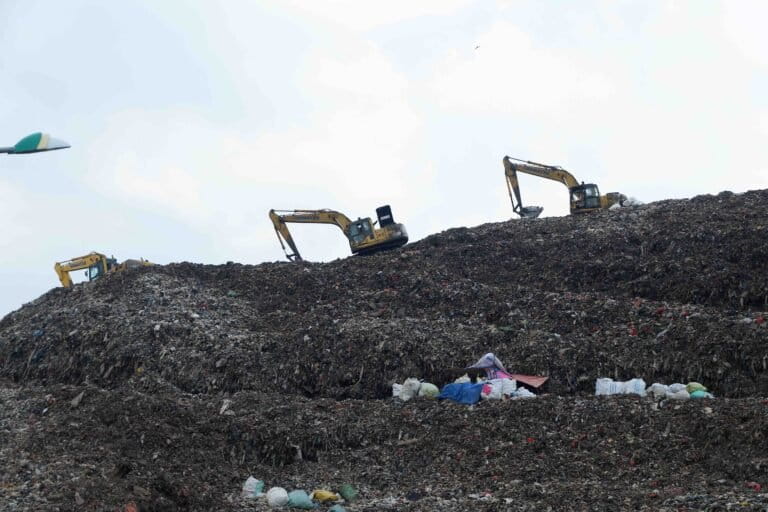
According to Suyoto, when new waste is dumped directly onto old, sun-baked, or compacted waste without first turning the soil or mixing the layers, the two masses fail to bond. This creates a "slip plane"—a smooth, unstable boundary where the new layer can easily slide off the old one, especially after heavy rainfall. The rain acts as a lubricant, increasing the weight of the upper layers while reducing friction at the boundary.
Furthermore, Suyoto revealed that minor landslides are a frequent occurrence at Bantargebang, though they are often suppressed by management to avoid public outcry or regulatory intervention. "Many of these incidents are hidden. They don’t want the exposure," Suyoto told investigators. The March 8 event was simply too large and too lethal to remain in the shadows.
The Legal Hammer: From Investigation to Prosecution
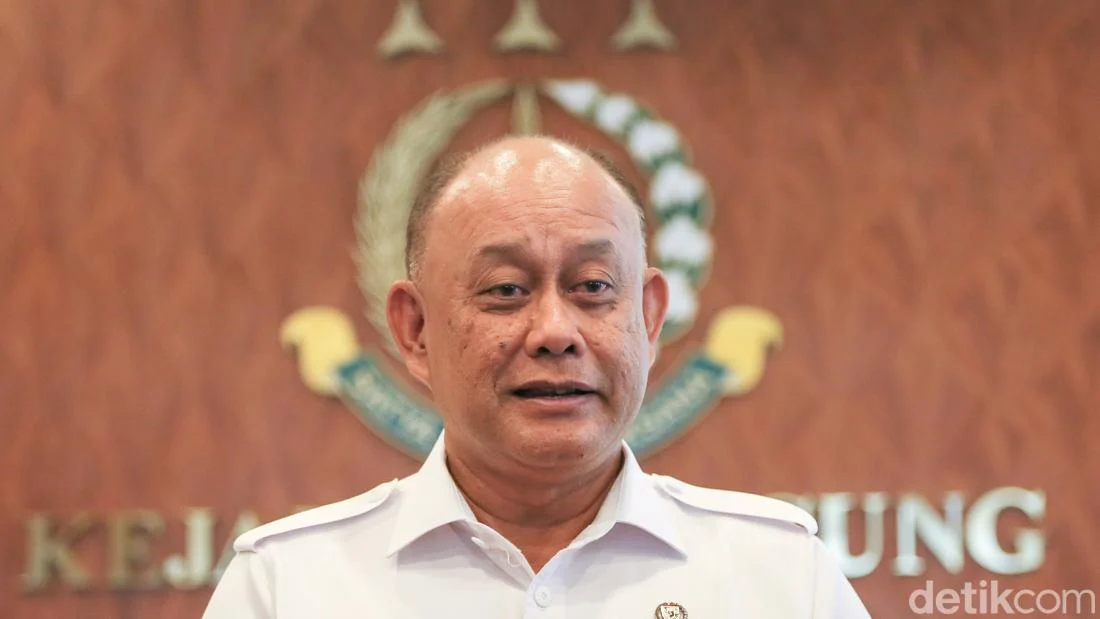
In the wake of the tragedy, the Indonesian Ministry of Environment (KLH) has taken an unprecedented stance. Minister Hanif Faisol Nurofiq announced that, with the approval of the National Police’s Criminal Investigation Department (Bareskrim) and the Attorney General’s Office, the legal status of the Bantargebang landslide has been elevated from an investigation to a full criminal inquiry (penyidikan).
The Ministry alleges that the facility’s management violated Law No. 18 of 2008 on Waste Management and Law No. 32 of 2009 on Environmental Protection and Management. Specifically, the continued use of "open dumping"—where waste is piled in open areas without proper sanitary landfilling techniques like soil covering or methane gas management—is a direct violation of federal law.
"TPST Bantargebang must be a lesson for all of us," Minister Hanif stated. "The government is not playing around. This is a failure to manage Jakarta’s waste that has resulted in the loss of life."
The management now faces potential prison sentences ranging from five to ten years and fines between Rp5 billion and Rp10 billion (approximately $320,000 to $640,000). Notably, the Ministry had already issued a Warning Letter of Commencement of Investigation (SPDP) just six days before the landslide, indicating that the government was already aware of the high-risk conditions at the site.
A History of Disasters: The "Iceberg Phenomenon"
The March 8 landslide is part of a dark lineage of waste-related disasters in Indonesia. The Ministry of Environment records show that Bantargebang suffered a similar collapse in 2003 that buried nearby residential areas. In 2006, a collapse in Zone 3 resulted in the deaths of dozens of scavengers.
Beyond Bekasi, the 2005 Leuwigajah disaster in Cimahi remains the deadliest in the nation’s history, where a methane explosion and subsequent landslide killed 143 people. More recently, landslides have been reported at the Cipayung TPA in Depok. Environmental advocates argue that these events are not "accidents" but predictable outcomes of a system that prioritizes disposal over reduction.
Minister Hanif described the situation as an "iceberg phenomenon." While the landslide is the visible tip, the underlying mass is a failure of urban planning. Jakarta currently generates more than 7,354 tons of waste per day. Over 37 years, Bantargebang has absorbed 80 million tons, far exceeding its intended lifespan and geographic footprint.
Financial Disparities and the "Amburadul" Governance
A significant portion of the crisis stems from what activists call "amburadul" or shambolic governance. Bagong Suyoto highlighted a stark disparity in budget allocations. While Jakarta’s 2022 Regional Budget (APBD) stood at a massive Rp78.7 trillion, only Rp1.5 trillion—roughly 2%—was allocated to TPST Bantargebang.
The situation is even more dire in satellite cities. Bekasi City allocated only 0.4% of its budget to its Sumur Batu landfill, while Bogor Regency allocated a mere 0.2% to its Galuga site. Suyoto argues that at least 3% to 5% of regional budgets must be dedicated to waste management to transition from open dumping to modern technologies such as composting, recycling, and Refuse-Derived Fuel (RDF).
Furthermore, Suyoto alleged that corruption and "mark-ups" in procurement for fuel, spare parts, and land acquisition for "cover soil" have historically bled the waste management budget dry. He estimated that only 50% to 60% of allocated funds actually reach the intended field operations, leaving the facility with sub-standard maintenance and safety protocols.
The Path Forward: Technology and Source Reduction
In response to the crisis, the Jakarta Environmental Agency (DLH) has accelerated the operation of the RDF Plant in Rorotan. This facility uses high-heat technology to convert waste into fuel for industrial use. As of March 10, the plant began processing 300 tons per day, with plans to scale up to 1,000 tons per day.
However, technology alone is not a panacea. Asep Kuswanto, Head of Jakarta’s DLH, emphasized that "source reduction" is the only long-term solution. This involves mandatory waste sorting at the household, office, and community levels. If organic waste—which makes up the bulk of landfill mass and produces destabilizing methane gas—is managed at the source, the physical pressure on Bantargebang would decrease significantly.
Greenpeace Indonesia and Walhi (The Indonesian Forum for the Environment) have also called for the implementation of Extended Producer Responsibility (EPR). This policy would force manufacturers to take financial and physical responsibility for the packaging waste they produce, incentivizing a shift toward reusable and biodegradable materials.
Conclusion: A Wake-Up Call for a Megacity
The seven lives lost on March 8 at Bantargebang are a tragic testament to a city that has outgrown its infrastructure. As the police investigation continues and the mounds of trash are reshaped, the fundamental question remains: Can Jakarta transform its relationship with waste before the next mountain falls?
The tragedy serves as a final warning. Without a massive increase in budget transparency, a move away from open dumping, and a cultural shift toward zero waste, the "mountains" of Bantargebang will continue to loom as a threat to the very people who sustain the city’s economy. For Darja, the survivor, the site is no longer just a place of work; it is a graveyard of friends and a reminder of the day the earth—made of plastic and neglect—gave way.