Azin Asro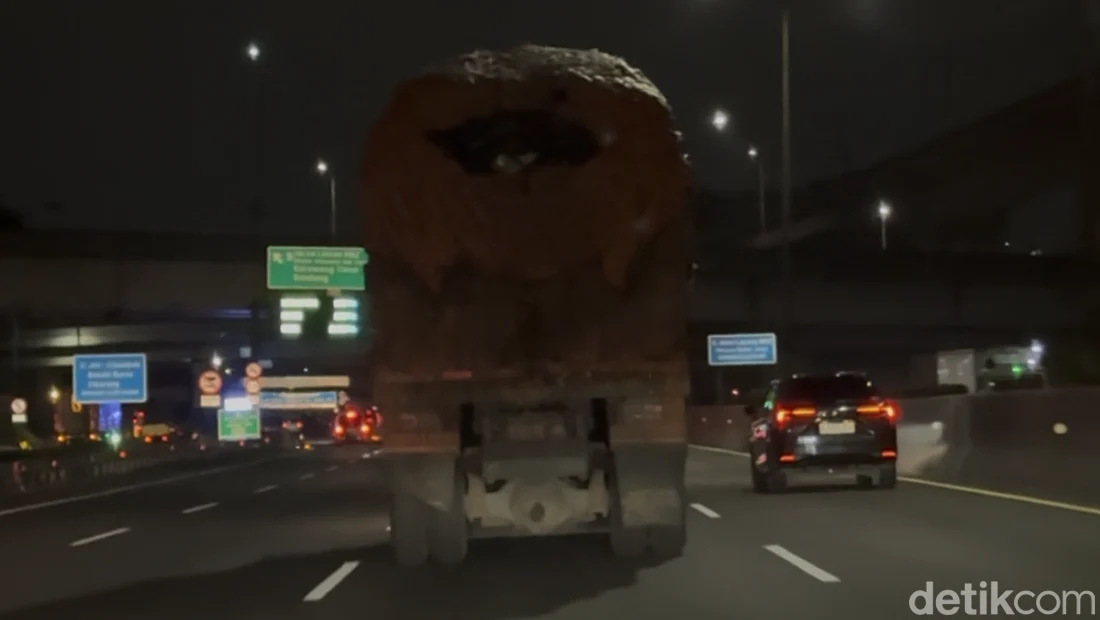
The safety of Indonesia’s highway infrastructure has once again come under intense public scrutiny following a viral dashcam recording that captured a harrowing near-miss incident on the Jakarta-Cikampek toll road. The footage, which has circulated widely across social media platforms, depicts a modern passenger SUV narrowly avoiding a catastrophic rear-end collision with a heavy truck that was operating without any functional rear lighting. This incident highlights a persistent and deadly trend on Indonesian highways: the presence of "invisible" heavy vehicles that pose a lethal threat to motorists, particularly during nighttime hours on stretches of road lacking adequate public street lighting.
The event, which took place at approximately 9:00 PM local time, occurred as a driver was navigating the Jakarta-Cikampek toll road heading toward the Cikopo-Palimanan (Cipali) section. The video, shared by the social media account @dashcamindonesia, shows the vehicle traveling in the second lane at highway speeds. Without warning, the vehicle’s Advanced Driver Assistance Systems (ADAS) triggered an emergency alert, detecting an obstacle that was virtually invisible to the human eye due to the total absence of tail lights, brake lights, or reflective markings on the truck ahead. The driver, alerted by the system, managed to execute a high-speed evasive maneuver, swerving into the rightmost lane just moments before impact.
Chronology of a Near-Fatal Encounter
The sequence of events began as the driver of a Hyundai Palisade was maintaining a steady pace in the middle lane of the toll road. At 9:00 PM, visibility was heavily reliant on the vehicle’s own headlights, as the specific segment of the Jakarta-Cikampek toll road lacks consistent overhead lighting. The truck in question was moving significantly slower than the flow of traffic, a common occurrence with overloaded logistics vehicles in Indonesia.
Because the truck lacked any form of illumination, its dark silhouette blended perfectly into the nighttime horizon. The driver reported that from a distance, the road appeared entirely clear. It was only through the intervention of the vehicle’s onboard sensors—specifically the Forward Collision-Avoidance Assist (FCA)—that the danger was identified. The system emitted a sharp auditory and visual warning, prompting the driver to check their surroundings and banting setir (sharply steer) to the right.
Following the successful maneuver, the driver utilized their horn to alert the truck driver of the danger they were posing to other road users. In a testimonial shared alongside the footage, the driver expressed profound shock, stating that their "chest felt tight" and they were "trembling" from the adrenaline and fear of the near-collision. They credited the vehicle’s ADAS and Traction Control System (TCS) for maintaining stability during the abrupt lane change, preventing a secondary accident such as a rollover or a spin-out.
The Technical Safeguard: Understanding ADAS and TCS
This incident serves as a real-world case study for the efficacy of modern automotive safety technologies. Advanced Driver Assistance Systems (ADAS) utilize a combination of radar sensors, cameras, and ultrasonic sensors to monitor the vehicle’s surroundings. In scenarios involving unlit obstacles, radar is particularly effective because it does not rely on visible light to detect the mass of an object. The radar waves bounce off the metal structure of the truck, allowing the car’s computer to calculate the closing speed and distance even when the driver sees nothing but darkness.
Complementing the ADAS is the Traction Control System (TCS) and Electronic Stability Control (ESC). When the driver in the viral video swerved at high speed, the vehicle’s weight shifted violently. In older vehicles or those without advanced stability suites, such a maneuver often leads to a loss of control. However, modern systems can selectively apply brakes to individual wheels and modulate engine power to ensure the car follows the driver’s steered path, keeping the chassis level and the tires gripped to the asphalt.
As automotive technology becomes more accessible in the Indonesian market, these features are transitioning from luxury add-ons to essential life-saving tools. However, safety experts warn that technology should not be a substitute for proper road etiquette, vehicle maintenance, and rigorous law enforcement.
The "Dark Truck" Phenomenon: A Long-Standing Crisis
The issue of trucks operating without functional rear lights is not a new development in Indonesia’s transportation sector. Jusri Pulubuhu, a veteran safety driving practitioner and the founder of the Jakarta Defensive Driving Consulting (JDDC), noted that this phenomenon has plagued Indonesian roads since long before the enactment of Law No. 22 of 2009 concerning Traffic and Road Transportation.
According to Pulubuhu, the root of the problem lies in a combination of low safety awareness among fleet owners and inconsistent law enforcement. "This is a matter of low traffic consciousness," Pulubuhu stated. "It leads to dangerous behaviors. Furthermore, the campaigns regarding this issue are insufficient, and legal enforcement remains inconsistent."
The "dark truck" problem is often exacerbated by the "Over Dimension, Over Load" (ODOL) crisis. Trucks that are carrying weight far beyond their designed capacity often suffer from electrical failures due to the strain on the vehicle’s systems or general neglect of maintenance. In many cases, these trucks move at speeds as low as 30-40 km/h on toll roads where the minimum speed limit is 60 km/h and passenger cars are traveling at 100 km/h. The speed differential, combined with zero visibility, creates a "sitting duck" scenario for rear-end collisions.
Supporting Data and Highway Safety Statistics
Data from the National Transportation Safety Committee (KNKT) and Jasa Marga, the state-owned toll road operator, consistently indicate that rear-end collisions (tabrak belakang) are among the leading causes of fatalities on Indonesian highways. On the Cipali toll road alone—which connects with the Jakarta-Cikampek route—a significant percentage of accidents involve passenger vehicles crashing into the rear of slow-moving or stationary trucks.
In 2022 and 2023, reports suggested that over 60% of accidents on major Indonesian toll roads occurred at night or during the early morning hours. A lack of "conspicuity"—the ability of a vehicle to be seen—is frequently cited as a contributing factor. While the Ministry of Transportation has introduced regulations requiring heavy vehicles to be equipped with high-intensity reflective stickers (often referred to as AP75 stickers), compliance remains low among smaller logistics operators and individual truck owners.
The absence of street lighting on long stretches of inter-city toll roads further complicates the issue. While toll road operators argue that headlights should be sufficient for visibility, this assumption relies on the premise that all vehicles on the road are properly equipped with functional lighting and reflective materials. When a truck operates in "stealth mode" without lights, even the most attentive driver may not perceive the danger until it is too late.
Regulatory Framework and the Call for Stricter Enforcement
Under Indonesian law, specifically Article 285 of Law No. 22 of 2009, every motor vehicle operated on the road must meet technical and roadworthiness requirements, which include functional lighting systems. Violations can result in fines or imprisonment. However, the reality on the ground suggests that these penalties are rarely a deterrent.
Safety advocates are calling for several key interventions:
- Strict Roadworthiness Inspections (KIR): There is a demand for more rigorous and corruption-free periodic inspections. Trucks that show signs of faulty wiring or lack proper reflective tape should be grounded immediately.
- Increased Highway Patrols: The police and the Department of Transportation (Dishub) must conduct more frequent "night raids" on toll roads to intercept vehicles without lights.
- Infrastructure Improvements: While lighting every kilometer of a toll road is cost-prohibitive, experts suggest increasing the use of "cats-eyes" (reflective road studs) and ensuring that all highway signage is highly reflective.
- Mandatory Reflective Tape: Full enforcement of the Ministry of Transportation Regulation (KP 3996/AJ.502/DRJD/2019) regarding the installation of rear and side reflective markings is essential. These stickers are designed to be visible from hundreds of meters away, even if the truck’s electrical system fails.
Broader Implications for the Logistics Industry
The incident also highlights the economic pressures within the logistics industry. Many truck drivers operate on razor-thin margins, leading to "cost-cutting" measures that include skipping essential maintenance. When a bulb burns out or a wire frays, it may be ignored in favor of completing a delivery on time.
However, the cost of a single fatal accident far outweighs the cost of a lightbulb or a roll of reflective tape. Beyond the loss of life, these accidents cause massive traffic congestion, damage to infrastructure, and significant financial losses for insurance companies and logistics firms.
Jusri Pulubuhu emphasized that the responsibility lies not just with the driver, but with the vehicle owners and the authorities. "The owners must maintain their vehicles. From the side of the officials, both Dishub and the Police, there must be firm action. We see so many rear-end collisions. When we move to the slow lane or the middle lane at night, we expect it to be clear, but suddenly there is an unlit truck idling or moving slowly. At 80 or 100 km/h, that is a death sentence."
Conclusion: A Multi-Pronged Approach to Road Safety
The viral video of the Hyundai Palisade’s near-miss is a chilling reminder of the dangers that lurk on Indonesia’s highways. While the advancement of vehicle technology like ADAS provides a vital safety net, it cannot be the only line of defense.
A sustainable solution requires a cultural shift in traffic safety awareness, a commitment to vehicle maintenance by the logistics sector, and unwavering enforcement of existing laws by the government. Until the "dark truck" phenomenon is eradicated, Indonesian toll roads will remain a high-risk environment for even the most cautious drivers. The integration of technology, better infrastructure, and strict regulation is the only path forward to ensure that a trip on the toll road does not end in a preventable tragedy.