Nila Kartika Wati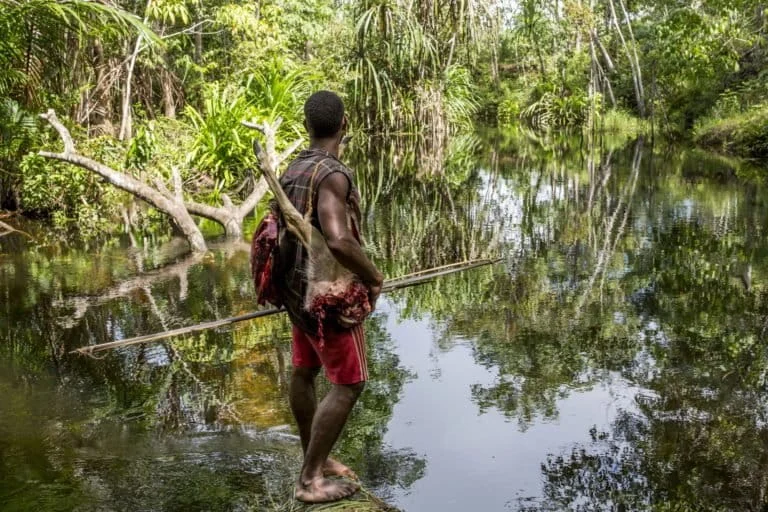
The Indonesian provinces of Papua, long celebrated as one of the world’s last great wildernesses, are currently facing an unprecedented wave of industrial transformation that threatens to alter their ecological and social fabric forever. At the heart of this shift are several large-scale initiatives categorized as National Strategic Projects (Proyek Strategis Nasional or PSN), focusing on food, energy, and water security. While the central government in Jakarta frames these developments as essential for national resilience and economic sovereignty, the reality on the ground in regions like Merauke, Boven Digoel, and Raja Ampat tells a more complex story of displacement, deforestation, and cultural erosion. In South Papua, the vast landscapes of Merauke and Boven Digoel are being cleared to make way for massive agricultural and energy estates, while in the West, the globally renowned marine sanctuary of Raja Ampat is increasingly targeted by the nickel mining industry. These developments have sparked significant alarm among indigenous communities, environmental scientists, and human rights advocates who argue that the cost of such "progress" may be the permanent loss of irreplaceable biodiversity and the traditional ways of life that have protected these lands for millennia.
The push for large-scale development in Papua is not a new phenomenon, but the current pace and scale under the PSN banner are historic. The Merauke Integrated Food and Energy Estate (MIFEE), originally launched over a decade ago, has been revitalized and expanded into a centerpiece of the government’s plan to reduce reliance on food imports. In the Merauke and Boven Digoel districts, hundreds of thousands of hectares of primary forest and peatland have been earmarked for conversion into sugarcane plantations, rice fields, and palm oil estates. This industrialization of the landscape represents a fundamental shift from the traditional land-use patterns of the indigenous Papuan people, for whom the forest is not merely a resource to be extracted but a sacred entity providing food, medicine, and spiritual identity. As the heavy machinery moves in and the canopy falls, the Awyu and Mandobo peoples, among others, find their ancestral territories shrinking, replaced by monoculture rows that offer little to no benefit to the local population.
The timeline of this industrial expansion reveals a systematic dismantling of environmental protections in favor of expedited investment. Following the passage of the Job Creation Law (Omnibus Law) in 2020, administrative hurdles for large-scale projects were significantly reduced. This legislative shift streamlined the process for land acquisition and weakened the requirement for comprehensive Environmental Impact Assessments (AMDAL) for projects deemed of national importance. By 2023 and early 2024, the government accelerated the designation of new PSN sites in Papua, specifically targeting the production of bioethanol and sugar to meet national energy and food demands. This chronology suggests a prioritized focus on macroeconomic indicators and industrial "downstreaming" (hilirisasi) at the expense of local environmental stability.
The environmental data associated with these projects is stark. According to satellite monitoring and reports from environmental NGOs such as Pusaka and Greenpeace, Papua has lost millions of hectares of forest cover over the last two decades, with the rate of clearing in South Papua showing a sharp uptick in recent years. The conversion of these forests into agricultural land releases massive amounts of stored carbon into the atmosphere, undermining Indonesia’s international climate commitments. Furthermore, the disruption of the hydrological cycle in Merauke—a region characterized by its unique savanna and wetland ecosystems—threatens to cause localized droughts and floods, further endangering the food security of the very people the projects are purportedly designed to help.
Parallel to the agricultural expansion in the south is the looming threat of the nickel industry in the northern and western parts of Papua, most notably in the Raja Ampat archipelago. Known as the "Crown Jewel" of the Coral Triangle, Raja Ampat is a global epicenter of marine biodiversity, hosting more than 1,400 species of fish and 75% of the world’s known coral species. However, the global demand for nickel—driven by the electric vehicle (EV) battery boom—has placed Raja Ampat’s islands in the crosshairs of mining conglomerates. On islands like Waigeo, exploration permits have been granted for nickel mining, raising fears of catastrophic runoff. Nickel mining is notoriously destructive; it requires the removal of entire hillsides, leading to massive soil erosion. When it rains, the red, mineral-rich silt washes into the sea, smothering coral reefs and destroying the nurseries for the fish populations that sustain both local communities and the international tourism industry.
Statements from indigenous leaders and community members reflect a deep sense of betrayal and existential dread. "The forest is our supermarket and our pharmacy," has become a common refrain among the Awyu people of Boven Digoel, who are currently engaged in high-profile legal battles to protect their land from palm oil expansion. They argue that the government’s definition of "development" is alien to their reality. For them, development that destroys the forest is not progress but a form of dispossession. Legal representatives for these communities have pointed out that many land deals were conducted without Free, Prior, and Informed Consent (FPIC), with signatures often obtained through coercion or by misleading local elders about the long-term impacts of the projects.
Government officials, however, maintain that these projects are vital for the nation’s future. The Ministry of Investment and the Ministry of Environment and Forestry have frequently stated that industrializing Papua is necessary to bring infrastructure, education, and healthcare to remote regions. They argue that the PSN initiatives will create jobs and integrate Papua into the national and global economy. Yet, critics point out a "resource curse" dynamic, where the wealth extracted from the land flows to Jakarta or international investors, while the local population is left with a degraded environment and a loss of traditional livelihoods. Analysis of employment data in previous food estate projects suggests that most skilled labor is brought in from outside Papua, leaving indigenous people with only the most menial, low-paying roles.
The broader implications of these developments extend far beyond Indonesia’s borders. Papua’s rainforests represent the third-largest tropical forest mass in the world, following the Amazon and the Congo Basin. As a critical carbon sink, their destruction has global consequences for the climate crisis. The loss of biodiversity is equally concerning; Papua is home to species found nowhere else on Earth, including the iconic Birds of Paradise and various tree kangaroo species. The encroachment of industrial projects into these habitats increases the risk of species extinction and disrupts the delicate balance of ecosystems that have evolved over millions of years.
Furthermore, the social impact of these projects is a precursor to potential conflict. The marginalization of indigenous Papuans in the name of national development has historically fueled tensions and social unrest. When communities lose their land, they lose their autonomy. The transition from a self-sufficient, forest-based economy to a dependency on cash wages in a plantation system often leads to a breakdown of traditional social structures and an increase in poverty. The psychological toll of watching ancestral graves and sacred sites being bulldozed for sugarcane or nickel mines is immeasurable and contributes to a growing sense of alienation among the Papuan youth.
As the international community increasingly focuses on "green" energy and sustainable supply chains, the situation in Papua presents a glaring contradiction. The nickel mined to create "eco-friendly" electric vehicles in Europe or North America may be directly responsible for the destruction of primary forests and coral reefs in Raja Ampat. Similarly, the bioethanol produced from Papuan sugarcane is marketed as a renewable fuel, yet its production involves the massive release of carbon from deforested peatlands. This "green-washing" of industrial expansion obscures the true ecological cost and shifts the burden of environmental degradation onto one of the world’s most vulnerable populations.
In conclusion, the current trajectory of development in Papua, characterized by the aggressive implementation of National Strategic Projects and the expansion of the extractive industry, poses a fundamental threat to the region’s environmental and cultural integrity. While the Indonesian government pursues a vision of economic growth and resource security, the methods employed—large-scale land conversion, top-down decision-making, and the prioritization of industrial interests over indigenous rights—are creating a legacy of ecological destruction. The question remains whether a more inclusive and sustainable model of development can be found—one that respects the rights of indigenous peoples to manage their ancestral lands and recognizes that the true value of Papua lies not in the commodities that can be extracted from it, but in the life-sustaining ecosystems it provides for the entire planet. Without a significant shift in policy and a genuine commitment to environmental justice, the unique landscapes of Merauke, Boven Digoel, and Raja Ampat risk being sacrificed at the altar of short-term economic gain, leaving future generations of Papuans to inherit a land that is a shadow of its former self.