Nila Kartika Wati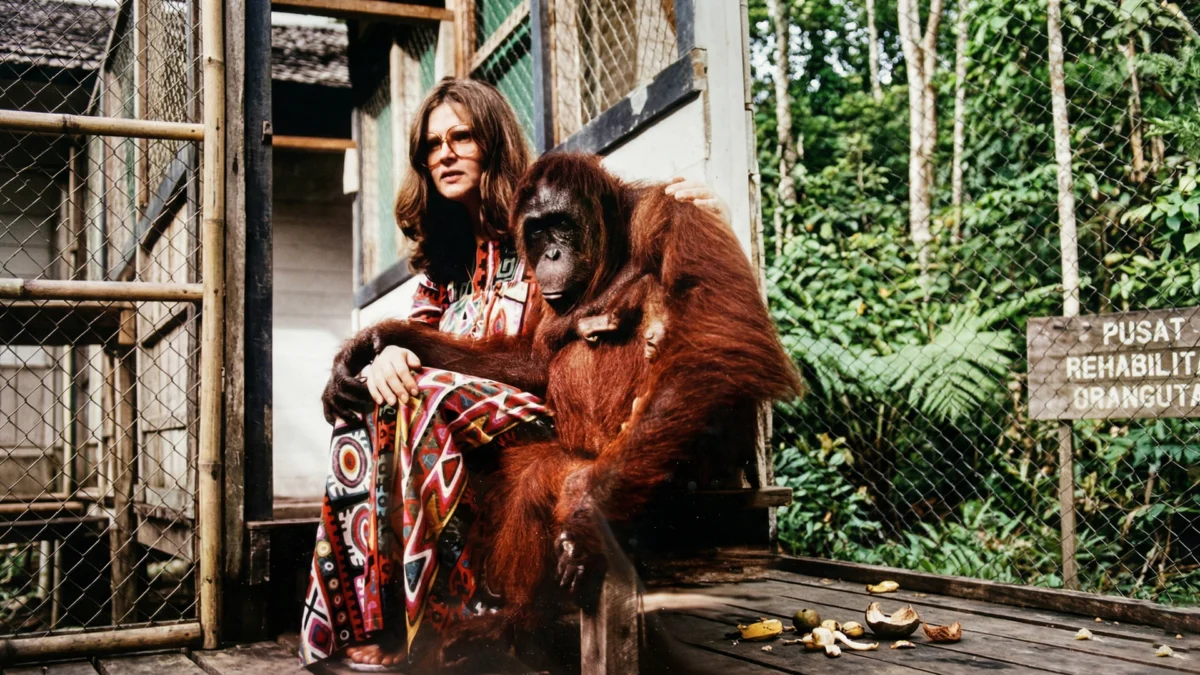
The passing of Dr. Birutė Mary Galdikas marks the end of an era for global primatology and Indonesian conservation, leaving behind a complex legacy that spanned over five decades of tireless advocacy for the Bornean orangutan (Pongo pygmaeus). Known as one of "Leakey’s Angels"—alongside Jane Goodall and the late Dian Fossey—Galdikas arrived in the jungles of Central Kalimantan in 1971, embarking on a mission that would transform Tanjung Puting from a little-known reserve into a world-renowned national park. While her expertise is recognized globally, her career was frequently marked by intense debate, political friction, and a relentless battle against the industrial forces of deforestation. As the conservation community prepares for her final rites in the soil of the island she called home, the weight of her contributions and the controversies she navigated offer a profound look at the evolution of wildlife preservation in Southeast Asia.
The Genesis of a Lifelong Mission
Birutė Galdikas’s journey began under the mentorship of legendary paleoanthropologist Louis Leakey, who believed that studying great apes in their natural habitats was the key to understanding human evolution. While Goodall went to Gombe to study chimpanzees and Fossey to the Virunga Mountains for gorillas, Galdikas chose the swampy, dense rainforests of Indonesian Borneo. When she arrived at Camp Leakey in 1971, little was known about the solitary orangutan. Over the next fifty years, she conducted the longest continuous study of any single wild mammal by a single investigator, documenting the intricate social structures, diet, and life cycles of these "gardeners of the forest."
![Totalitas Birute Galdikas untuk Orangutan Kalimantan [2]](https://indomgb.s3.amazonaws.com/wp-content/uploads/2026/04/01063901/Birute1-768x512.jpeg)
Under her leadership, the Orangutan Foundation International (OFI) became a cornerstone of conservation in Central Kalimantan. Her work facilitated the rehabilitation of hundreds of captive orangutans, many of whom were orphaned by the burgeoning palm oil industry or the illegal pet trade. However, her methodology—specifically the close physical contact between humans and orangutans during the rehabilitation process—became a point of contention within the scientific community.
Scientific Debates and Methodological Criticism
Galdikas’s approach to conservation was often as personal as it was professional. Critics in the conservationist circle frequently argued that her close proximity to the primates could hinder their "wildness," potentially making them too habituated to humans to survive independently in the deep forest. The use of feeding platforms, which became a staple of ecotourism in Tanjung Puting, was also scrutinized. While these platforms provided a safety net for rehabilitated apes and a spectacle for tourists, some experts feared they created an artificial dependency and increased the risk of disease transmission between species.
More systemic criticisms came from figures like Erik Meijaard, a prominent conservation scientist. Meijaard and others argued that the heavy financial focus on high-cost individual rehabilitation projects did not address the root cause of the orangutan crisis: the massive, systemic destruction of habitat. Critics pointed out that while millions of dollars were spent on the care of individual apes, the broader trend of depopulation continued unabated as forests were cleared for timber and oil palm. Between 1999 and 2015, research suggests that Borneo lost approximately 100,000 orangutans, a figure that highlights the staggering scale of the challenge Galdikas faced.
![Totalitas Birute Galdikas untuk Orangutan Kalimantan [2]](https://indomgb.s3.amazonaws.com/wp-content/uploads/2026/04/01063901/Birute1.jpeg)
Political Turbulence and the 1992 Crisis
Galdikas’s vocal advocacy for the forest frequently put her at odds with the Indonesian government, particularly during the New Order era under President Suharto. Her insistence on protecting the boundaries of Tanjung Puting National Park led to a period of heightened tension in 1992, when the government threatened to revoke her research and activity permits.
Soeprapto, then the Head of the Tanjung Puting National Park Office, leveled serious accusations against her, claiming she acted more as a travel agent than a scientist. He accused her of profiting from the sale of orangutan blood samples to overseas entities and charging exorbitant fees to international media outlets. Galdikas vigorously denied these claims. She clarified that blood sampling was a regulatory requirement by the Indonesian government itself to ensure that orangutans were correctly identified as either Bornean or Sumatran before being released into the wild to prevent genetic mixing. She further explained that donations from foreign visitors were strictly channeled back into the costly operations of the rehabilitation center, which received limited state funding.
These accusations surfaced shortly after Galdikas had launched a fierce campaign against PT Hesubasa, a logging company that held a Timber Utilization Permit (HPH) near the park. She argued that the roar of chainsaws and heavy machinery in the southern reaches of Tanjung Puting was traumatizing the local orangutan population. Today, that former logging concession has been incorporated into the national park, though it remains a degraded landscape highly susceptible to peatland fires during the dry season.
![Totalitas Birute Galdikas untuk Orangutan Kalimantan [2]](https://indomgb.s3.amazonaws.com/wp-content/uploads/2026/04/01064316/Birute2.jpeg)
The Era of Lawlessness: 1999–2002
The most dangerous chapter of Galdikas’s career occurred following the fall of the Suharto regime in 1998. During the early years of the "Reformasi" era, central authority weakened, leading to a period of rampant illegal logging across Indonesia’s national parks. Tanjung Puting was besieged by thousands of loggers who operated with near impunity, often backed by local "timber barons."
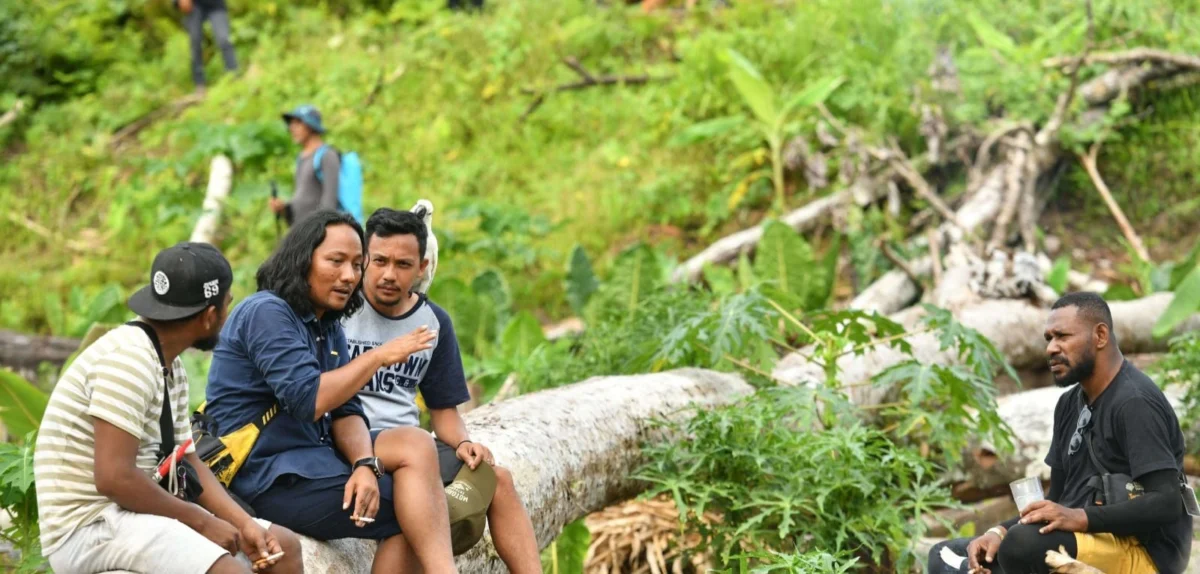
Togu Simorangkir, a prominent environmental activist who served as the manager of Camp Leakey during this volatile period, recalls the extreme risks faced by OFI staff. In one instance, a mob of over a hundred illegal loggers confronted the camp. Despite having only a handful of staff and unarmed police for protection, Galdikas and her team refused to abandon the site. The violence of that era was visceral; the National Park office in Kumai was burned to the ground by a mob, and Galdikas herself was present during demonstrations where her camera was smashed by protesters.
To mitigate the conflict, Galdikas adopted a pragmatic, if controversial, approach. She began hiring former illegal loggers to work for OFI, involving them in forest patrols and conservation efforts. By providing an alternative economic path, she sought to turn the forest’s destroyers into its protectors. Fajar Dewanto, an OFI official, noted that ecotourism was developed during this time not merely for profit, but as a survival strategy to provide the local community with a stake in the standing forest rather than the felled timber.
![Totalitas Birute Galdikas untuk Orangutan Kalimantan [2]](https://indomgb.s3.amazonaws.com/wp-content/uploads/2026/04/01064612/Birute3.jpeg)
A Visionary Plan for Wildlife Corridors
In her final years, Galdikas shifted her focus toward large-scale landscape connectivity. She recognized that isolated pockets of forest like Tanjung Puting—which covers approximately 415,040 hectares—would eventually become genetic "islands" if not connected to other habitats. Her grand vision was the creation of a massive wildlife corridor spanning the island of Kalimantan.
Specifically, she proposed a 273-kilometer corridor to link Tanjung Puting in the south to the Bukit Baka Bukit Raya National Park in the north. This ambitious plan aimed to provide a safe passage for orangutans and other endangered species, such as the clouded leopard and the Bornean sun bear, across a landscape increasingly fragmented by industrial concessions.
Speaking at a forum for National Science Week at the University of Newcastle in August 2024, Galdikas emphasized that she had already presented concrete plans to the Indonesian government. For her, this was not just a scientific endeavor but a spiritual one. Having lived the majority of her life in the jungle, she often told her staff that while others found their faith in mosques or churches, she found her "divine" in the "Mother Nature" of the Kalimantan rainforest.
![Totalitas Birute Galdikas untuk Orangutan Kalimantan [2]](https://indomgb.s3.amazonaws.com/wp-content/uploads/2026/04/01064755/Orangutan-kalimantan4.jpeg)
Impact Analysis and Broader Implications
The death of Birutė Galdikas leaves a significant void in the leadership of Southeast Asian conservation. Her life’s work serves as a case study in the complexities of "frontier conservation," where science must constantly negotiate with politics, economics, and social unrest.
- The Shift to Landscape Conservation: Galdikas’s later focus on corridors reflects a global shift in conservation strategy. Protecting individual parks is no longer seen as sufficient; instead, the focus has moved toward maintaining ecological connectivity across entire regions.
- Economic Alternatives: Her success in turning Tanjung Puting into a premier ecotourism destination demonstrated that wildlife can be more valuable alive than dead. However, it also raised questions about how to manage the ecological footprint of tourism in sensitive habitats.
- The Role of International NGOs: OFI’s history in Indonesia highlights the delicate balance international organizations must maintain. Galdikas’s ability to survive decades of political shifts while remaining a vocal critic of industry is a testament to her resilience.
As her body is laid to rest in the village of Pasir Panjang, beside her late husband Bohap bin Jalan—a local Dayak man who was her partner in both life and conservation—the future of the Bornean orangutan remains precarious. The 273-kilometer corridor remains a dream that now falls to a new generation of conservationists to realize. Birutė Galdikas did not just study orangutans; she fought for their right to exist in a world that was rapidly encroaching upon them. Her legacy will be measured not just in the scientific papers she published, but in every hectare of the Sekonyer River valley that remains green today.