Nila Kartika Wati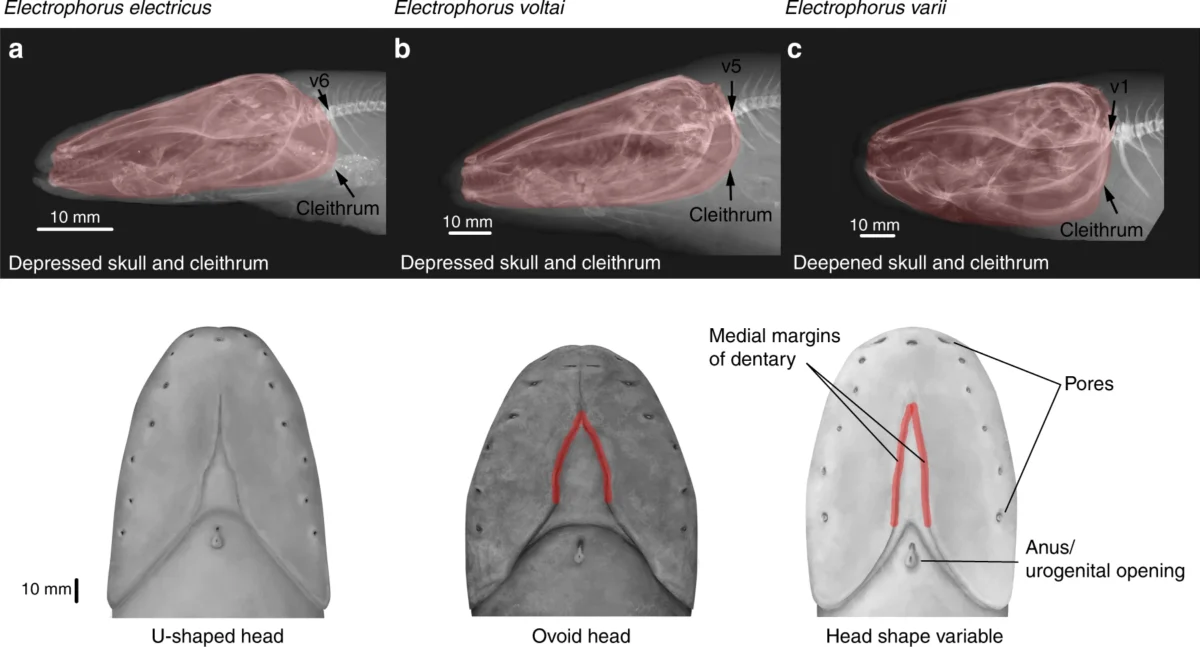
The depths of the Amazon and Orinoco river basins have long been the theater for some of the most dramatic predator-prey interactions on the planet, but few spectacles are as jarring as the confrontation between a caiman and an electric eel. In a video that has recently resurfaced and gone viral across global social media platforms, the raw, unyielding power of biological electricity is put on full display. The footage captures a massive caiman, a formidable apex predator of the South American waterways, attempting to prey upon what appears to be a defenseless, serpentine fish. Within milliseconds of the caiman’s jaws snapping shut, the hierarchy of the wild is upended. Instead of a successful kill, the predator is seized by violent, uncontrollable tremors. The caiman, an animal built for brute force and endurance, is rendered instantly rigid, paralyzed by a high-voltage discharge that overrides its entire nervous system. This encounter serves as a visceral reminder that in the complex ecosystems of the tropics, physical size and predatory instinct are often no match for the sophisticated chemical and electrical weaponry of specialized species.
The Physics of a Bioelectric Strike
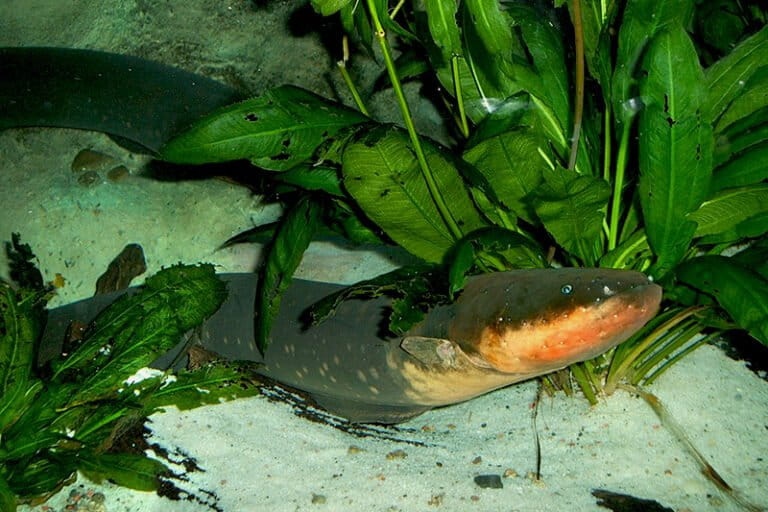
The phenomenon witnessed in the viral footage is not merely a freak occurrence but the result of millions of years of evolutionary refinement. The electric eel, which is scientifically classified not as a true eel but as a species of gymnotiform knifefish, possesses a biological battery system unlike any other creature on Earth. Its body contains three specialized abdominal organs: the Main organ, the Hunter’s organ, and the Sach’s organ. These organs are comprised of approximately 6,000 specialized cells called electrocytes.
Electrocytes function similarly to biological capacitors or batteries. When the eel identifies a threat or a potential meal, its brain sends a signal through the nervous system to these cells. This signal triggers the simultaneous opening of ion channels, allowing sodium to flow through the cell membranes and creating a momentary surge of electricity. While a single electrocyte produces only a tiny fraction of a volt, the thousands of cells arranged in series—much like batteries in a high-powered flashlight—combine their output to create a massive discharge.
In the case of the caiman attack, the eel’s defensive response was instantaneous. Research published in Nature Communications in 2019, led by scientist C. David de Santana and his team, highlighted that certain species, specifically Electrophorus voltai, can produce a discharge of up to 860 volts. This is significantly higher than the 110 or 220 volts found in standard household electrical outlets. When this current enters the body of a predator like a caiman, it acts as a biological Taser, causing every muscle in the attacker’s body to contract at once.
The 2019 Taxonomic Revolution
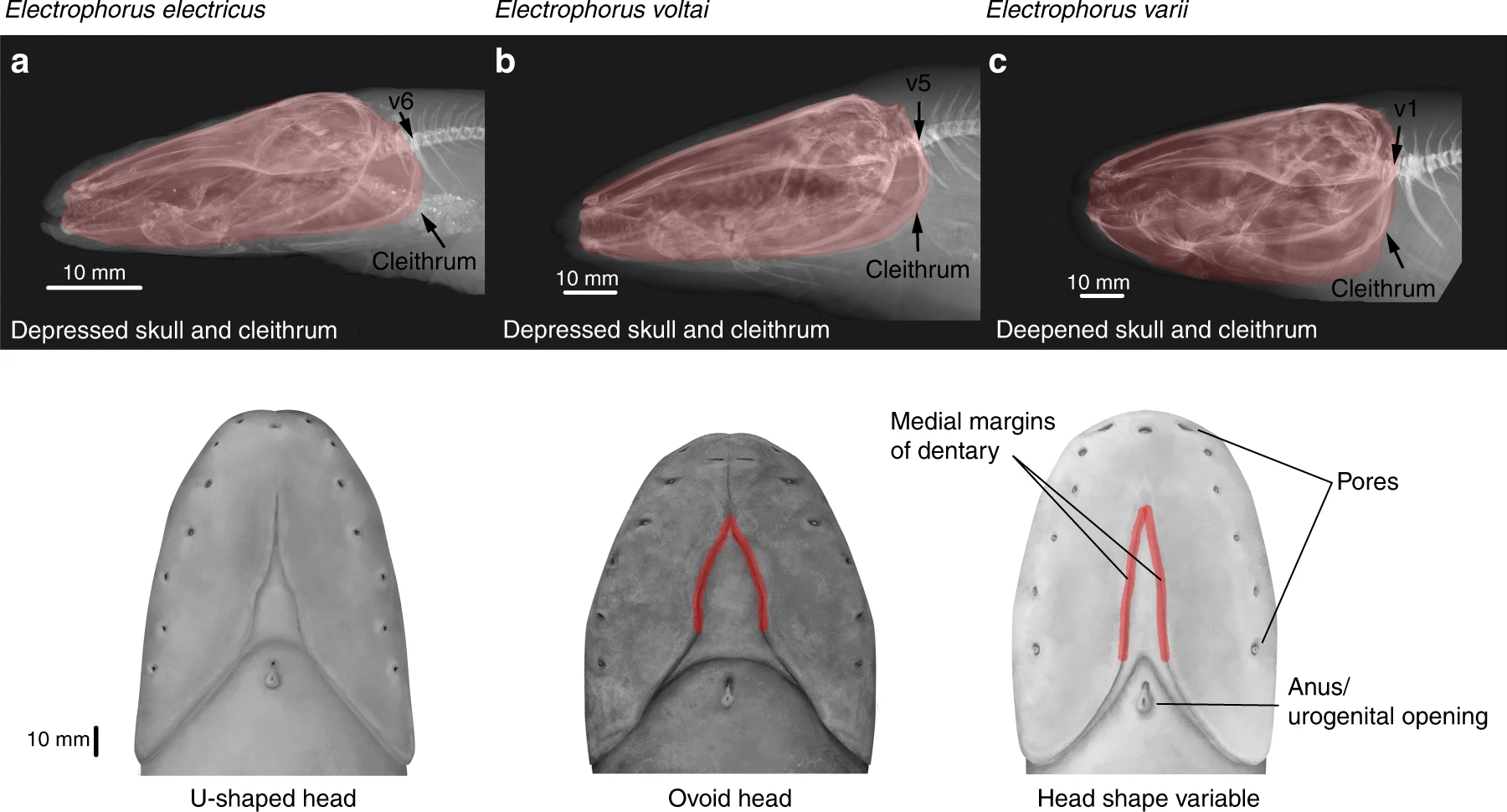
For over 250 years, scientists believed that there was only one species of electric eel, Electrophorus electricus, first described by Carl Linnaeus in 1766. However, the 2019 study referenced in the viral reports fundamentally changed our understanding of these creatures. By analyzing 107 specimens collected from various regions of the Amazon, researchers utilized DNA sequencing, morphology, and environmental data to identify three distinct species: Electrophorus electricus, Electrophorus varii, and the record-breaking Electrophorus voltai.
The discovery of E. voltai was particularly groundbreaking because it shattered previous records for bioelectric output. While E. electricus generally inhabits the clearer waters of the Guiana Shield, E. voltai is found in the well-oxygenated, highland waters of the Brazilian Shield. These waters have low conductivity, which researchers believe may have driven the evolution of higher voltage outputs to ensure the eel’s electrical signals and shocks could effectively travel through the environment. The 860-volt discharge recorded from E. voltai remains the strongest bioelectric force ever measured in a living organism.
The "Remote Control" Hunting Strategy
The work of Kenneth Catania, a professor of biological sciences at Vanderbilt University, has further illuminated the terrifying efficiency of the electric eel’s arsenal. Catania’s research revealed that the eel does not just use its electricity for defense; it uses it as a sophisticated sensory and hunting tool. Through a series of high-voltage pulses, the eel can effectively "remote control" its prey.
When an eel is hunting in the murky, low-visibility waters of the Amazon, it emits "doublets"—two high-voltage pulses in rapid succession. These pulses cause the muscles of any nearby hidden prey to twitch involuntarily. This twitch creates a ripple in the water that the eel’s sensitive mechanoreceptors detect, revealing the prey’s exact location. Once the target is located, the eel delivers a sustained volley of high-frequency, high-voltage pulses. This "Taser" effect causes total muscle exhaustion and paralysis in the prey, allowing the eel to consume it without a struggle.
In the encounter with the caiman, the eel likely perceived the predator’s approach through its low-voltage radar system. When the caiman struck, the eel transitioned to its maximum defensive output. Because the caiman’s mouth is full of sensitive nerve endings and is in direct contact with the eel’s skin, the electrical current flowed directly into the predator’s cranium and down its spinal column.
The Leap Attack: Maximizing Lethality
One of the most fascinating behaviors observed in electric eels, and one that likely played a role in the viral incident, is the "leaping attack." First described by the explorer Alexander von Humboldt in 1800, the behavior was dismissed as a myth for over two centuries until Kenneth Catania documented it in a laboratory setting.
When an electric eel is partially submerged or feels threatened by a large, semi-aquatic predator like a caiman or a human, it may leap out of the water and press its chin directly against the attacker. This is a calculated move based on the physics of electricity. Water is a conductive medium that dissipates some of the eel’s electrical energy. By leaping out of the water and making direct contact, the eel ensures that the current flows through the predator’s body rather than being "shunted" away by the surrounding water.
In the viral video, the caiman’s bite provides the perfect conduit for this energy. The direct contact ensures that the full 860-volt potential (if the species is E. voltai) is delivered to the predator. This leads to a phenomenon known as "tetany," where the muscles contract so forcefully and continuously that the animal cannot move or release its grip.
A Duel With No Winners: The Physiological Impact
While the video shows the caiman suffering, the reality of these encounters is often fatal for both parties. This is a rare instance in nature where the defense mechanism of the prey can be as lethal as the attack of the predator.
When a caiman bites an electric eel, the resulting electrical shock causes the caiman’s jaw muscles to lock in a "death grip." Because the shock is continuous as long as the eel feels threatened, the caiman cannot physically let go. This creates a feedback loop of destruction. The physical pressure from the caiman’s jaws—which can exceed 3,700 pounds per square inch in larger species—causes massive internal damage to the eel, often crushing its organs or severing its spine.
Simultaneously, the electrical current passing through the caiman’s body wreaks havoc on its internal systems. The primary cause of death for a caiman in this scenario is cardiac arrest. The high-voltage pulses interfere with the electrical signals that regulate the heart, leading to ventricular fibrillation or total cessation of the heartbeat. Furthermore, the paralysis of the respiratory muscles means the caiman can no longer breathe. If the encounter happens underwater, the paralyzed caiman will drown; if it happens on the bank, it will succumb to heart failure.
Broader Ecological and Scientific Implications
The viral interaction between the caiman and the electric eel is more than just a startling clip; it is a case study in the extreme adaptations required for survival in the Amazonian "evolutionary arms race." These encounters underscore the importance of biodiversity and the need for continued exploration of the Amazon. The discovery of three species where one was thought to exist suggests that many other secrets remain hidden in the world’s most complex river systems.
From a scientific perspective, the electric eel’s ability to generate such high voltages has inspired innovations in bionics and energy storage. Researchers are currently looking into "bio-inspired" batteries that mimic the stackable, series-parallel arrangement of electrocytes to create flexible, biocompatible power sources for medical implants and soft robotics.
For the local populations in South America, these encounters are a matter of daily safety. Locals have long known to avoid areas where electric eels are present, especially during the dry season when water levels drop and the concentration of these fish increases. The power of the eel is woven into indigenous folklore, where it is often depicted as a spirit of the water or a guardian of the deep.
Conclusion: The Deceptive Power of the Amazon
The viral footage of the caiman and the electric eel serves as a humbling reminder of nature’s ingenuity. It challenges the human perception of power, showing that a fish—an animal often viewed as lower on the food chain—can effectively neutralize one of the most successful predatory lineages in history. The caiman’s failure was not due to a lack of strength, but a lack of defense against a weapon it could not see, touch, or fight with muscle alone.
As the scientific community continues to study the Electrophorus genus, the focus remains on how these creatures manage to produce such immense energy without shocking themselves, and how their environment continues to shape their extraordinary biology. In the murky, shadowed waters of the Amazon, the electric eel remains a silent powerhouse, a living testament to the fact that in the wild, the most dangerous weapon is often the one that is completely invisible until the moment it strikes.