Nila Kartika Wati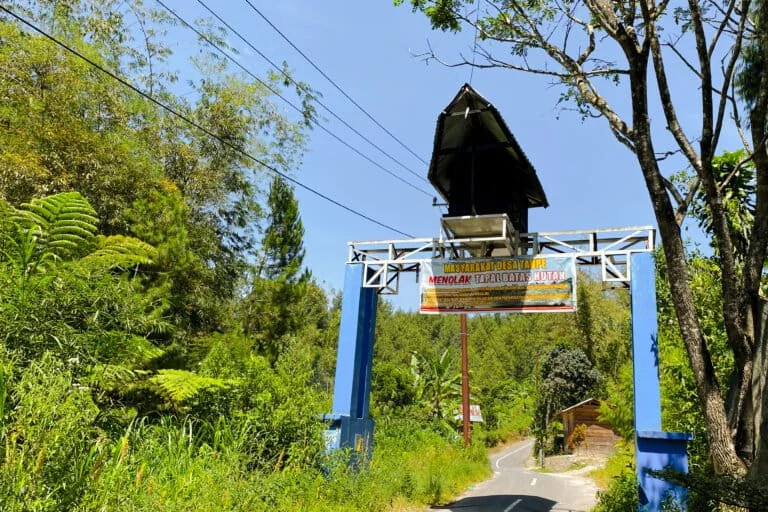
The legal framework governing land and forestry in Indonesia continues to face sharp criticism for failing to uphold agrarian justice, as contemporary policies frequently prioritize state authority over the ancestral rights of indigenous and local communities. While the government often frames its land management strategies under the banners of conservation, national strategic interests, or economic development, the reality on the ground reflects a deepening divide between the state’s territorial claims and the lived realities of those who have inhabited these lands for generations. From the highlands of Sulawesi to the dense forests of Sumatra and Papua, the persistence of colonial-era legal doctrines has created a systemic environment where indigenous sovereignty is sidelined, leaving millions of citizens in a state of legal and economic precariousness.
The Microcosm of Mamasa: Conservation as a Tool of Displacement
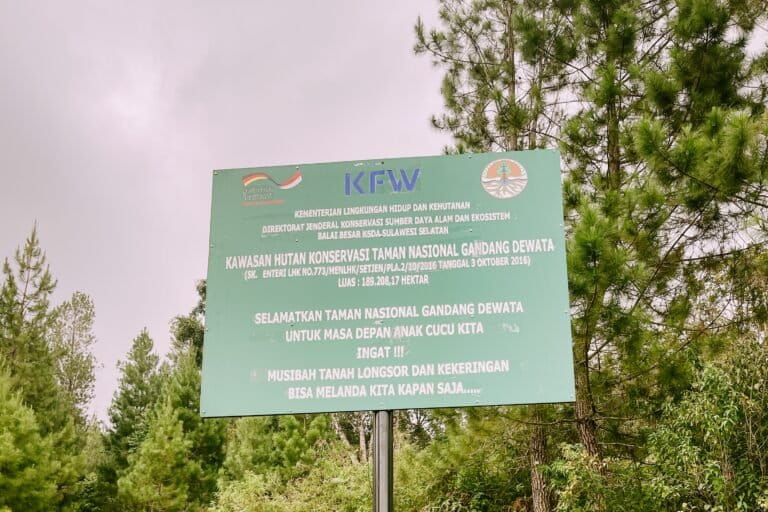
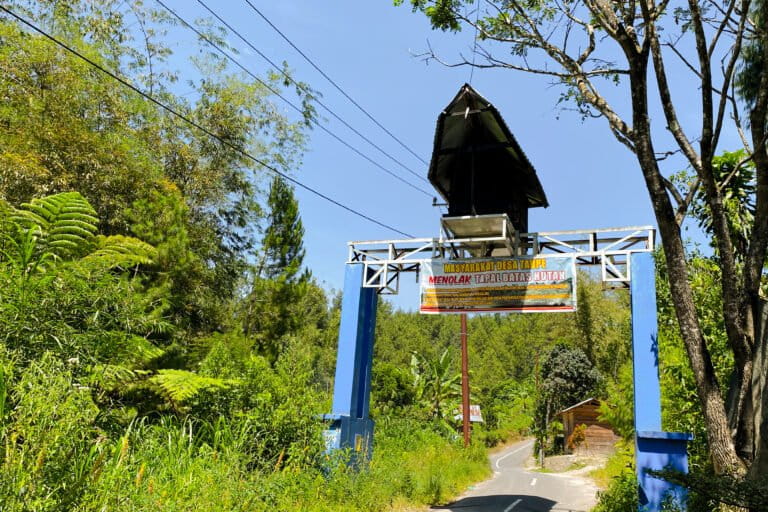
The human cost of these systemic issues is perhaps most visible in the Taupe village of Mamasa, West Sulawesi. Here, the establishment of the Gandang Dewata National Park (TNGD) has become a source of profound distress for local residents. For decades, families like that of Demma Sesse have cultivated coffee and other crops on lands they inherited from their ancestors. However, the designation of the area as a national park in 2016 effectively criminalized their traditional way of life.
Demma Sesse’s plight is a common one in the region. He notes that his gardens, which were once productive and provided a steady livelihood, are now inaccessible or restricted. The irony for many residents of Taupe is that they were unaware their lands had been incorporated into the national park until years after the fact. In many instances, the community only realized the extent of the state’s claim when local development projects, such as a planned rice field expansion, were abruptly halted because the site overlapped with the park’s boundary markers.
The fear of criminalization is a potent deterrent. Under Indonesian law, unauthorized agricultural activity within a conservation zone can lead to severe legal penalties, including imprisonment. Consequently, many villagers have abandoned their ancestral plots, leading to a decline in local food security and an increase in economic hardship. This phenomenon is not isolated to Mamasa; according to the Consortium for Agrarian Reform (KPA), there are approximately 2,768 villages across Indonesia currently trapped within state-claimed forest zones. This "enclosure" prevents local governments and residents from accessing basic infrastructure development, effectively institutionalizing poverty in rural areas.
The Colonial Legacy: From Domein Verklaring to the Modern State
To understand the current impasse, one must look back at the legal foundations laid during the Dutch colonial era. The root of the problem lies in the domein verklaring doctrine, established through the Agrarian Law of 1870. This principle dictated that all land for which no written proof of ownership could be provided was deemed the property of the Dutch Crown. This doctrine allowed the colonial administration to seize vast swathes of land for plantations and extractive industries, ignoring the oral traditions and customary laws (adat) of the indigenous population.
Abdon Nababan, a prominent member of the Asia Indigenous People Pact, argues that this "doctrine of discovery" remains the bedrock of Indonesia’s current forestry management. Even after independence in 1945, the transition to a more equitable land system was short-lived. While the 1960 Basic Agrarian Law (UUPA) sought to dismantle colonial structures and recognized the importance of customary rights, it contained significant ambiguities. It granted the state the "right to control" (hak menguasai negara) for the benefit of the people, a term that was later reinterpreted by the New Order regime under President Suharto.
In 1967, the Basic Forestry Law (UUPK) was enacted, which effectively froze the progressive elements of the UUPA. Under Suharto, "state control" was treated as "state ownership." This law allowed the Ministry of Forestry to designate any area—even those without trees—as "Permanent Forest." By the 1980s, the Ministry had claimed authority over approximately 140 million hectares, or roughly 70% of Indonesia’s total landmass. This massive territorial claim laid the groundwork for the widespread agrarian conflicts that persist today.
The Paradox of Conservation and Academic Colonialism
The expansion of state control was further solidified through the rise of environmental conservation movements in the 1980s and 1990s. While protecting biodiversity is a global necessity, the Indonesian model of conservation often mirrors colonial "fortress conservation" methods. This approach views human presence as inherently detrimental to nature, leading to the forced eviction or restriction of indigenous communities who have actually served as the primary guardians of these ecosystems for centuries.
Critics like Abdon Nababan point out that this ideology has been deeply embedded in Indonesia’s higher education system. Forestry curriculum in Indonesian universities was historically modeled after German and Dutch colonial methods, which prioritize timber production and state-led management over community-based forestry. This has created generations of bureaucrats and scientists who view indigenous land management through a lens of illegality or "backwardness."
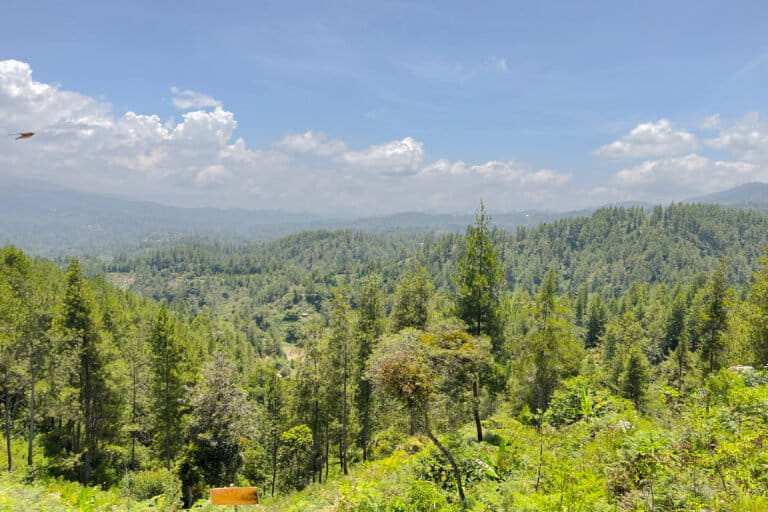
Currently, Indonesia manages 57 national parks. While the 1999 Forestry Law (UU 41/1999) introduced the concept of "Adat Forest," it still categorized these areas as a subset of "State Forest." This meant that indigenous communities could only reclaim their land if they navigated a labyrinthine bureaucratic process to prove their existence and their traditional boundaries—a process that is often prohibitively expensive and politically fraught.
Statistical Realities: Overlapping Claims and Legal Uncertainty
The scale of the conflict is reflected in the data provided by the Alliance of Indigenous Peoples of the Archipelago (AMAN). The organization has registered 33.6 million hectares of ancestral territory across 1,633 indigenous regions. Alarmingly, approximately 60% of these territories overlap with state-claimed forest zones.
The 2016 National Inquiry by the National Commission on Human Rights (Komnas HAM) highlighted that the lack of legal recognition for Indigenous Peoples (MHA) is a primary driver of human rights violations in the forestry sector. The report noted that the government often prioritizes large-scale industrial concessions for logging, mining, and plantations over the fundamental rights of its citizens. This prioritization is driven by a state-centric development model that equates economic growth with the extraction of natural resources.
By late 2025, the Ministry of Forestry (Kemenhut) reportedly controlled 122,391,457 hectares of land across 40 provinces. Despite various government initiatives intended to resolve land disputes, such as the Agrarian Reform Object Land (TORA) and Social Forestry programs, the results have been underwhelming. KPA notes that the TORA program often only releases land that is already occupied by houses or public facilities, failing to return the "living space"—the farms and forests—that communities need to survive.
The Impact of the Omnibus Law and Strategic Projects
The introduction of the Job Creation Law (UU Cipta Kerja), often referred to as the Omnibus Law, has added a new layer of complexity to agrarian conflicts. While the law was intended to streamline investment, environmental advocates and indigenous groups argue it has further strengthened the domein verklaring mindset. The law centralizes the management of forest resources in the hands of the central government and provides a mechanism for "whitewashing" illegal corporate operations within forest zones.
Under the Omnibus Law, companies operating without proper permits in forest areas can avoid criminal prosecution by paying administrative fines. This "amnesty" for corporations stands in stark contrast to the criminalization of small-scale farmers like those in Mamasa. Furthermore, the law allows for the reclassification of conservation forests to accommodate "National Strategic Projects" (PSN), such as large-scale mining operations or infrastructure development, often without the Free, Prior, and Informed Consent (FPIC) of local communities.
Tsabit Khairul Auni of Forest Watch Indonesia (FWI) warns that the current trend emphasizes "ease of doing business" over environmental and social safeguards. The flexibility granted to the central government to alter forest functions for investment purposes suggests that the state still views the nation’s forests primarily as a financial asset rather than a heritage to be shared with its inhabitants.
Future Implications: Food Estates and the New Administration
As Indonesia transitions into the administration of President Prabowo Subianto, there are concerns that the "extractive" paradigm will intensify. The government has already signaled plans to designate 20.6 million hectares of forest land for food and energy security projects, such as the "Food Estate" program. While framed as a solution to national self-sufficiency, these projects often involve the large-scale conversion of forests and peatlands into industrial monocultures, frequently on lands claimed by indigenous peoples.
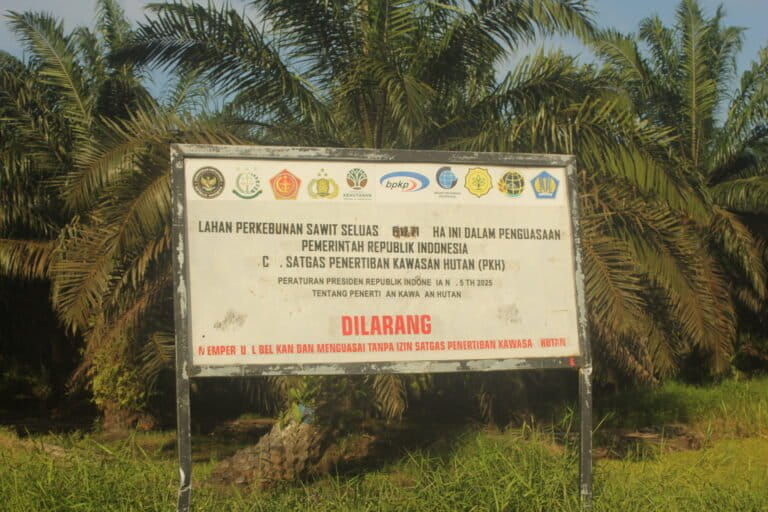
The issuance of Presidential Regulation (Perpres) No. 5 of 2025 regarding the "ordering" of forest areas has also sparked alarm. Civil society organizations, including WALHI and AMAN, fear that this regulation could lead to a "militarization" of forest management, where security forces are used to enforce state boundaries against local communities. There is a persistent concern that the regulation will be used to nationalize ancestral forests that have not yet received formal state recognition, effectively bypassing the landmark Constitutional Court Ruling No. 35/2012 (MK 35).
The MK 35 ruling was a historic victory for indigenous groups, as it declared that "Adat Forest is not State Forest." However, the implementation of this ruling has been painstakingly slow. Without a comprehensive Law on Indigenous Peoples to provide a clear legal framework for recognition, the state continues to operate under the assumption that all land is its own until proven otherwise.
The ongoing struggle for agrarian justice in Indonesia is more than a legal dispute; it is a battle over the soul of the nation’s development. As long as the "ghosts of colonialism" continue to haunt the country’s forestry and land laws, communities like those in Taupe will remain on the fringes of their own land. The path forward requires a fundamental shift in perspective: from viewing land as a commodity to be controlled by the state, to recognizing it as a source of identity, livelihood, and ecological stability for the people who have called it home since time immemorial. Failure to address these systemic inequities will only ensure that the cycle of conflict, poverty, and environmental degradation continues for generations to come.