Azin Asro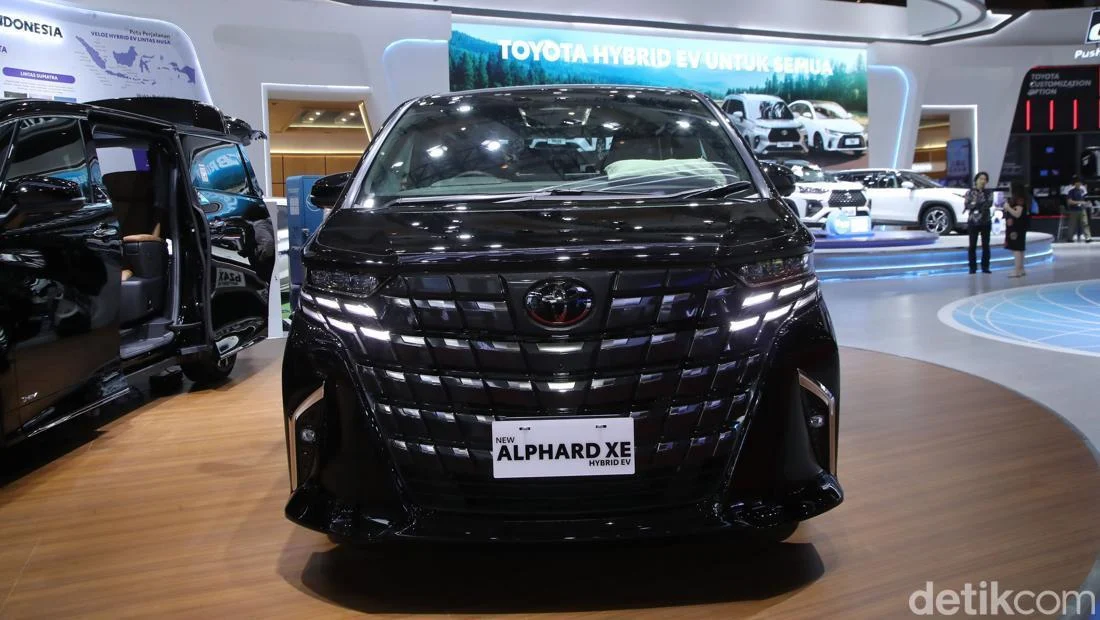
The landscape of the Indonesian luxury automotive sector has undergone a significant shift with the introduction of more accessible entry points for the nation’s most iconic status symbol, the Toyota Alphard. For years, the Alphard has served as the definitive benchmark for executive transportation, with price tags traditionally hovering well above the Rp 1.6 billion mark. However, PT Toyota-Astra Motor (TAM) has strategically adjusted its lineup to include the XE variant, effectively lowering the barrier to entry for the fourth-generation (AH40) luxury MPV to approximately Rp 1.2 billion. This strategic move aims to capture a broader segment of the premium market, appealing to corporate fleets and private owners who prioritize the Alphard’s prestigious silhouette and core mechanical reliability over high-end interior technological redundancies.
The Strategic Emergence of the Affordable Alphard
The Toyota Alphard has long dominated the Premium MPV segment in Southeast Asia, particularly in Indonesia, where it commands a near-monopoly in the executive transport niche. Historically, the "budget" option for those seeking the Alphard experience was often found in the secondary market or through its sibling, the Toyota Vellfire. With the global launch of the all-new AH40 generation at the 2023 Gaikindo Indonesia International Auto Show (GIIAS), Toyota initially focused on high-specification models. The recent introduction of the XE variant represents a calculated response to market demand for a "functional luxury" vehicle that retains the TNGA-K (Toyota New Global Architecture) platform’s benefits while shedding cost-intensive features.
Currently, the Toyota Alphard XE is offered in two distinct powertrains: a conventional internal combustion engine (ICE) and a Hybrid Electric Vehicle (HEV) system. The gasoline-powered Alphard 2.5 XE is positioned at a retail price of approximately Rp 1.288 billion, while the 2.5 XE Hybrid is priced slightly higher at Rp 1.388 billion. Compared to the flagship variants, which can exceed Rp 1.7 billion, these models represent a significant saving of nearly Rp 400 million, a figure that drastically alters the total cost of ownership (TCO) for many buyers.
Fiscal Obligations: Analyzing the Annual Tax Structure
For prospective owners of luxury vehicles in Indonesia, the initial purchase price is only one part of the financial equation. The annual Motor Vehicle Tax (Pajak Kendaraan Bermotor or PKB) remains a substantial recurring expense. Based on data from the Jakarta Samsat (One-stop Integrated Funding System), the tax calculations for the Alphard XE are derived from the NJKB (Nilai Jual Kendaraan Bermotor), which serves as the official government-determined sale value before various regional taxes and margins are applied.
For the year 2026 registration cycle—assuming the vehicle is registered as a first-owned private car in the Jakarta province—the tax breakdown is as follows:
1. The Gasoline-Powered Alphard 2.5 XE
The NJKB for the gasoline variant is recorded at Rp 1.02 billion. To calculate the annual PKB, the government applies a 2% rate on the NJKB multiplied by a weight coefficient (bobot), which for an MPV of this size is typically 1.05.
- Estimated PKB: Rp 1.02 billion x 1.05 x 2% = Rp 21,420,000.
- SWDKLLJ (Mandatory Road Accident Fund): Rp 143,000.
- Total Annual Obligation: Approximately Rp 21,563,000.
2. The Alphard 2.5 XE Hybrid
The hybrid version carries a slightly higher NJKB of Rp 1.077 billion, reflecting the added value of the electric motor and battery components.
- Estimated PKB: Rp 1.077 billion x 1.05 x 2% = Rp 22,617,000.
- SWDKLLJ: Rp 143,000.
- Total Annual Obligation: Approximately Rp 22,760,000.
It is critical to note that these figures apply specifically to first-car ownership. Under Indonesia’s progressive tax system, a second car would incur a 2.5% rate, a third car 3%, and so on, reaching up to 10% for the seventeenth vehicle. Consequently, for a "collection" or corporate fleet, the annual tax for even this "affordable" Alphard could easily climb toward Rp 40 million or higher per unit.
Feature Rationalization: What Has Been Omitted?
To achieve the lower price point, Toyota has engaged in a process of "feature rationalization." This involves removing high-cost, low-utilization amenities while preserving the structural and safety integrity of the vehicle. For many buyers, particularly those using the vehicle for chauffeur-driven executive commutes, these omissions may be viewed as acceptable trade-offs.
The most notable exclusions in the XE variant include:
- Head-Up Display (HUD): The driver-centric projection system has been removed, requiring the driver to rely on the digital instrument cluster.
- Rear Seat Entertainment (RSE): The ceiling-mounted monitors for rear passengers are absent in the XE trim.
- Wheel Size: While higher trims often sport 19-inch alloys, the XE utilizes smaller wheels, which often results in a slightly more cushioned ride due to the higher tire sidewalls, though it reduces the aggressive aesthetic of the vehicle.
- Voice Command Power Backdoor: The ability to open the trunk via voice prompts is removed, though power operation usually remains available via buttons.
- Interior Refinements: Specific luxuries such as the side-window curtains, side steps (step illumination), and integrated smartphone DVR (Dashcam) systems have been omitted from the standard XE package.
Despite these omissions, the "essential" Alphard experience remains intact. The vehicle still features the signature power-sliding doors, the expansive interior cabin space, and the commanding road presence that the model is known for.
Uncompromised Safety: The Retention of TSS 3.0
One area where Toyota has refused to compromise is safety. Even in the XE variant, the vehicle is equipped with the Toyota Safety Sense (TSS) 3.0 suite. This is a critical selling point, as it ensures that the "affordable" version is just as safe as the flagship models. The safety package includes:
- Pre-Collision System (PCS): Sensors to detect potential impacts and apply autonomous braking.
- Full Speed Adaptive Cruise Control (ACC): Maintaining distance from the vehicle ahead even in stop-and-go traffic.
- Lane Tracing Assist (LTA): Helping the vehicle stay centered within its lane.
- Blind Spot Monitor (BSM) and Panoramic View Monitor (PVM): Essential for maneuvering a vehicle of this size in tight urban environments like Jakarta.
- Airbag System: Comprehensive coverage from the front dashboard to the side curtain airbags.
Technical Performance and Powertrains
Under the hood, the XE variants utilize the same robust engines found in the higher G and HEV trims. The gasoline version is powered by the reliable 2AR-FE, a 2.5-liter four-cylinder engine producing 182 PS at 6,000 rpm and 235 Nm of torque. This engine is mated to a Super CVT-i transmission, optimized for smoothness rather than rapid acceleration.
The XE Hybrid variant utilizes the more modern A25A-FXS engine. This 2.5-liter Atkinson cycle engine produces 190 PS and 236 Nm of torque. When combined with the electric motor, the hybrid system provides superior fuel efficiency and a significantly quieter cabin experience during low-speed electric-only (EV mode) operation. Both versions prioritize the "omotenashi" (Japanese hospitality) philosophy, ensuring that engine vibrations and road noise are kept to a minimum.
Market Implications and Competitive Landscape
The introduction of the Alphard XE at the Rp 1.2 billion level is a preemptive strike against emerging competitors in the premium MPV space. In recent years, Chinese manufacturers have begun introducing luxury electric MPVs, such as the Maxus Mifa 9 or the GAC Aion series, which offer high levels of luxury at competitive prices. By lowering the entry price of the Alphard, Toyota leverages its massive brand equity and superior resale value to maintain its dominant market share.
Furthermore, the XE variant is expected to revitalize the corporate fleet market. Many five-star hotels and multinational corporations in Indonesia maintain fleets of Alphards for VIP transport. The Rp 400 million price difference per unit allows these companies to modernize their fleets with the AH40 generation while adhering to stricter procurement budgets.
Conclusion: A Calculated Evolution
The Toyota Alphard XE represents a calculated evolution of the luxury MPV segment in Indonesia. By stripping away the "extravagant" features while retaining the core mechanical excellence and safety standards of the AH40 platform, Toyota has created a vehicle that is both aspirational and pragmatically accessible. While an annual tax of Rp 21 million to Rp 22 million remains high by general standards, it is a significant reduction compared to the flagship variants, making the "dream" of Alphard ownership a reality for a wider demographic of Indonesian professionals and businesses. This move ensures that while the price has become more "affordable," the prestige associated with the Alphard nameplate remains undiminished.