Bambang Pamungkas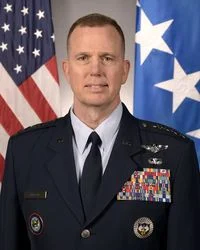
Behind the scenes of every significant American military endeavor, a sophisticated, globally distributed command structure orchestrates operations that transcend the traditional boundaries of individual service branches. The United States maintains a system known as U.S. Combatant Commands (COCOMs), a robust network of joint combat commands strategically organized to lead military operations based on specific geographical regions or functional responsibilities. This architecture ensures unified action and strategic coherence, distinguishing it from the traditional roles of the armed services.
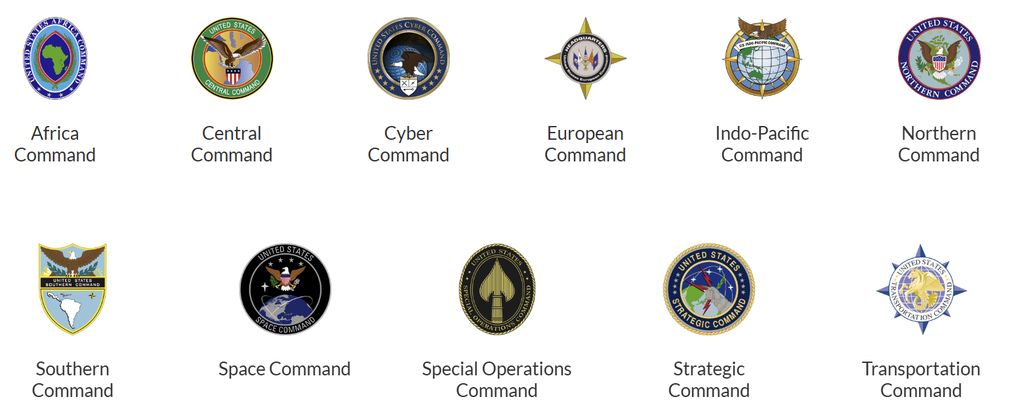
As of April 3, 2026, the U.S. Department of Defense officially recognizes 11 Combatant Commands, each endowed with a distinct mission, whether geographical or functional, to manage the application of military power in both peacetime and during conflict. While the individual military services—the Army, Navy, Air Force, Marine Corps, and Space Force—are responsible for recruiting, training, equipping, and maintaining the readiness of their personnel and materiel, the Combatant Commands are tasked with the direct execution of military operations on the ground, at sea, in the air, in space, and in cyberspace. This division of labor, enshrined by the Goldwater-Nichols Act of 1986, fosters unparalleled jointness and efficiency, allowing the U.S. military to respond swiftly and decisively to threats and crises across the globe.
Therefore, whether American forces are operating in the volatile Middle East, the strategically vital Indo-Pacific, the complex European theater, the burgeoning realm of cyberspace, or the critical domain of outer space, one of these 11 Combatant Commands is invariably at the helm. These commands represent the pinnacle of strategic military leadership, typically led by four-star general or flag officers drawn from any of the U.S. military services, reflecting the inter-service cooperation inherent in their design. The following provides a comprehensive overview of these pivotal commands and their current leadership.
The Global Reach: A Deep Dive into the 11 U.S. Combatant Commands
The strategic landscape of the 21st century demands a military structure capable of addressing multifaceted challenges, from state-sponsored aggression to asymmetric threats and humanitarian crises. The U.S. Combatant Commands are precisely engineered for this purpose, providing centralized control and decentralized execution for complex global operations.
1. U.S. Africa Command (AFRICOM) – General Dagvin R.M. Anderson
U.S. Africa Command, or AFRICOM, is the primary Combatant Command responsible for all U.S. military activities across the vast majority of the African continent. Established in 2007, AFRICOM’s mandate covers 53 African nations, excluding Egypt which falls under CENTCOM. Its mission encompasses enhancing regional stability, countering violent extremist organizations like Al-Shabaab and Boko Haram, strengthening defense capabilities of African partners, and providing security assistance. The command’s broad operational scope includes everything from security force assistance and training exercises to logistics support and crisis response. A notable operational highlight in its history includes involvement in overseeing the repositioning of U.S. forces from Somalia, demonstrating its adaptability to evolving security dynamics on the continent.
Currently, AFRICOM is led by General Dagvin R.M. Anderson of the U.S. Air Force. General Anderson’s distinguished career prior to this command included serving as the Director for Joint Force Development on the Joint Staff at the Pentagon, a role critical for shaping future military capabilities and doctrine. Known as a seasoned command pilot, he boasts an impressive record of over 3,400 flight hours across 16 different aircraft types, reflecting extensive operational experience that informs his leadership in a region with diverse air and ground challenges. Defense analysts often highlight AFRICOM’s crucial role in addressing complex transnational threats and supporting diplomatic efforts to promote peace and prosperity in Africa.
2. U.S. Central Command (CENTCOM) – Admiral Brad Cooper
Amidst persistent geopolitical tensions, particularly concerning Iran, U.S. Central Command, or CENTCOM, stands as one of the most critical COCOMs. This command orchestrates U.S. military operations across the Middle East and Central Asia, a region characterized by significant energy reserves, strategic maritime chokepoints, and long-standing conflicts. CENTCOM was notably at the forefront of the recent "Operation Epic Fury," a significant military action against Iran, underscoring its pivotal role in Washington’s strategic responses to escalating regional crises. When escalations erupt in the Middle East, CENTCOM almost invariably becomes the primary operational control center for U.S. forces. Its area of responsibility spans 21 nations, making it a linchpin for global counter-terrorism efforts and regional stability.
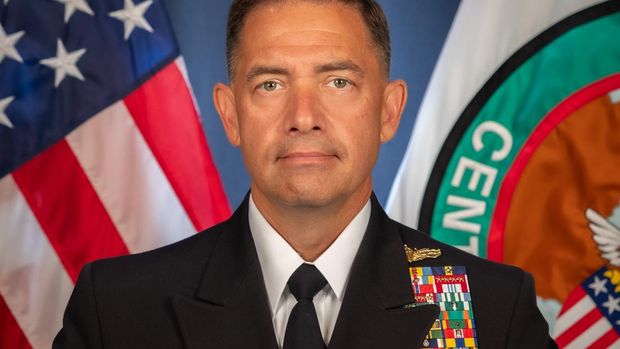
Admiral Brad Cooper, a highly experienced U.S. Navy officer with deep expertise in the Middle East, currently commands CENTCOM. Prior to his current assignment, Admiral Cooper commanded U.S. Naval Forces Central Command, the U.S. Fifth Fleet, and the Combined Maritime Forces in Bahrain, giving him unparalleled insight into maritime security challenges in the Persian Gulf and Red Sea. His operational background also includes service in Afghanistan. Academically, he is an alumnus of the U.S. Naval Academy, the National Intelligence University, Harvard, and Tufts, providing a robust intellectual foundation for his strategic command. The region’s inherent volatility, including major energy pathways and critical conflict zones, makes CENTCOM’s role central to global security for decades to come.
3. U.S. European Command (EUCOM) – General Alexus G. Grynkewich
When discussing U.S. military engagement with Europe, U.S. European Command, or EUCOM, is the undisputed leader. More than just directing U.S. military operations in Europe, EUCOM serves as an indispensable bridge between Washington, NATO, and its myriad allies. This dual role imbues EUCOM with a uniquely central position within the Western defense architecture, particularly in an era of renewed great power competition. Its responsibilities extend across 51 countries and territories, including all of Europe, parts of Asia, and the Arctic.
Headquartered in Stuttgart-Vaihingen, Germany, EUCOM’s proximity to the heart of European defense coordination further solidifies its critical importance amidst ongoing security tensions, especially in the wake of Russia’s full-scale invasion of Ukraine. General Alexus G. Grynkewich currently leads EUCOM and simultaneously holds the esteemed position of Supreme Allied Commander Europe (SACEUR) within NATO. General Grynkewich brings a formidable background in air combat, having served as an F-16 and F-22 pilot, pilot instructor, weapons officer, and operational test pilot. Before assuming command of EUCOM, he served as the Director for Operations (J-3) on the Joint Staff, a role that prepared him for coordinating complex, multi-domain operations crucial to European security. His leadership is pivotal in reinforcing deterrence and defense postures across the continent.
4. U.S. Northern Command (NORTHCOM) – General Gregory M. Guillot
In contrast to many Combatant Commands focused on overseas operations, U.S. Northern Command, or NORTHCOM, is primarily oriented towards domestic defense. Its core mission is the robust defense of North America, encompassing the protection of U.S. territory, homeland defense operations, and providing crucial support during national emergencies or major disasters. This makes NORTHCOM an absolutely vital component of Washington’s domestic security apparatus. The command’s area of responsibility includes the continental United States, Alaska, Canada, Mexico, Puerto Rico, and the U.S. Virgin Islands.
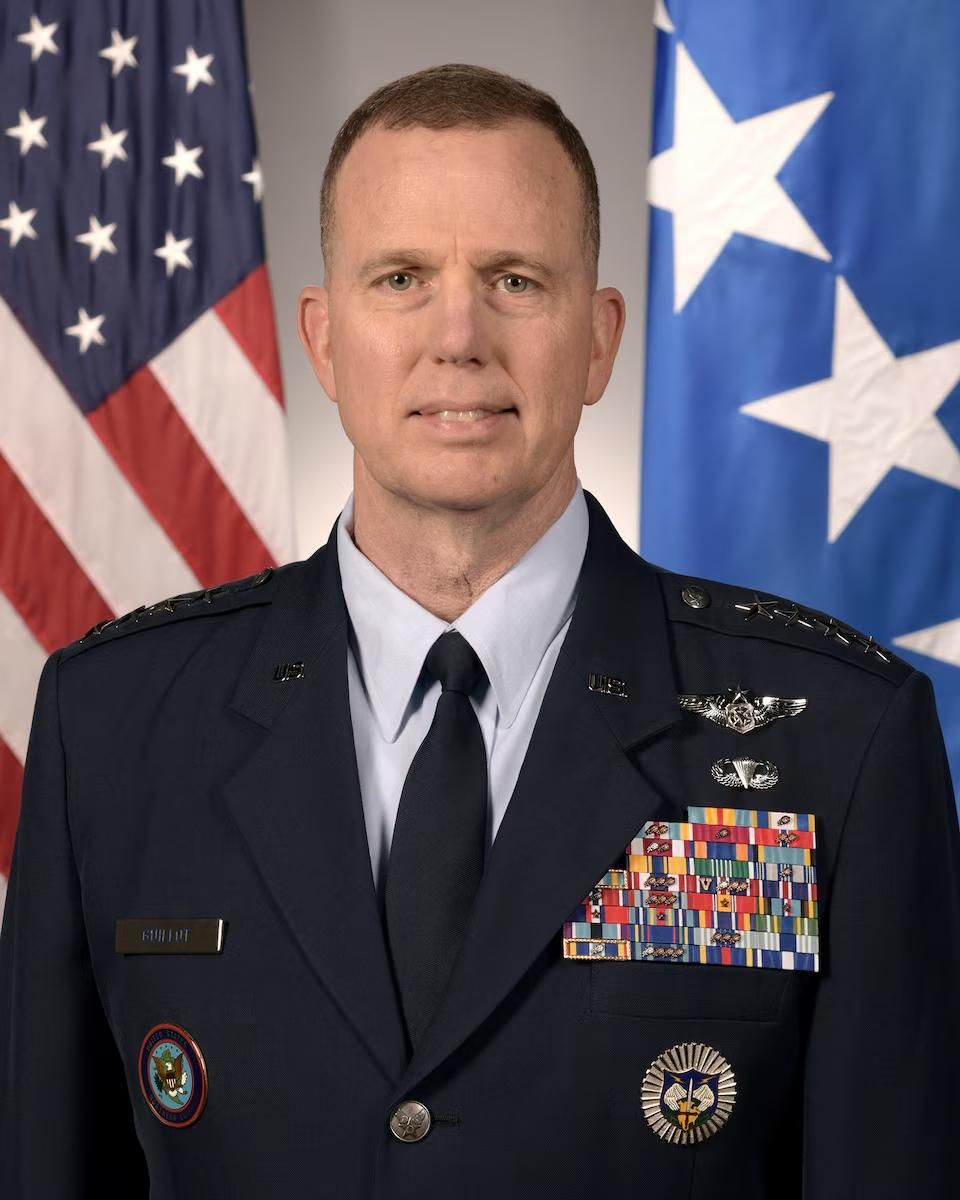
General Gregory M. Guillot, from the U.S. Air Force, leads NORTHCOM. Concurrently, he serves as the Commander of NORAD (North American Aerospace Defense Command), an integrated bi-national U.S. and Canadian command responsible for aerospace warning, aerospace control, and maritime warning for North America. General Guillot is a graduate of the U.S. Air Force Academy, holding educational backgrounds in aeronautical science and strategic studies. His career includes leading various critical air units, from squadrons and wings to the Ninth Air Force, providing him with extensive experience in air defense and rapid response capabilities essential for protecting the homeland against evolving threats, including ballistic missiles and advanced aerial platforms.
5. U.S. Indo-Pacific Command (INDOPACOM) – Admiral Samuel J. Paparo
The Indo-Pacific region represents the epicenter of global economic growth and the arena for the most intense geopolitical competition of the 21st century. Consequently, U.S. Indo-Pacific Command (INDOPACOM) is not only the oldest but also the largest and arguably most strategically significant Combatant Command within the U.S. military structure. Established on January 1, 1947, as a unified command, its area of responsibility is vast, covering approximately half of the Earth’s surface. It stretches from the waters off the west coast of the United States to the western border of India, and from Antarctica to the North Pole, encompassing East Asia, Southeast Asia, South Asia, and the Pacific and Indian Oceans.
This colossal region includes critical zones like the South China Sea, the Taiwan Strait, the Korean Peninsula, and numerous vital global sea lanes. It is home to 38 nations, over 50% of the world’s population, roughly 3,000 distinct languages, several of the world’s largest militaries, and five U.S. treaty allies (Japan, South Korea, Australia, the Philippines, and Thailand). Two of the world’s three largest economies are in the Asia-Pacific, alongside 10 of the 14 smallest. The region also hosts the world’s most populous country, its largest democracy, and the nation with the largest Muslim population (Indonesia). The sheer size and complexity of the Indo-Pacific necessitate a commander with extensive operational experience.
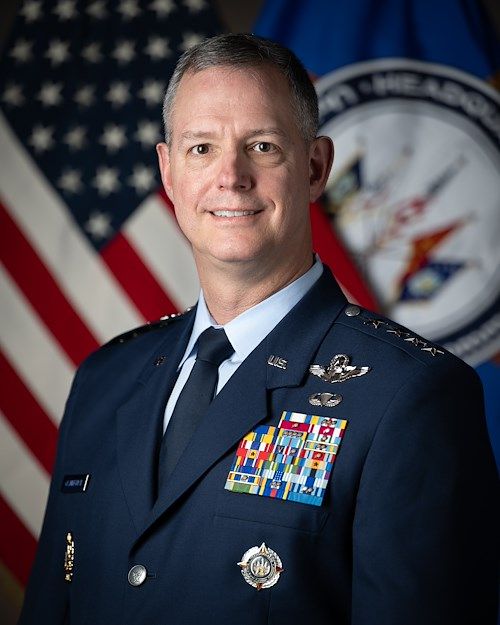
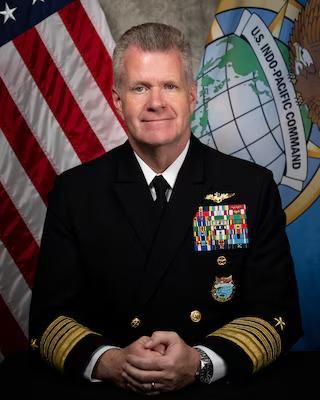
Admiral Samuel J. Paparo, a U.S. Navy pilot and a graduate of TOPGUN, currently holds this demanding position. With over 6,000 flight hours, his career includes commanding a carrier strike group, U.S. Naval Forces Central Command, the Fifth Fleet, and the U.S. Pacific Fleet. Admiral Paparo’s background is particularly relevant for navigating the complex maritime and air domains that define the Indo-Pacific, where strategic competition with rising powers, particularly China, and challenges from North Korea’s nuclear program demand constant vigilance and robust deterrence.
6. U.S. Southern Command (SOUTHCOM) – General Francis L. Donovan
U.S. Southern Command (SOUTHCOM) manages U.S. military operations and security cooperation activities across Latin America and the Caribbean. This region presents a unique set of challenges, including combating transnational organized crime, illicit trafficking (drugs, weapons, humans), providing humanitarian assistance and disaster relief, and strengthening the security capabilities of partner nations. SOUTHCOM’s area of responsibility covers 31 countries and 15 areas of special sovereignty.
General Francis L. Donovan of the U.S. Marine Corps commands SOUTHCOM. His extensive military career is forged from a background in infantry, reconnaissance, and special operations. General Donovan has commanded a Force Reconnaissance Platoon, Marine Expeditionary Unit, Marine Expeditionary Brigade, and a Marine Division. He also led naval task forces in both the Fifth and Sixth Fleets. Before his current assignment, he served as the Vice Commander of U.S. Special Operations Command, an experience that provides invaluable insight into the asymmetric threats prevalent in SOUTHCOM’s area of operations. His expertise is crucial in fostering regional stability and countering destabilizing influences through collaborative partnerships.
7. U.S. Space Command (SPACECOM) – General Stephen N. Whiting
Once primarily a domain for exploration, outer space has rapidly evolved into a critical operational domain for the U.S. military. U.S. Space Command (SPACECOM) was reactivated in 2019 to safeguard U.S. and allied interests in the space domain and to support joint operations worldwide through space-based systems. Its mission is to deter aggression, defend U.S. and allied space capabilities, and deliver combat power in, from, and to space.
Given the increasing reliance on satellite technology for communication, navigation, intelligence, and global monitoring, SPACECOM’s role continues to expand exponentially. Headquartered at Peterson Space Force Base in Colorado, it is at the forefront of developing capabilities to protect crucial space assets from adversarial threats, including anti-satellite weapons and cyberattacks on space infrastructure. The command is led by General Stephen N. Whiting, a distinguished graduate of the U.S. Air Force Academy with an aeronautical engineering background. His career as a space operations officer has positioned him perfectly to lead this cutting-edge command, ensuring U.S. dominance and freedom of action in the increasingly congested and contested space environment.
8. U.S. Special Operations Command (SOCOM) – Admiral Frank M. Bradley
For operations synonymous with secrecy, high stakes, counter-terrorism, and high-risk missions, U.S. Special Operations Command (SOCOM) is the definitive entity. This command serves as the overarching home for U.S. special operations forces (SOF) from all services, frequently acting as the primary actor in missions that often remain out of the public eye. SOCOM’s mandate includes direct action, special reconnaissance, foreign internal defense, counter-terrorism, unconventional warfare, psychological operations, and civil affairs, among others. It plays a crucial role in shaping the global security environment through precision operations.
Admiral Frank M. Bradley, a highly decorated Navy SEAL, currently commands SOCOM. His path in special operations began after completing Basic Underwater Demolition/SEAL (BUD/S) training in 1992. Admiral Bradley has commanded the Joint Special Operations Command (JSOC), Special Operations Command Central (SOCCENT), and the Naval Special Warfare Development Group (DEVGRU). He was among the initial personnel deployed to Afghanistan following the September 11, 2001, attacks, underscoring his extensive operational experience in the most challenging environments. Under his leadership, SOCOM continues to adapt its capabilities to counter evolving global threats, from sophisticated terrorist networks to malign state actors.
9. U.S. Strategic Command (STRATCOM) – Admiral Richard A. Correll
Not all military commands carry the same strategic weight; U.S. Strategic Command, or STRATCOM, is arguably one of the most sensitive due to its direct link to U.S. strategic deterrence. This command is responsible for the nation’s strategic nuclear forces, global strike capabilities, missile defense, and critical space and cyber operations that underpin strategic deterrence. Its existence touches upon the most crucial core of American military power – the ability to deter large-scale attacks and respond decisively if deterrence fails.
The leader of STRATCOM typically comes from a highly specialized background. Admiral Richard Correll, a U.S. Navy officer with extensive submarine experience, currently commands STRATCOM, having assumed the role in December 2025. His career includes commanding the USS Topeka, Submarine Squadron 11, and Submarine Group 7 in Japan, culminating in his previous role as Deputy Commander STRATCOM. His academic background is equally robust, ranging from chemical engineering to international strategic studies, providing a comprehensive understanding of the complex technical and geopolitical dimensions of strategic deterrence. STRATCOM’s continuous modernization efforts are vital for maintaining a credible deterrent in a rapidly changing security environment.
10. U.S. Transportation Command (TRANSCOM) – General Randall Reed
In the public imagination, warfare often conjures images of combat troops, warships, or airstrikes. However, without robust logistics and global mobility, none of these forces could effectively operate. This is the indispensable primary function of U.S. Transportation Command, or TRANSCOM: to ensure the rapid and efficient movement of forces, equipment, ammunition, and all essential military supplies across continents. TRANSCOM provides air, land, and sea transportation for the Department of Defense, globally. It is the logistical backbone that enables the U.S. military to project power and sustain operations anywhere in the world, at any time.
This critical command is led by General Randall Reed. His leadership ensures the seamless flow of resources, from deploying troops to conflict zones to delivering humanitarian aid during disaster relief operations. TRANSCOM’s sophisticated network of transportation assets and logistics experts is a testament to the U.S.’s unparalleled global reach and sustainment capabilities, making it an unsung hero of military operations.
11. U.S. Cyber Command (CYBERCOM) – General Joshua M. Rudd
While traditional warfare unfolds across land, sea, and air, U.S. Cyber Command (CYBERCOM) operates in the digital realm. This command is responsible for conducting military operations in cyberspace, protecting Department of Defense networks, and responding to sophisticated cyber threats emanating from state-sponsored actors and non-state groups alike. CYBERCOM’s mission is to defend forward, deter malicious activity, and, if necessary, defeat adversaries in cyberspace.
Headquartered at Fort Meade, Maryland, CYBERCOM works closely with the National Security Agency (NSA) to achieve its objectives. Based on official Pentagon documents dated March 24, 2026, Lieutenant General William Hartman served as acting commander since April 3, 2025, during a transitional period. However, by April 2026, General Joshua M. Rudd has assumed full command of CYBERCOM. General Rudd’s background, though not detailed in the original article, would necessarily involve extensive expertise in cyber warfare, information technology, and strategic communications, positioning him to lead the nation’s efforts in this critical and rapidly evolving domain of conflict. The increasing frequency and sophistication of cyberattacks underscore CYBERCOM’s growing importance in national security.
The Interplay of Forces: Services vs. Combatant Commands
The U.S. military’s dual-hatted structure—where service branches (Army, Navy, Air Force, Marine Corps, Space Force) organize, train, and equip forces, while Combatant Commands employ them—is a cornerstone of American military effectiveness. This distinction, codified by the Goldwater-Nichols Act, was a deliberate reform to overcome inter-service rivalries and ensure unified command and control for joint operations. It means that while the Army might provide ground troops, and the Air Force air support, it is a COCOM, like CENTCOM, that directs their combined efforts towards a single strategic objective. This system fosters a joint culture, where commanders prioritize mission success over service-specific interests, leading to more agile and effective responses to global challenges.
Strategic Implications of the COCOM Structure
The existence and continuous evolution of the U.S. Combatant Commands structure carry profound strategic implications for U.S. national security and global stability:
- Global Power Projection: The COCOMs enable the U.S. to maintain a persistent and capable military presence across all critical regions and functional domains, facilitating rapid response to crises and projecting influence.
- Adaptability to Evolving Threats: The functional commands (SOCOM, STRATCOM, SPACECOM, CYBERCOM, TRANSCOM) specifically address contemporary and future threats that transcend traditional geographical boundaries, demonstrating the U.S. military’s capacity to adapt to new forms of warfare.
- Role in International Partnerships and Alliances: Geographical COCOMs are vital for building and maintaining alliances, conducting multinational exercises, and enhancing interoperability with partner nations, thereby strengthening collective security.
- Deterrence and Assurance: The comprehensive global coverage and specialized capabilities of the COCOMs contribute significantly to global deterrence, reassuring allies and signaling capability to potential adversaries.
While the COCOM structure is highly effective, it also faces ongoing challenges, including resource allocation across diverse global priorities, adapting to rapid technological advancements, and navigating complex geopolitical shifts. Despite these complexities, the U.S. Combatant Commands remain the indispensable framework through which the United States projects its military power, protects its interests, and contributes to international security.
Conclusion
The U.S. Combatant Commands represent a sophisticated and dynamic operational architecture, critical to America’s global military posture. From the strategic competition in the Indo-Pacific to counter-terrorism efforts in Africa, and from the deterrence of nuclear adversaries to the defense of cyberspace, these 11 commands, led by their distinguished general and flag officers, are the nexus of U.S. military operations worldwide. Their ability to integrate forces from all services under a unified command ensures that the United States remains capable of addressing the full spectrum of global security challenges, making them the silent, yet powerful, backbone of American national security and a cornerstone of international stability in an increasingly complex world.