Eko Sulistyo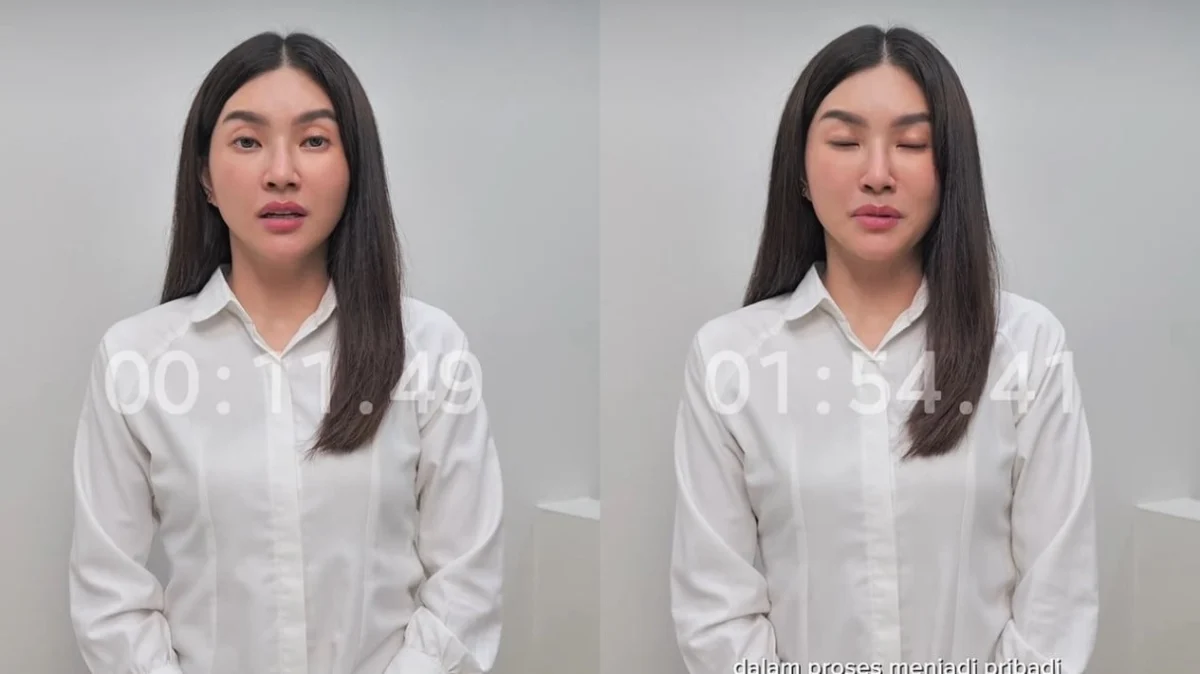
The ongoing legal dispute between celebrity couple Sarwendah and Ruben Onsu has reached a critical juncture, shifting from private domestic disagreements to a public confrontation involving digital evidence and potential criminal liabilities. The recent dissemination of a video call recording by Sarwendah on her official Instagram account has acted as a catalyst for renewed public scrutiny, effectively moving the conflict from the privacy of their household into the high-pressure environment of the Jakarta District Court. As the proceedings unfold, the core of the issue centers on custody rights, the authenticity of digital evidence, and the looming threat of legal repercussions that could carry a prison sentence of up to a decade under Indonesian information and electronic transaction laws.
A Chronology of Escalating Tensions
The relationship between Ruben Onsu and Sarwendah, once considered one of the most stable partnerships in the Indonesian entertainment industry, began to show visible cracks in early 2024. Following a series of rumors regarding their separation, the couple eventually confirmed that their marriage was heading toward dissolution. However, the legal focus quickly pivoted from the divorce itself to the complexities of child custody.
By mid-2026, the situation had deteriorated significantly. Legal teams representing both parties were engaged in intensive negotiations, yet public comments from legal representatives suggested that communication between the two had become increasingly adversarial. The tipping point arrived in October 2026, when Sarwendah, feeling that her reputation was being systematically undermined by circulating narratives, opted to publish a video call recording featuring Ruben Onsu. This act was not merely a social media update; it was a calculated maneuver intended to provide context to the ongoing custody battle, though it simultaneously opened a legal Pandora’s box regarding the privacy rights of the parties involved.
Legal Representation and the Rationale for Disclosure
Following the court session held on Wednesday, October 14, 2026, at the South Jakarta District Court, Chris Sam Siwu, lead counsel for Sarwendah, provided a detailed explanation regarding the decision to release the video content. According to Sam Siwu, the move was the result of a long period of "accumulation"—a build-up of frustration stemming from the perception that Sarwendah was being framed as the primary antagonist in the narrative of their separation.
"It is an accumulation of events," Sam Siwu stated during a press briefing. "Our client has been subjected to a specific narrative, and remaining silent was no longer a viable strategy for her to protect her interests or her position in the custody proceedings. What you see on her Instagram is not a spontaneous act of emotion; it is a deliberate, measured response to the situation she has been forced into. It is, in essence, a form of resistance against the ongoing framing of her character."

The defense team maintains that the release of the video was intended to clarify the truth, though they acknowledged that such actions carry significant risks. By choosing to go public, Sarwendah has shifted the debate from courtroom arguments to the court of public opinion, a high-stakes environment where legal nuance is often lost, and the potential for litigation regarding the distribution of private digital communications is significantly heightened.
The Legal Framework and the Threat of Prosecution
The primary concern now facing Sarwendah involves the potential violation of Law Number 1 of 2024, which serves as the second amendment to the Law on Information and Electronic Transactions (ITE Law). This legislation strictly regulates the dissemination of private electronic information without the consent of the involved parties.
If the court finds that the video call was intercepted or shared in a manner that violates the privacy rights of Ruben Onsu, Sarwendah could face severe criminal charges. The ITE Law carries penalties that can extend up to ten years of imprisonment for the illegal distribution of electronic information that damages the reputation or privacy of another individual. This reality places Sarwendah in a precarious position: while she seeks to defend her custody rights, she remains legally vulnerable to criminal prosecution that could separate her from her children more effectively than any civil custody order.
Legal observers have noted that even if the content of the video is proven to be authentic, the act of publishing it remains a distinct legal issue from its veracity. The court will likely bifurcate these two points: first, determining whether the video evidence is admissible in the custody battle, and second, determining whether its public disclosure constituted a criminal breach of privacy.
The Broader Impact on Custody Proceedings
The custody dispute, which is arguably the most sensitive aspect of the case, is complicated by the public nature of the parents’ conflict. Under Indonesian law, the primary consideration in any custody arrangement is the "best interests of the child." Courts are historically wary of parents who engage in public campaigns that may negatively impact the psychological well-being of the children involved.
By escalating the dispute to social media, both parties have inadvertently provided evidence of a volatile home environment. Legal experts suggest that the court may view these public outbursts as evidence of an inability to co-parent effectively, which could lead the judge to impose stricter custody arrangements, potentially limiting the rights of either parent if the court determines that their actions are harmful to the children’s developmental needs.

Analysis of the Digital Evidence Conflict
The authenticity of the video call has been a major point of contention. While reports suggest that forensic analysis may support the claim that the call was "real" (meaning not deepfaked or digitally manipulated), the ethical and legal implications of its release remain the focus of the prosecution.
The strategy employed by Sarwendah’s legal team is to frame the release as a necessary defense of reputation. However, this strategy ignores the judicial precedent that electronic evidence must be handled with extreme care. Courts prefer that such evidence be submitted directly to the presiding judge under seal rather than disseminated to the public. By bypassing the traditional discovery process, Sarwendah has effectively lost control over the narrative, as the public now has access to materials that the judge may deem prejudicial or irrelevant to the core custody dispute.
Official Responses and Future Outlook
As of mid-October 2026, the camp representing Ruben Onsu has remained relatively reserved in their public responses, preferring to let the court handle the proceedings. Sources close to the legal team suggest that they are focused on the technicalities of the privacy breach rather than the content of the video itself. This suggests a calculated attempt to use the ITE Law to gain leverage in the custody negotiations, effectively using the threat of criminal charges to force a settlement.
For the public, the case serves as a stark reminder of the dangers inherent in navigating high-profile domestic disputes in the digital age. What begins as a private disagreement between spouses can rapidly transform into a criminal matter when social media is used as a weapon of choice.
Looking forward, the upcoming court sessions will be critical. The judge’s decision on the admissibility of the video evidence, combined with any potential police report filed by the opposing party regarding the privacy violation, will dictate the trajectory of this case. Should the case proceed to criminal investigation, the custody battle will almost certainly be suspended, as the potential for a lengthy prison sentence would fundamentally alter the fitness of the parent in question to maintain custody.
The case of Ruben Onsu and Sarwendah is no longer just a story about a celebrity divorce; it is a definitive case study in the intersection of family law, digital privacy, and the influence of social media on the judiciary. As the legal teams prepare for the next round of testimony, the central question remains: can the interests of the children be protected when the parents have seemingly abandoned the possibility of a private resolution? The answer, as of now, lies in the hands of the Jakarta District Court, which must balance the rights of the individuals involved against the evolving standards of digital conduct in modern Indonesian society.