Azin Asro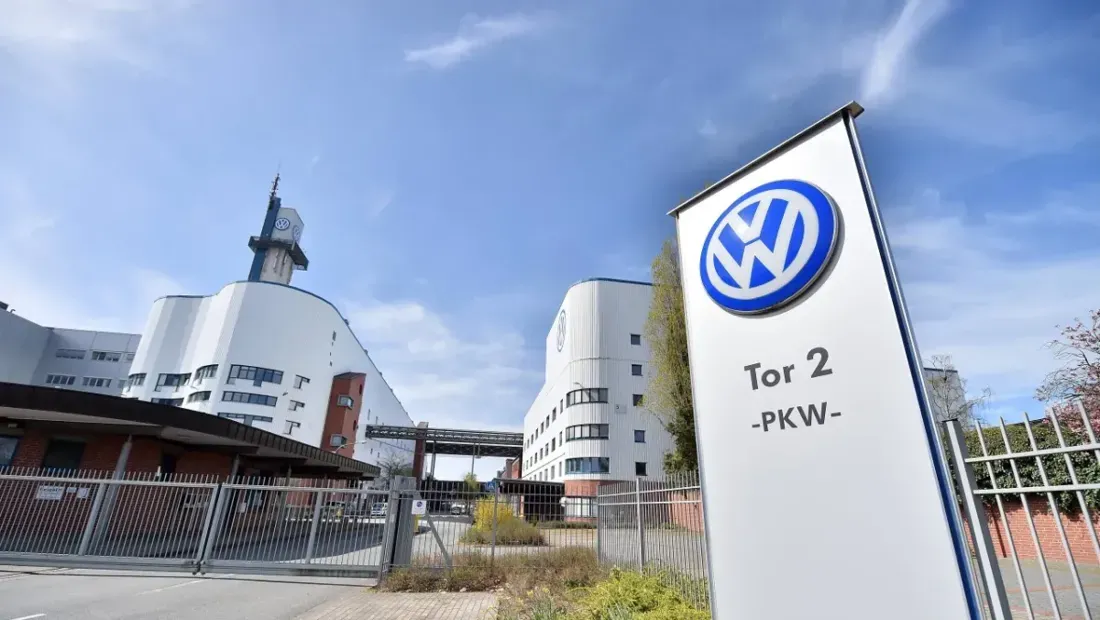
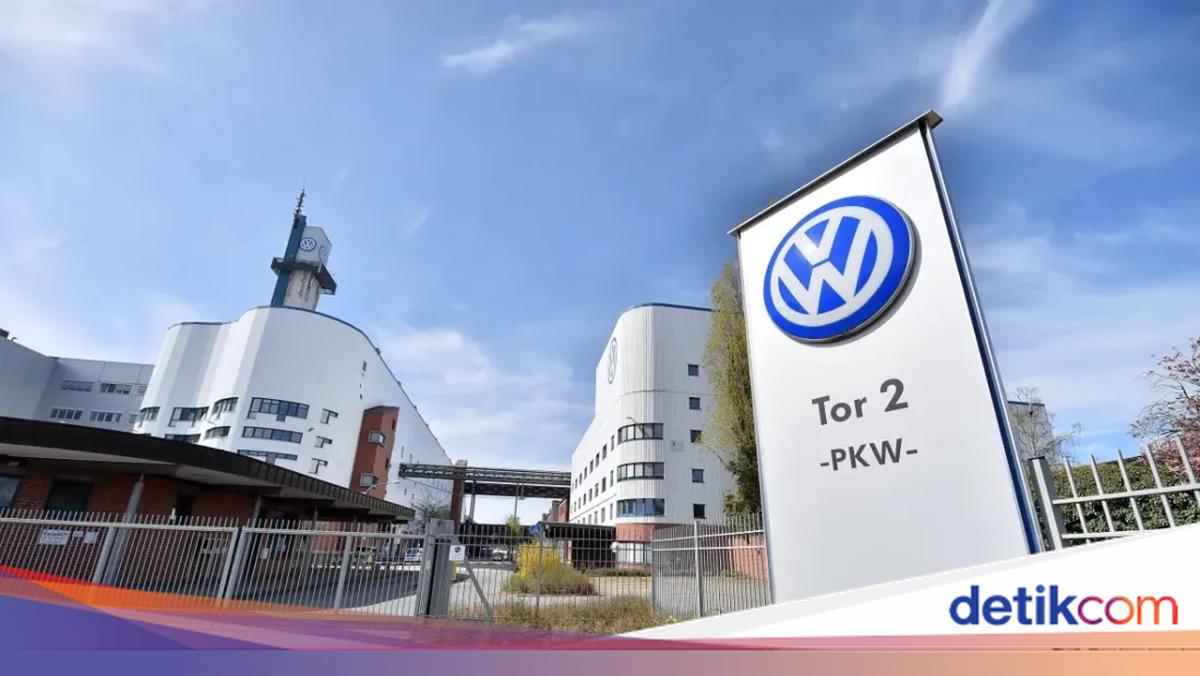
The German automotive giant Volkswagen AG is reportedly investigating a significant departure from its core manufacturing identity by exploring a strategic partnership with the Israeli defense firm Rafael Advanced Defense Systems. This potential collaboration, first brought to light by reports in the Financial Times, suggests a radical contingency plan for the automaker’s Osnabruck facility, which could see the site repurposed from a vehicle assembly line into a production hub for sophisticated military hardware, specifically components for the Iron Dome air defense system. While Volkswagen has officially moved to downplay the speculation, the mere existence of such discussions underscores the profound structural crisis currently gripping the European automotive industry and the corresponding boom in the global defense sector.
The Osnabruck plant, a facility with a storied history of niche vehicle production, is currently facing a precarious future. With the automotive sector reeling from high energy costs, intense competition from Chinese electric vehicle (EV) manufacturers, and a stuttering transition to electrification, Volkswagen has been forced to evaluate every aspect of its industrial footprint. The company has already signaled that vehicle production at the Osnabruck site is scheduled to conclude by 2027, leaving approximately 2,300 highly skilled workers in a state of professional limbo. The prospect of pivoting toward the defense industry represents a potential lifeline for these employees, even as it raises complex ethical and operational questions for a company that has spent decades distancing itself from military production.
The Financial and Industrial Pressure on Volkswagen
The backdrop to these discussions is a period of unprecedented turmoil for Volkswagen. In late 2023 and early 2024, the group announced a massive efficiency program aimed at saving 10 billion euros by 2026. This austerity drive is a response to several converging factors: the high cost of developing proprietary software for EVs, the loss of market share in China—once VW’s most profitable market—and the general cooling of consumer demand for expensive battery-electric vehicles in Europe.
In Germany alone, Volkswagen is contemplating the closure of several domestic plants for the first time in its history. The company has indicated that up to 50,000 jobs could be at risk by 2030 as it seeks to lean out its operations. The Osnabruck plant is particularly vulnerable because it specializes in low-volume, niche models such as the Volkswagen T-Roc Cabriolet and Porsche’s Cayman and Boxster models. As Porsche moves to centralize its own production and the market for convertibles shrinks, the economic rationale for keeping Osnabruck as an automotive site has evaporated.
The Rise of the European Defense Sector
While the automotive industry faces a downturn, the defense sector is experiencing a historic resurgence. Following the Russian invasion of Ukraine in February 2022, European nations have undergone a "Zeitenwende" or a turning point in defense policy. Germany, in particular, has established a 100-billion-euro special fund to modernize its armed forces and has committed to meeting the NATO target of spending 2% of GDP on defense.
This shift has created a massive demand for production capacity. Traditional defense contractors like Rheinmetall and Hensoldt have seen their order books swell to record levels, leading to a shortage of manufacturing space and skilled labor. Rafael Advanced Defense Systems, an Israeli state-owned firm known for developing the Iron Dome and the Trophy active protection system, is looking to expand its footprint in Europe to meet this demand and to provide "local content" for European defense contracts. The synergy between an underutilized automotive plant and an overcapacity defense firm is, from a purely industrial perspective, logical.
Official Responses and the "Open Review" Process
In response to the reports of a potential deal with Rafael, Volkswagen has maintained a cautious and somewhat contradictory stance. A spokesperson for the company stated that "the production of weapons by Volkswagen AG remains excluded for the future," and dismissed the reports as "speculation." However, the same spokesperson confirmed that the company is in an "open review process" for the period after 2027 and is actively speaking with various "market players" to find a viable future for the Osnabruck site.
The denial specifically targets the manufacturing of "weapons," but it leaves the door open for the production of non-lethal components, chassis, or logistical systems. In the world of modern defense, the line between "automotive" and "military" is often blurred. Volkswagen’s subsidiary, MAN, already operates a successful joint venture with Rheinmetall (RMMV) to produce military trucks. Expanding this model to Osnabruck, perhaps through a separate entity or a lease agreement with Rafael, would allow Volkswagen to preserve jobs without directly rebranding itself as an arms manufacturer.
Historical Context and Ethical Considerations
Any move back into the defense sphere is fraught with historical weight for Volkswagen. The company was founded under the Nazi regime, and during World War II, its factories were used to produce the Kübelwagen, the Schwimmwagen, and V1 flying bombs, often utilizing forced labor. In the post-war era, Volkswagen rebuilt its reputation as the manufacturer of the "People’s Car," a symbol of West Germany’s peaceful economic miracle.
While the company has been transparent about its history and has paid reparations, a return to defense production at a primary VW-branded site would be a significant symbolic shift. This is likely why the corporate communication team is moving so cautiously. Nevertheless, the pragmatic need to save 2,300 jobs in a region with few other industrial alternatives may eventually outweigh these historical sensitivities.
Technical Feasibility of the Transition
From an engineering standpoint, converting an automotive assembly plant to defense production is a complex but feasible task. Modern car factories are masters of precision engineering, logistics, and complex assembly—skills that are directly transferable to the production of defense systems.
- Precision Machining: The tools used to create automotive engines and transmissions can be recalibrated for the high-tolerance components required in missile defense systems.
- Assembly Lines: The "just-in-time" logistics of a car plant are ideal for the assembly of complex electronics and mechanical systems used in the Iron Dome.
- Workforce Skills: Automotive technicians are highly skilled in electronics, hydraulics, and structural welding, all of which are critical in the defense industry.
However, the transition would require significant capital investment to retool the facility and provide specialized training for the workforce. There are also stringent security and "cleared" status requirements for workers handling sensitive military technology, which could present a hurdle for the existing labor force.
Labor Union Influence and Political Implications
The role of IG Metall, Germany’s powerful metalworkers’ union, cannot be overstated. The union holds significant power on Volkswagen’s supervisory board and has been vocal about its opposition to plant closures. For the union, the priority is job security. If the choice is between the total closure of Osnabruck and a transition to defense production, the union is likely to favor the latter, provided that wages and working conditions are maintained.
Politically, the German government finds itself in a delicate position. On one hand, the ruling coalition is desperate to prevent mass layoffs in the automotive sector, which is the backbone of the German economy. On the other hand, it is committed to strengthening the nation’s defense capabilities. A deal that solves both problems—saving an industrial site while bolstering the European defense industrial base—would be viewed favorably in Berlin, even if it remains a sensitive topic for the general public.
Broader Impact and Industry Implications
The situation at Volkswagen Osnabruck may be a bellwether for the rest of the European automotive industry. As the transition to EVs requires fewer workers and different supply chains, many traditional "Old Auto" plants will become redundant. At the same time, the geopolitical reality of a more volatile Europe necessitates a permanent increase in defense production capacity.
We may be seeing the beginning of a "dual-use" industrial strategy in Europe, where large-scale manufacturing sites are designed to be flexible enough to switch between civilian and military production based on market demand and geopolitical necessity. This would represent a return to an industrial model not seen since the Cold War, where the distinction between a nation’s industrial strength and its military readiness was non-existent.
Conclusion and Future Outlook
As of early 2025, no final decision has been reached regarding the Osnabruck plant. Volkswagen continues to produce vehicles there, and the official line remains that no weapons production is planned. However, the clock is ticking toward the 2027 deadline. The "open review" process will likely conclude in the next 12 to 18 months, at which point the company will have to present a concrete plan to its employees and shareholders.
Whether the facility ends up producing Iron Dome components for Rafael, chassis for Rheinmetall, or is eventually sold to a third party, the Osnabruck saga highlights the end of an era for the European car industry. The "Golden Age" of undisputed automotive dominance is over, replaced by a period of painful restructuring and the search for new, often controversial, avenues for survival. For the 2,300 workers in Osnabruck, the hope is that their skills in precision manufacturing will remain a valuable asset, regardless of whether the final product is a luxury convertible or a shield against aerial threats.