Nila Kartika Wati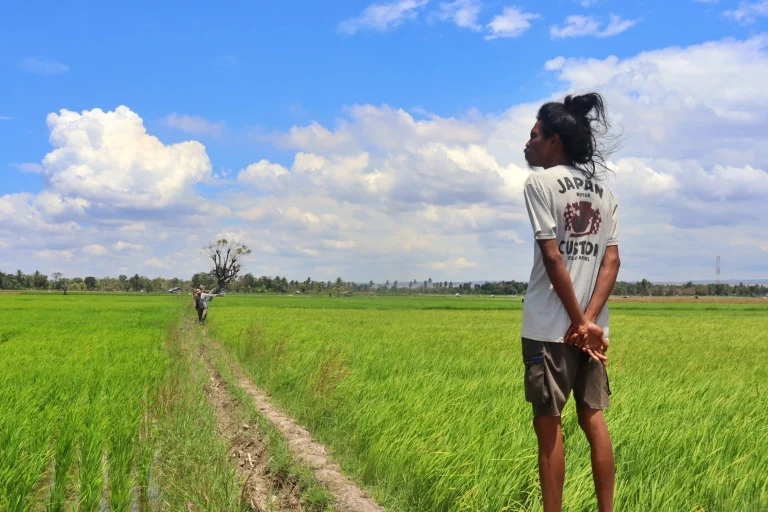
The rice fields of Wanga Village, the largest agricultural expanse in the Umalulu District of East Sumba, East Nusa Tenggara, are beginning to show a deceptive tint of green as the young stalks start to grain, yet a profound sense of anxiety haunts the local farming community. These farmers, members of the Patawang Wanga Indigenous Community, are currently facing a dire existential threat rooted in the diminishing availability of water, a crisis that has transformed their traditional way of life into a costly struggle for survival. Where once the land was nourished by natural flows and ancestral springs, the landscape is now defined by the persistent drone of diesel-powered water pumps, an expensive and precarious solution to a systemic environmental shift.
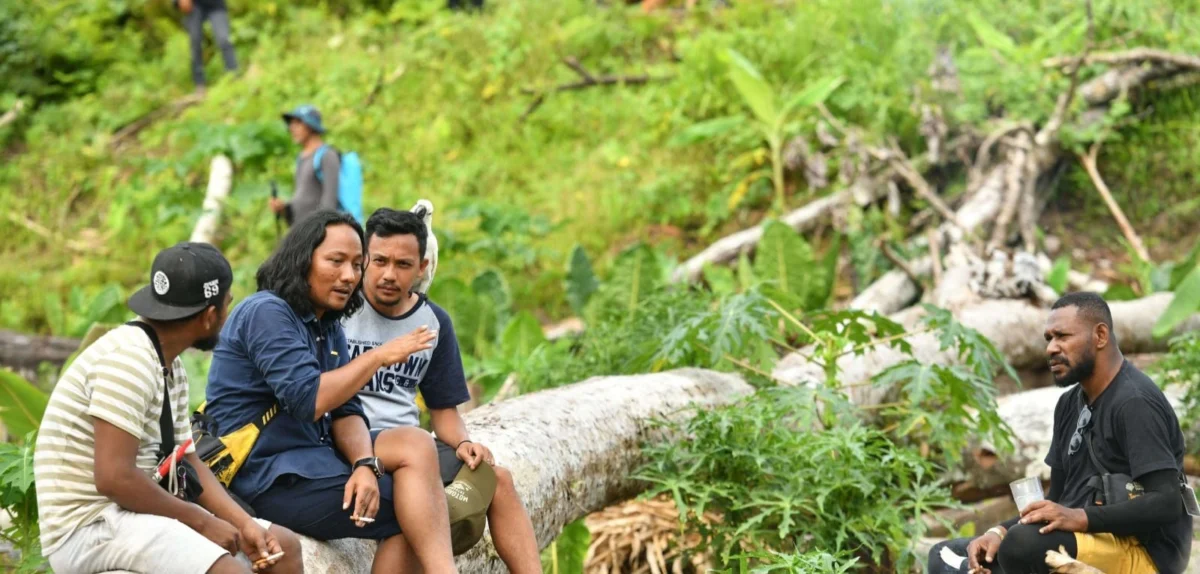
Mbada Halatamu, a 65-year-old local farmer, stands as a witness to this transformation. Speaking from his modest hut situated amidst the sprawling fields, the rhythmic thud of a pump serves as the soundtrack to his daily labor. He explains that the entire area now depends on water extracted from hand-dug wells using mechanical pumps. This shift is not merely a change in technique but a significant economic burden. Beside his hut, a dry irrigation canal cleaves through the fields—a silent monument to a defunct system. Since 2017, these canals, which once provided consistent hydration to the crops, have remained parched, filling only briefly during the peak of the rainy season.
The economic divide in the village has widened as a result of this water scarcity. According to Halatamu, farmers with sufficient capital are forced to invest in expensive pumping equipment to ensure they can harvest twice a year. Conversely, those without the means to purchase machinery or fuel are relegated to a single planting cycle, entirely dependent on the increasingly unpredictable monsoon rains. This reality stands in stark contrast to the historical productivity of the region, which has long been a cornerstone of East Sumba’s food security.
Historical Context and Statistical Decline in Productivity
East Sumba has historically been a reliable producer of rice within the East Nusa Tenggara (NTT) province. Data from the Agros Agricultural Journal, citing the Central Bureau of Statistics (BPS) for NTT 2020, highlights a period of significant growth followed by a concerning downturn. In 2015, the region produced approximately 778,808 tons of wetland rice from a harvested area of 188,092 hectares. This production peaked in 2018, reaching 1,067,121 tons from 247,759 hectares. However, by 2019, the numbers began to slip, falling to 993,791 tons as the harvested area contracted to 233,252 hectares.
In the Umalulu District specifically, the harvested area for wetland rice stands at 899 hectares, with a total production of 3,420 tons. This results in an average yield of approximately 3.8 tons per hectare. While these figures suggest a functional agricultural sector, they mask the internal struggles of villages like Wanga, where local farmers report that their individual yields have plummeted far below historical averages.
The crisis is particularly poignant given East Sumba’s traditional motto: "Matawai Amahu Pada Njara Hammu," which translates to "Golden Springs, Beautiful Horse Pastures." This cultural identity is built upon the abundance of water and the health of the land. For the Marapu indigenous believers, water is viewed as the "blood of the Humba land." Dedy Febrianto Holo of Walhi NTT emphasizes that in Marapu culture, the ritual of Pa Eri Wee or Kalarat Wai involves the consecration of springs. These rituals are not merely religious ceremonies but represent a deep-seated commitment to the sustainable management of water resources for the collective good. The current scarcity is viewed by many locals not just as a technical failure, but as a violation of this sacred balance.
The Shift Since 2016: Industrial Influence and Resource Competition
Local residents point to a specific turning point in their environmental history: the arrival and operation of PT Muria Sumba Manis (MSM) in 2016. Before the company began its large-scale sugarcane operations, farmers like 62-year-old Kundi Kei Marak recall a time of abundance. The Bula spring, the Mata spring, and the Wanga River once provided enough water for three planting cycles per year. During that era, the community lived in relative prosperity, free from the need to purchase expensive diesel fuel to irrigate their ancestral lands.
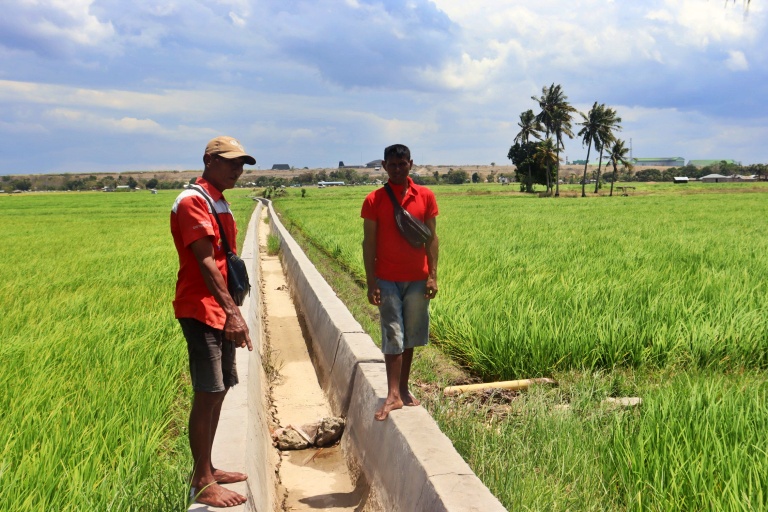
"In the past, one hectare could yield up to 8 tons of rice, but now it has dropped drastically to only two tons," Marak laments. The transition to pump-based irrigation has introduced a volatile cost structure. To irrigate four hectares of land during the dry season, a pump requires roughly five liters of solar (diesel) if the soil is still moist, but up to 10 liters if the ground has cracked from heat. With diesel prices reaching Rp50,000 for five liters at roadside retailers, the financial math of farming has become increasingly unsustainable.
David Luta Lapu, another local resident, elaborates on the compounding costs. A single hectare of rice requires two full days of pumping every three days to maintain adequate moisture. When added to the Rp4 million required for fertilizers and pesticides, plus the costs of labor and the rental of combine harvesters, the profit margins for smallholders have evaporated. If the harvest is successful, a farmer might break even or see a small profit; however, a minor interruption in water supply can lead to total crop failure and devastating debt.
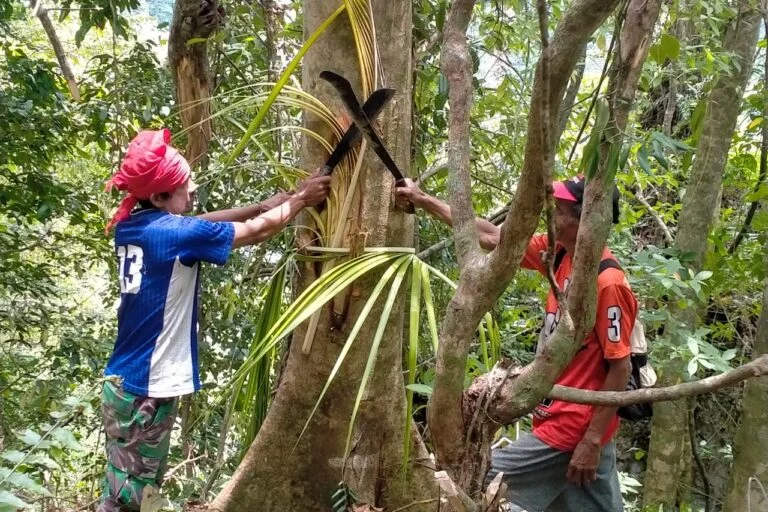
This economic pressure has forced many indigenous farmers to abandon their own fields to work as laborers for PT MSM. The wages are meager—roughly Rp130,000 per "net" of harvested sugarcane. On a good day, a worker can fill one net; on difficult days where the sugarcane is planted too densely, they might only manage half. Others have turned to harvesting lontar palm leaves, selling them for a mere Rp5,000 per shoot, a desperate pivot for a community that once prided itself on its agricultural independence.
Official Responses and the Corporate Defense
The local government has offered a different perspective on the crisis. During a press conference in September, East Sumba Regent Umbu Lili Pekuwali stated that the Wanga rice fields have historically faced water shortages during the dry season, even before the industrial sugarcane plantations were established. He argued that the natural limitations of the irrigation sources necessitated a rotational watering system long before PT MSM arrived.
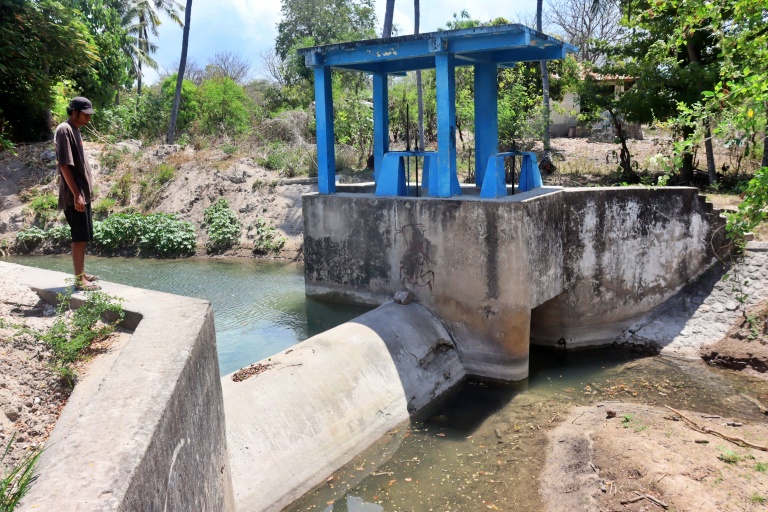
Regarding the company’s water usage, the Regent explained that PT MSM utilizes the Mbula spring, which would otherwise flow directly into the sea. "The company captures this water in reservoirs (embung) near the factory. It may appear that they are withholding water, but they are strategically collecting excess water during the rainy season to use when it is scarce," Pekuwali noted. He defended the company’s technical strategy, asserting that the giant reservoirs were built to store surplus water rather than diverting existing irrigation flows intended for the villagers.
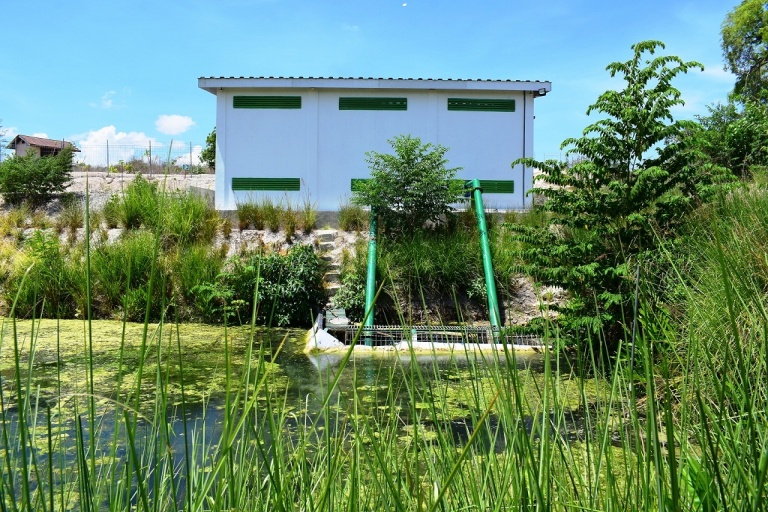
However, the community remains skeptical. PT MSM has constructed three massive reservoirs, and villagers frequently report seeing water being drawn from the Wanga River to irrigate the company’s vast sugarcane tracts. The sight of a company pump house at the Mbula spring, actively channeling water toward industrial fields while local canals remain dry, serves as a visual catalyst for the ongoing tension.
Aditia Insani, Corporate Communication for PT MSM, addressed these concerns by stating that the company conducted extensive technical and environmental impact studies before beginning operations. "We are aware that water is a crucial issue in Sumba. Our initiatives, including the construction of reservoirs and the use of rainwater harvesting, are designed to minimize the impact on the community’s water supply," Insani said. The company also claims to be involved in "enrichment" planting programs and environmental conservation efforts in collaboration with the government to balance the ecological footprint of their investment.
Analysis of Implications and the Path Forward
The situation in Wanga Village is a microcosm of the broader tension between industrial development and indigenous food sovereignty in Indonesia. While the presence of PT MSM represents a significant capital investment in a traditionally underdeveloped region, the externalized costs of this development are being borne by the local farming community. The transition from a self-sustaining, gravity-fed irrigation system to a high-cost, diesel-dependent model has undermined the resilience of the Patawang Wanga people.
The decline in rice yields from 8 tons to 2 tons per hectare is a staggering blow to local food security. When indigenous farmers are forced to become wage laborers on the very land they once managed independently, it signals a loss of cultural and economic autonomy. Furthermore, the reliance on diesel pumps introduces a carbon footprint to a traditional practice and ties the survival of local crops to the fluctuating global price of fossil fuels.
For East Sumba to live up to its motto of "Golden Springs," a more transparent and equitable water management strategy is required. This would involve independent hydrological audits to determine the true impact of the sugarcane plantations on the local water table and the restoration of the irrigation infrastructure that has sat dormant since 2017. Without intervention, the green fields of Wanga may soon become a memory, replaced by an industrial landscape that provides sugar for the nation but leaves its own guardians parched.