Paryono Ramadhan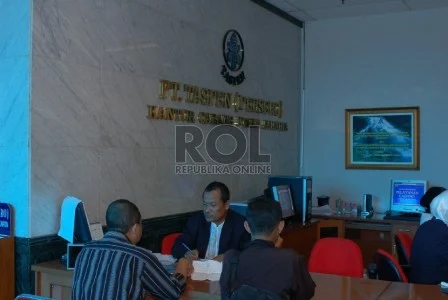
PT Taspen, the state-owned enterprise responsible for civil servant social insurance and pension funds in Indonesia, is set to commence the repayment of Tabungan Perumahan Pegawai Negeri Sipil (Taperum PNS) for eligible civil servants beginning June 1st. This significant initiative marks a crucial step in fulfilling the long-term housing savings commitments to the nation’s public servants as they transition into retirement. The repayment program is specifically designed for all civil servants reaching their retirement age on or after June 1st, with the notable exception of personnel within the Ministry of Defense, the Indonesian National Armed Forces (TNI), and the Indonesian National Police (Polri), who operate under distinct housing and pension schemes.
The decision to initiate these repayments stems from a foundational cooperation agreement established between PT Taspen and the Badan Pertimbangan Tabungan Perumahan Pegawai Negeri Sipil (Bapertarum-PNS), the advisory body for civil servant housing savings. This agreement outlines the framework and procedures for the orderly and efficient return of accumulated housing savings to retiring employees. According to Iwan Soeroto, Corporate Secretary of Taspen, in an official press release, the streamlined process aims to maximize convenience for the beneficiaries. The Taperum repayment will be disbursed concurrently, bundled together with the first pension payment and the Tabungan Hari Tua (THT) or old-age savings, directly at each respective Taspen branch office nationwide. This integrated approach, as emphasized by Soeroto and widely reported, is intended to simplify the administrative burden on pensioners, ensuring they receive all their due entitlements in a single, convenient transaction.
Understanding Taperum PNS: A Historical Overview
Taperum PNS, or the Civil Servant Housing Savings, was a mandatory savings program established by the Indonesian government to assist civil servants in acquiring or improving their housing. The program’s roots can be traced back to the early 1990s, formalized under Presidential Decree (Kepres) Number 46 of 1994. This decree mandated contributions from civil servants (excluding those in TNI, Polri, and Kemhan) as a means to accumulate funds specifically dedicated to housing assistance. The primary objective was to provide a safety net and financial support for civil servants to access affordable housing, a critical component of welfare for public employees in a rapidly developing nation like Indonesia.
The establishment of Taperum PNS reflected a broader government policy to enhance the welfare of its civil apparatus. At the time, access to affordable housing was a significant challenge for many public servants, particularly those in lower and middle-income brackets. The compulsory savings scheme aimed to pool resources that could then be leveraged for housing loans, down payment assistance, or other forms of housing support. Bapertarum-PNS was created as the managing entity, overseeing the collection of contributions, management of funds, and distribution of benefits, working in close collaboration with various stakeholders, including financial institutions and housing developers.
Contribution Structure and Evolution
Under Kepres Number 46 of 1994, the monthly contributions to Taperum PNS were structured based on the civil servant’s employment grade (golongan). Specifically:
- Golongan I civil servants contributed Rp 3,000 per month.
- Golongan II civil servants contributed Rp 5,000 per month.
- Golongan III civil servants contributed Rp 7,000 per month.
- Golongan IV civil servants contributed Rp 10,000 per month.
These fixed contribution amounts, while seemingly modest by contemporary standards, were significant at the time of their inception and remained unchanged for many years. However, as the Indonesian economy grew and inflation eroded the purchasing power of money, the fixed nominal contributions became increasingly less impactful relative to rising housing costs. This discrepancy between fixed contributions and escalating housing prices highlighted the need for a re-evaluation of the scheme’s effectiveness and sustainability.
Recognizing these challenges and in an effort to modernize the housing finance landscape for public servants, PT Taspen had been actively pursuing a proposal to revise the contribution structure. Instead of fixed nominal amounts, the proposal aimed to implement a contribution rate based on a percentage of the civil servant’s total salary, specifically targeting 2.5 percent. This shift to a percentage-based contribution, if implemented, would ensure that contributions scale with salary increases, providing a more robust and equitable funding mechanism for housing assistance. Such a change would also align Taperum PNS (or its successor) with more modern and sustainable social security and housing finance models adopted globally. While the article focuses on the repayment of past contributions, the mention of this proposed change indicates an ongoing effort to reform and improve civil servant housing benefits.
The Administrative Process and Operational Scale
The task of repaying Taperum PNS to retiring civil servants represents a substantial administrative undertaking for PT Taspen. With hundreds of thousands of civil servants reaching retirement age annually across the archipelago, the logistical coordination required is immense. Taspen operates a vast network of branch offices throughout Indonesia, each tasked with processing pension, THT, and now Taperum payments. The "one-package" system, while convenient for beneficiaries, necessitates meticulous internal coordination between different departments within Taspen to ensure all calculations are accurate and all funds are available for simultaneous disbursement.
The repayment process involves verifying the eligibility of each retiree, cross-referencing their service records, contribution history, and ensuring compliance with the cooperation agreement between Taspen and Bapertarum-PNS. The integration with existing pension and THT payment systems leverages Taspen’s established infrastructure, which has been honed over decades of managing social insurance for civil servants. This existing framework minimizes the need for entirely new payment channels, thus reducing potential delays and complications. The sheer volume of transactions underscores Taspen’s critical role in the welfare ecosystem of Indonesian civil servants.

Context of Reform: Transition to BP Tapera
The initiation of Taperum PNS repayments is not an isolated event but rather an integral part of a broader reform in Indonesia’s national housing finance system. The original Bapertarum-PNS, which managed Taperum, was eventually dissolved. Its functions and assets were subsequently transferred to the newly established Badan Pengelola Tabungan Perumahan Rakyat (BP Tapera) or the Public Housing Savings Management Agency. BP Tapera was formed under Law Number 4 of 2016 concerning Public Housing Savings, with the mandate to manage a national housing savings program for all Indonesian citizens, including civil servants, private sector employees, and independent workers.
This transition signifies a move towards a more comprehensive and inclusive housing savings scheme, aiming to address the persistent housing backlog in Indonesia. The repayment of Taperum PNS funds to retiring civil servants by Taspen is a necessary step to reconcile the old system’s obligations as the new BP Tapera framework takes full effect. It ensures that civil servants who contributed under the previous regime receive their entitlements while paving the way for a harmonized national housing savings system. This chronological shift from Taperum/Bapertarum-PNS to BP Tapera represents a significant policy evolution, reflecting the government’s sustained commitment to improving housing accessibility for its populace through a more centralized and robust mechanism.
Implications for Civil Servant Welfare
The repayment of Taperum PNS holds significant implications for the financial welfare of retiring civil servants. While the individual amounts accumulated from fixed, modest contributions over many years might not be substantial enough to cover the entirety of a new home purchase in today’s market, the lump sum repayment provides welcome additional capital. This money can be utilized by retirees in various ways: as supplementary income during their initial retirement phase, for home renovations, to clear existing debts, or as a small investment. For many, this repayment represents the final return on a mandatory savings scheme they contributed to throughout their working lives.
The "one-package" payment approach is a testament to the government’s and Taspen’s commitment to ease of service. Retirement can be a period of significant adjustment, both financially and emotionally. By simplifying the process of receiving entitlements, Taspen helps alleviate potential administrative burdens, allowing retirees to focus on their post-service life with greater peace of mind. This commitment to efficient service delivery reinforces trust in public institutions and contributes positively to the overall morale and security of the civil service. It underscores the principle that the government values the long-term service of its employees and ensures their welfare, even after they leave active duty.
Broader Economic and Social Impact
On a broader scale, the disbursement of Taperum PNS funds injects a considerable amount of capital into the economy, albeit distributed over time to individual retirees. While not a massive stimulus, the cumulative effect of these payouts can contribute to local economic activity as retirees spend their funds on goods, services, or home improvements. This cyclical flow of funds, even if modest per individual, supports various sectors of the economy.
Socially, the successful implementation of this repayment program reinforces the government’s dedication to its civil servants. It serves as a concrete demonstration that mandatory contributions made during active service are honored and returned. This builds confidence not only among current civil servants but also among the general public regarding the integrity and effectiveness of state-managed welfare programs. In a nation where public trust is paramount, such initiatives play a crucial role in strengthening the social contract between the government and its employees.
Furthermore, the transition from Taperum PNS to BP Tapera, facilitated by these repayments, signifies a strategic recalibration of national housing policy. It acknowledges the limitations of older, fixed-contribution models and embraces a more dynamic, inclusive, and sustainable approach to addressing housing needs across a wider segment of the population. This move towards a national housing savings scheme managed by BP Tapera is a forward-looking step that aims to create a more equitable and accessible housing market for all eligible Indonesians in the long run.
Conclusion: A Milestone in Civil Servant Welfare
The commencement of Taperum PNS repayments by PT Taspen on June 1st marks a significant milestone in the administration of civil servant welfare in Indonesia. It represents the culmination of years of mandatory contributions and the fulfillment of a long-standing commitment to public servants as they enter retirement. The strategic decision to bundle these repayments with first pension and THT disbursements reflects a thoughtful approach aimed at maximizing convenience for beneficiaries.
This initiative is also intrinsically linked to the broader evolution of Indonesia’s national housing finance framework, particularly the transition from the legacy Taperum/Bapertarum-PNS system to the more comprehensive BP Tapera. By systematically addressing the obligations of the past while simultaneously laying the groundwork for a more robust future housing savings program, the Indonesian government, through entities like PT Taspen, reaffirms its unwavering commitment to the financial security and housing welfare of its dedicated civil service. As thousands of civil servants begin to receive their long-awaited Taperum funds, this program stands as a testament to the nation’s ongoing efforts to ensure a dignified and secure retirement for those who have served the public.