Paryono Ramadhan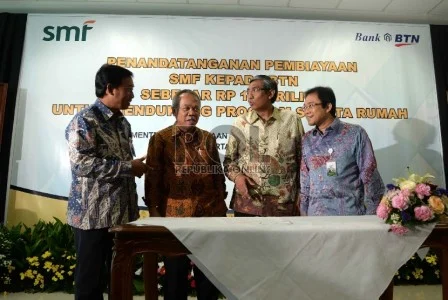
The Indonesian government is redoubling its efforts to mobilize all available resources to ensure the success of the ambitious One Million Houses Program, a flagship initiative designed to significantly alleviate the nation’s persistent housing backlog, particularly for low-income communities (MBR). This comprehensive strategy underscores a robust commitment from the Ministry of Public Works and Public Housing (PUPR) to foster an inclusive housing ecosystem where affordability and accessibility are paramount. Minister Basuki Hadimuljono, a vocal proponent of the program, emphasized the holistic mobilization of resources during a significant signing ceremony in Jakarta last week, which saw a crucial collaboration between PT Sarana Multigriya Finansial (SMF) and Bank Tabungan Negara (BTN).
The cornerstone of this renewed drive is a substantial financial injection facilitated by PT Sarana Multigriya Finansial (SMF), a state-owned secondary mortgage facility, which extended a significant loan totaling IDR 1.5 trillion (approximately USD 100 million) to Bank Tabungan Negara (BTN). This strategic partnership is meticulously designed to bolster BTN’s capacity to finance housing units under the One Million Houses Program, directly translating into enhanced opportunities for low-income citizens to secure affordable homes. The collaboration is not merely a financial transaction but a testament to the government’s multi-pronged approach to housing provision, leveraging both state-owned enterprises and specialized financial institutions to address a complex societal challenge. The ultimate objective is to streamline the path to homeownership for the MBR segment, ensuring that financial constraints do not become insurmountable barriers.
Background and Genesis of the One Million Houses Program
The One Million Houses Program was formally launched by President Joko Widodo in 2015, signaling a decisive governmental commitment to tackle Indonesia’s burgeoning housing deficit. At its inception, the national housing backlog was estimated to be in the realm of 11-13 million units, a staggering figure that highlighted the urgent need for systemic intervention. The program’s primary objective was, and remains, to construct one million new housing units annually, a target that encompasses both subsidized housing for low-income families and non-subsidized housing to stabilize the broader property market. This initiative was envisioned not only as a means to provide shelter but also as a catalyst for economic growth, stimulating the construction sector, creating employment opportunities, and fostering regional development across the archipelago.
Before the program’s launch, various fragmented efforts had been made to address housing needs, but none possessed the scale, coordination, and sustained political will demonstrated by the One Million Houses Program. The government recognized that a significant portion of the population, particularly those earning below a certain threshold, struggled to access conventional housing finance due to unstable incomes, lack of collateral, and the high cost of land and construction. The program was thus designed to integrate various financial instruments, regulatory reforms, and land provision strategies to create a more equitable and efficient housing supply chain. Its long-term vision extends beyond mere construction, aiming to improve urban planning, enhance living standards, and contribute to social stability by reducing informal settlements and improving access to essential infrastructure.
Diverse Funding Mechanisms Powering the Initiative
The IDR 1.5 trillion loan from SMF to BTN represents a critical component of a much larger, diversified funding strategy for the One Million Houses Program. Minister Basuki Hadimuljono outlined several other significant financing avenues that collectively underpin the program’s ambitious targets. These include contributions from various government bodies and social security funds, demonstrating a coordinated national effort:
-
BPJS Ketenagakerjaan (Workers’ Social Security Agency): A substantial allocation of IDR 48.5 trillion from BPJS Ketenagakerjaan is earmarked for housing financing. As a major social security provider, BPJS Ketenagakerjaan manages vast funds from workers’ contributions. Channeling a portion of these funds into housing loans, particularly for its members, serves a dual purpose: it provides a stable, long-term funding source for the program and offers tangible benefits to its participants by facilitating their homeownership aspirations. This mechanism allows workers to leverage their social security savings for housing down payments or to access more favorable loan terms.
-
FLPP (Fasilitas Likuiditas Pembiayaan Perumahan – Housing Financing Liquidity Facility): The government’s direct subsidy program, FLPP, contributes IDR 5.1 trillion. FLPP is a crucial instrument designed to make housing more affordable for MBR by providing interest rate subsidies, thereby reducing monthly mortgage payments. This facility operates by partnering with commercial banks, including BTN, to offer loans at significantly lower, fixed interest rates compared to market rates. The government absorbs the difference, making homeownership accessible to those who would otherwise be priced out of the market. Its effectiveness lies in directly addressing the affordability gap for eligible beneficiaries.
-
DIPA APBN (Daftar Isian Pelaksanaan Anggaran Anggaran Pendapatan dan Belanja Negara – State Budget Implementation List): An additional IDR 8.1 trillion is allocated through the DIPA APBN. This represents direct budgetary support from the central government, typically used for infrastructure development associated with housing projects, land acquisition, or direct construction of public housing units. These funds are vital for laying the groundwork for large-scale housing developments, ensuring that essential amenities like roads, water supply, and sanitation are in place, which are crucial for the habitability and sustainability of new communities.
The Role of Key Financial Institutions
PT Sarana Multigriya Finansial (SMF): As a state-owned enterprise under the Ministry of Finance, SMF plays a pivotal role in the secondary mortgage market. Its primary mandate is to foster liquidity and stability in the housing finance sector by acquiring mortgage loans from primary lenders (like BTN) and securitizing them, or by providing direct funding to banks. This mechanism allows primary lenders to free up capital, which they can then re-lend for new mortgages, effectively expanding the pool of available housing finance. The IDR 1.5 trillion loan to BTN is a direct manifestation of SMF’s mission to strengthen the housing finance ecosystem and ensure a continuous flow of funds for the One Million Houses Program. SMF’s involvement is critical in bridging the funding gap and enabling banks to extend more loans, particularly to the MBR segment, which typically carries higher perceived risks for commercial lenders.
Bank Tabungan Negara (BTN): BTN has historically been Indonesia’s leading state-owned housing bank, with a long-standing commitment to facilitating homeownership for all segments of society, especially low-income earners. It holds a significant market share in the housing loan sector and is a primary channel for government-subsidized housing programs like FLPP. The partnership with SMF is strategically vital for BTN, as it enhances its lending capacity and reinforces its position as a key executor of the One Million Houses Program. By securing additional funding, BTN can expand its outreach, process more loan applications, and ultimately contribute a larger share of housing units to the program’s annual targets. The bank’s extensive network and expertise in administering housing loans make it an indispensable partner in achieving the government’s housing objectives.

Persistent Challenges and Proposed Solutions
Despite the robust financial commitments and strategic partnerships, the One Million Houses Program continues to grapple with several systemic challenges. Indonesia Property Watch, a prominent real estate research institution, has consistently highlighted five critical areas that require sustained governmental attention to ensure the program’s long-term success. These challenges, and the potential solutions, form a crucial part of the ongoing policy dialogue:
-
Land Availability and Affordability: The escalating cost and scarcity of suitable land, particularly in urban and peri-urban areas, remain a formidable barrier. Indonesia Property Watch advocates for the establishment of a robust "land bank" system. This would involve the government proactively acquiring and consolidating land, then making it available for public housing projects at controlled prices, rather than allowing market mechanisms to dictate land values. Without a centralized land management strategy, speculative land purchases and rapid urbanization will continue to drive up costs, making affordable housing development increasingly difficult. Government initiatives, such as land acquisition reforms and the utilization of state-owned land, are crucial to mitigate this challenge.
-
Dedicated Institution for Public Housing: The current governance structure for public housing is often perceived as fragmented, involving multiple ministries and agencies with overlapping responsibilities. The recommendation is to establish a more focused, agile, and powerful institution solely dedicated to overseeing and coordinating all aspects of public housing. Such an entity could streamline policy implementation, improve inter-agency coordination, and ensure a consistent, long-term strategy for addressing the housing needs of the populace, free from bureaucratic inertia or conflicting agendas. This dedicated body could also be responsible for research, data collection, and innovation in housing solutions.
-
Sustainable Funding Mechanisms: While existing funding sources like FLPP, BPJS, and SMF are vital, the sheer scale of the housing deficit necessitates exploring more diverse and sustainable long-term financing models. This includes leveraging private sector capital through various public-private partnership (PPP) schemes, exploring social impact bonds, and attracting foreign investment into affordable housing. Ensuring the long-term viability of these funding streams, protecting them from economic fluctuations, and continuously innovating financial products tailored for low-income segments are paramount. The goal is to move beyond annual budget allocations to a more enduring and resilient financial framework.
-
Data and Information on Housing Deficit: Accurate, real-time, and granular data on the housing deficit, including demographic specifics, income levels, geographical distribution, and types of housing needed, is essential for effective planning and targeting. Current data systems can sometimes be disparate or outdated, leading to misallocations of resources or an inability to precisely identify the most vulnerable populations. Investing in comprehensive national housing surveys, utilizing big data analytics, and establishing a centralized, accessible housing database would significantly enhance the program’s efficiency and impact, allowing for more data-driven policy decisions and targeted interventions.
-
Streamlining Costs and Bureaucracy: The cumulative burden of complex permitting processes, high certification fees, and connection charges for utilities (such as PLN electricity) significantly inflates the final cost of housing units. These administrative and regulatory hurdles often lead to delays, increase developer costs, and ultimately get passed on to homebuyers. A concerted government effort to simplify bureaucratic procedures, reduce redundant approvals, cap administrative fees, and ensure timely utility connections is critical. Initiatives like the Omnibus Law on Job Creation (Undang-Undang Cipta Kerja) aim to streamline these processes, but effective implementation and consistent oversight are required to translate policy into tangible cost savings for housing developers and MBR beneficiaries.
Implications and Broader Impact
The sustained commitment to the One Million Houses Program, bolstered by significant financial partnerships like that between SMF and BTN, carries profound implications across various sectors:
Economic Impact: The program serves as a powerful engine for economic growth. The construction of millions of homes generates massive demand for building materials, equipment, and services, stimulating local industries and supply chains. It creates direct and indirect employment opportunities for millions of workers, from architects and engineers to construction laborers and material suppliers. This economic activity, particularly in regions where housing projects are concentrated, can uplift local economies and contribute to national GDP growth.
Social Impact: Providing safe, decent, and affordable housing is a fundamental human right and a cornerstone of social welfare. The program directly improves the living standards of millions of low-income families, offering them stability, security, and a foundation for improved health and education outcomes. It helps reduce urban slums and informal settlements, fostering more organized and sustainable urban development. By addressing housing inequality, the program contributes to greater social equity and cohesion.
Policy and Governance Implications: The One Million Houses Program underscores the Indonesian government’s long-term vision for national development, placing housing at the center of its socio-economic agenda. Its success relies heavily on inter-ministerial coordination, effective public-private partnerships, and adaptive policy-making. The challenges identified by institutions like Indonesia Property Watch highlight the continuous need for regulatory reform, institutional strengthening, and innovative financial models to ensure the program’s sustainability and effectiveness over time. It also emphasizes the importance of robust monitoring and evaluation mechanisms to track progress and make necessary adjustments.
In conclusion, the One Million Houses Program is more than just a housing initiative; it is a comprehensive national endeavor aimed at transforming the socio-economic landscape of Indonesia. The recent IDR 1.5 trillion loan from SMF to BTN is a timely and significant boost, demonstrating the government’s resolve to overcome funding hurdles. However, sustained success will require an unwavering focus on addressing the systemic challenges related to land, institutional coordination, diversified financing, accurate data, and bureaucratic efficiency. Only through such an integrated and persistent approach can Indonesia truly achieve its ambitious goal of ensuring every citizen has access to a decent and affordable home.