Paryono Ramadhan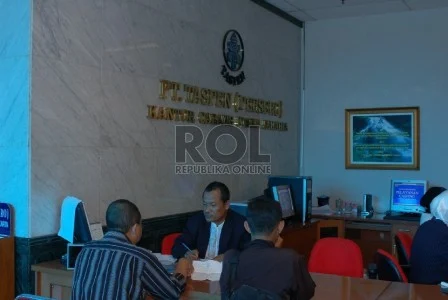
PT Taspen (Persero), Indonesia’s state-owned enterprise responsible for civil servant pension funds and old-age savings, is set to begin the repayment of the Civil Servant Housing Savings (Taperum PNS) program on June 1st. This crucial initiative is designed to provide financial relief and support to civil servants transitioning into retirement, signifying a continued commitment by the government to the welfare of its dedicated workforce. The disbursement of these funds will be specifically directed towards all civil servants who commence their pension period on or after June 1st, with the notable exception of personnel from the Ministry of Defense, the Indonesian National Armed Forces (TNI), and the Indonesian National Police (Polri), who operate under distinct welfare frameworks.
The announcement was formally conveyed by Taspen’s Corporate Secretary, Iwan Soeroto, through an official press statement. Soeroto emphasized that the impending Taperum repayment aligns with a comprehensive cooperation agreement forged between PT Taspen and the Board of Consideration for Civil Servant Housing Savings (Badan Pertimbangan Tabungan Perumahan Pegawai Negeri Sipil, or Bapertarum PNS). This collaborative framework underscores the streamlined approach adopted to ensure the efficient and timely delivery of benefits to eligible retirees. The repayment process itself has been strategically designed for maximum convenience, as it will be bundled concurrently with the first pension payment and the Old Age Savings (Tabungan Hari Tua, or THT) disbursements. This integrated approach allows retirees to access all their entitled benefits in a single, cohesive transaction at their respective Taspen branch offices across the archipelago. "The payment will be carried out as a single package to simplify the process for civil servants in receiving their entitlements," Soeroto stated, as quoted by Antara, highlighting the user-centric design of the disbursement mechanism.
The Genesis and Evolution of Taperum PNS
To fully appreciate the significance of this repayment, it is essential to delve into the historical context and purpose of the Taperum PNS program. Taperum PNS was established with the overarching goal of assisting Indonesian civil servants in acquiring, constructing, or renovating their homes. Recognizing the often-challenging economic realities faced by civil servants, particularly concerning housing affordability, the government introduced this mandatory savings program to provide a collective fund from which members could draw upon retirement or under specific circumstances related to housing needs.
The program’s legal foundation can be traced back to various government regulations and presidential decrees, notably Keputusan Presiden (Presidential Decree) Number 46 of 1994, which standardized the contribution rates and outlined the operational framework for Taperum. Prior to this, various initiatives existed, but the 1994 decree solidified the program’s structure and made participation compulsory for all eligible civil servants. For decades, Taperum PNS served as a vital, albeit often modest, financial safety net for civil servants aiming to secure stable housing for themselves and their families. It was a testament to the government’s long-standing commitment to improving the welfare and living standards of its public sector employees, recognizing that secure housing is a fundamental pillar of societal stability and individual well-being. The program has evolved over time, adapting to changing economic conditions and administrative structures, yet its core mission to support civil servant housing has remained constant.
The Roles of PT Taspen and Bapertarum PNS
The successful implementation of the Taperum PNS program, including its current repayment phase, hinges on the collaborative efforts of key state institutions. PT Taspen (Persero) is a state-owned enterprise established in 1963 with a primary mandate to manage pension funds and old-age savings for civil servants. Over the decades, Taspen has grown into a cornerstone of civil servant welfare, managing substantial assets and serving millions of employees and retirees nationwide. Its extensive network of branch offices and sophisticated administrative infrastructure make it the ideal entity for executing large-scale benefit disbursements. Taspen’s expertise in financial management, data processing, and direct interaction with civil servants positions it as the operational backbone for programs like Taperum.
Bapertarum PNS, on the other hand, was specifically created to oversee and manage the Taperum program itself. While Taspen handles the operational disbursement of funds, Bapertarum PNS has traditionally been responsible for setting policy, managing the collective fund, and determining eligibility criteria and utilization guidelines for housing assistance. The cooperation agreement mentioned by Iwan Soeroto signifies a strategic alignment between these two entities, streamlining the administration and disbursement processes to enhance efficiency and transparency. This partnership ensures that the funds accumulated over years of service are returned to retirees in a systematic and organized manner, reflecting a coordinated approach to public service welfare management. The agreement likely formalizes the roles and responsibilities in the repayment process, leveraging Taspen’s operational capabilities to reach a broad base of beneficiaries effectively.
Contribution Structure and Proposed Reforms
The current Taperum PNS contribution structure, as mandated by Kepres Nomor 46 Tahun 1994, is based on a fixed monthly deduction from civil servants’ salaries, varying by their employment grade or ‘golongan’. Under this system, civil servants in Golongan I contribute Rp 3,000 per month, those in Golongan II contribute Rp 5,000, Golongan III contribute Rp 7,000, and Golongan IV, the highest grade, contribute Rp 10,000 monthly. These fixed amounts, while consistent, have remained largely unchanged for decades, leading to discussions about their adequacy in the face of rising housing costs and inflation.
Recognizing the need for a more dynamic and equitable contribution model, Iwan Soeroto also revealed that Taspen is actively working towards reforming this structure. The proposed change aims to shift from fixed nominal contributions to a percentage-based deduction, specifically targeting 2.5 percent of the civil servant’s total salary. This proposed reform holds significant implications. Firstly, it would ensure that contributions are proportionate to a civil servant’s income, making the system fairer across different salary brackets. Secondly, as salaries increase over time, so too would the contributions, potentially leading to a more substantial fund accumulation for future housing assistance or retirement payouts. This move reflects a forward-thinking approach to ensure the sustainability and relevance of civil servant welfare programs in a dynamic economic environment. The transition from fixed nominal amounts to a percentage of salary is a common reform in many social security and welfare systems globally, designed to maintain fiscal health and benefit adequacy over the long term.
Beneficiary Scope and Exclusions
The repayment of Taperum PNS is a broad-reaching initiative, set to benefit a significant portion of the Indonesian civil service. All civil servants (Pegawai Negeri Sipil, PNS) who reach their retirement age starting from June 1st will be eligible to receive their accumulated Taperum funds. This encompasses a vast array of public sector employees working across various ministries, agencies, and regional governments throughout Indonesia. With millions of civil servants currently employed and tens of thousands retiring annually, this program will touch numerous households.

However, it is crucial to note the specific exclusions. Personnel from the Ministry of Defense, the Indonesian National Armed Forces (TNI), and the Indonesian National Police (Polri) are explicitly excluded from this particular Taperum PNS repayment scheme. This exclusion is not arbitrary; rather, it reflects the distinct welfare and housing programs that have been established for these specific uniformed services. The TNI and Polri, along with defense ministry personnel, have their own dedicated housing funds, welfare schemes, and pension management systems, which are tailored to their unique service conditions and operational requirements. These separate systems are managed by their respective institutional bodies, ensuring that their specific needs are addressed through bespoke mechanisms. Therefore, while this repayment specifically targets civilian civil servants, it does not imply a lack of housing support for military and police personnel, but rather a differentiated approach to welfare provision within the broader public sector.
Operational Streamlining and Collaboration
The decision to bundle the Taperum repayment with the first pension payment and THT at Taspen branch offices is a testament to the commitment to operational efficiency and retiree convenience. Historically, accessing various retirement benefits could sometimes involve multiple processes and different administrative touchpoints, leading to potential delays or bureaucratic hurdles. By integrating these disbursements into a single package, Taspen aims to create a seamless and user-friendly experience for retiring civil servants. This streamlined approach minimizes the need for multiple visits or separate applications, allowing retirees to focus on their transition into a new phase of life without undue administrative burden.
The collaboration between Taspen and Bapertarum PNS, formalized through their cooperation agreement, is central to this operational streamlining. Such inter-agency coordination is vital for the successful execution of complex welfare programs involving large populations. It ensures that data synchronization, fund transfers, and policy interpretations are consistent, preventing discrepancies and expediting the overall process. This integrated payment system also reflects a modern approach to public service delivery, leveraging technology and coordinated efforts to enhance government responsiveness and citizen satisfaction. It sets a precedent for how future welfare benefits might be disbursed, emphasizing convenience and efficiency as key performance indicators for state-owned enterprises involved in public service.
Implications for Retiring Civil Servants
For retiring civil servants, the Taperum PNS repayment, though potentially modest in individual value given the fixed contribution rates over many years, represents a welcome financial increment. While it may not be sufficient to purchase a new home outright, it can serve various practical purposes. Many retirees might use these funds for home renovations or repairs, improving their existing living conditions. Others might allocate the money to pay off outstanding housing-related debts or use it as supplementary income during their initial retirement phase, providing a small but tangible boost to their financial security. For some, it might contribute to medical expenses or other essential needs that often arise in retirement.
Beyond the purely financial aspect, the repayment carries significant symbolic value. It reinforces the notion that the government values the long service and dedication of its civil servants and is committed to fulfilling its obligations. It provides a sense of closure to a long-standing savings program, allowing retirees to fully realize the benefits accumulated over their careers. This gesture can foster greater trust and morale among the civil service, assuring current employees that their contributions to welfare programs will eventually be returned. In a broader sense, it contributes to the overall economic well-being of retiring individuals, providing them with additional liquidity at a crucial juncture in their lives.
Broader Policy and Socio-Economic Impact
The commencement of Taperum PNS repayments, coupled with the proposed reform of contribution structures, signals broader policy implications within Indonesia’s civil servant welfare framework. It underscores the government’s continued focus on enhancing the social security and welfare provisions for its public sector employees. By addressing the Taperum program, the government is demonstrating its commitment to modernizing and optimizing existing welfare schemes. The proposed shift to a 2.5 percent salary contribution, if implemented, would represent a significant policy adjustment. This move aims to make the housing savings program more sustainable, more equitable, and potentially more impactful in providing meaningful housing assistance in the future. It could also lead to a larger pool of funds, allowing for more substantial housing loans or grants for active civil servants, thereby addressing current housing affordability challenges more effectively.
From a socio-economic perspective, while the individual repayments might be small, the collective disbursement to thousands of retirees could inject a minor stimulus into local economies. Retirees, often concentrated in various regions, will likely spend these funds on local goods and services, contributing to economic activity. Furthermore, a well-managed and robust civil servant welfare system is crucial for attracting and retaining talent in the public sector, ensuring a stable and competent bureaucracy. The continuous refinement of such programs is essential for maintaining the motivation and loyalty of civil servants, who play a pivotal role in national development and public service delivery. The transparent and efficient handling of these repayments also bolsters public confidence in state-managed welfare funds.
The Future of Civil Servant Housing Welfare
The Taperum PNS repayment initiative marks not an end, but rather a new chapter in Indonesia’s civil servant housing welfare strategy. The discussions surrounding the transition to a 2.5 percent salary-based contribution highlight a proactive approach to adapting welfare programs to contemporary economic realities. This proposed change suggests a future where housing assistance for civil servants could become more substantial and better aligned with their earning capacity. Such reforms are crucial for ensuring that civil servants, particularly those in lower and middle-income brackets, continue to have viable pathways to homeownership in an increasingly competitive housing market.
Future developments might also include enhanced partnerships between Taspen, Bapertarum (or its successor if its role evolves), and other housing development agencies, potentially leveraging the accumulated funds for more direct housing provision or subsidized loan schemes for active civil servants. The experience gained from this large-scale repayment exercise will undoubtedly inform future policy decisions, leading to even more efficient and impactful welfare programs. Ultimately, the objective remains to provide comprehensive and sustainable support for civil servants, recognizing their invaluable contribution to the nation and ensuring their well-being throughout their careers and into retirement. This ongoing commitment is vital for fostering a dedicated and effective public service in Indonesia.