Bambang Pamungkas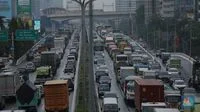
Jakarta, a megacity of over 10 million people, stands at a critical juncture in its urban development, grappling with the dichotomy of its aspirations to become a "Global City" and the enduring reality of deep-seated urban disparities. While iconic thoroughfares like Jalan MH Thamrin epitomize modernity and order, vast swathes of the metropolis continue to contend with entrenched issues of informal settlements, inadequate infrastructure, and social inequality. This stark contrast highlights the complex challenges faced by the Jakarta Provincial Government as it navigates a path toward inclusive and sustainable urban growth, echoing historical struggles against similar urban imbalances.
The central artery of Jalan MH Thamrin, stretching from the Arjuna Wiwaha (Patung Kuda) monument to the iconic Bundaran HI, offers a glimpse into Jakarta’s potential. Lined with gleaming skyscrapers, meticulously maintained sidewalks, and efficient urban planning, it presents an image of progress and sophistication. For commuters on Transjakarta’s Route 1 (Blok M-Kota), this vista is a familiar sight, symbolizing the city’s economic dynamism and ambition. Yet, this polished facade often belies the surrounding urban fabric, where the narrative shifts dramatically. Just a short distance from Thamrin’s grandeur, areas such as Harmoni, Pecenongan, Tanah Abang, and Kebon Kacang reveal a different Jakarta—one characterized by chaotic spatial planning, narrow streets, precarious dangling electrical cables, and uncontrolled pedestrian traffic. This immediate juxtaposition throws into sharp relief the notion that Jakarta’s dream of global city status might, for many, remain a distant aspiration.
Historical Echoes: MH Thamrin and the Fight for Urban Equity
The naming of Jalan MH Thamrin itself carries profound historical significance, paying tribute to Mohammad Husni Thamrin, a towering figure in Indonesia’s nationalist movement and an early advocate for urban equity. Born in Batavia (now Jakarta) in 1894, Thamrin served as a member of the Gementeeraad (City Council) of Batavia from 1919 to 1929. His tenure was marked by a fierce critique of the colonial administration’s discriminatory urban policies, which saw resources disproportionately allocated to European enclaves while indigenous kampungs (villages) languished in neglect.
Thamrin famously described Batavia as a beautiful painting, with its indigenous kampungs relegated to "blank canvases," devoid of value in the eyes of the colonial powers. Yet, these "unvalued" kampungs were home to the vast majority of the city’s inhabitants, hardworking individuals striving daily for survival and the well-being of their families. This historical context underscores a persistent theme in Jakarta’s development: the struggle to ensure that urban prosperity benefits all its citizens, not just a privileged few.
Batavia, even in its colonial guise, was a bustling international trading hub, attracting merchants and settlers from across the globe. However, the wealth generated from this vibrant commerce rarely trickled down to improve the living conditions of the local populace. Marginalization was a systemic issue, creating profound socio-economic divides. Thamrin’s activism provided a much-needed voice for the voiceless. He championed kampongverbetering, a pioneering initiative focused on improving sanitation, drainage, and access to clean water in Jakarta’s informal settlements. He advocated for the installation of water pumps to clean streets and enhance public hygiene, recognizing that basic infrastructure was fundamental to human dignity and health.
Thamrin’s vision for inclusive urban development extended beyond his lifetime. His legacy profoundly influenced subsequent leaders, notably Governor Ali Sadikin, who governed Jakarta from 1966 to 1977. Sadikin launched extensive kampong improvement programs, driven by the belief that clean environments and healthy living conditions were crucial catalysts for community empowerment and economic advancement. These historical precedents highlight a long-standing recognition among Jakarta’s leaders that the city’s progress hinges on addressing the welfare of its most vulnerable residents.
Current Challenges and Ambitious Targets
In contemporary Jakarta, the city administration continues to grapple with these historical challenges while setting ambitious new targets. Recent reports from the Jakarta Provincial Government indicate significant strides in slum eradication, with claims of successfully eliminating "heavy slum areas" and reducing the number of "slum RWs" (community units) by half in 2026. Furthermore, the administration has set an ambitious goal to redevelop 50 additional slum RWs by 2027, aiming to "upgrade" these communities and integrate them more fully into the city’s modern fabric. These efforts are often lauded as critical steps towards Jakarta’s "Global City" aspirations.
However, the reality on the ground often presents a more nuanced picture. While statistical improvements are reported, a casual journey on the KRL Commuter Line reveals persistent visual evidence of disorganization and deprivation. From the train windows, one can observe precarious housing structures, often appearing structurally unsound and supported only by neighboring buildings. The labyrinthine narrow alleys of these communities are frequently overshadowed by a tangle of exposed electrical cables, posing constant fire hazards and health risks. Below, rivers and drainage canals are often choked with refuse, human waste, and toxic industrial foam, presenting a stark environmental challenge and raising fundamental questions about the efficacy of basic service provision. These visual cues serve as a powerful reminder that while "heavy slums" may be officially eliminated, the underlying issues of informal settlements, inadequate sanitation, and environmental degradation remain pervasive.
Beyond Housing: Education and Human Capital Development
The journey towards "Global City" status extends far beyond physical infrastructure and slum eradication. A critical component is the development of human capital, which necessitates robust educational systems. MH Thamrin himself was a fervent advocate for expanded educational access, particularly for indigenous populations marginalized by colonial policies. He proposed the establishment of schools for girls in Batavia and vehemently campaigned against regulations that restricted private schools, which often served as the only educational option for many pribumi who faced discrimination in government-run institutions.
Today, the Jakarta administration, under its current leadership, has introduced initiatives aimed at bolstering educational opportunities. One such program mirrors the national LPDP scholarship scheme, offering hundreds of Jakarta students, with a prioritization for "Betawi children," the chance to pursue higher education abroad. This policy aligns with Thamrin’s historical emphasis on empowering local communities through knowledge and opportunity.
However, a broader examination of Jakarta’s educational landscape reveals significant challenges that could impede its global city ambitions. Despite scholarship programs, issues such as frequent student brawls (tawuran), concerns over the quality of primary school educators, and the increasingly recognized problem of student mental health persist. These systemic problems raise serious questions about the city’s capacity to adequately prepare its youth to become competitive, skilled human resources capable of thriving in a globalized economy. If these foundational issues are not addressed comprehensively, the gap between the knowledge and experience of Jakarta’s children and the demands of the modern job market will only widen, undermining long-term development goals.
Defining a True Global City: More Than Just Aesthetics
The concept of a "Global City" is multi-faceted, encompassing far more than just impressive skyscrapers, manicured parks, or smooth roadways. International indices, such as the Oxford Economics Global Cities Index 2025, evaluate cities based on a comprehensive set of criteria: economic dynamism, human capital, quality of life, environmental sustainability, and effective governance. For Jakarta, achieving genuine global city status will depend not merely on superficial aesthetic improvements but on substantive enhancements across all these dimensions.
The success or failure of the Jakarta Provincial Government in improving the quality of life and fostering a conducive environment for human capital development within its kampungs will directly impact its standing on the global stage. A city cannot truly be global if a significant portion of its population lives in conditions of poverty, poor sanitation, and limited opportunity. The "local" issues, often dismissed as mere "peripherals" when compared to grand statistical achievements, are precisely the foundational elements upon which a resilient and equitable "Global City" must be built.
Broader Implications and the Path Forward
The persistent urban disparities in Jakarta carry significant broader implications for social cohesion, economic inclusivity, and environmental sustainability. A city where such stark contrasts exist between its developed core and marginalized peripheries risks exacerbating social tensions, hindering equitable economic growth, and undermining collective civic pride. The environmental consequences of unchecked urban sprawl and inadequate waste management in informal settlements contribute to pollution, flooding, and public health crises that ultimately affect the entire city.
The historical lessons from MH Thamrin remain profoundly relevant. His approach to problem-solving was "bottom-up," rooted in direct engagement with communities and a deep understanding of their lived experiences. This perspective allowed him to identify the real, pressing issues that demanded relevant policy interventions, rather than relying solely on top-down directives or abstract statistics. For Jakarta to truly mature into a "Global City," its leaders must embrace a similar approach, ensuring that policies are informed by the realities on the ground and address the fundamental needs of all its citizens.
The journey ahead for Jakarta is fraught with challenges. Balancing rapid economic development with inclusive growth, ensuring sustainable environmental practices, and fostering a high-quality urban environment for everyone requires concerted effort, transparent governance, and sustained investment. While the city celebrates milestones in slum eradication and educational initiatives, the ongoing presence of structural inequalities and visible deprivation serves as a constant reminder that the work is far from over. Only by comprehensively addressing these deep-seated issues can Jakarta truly fulfill its ambition of becoming a mature, resilient, and equitable "Global City" for all its inhabitants.