Bambang Pamungkas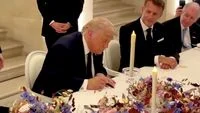
The recent signing of a peace memorandum of understanding (MoU) between United States President Donald Trump and Iran, conducted under the historic gilded ceilings of the Palace of Versailles in France, has been widely interpreted as a profound strategic reversal for Washington’s geopolitical objectives. This landmark legal step, formalized at a location synonymous with national humiliation in historical memory, signals an implicit acknowledgment by the United States that its primary goals in the Middle East remain elusive, despite the substantial military operations launched since the previous year. The document, a 14-clause draft outlining terms for peace, starkly illustrates the erosion of numerous "red lines" previously asserted by the US, highlighting a significant diplomatic concession by the Trump administration.
A Retreat from Previous Stance: The Erasing of Red Lines
Comparing the current agreement to the rigorous negotiation demands put forth by the US in 2025, which preceded the aerial bombardment of Tehran’s nuclear facilities, President Trump’s administration appears to have adopted a considerably more conciliatory posture. The earlier 2025 draft had unequivocally demanded that Iran possess no domestic uranium enrichment capabilities and be mandated to export its entire uranium stockpile. However, a dramatic shift occurred at the recent G7 Summit in Évian, where Trump officially acknowledged Iran’s right to continue domestic uranium enrichment, justifying this pivot by referencing similar programs in other Gulf region nations. This particular concession marks one of the most significant departures from Washington’s long-standing non-proliferation stance regarding Iran.
The choice of Versailles as the signing venue has not escaped critical commentary. Patrick Wintour, a seasoned Diplomacy Editor, observed the profound irony, stating, "Only a person with a disregard for history on par with Donald Trump would agree to sign an American peace treaty with Iran at Versailles, a place synonymous with national humiliation. And only a person with a mischievous sense of humor like Emmanuel Macron would be willing to propose the location." This sentiment underscores the perception that the agreement, while ostensibly a peace deal, carries undertones of a capitulation, especially given the historical weight of Versailles in international relations, famously associated with punitive post-war settlements.
Unpacking the Concessions: Sanctions and Nuclear Program
The US government has also significantly relaxed its oversight regulations concerning Iran’s nuclear program. Under the new MoU, Iran is now permitted to dilute its high-enriched uranium stock to 3.67% within its own territory, albeit under the vigilant supervision of the International Atomic Energy Agency (IAEA). This contrasts sharply with previous demands for all processing to occur outside Iran or for the material to be entirely shipped abroad.
Furthermore, a critical component of the agreement involves the activation of waivers for US sanctions on Iran’s crude oil exports. To facilitate this, the Trump administration has been compelled to grant exemptions across vital sectors, including financial services, banking, transportation, and maritime insurance protection. This move, aimed at allowing Iran to re-enter the global oil market, fundamentally alters the economic pressure architecture that Washington had meticulously built over years. Miad Maleki, a former US Treasury Department official and senior researcher at the Foundation for Defense of Democracies, warned about the ramifications of such waivers: "Extending authorization to financial transactions will fracture the core architecture of US oil and financial sanctions against Iran. These sanctions were the most powerful economic leverage the US held over the regime outside of a naval blockade." The waivers effectively provide Tehran with a lifeline, allowing it to generate much-needed revenue, but at the cost of weakening the very tools Washington once considered its most potent non-military options.
The Strait of Hormuz and Reconstruction Dilemmas
A major driver behind these substantial concessions from the White House was the urgent need to persuade Iran to reopen the Strait of Hormuz shipping lanes, which had been paralyzed due to the prolonged conflict and escalating tensions. The Strait, a critical chokepoint for global oil transit, had seen severe disruptions, impacting international trade and energy markets. According to the draft MoU, the guarantee of freedom of navigation without levies, a crucial demand from global maritime powers, is surprisingly time-limited, set to expire in just 60 days. After this short grace period, Iran, in conjunction with Oman, will assume full control over determining new maritime service tariffs through discussions with other Gulf states. This clause raises concerns about the long-term stability of shipping through the Strait and the potential for future disputes over transit fees and regulations.
Adding to the complexities, the US-conceived reconstruction fund for Iran, valued at a staggering US$350 billion (approximately IDR 6,230 trillion), faces significant challenges. Ironically, despite initiating the scheme, Washington has unequivocally refused to contribute any funds. The plan optimistically relies on the benevolence of Gulf Arab nations to finance the rebuilding of infrastructure in a country that many of them consider a regional adversary. This funding mechanism, or lack thereof from the US, highlights a profound disconnect between the stated aims of reconstruction and the practical means to achieve it. Compounding Tehran’s economic woes, the unfreezing of US$24 billion (approximately IDR 427.2 trillion) in Iran’s domestic assets held abroad is deemed insufficient to significantly alleviate the deep-seated economic crisis gripping the nation.
Historical Context and Escalation Timeline
The journey to this Versailles MoU is rooted in a tumultuous history of US-Iran relations, marked by periods of confrontation and failed diplomatic overtures. A pivotal moment was the 2015 Joint Comprehensive Plan of Action (JCPOA), commonly known as the Iran nuclear deal, negotiated under the Obama administration. This agreement imposed stringent restrictions on Iran’s nuclear program in exchange for sanctions relief. However, in 2018, President Donald Trump unilaterally withdrew the US from the JCPOA, deeming it a "terrible deal" and reinstating a "maximum pressure" campaign of sanctions aimed at crippling the Iranian economy and forcing a more comprehensive agreement.
The period following the US withdrawal saw a dramatic escalation of tensions:
- 2018: US withdraws from JCPOA, reimposes sanctions.
- 2019-2024 (Inferred Timeline based on original text’s "last year" reference): Increased military presence in the Persian Gulf, attacks on oil tankers, drone incidents, and proxy conflicts intensify across the region. Iran begins to exceed JCPOA limits on uranium enrichment in response to sanctions.
- 2025 (as per original text): The US, frustrated by Iran’s perceived defiance and continued nuclear advancements, launches military operations, including the bombing of Iranian nuclear facilities. This action, while intended to halt Iran’s program, inadvertently leads to further destabilization and a severe disruption of global oil supplies as the Strait of Hormuz becomes increasingly contested and eventually paralyzed.
- Early 2026 (Leading to MoU): With global oil reserves dwindling rapidly and the threat of a full-blown global macro-economic recession looming, intense diplomatic efforts begin. The G7 Summit in Évian serves as a critical forum where preliminary concessions are discussed and a framework for direct negotiations is established. The urgency of the situation, driven by economic fears, compels the US to reconsider its stringent demands.
- Mid-2026: The US and Iran, with French mediation, finalize the draft MoU, leading to the signing ceremony at Versailles.
Diplomatic Skepticism and Future Implications
Many diplomats and international observers view this emergency agreement as inferior to the 2015 JCPOA, which provided a much stricter framework for verifying Iran’s nuclear program. A key criticism of the Trump-brokered MoU is that the scope of nuclear restrictions remains vague and lacks strong legal commitments. Iran, in this latest agreement, has merely reiterated its verbal rejection of developing nuclear weapons, without any concrete, verifiable mechanisms for dismantling its missile program or ensuring long-term transparency. For international analysts, such unilateral statements from Tehran are largely irrelevant; the crucial element remains on-site verification. In this regard, they argue, the US position has not advanced beyond its previous standing.
The primary motivation behind Trump’s dramatic shift in strategy was explicitly stated by the President himself. "The only president I don’t want to emulate is the great late Herbert Hoover. I don’t want to see an economic catastrophe happen in the world, and if you let this war continue, that global crisis could indeed happen," Donald Trump candidly admitted. This stark confession reveals that the MoU was largely a pragmatic, emergency measure driven by the imminent threat of a global macro-economic recession and the rapid depletion of world oil reserves, which were estimated to run out within weeks. The immediate goal was to stabilize global energy markets and avert an economic collapse, rather than to achieve a comprehensive, long-term geopolitical reordering.
Broader Impact and Geopolitical Repercussions
The implications of the Versailles MoU extend far beyond the immediate cessation of hostilities and the reopening of trade routes.
- Regional Power Dynamics: The agreement undeniably shifts the balance of power in the Middle East, granting Iran significant diplomatic and economic leverage. Its right to enrich uranium domestically, even under supervision, legitimizes a program that many regional rivals, particularly Saudi Arabia and Israel, view with extreme suspicion. This could potentially spark a regional arms race as other nations might feel compelled to develop similar capabilities to counter Iran’s enhanced status.
- US Credibility and Foreign Policy: For Washington, the MoU represents a significant blow to its "maximum pressure" strategy and raises questions about the consistency and effectiveness of its foreign policy. The perceived abandonment of previously firm "red lines" could undermine US credibility on the international stage and complicate future negotiations with other adversaries. It also signals a potential re-evaluation of US engagement in the Middle East, moving from assertive intervention to a more pragmatic, albeit reactive, diplomatic approach driven by immediate economic imperatives.
- Global Energy Markets: While the immediate effect of the MoU is the stabilization of oil prices and the alleviation of fears over dwindling supplies, the long-term fragility of the agreement, particularly the 60-day clause for the Strait of Hormuz, leaves global energy markets vulnerable to future disruptions. The ultimate control over maritime tariffs by Iran and Oman after this period introduces an element of uncertainty that could impact shipping costs and oil prices in the future.
- Economic Relief for Iran: The unfreezing of assets and the lifting of key sanctions will undoubtedly provide a much-needed boost to Iran’s struggling economy. However, the deep structural issues, corruption, and the inadequacy of the unfrozen funds to address the full scope of the crisis mean that Tehran’s economic recovery will be a protracted and challenging process. The success of the US$350 billion reconstruction fund hinges entirely on the willingness of Gulf Arab states, many of whom have deep-seated geopolitical grievances with Iran, to contribute substantial capital, an outcome that remains highly uncertain.
- International Non-Proliferation Regime: The recognition of Iran’s domestic enrichment rights, even with IAEA oversight, could set a dangerous precedent for the international non-proliferation regime. Critics argue that it weakens the global norm against the spread of sensitive nuclear technologies and may encourage other nations to pursue similar paths.
In conclusion, the Versailles MoU, while providing an immediate reprieve from an escalating crisis and averting a potentially catastrophic global recession, is a complex and highly contentious agreement. It underscores a significant diplomatic retreat for the United States, driven by urgent economic considerations rather than a comprehensive, long-term strategic vision for the Middle East. Its long-term efficacy, the stability of regional geopolitics, and its impact on the international non-proliferation framework remain subjects of intense debate and uncertainty. The historical irony of its signing location will undoubtedly continue to resonate as the world watches the unfolding consequences of this emergency peace.