Bambang Pamungkas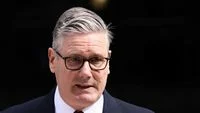
London, UK – Keir Starmer, Prime Minister of the United Kingdom, announced his resignation on Monday, June 22, 2026, in a statement delivered from Downing Street. His departure marks the end of a tumultuous two-year tenure that saw his Labour government struggle with declining public approval, significant electoral setbacks, and widespread discontent over key policies and scandals. The announcement initiates a leadership contest within the Labour Party, with nominations set to open on July 1, and the nation anticipating a new Prime Minister by September.
A Brief Political Ascent and Abrupt Decline
Starmer’s journey to the premiership began with his victory in the Labour Party leadership contest in 2020, succeeding Jeremy Corbyn, whom he criticised for fostering anti-Semitism within the party. His leadership culminated in a historic general election win in 2024, which not only secured Labour’s best electoral performance in over two decades but also ended 14 years of Conservative (Tory) rule. This victory was widely seen as a mandate for change, with the public yearning for stability and relief from a prolonged cost-of-living crisis, rising energy costs, and persistent inflation that had plagued the country following the 2022 decision to sever ties with Russian fossil fuels.
However, the "honeymoon" period for Prime Minister Starmer proved exceptionally short-lived. Within just one month of assuming office, his net approval rating, according to Ipsos, plummeted from a positive seven to zero. A significant 52% of Britons expressed to Ipsos pollsters that they felt the country was heading "in the wrong direction." By June 2026, YouGov data indicated his net support had fallen to a staggering -48 on their polling scale, a figure that positioned him as the least popular Prime Minister in recent history. This rapid erosion of public trust and approval laid the groundwork for the growing calls for his resignation.
Electoral Setbacks and the Rise of Challengers
The decline in Starmer’s popularity was starkly reflected in a series of damaging electoral results. After losing 187 local council seats across England in 2025, the Labour Party suffered an even more catastrophic blow in the local elections of May 2026, shedding over 1,400 seats. These losses were not merely a repudiation of Labour but also signalled a dramatic resurgence for the Nigel Farage-led Reform UK party, which capitalized on voter dissatisfaction by securing at least 1,200 seats in the same elections. The Green Party also made significant inroads, particularly in urban areas and among specific voter demographics, further fragmenting the political landscape.
Mounting Pressure from Within
The pressure on Starmer was not confined to opposition parties or the general public; it increasingly emanated from within his own Labour Party. Reports from The Times indicated that senior figures, including Energy Minister Ed Miliband, had urged Starmer as early as April 2026 to begin "planning his resignation." The culmination of this internal dissent came over the weekend preceding his announcement, when several senior ministers reportedly confirmed to Starmer that they would no longer support his leadership. Facing a collapsing mandate from both the electorate and his parliamentary colleagues, Starmer made the decision to step down, announcing it to the public on Monday morning from Downing Street.
Economic Policies Under Scrutiny
A significant source of public anger stemmed from Starmer’s economic policies, which many voters felt betrayed his pre-election promises. In his inaugural speech in 2024, Starmer revealed that his administration had uncovered a "£22 billion (approximately Rp525 trillion) black hole in public finances." He argued that this necessitated "unpopular decisions" to rectify the situation, including tax increases, despite his earlier pledges to reduce them.
True to his word, Starmer’s government implemented several tax hikes. These included a 2% increase in income tax and dividends, a rise in National Insurance contributions paid by employers, and an increase in property taxes. According to the TaxPayers’ Alliance, the Starmer administration introduced new taxes or raised existing ones, on average, every ten days between July 2024 and November 2025.
These measures hit a public already reeling from the economic pressures inherited from the previous Conservative government. Voters, who had hoped Starmer would ease their financial burdens, instead found themselves facing a further squeeze. The situation was compounded by Starmer’s announcement of substantial welfare cuts in 2025. While public outrage forced him to backtrack on some of these measures, including the deeply unpopular cut to winter fuel allowances for pensioners, the damage to public trust was profound. Green Party leader Zack Polanski encapsulated the sentiment in May 2026, stating, "We’ve had 14 years of Conservative austerity… Keir Starmer was elected promising change and, actually, what we’ve seen is very little change, and in many ways things have got worse."
Free Speech, Immigration, and Social Unrest
While Starmer’s economic policies alienated the left, his handling of social issues, particularly those related to immigration and free speech, drew the ire of the right. A wave of anti-immigration riots in late 2024 saw hundreds of Britons arrested for posting anti-immigrant content on social media. Controversially, violent criminals were reportedly released early from prison to make space for those arrested during the riots and for individuals who supported them online.
Starmer also became embroiled in a high-profile public dispute with X owner Elon Musk, who famously dubbed the Prime Minister "Keir two-tier," accusing him of prioritizing "speech crimes over real crimes." Starmer’s vigorous push for the Online Safety Bill, a piece of legislation that critics argued would further curtail freedom of expression in the UK, also sparked international condemnation. US Vice President J.D. Vance confronted Starmer directly, stating that the bill constituted "an infringement on free speech that not only impacts British citizens but impacts American tech companies and, further, American citizens." These issues, coupled with Starmer’s perceived failure to curb illegal immigration, significantly contributed to the electoral gains made by Reform UK in the May 2026 local elections.
A Divisive Stance on International Affairs: The Israel-Palestine Conflict
Another critical factor in Starmer’s declining popularity, particularly among left-wing and Muslim voters, was his controversial stance on the Israel-Palestine conflict. Upon assuming the Labour leadership in 2020, Starmer notably distanced the party from Jeremy Corbyn’s overtly pro-Palestinian policies. He insisted on purging the party of what he termed "anti-Semitism," while simultaneously declining to acknowledge reported infiltration by pro-Israel staff, journalists, and advocacy groups.
Unlike Corbyn, who was a vocal member of the Palestine Solidarity Campaign and supported boycotts of goods from occupied Palestinian territories, Starmer initially resisted calls from within his own party for a ceasefire in Gaza in late 2023. He publicly affirmed Israel’s right to cut off electricity and water supplies to the two million residents of the Gaza Strip.
However, faced with a mass exodus of left-wing and Muslim voters, Starmer eventually reversed his position, advocating for a ceasefire and a two-state solution to the Israeli-Palestinian conflict. This shift came only after widespread criticism for labeling ‘Palestine Action’ as a terrorist organization, ordering the arrest of thousands of demonstrators expressing support for the group, and implementing calls for "language surveillance" and bans on anti-Israel protests. The Green Party effectively leveraged the Palestine issue as a central part of its platform, notably winning a crucial by-election in Manchester earlier in 2026 by actively engaging with Muslim voters. As Polanski remarked ahead of the May 2026 elections, "Palestine is one element on the ballot… I think a lot of people feel very concerned about their local services – as they should – and also feel very concerned that a deplorable genocide is taking place."
Scandals and Damaged Trust
Starmer’s premiership was further marred by several high-profile scandals that eroded public trust. Perhaps the most damaging involved Peter Mandelson, whom Starmer appointed as his ambassador to the US between February and September 2025. Mandelson was dismissed due to his long-standing connections with convicted pedophile financier Jeffrey Epstein. Despite Starmer’s apparent awareness of these ties at the time of the appointment, he was compelled to fire Mandelson after emails emerged in which Mandelson referred to Epstein as his "best friend" and encouraged him to "fight for early release" from prison in 2008. Mandelson himself was arrested in February 2026 and is currently under investigation for allegedly lobbying on Epstein’s behalf in the late 2000s and leaking classified information to the disgraced financier.
The fallout extended to Starmer’s inner circle. Morgan McSweeney, Starmer’s chief of staff, took responsibility for the controversial appointment of another known Epstein associate and subsequently resigned in February 2026. These scandals, particularly the links to Epstein, significantly undermined Starmer’s image and further damaged public confidence in his judgment and the integrity of his administration.
The Persona Problem: Public Perception and Charisma
Beyond policy failures and scandals, Starmer faced a deeply ingrained and pervasive negative public perception. Commentators frequently described him as "useless and uncharismatic," "empty, fragile, [and] stiff." He became the target of chants such as "Keir Starmer is a bastard" from crowds across the political spectrum, a reflection of the profound and widespread antipathy his leadership generated. This personal perception problem, combined with the substantial policy grievances and ethical controversies, created an insurmountable barrier to regaining public trust and popularity. After two years under Labour leadership, many Britons felt poorer, less free, and more politically divided than before.
The Path Forward for Labour: A New Leadership Race
With Starmer’s resignation, the Labour Party now faces the urgent task of selecting a new leader. Nominations for the leadership contest are scheduled to open on July 1, with the expectation that a new Prime Minister will be in place by September 2026. The recent resounding victory of Andy Burnham in a Manchester by-election has positioned him as a strong contender. Burnham is widely perceived as less susceptible to corruption and less aligned with the "London elite" – a group increasingly reviled by both left- and right-wing voters. His emergence signals a potential shift towards a more grassroots-focused leadership, offering a glimmer of hope for a party reeling from its recent failures.
Implications for British Politics
Starmer’s abrupt departure has significant implications for the future of British politics. His resignation underscores the volatility of the contemporary political landscape and the public’s low tolerance for perceived broken promises and ethical lapses. For the Labour Party, the leadership contest will be a critical moment to redefine its identity and direction, particularly in light of the gains made by Reform UK and the Green Party. The next Labour leader will inherit a fragmented electorate, a challenging economic environment, and a deeply cynical public. Their ability to unite a fractured party and reconnect with disillusioned voters will determine not only Labour’s future electoral prospects but also the broader trajectory of the United Kingdom in the years to come. The era of a two-party dominance appears increasingly challenged, with smaller, more ideologically focused parties gaining traction, suggesting a more complex and unpredictable political future for Britain.