Eko Sulistyo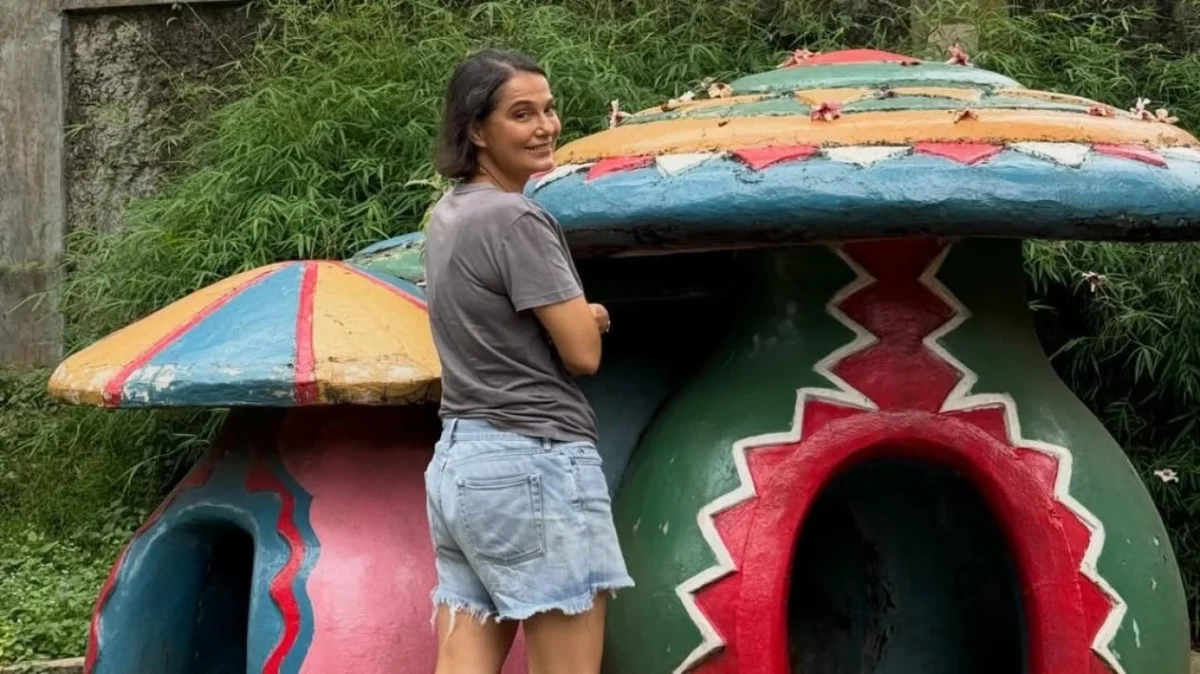
The landscape of Indonesian entertainment often finds itself looking backward to find inspiration, and few properties command as much nostalgic power as the legendary soap opera Tuyul dan Mbak Yul. In a recent social media update that quickly went viral, veteran actress Dominique Sanda, widely recognized for her portrayal of the titular Mbak Yul, shared a series of photographs documenting her return to the original filming site of the series. The visit, which took place in late June 2026, served as a poignant reminder of the show’s enduring influence on Indonesian pop culture, nearly three decades after it first premiered on national television.
The location in question is the renowned Taman Wiladatika, situated in the Cibubur district of Depok, West Java. For millions of Indonesians who grew up during the late 1990s and early 2000s, this park is more than just a public green space; it is the physical manifestation of a fictional world where a repentant "tuyul" (a mythical wealth-seeking spirit) named Ucil attempted to escape his fate while being protected by a kind-hearted human woman. Dominique Sanda’s visit specifically highlighted the "Mushroom House," a unique architectural structure that served as the base of operations for the show’s primary antagonists, the bumbling duo Samson and Pampam.
According to Sanda’s social media posts, the Mushroom House remains in remarkably good condition. Despite the passage of time, the building’s distinctive shape and vibrant colors have been preserved, standing as a testament to the maintenance of the park and the cultural significance of the site. Sanda expressed her surprise and delight at finding the location largely unchanged, noting that the bright hues of the structure still evoke the whimsical, fantasy-comedy atmosphere that defined the series. Accompanying Sanda during this nostalgic excursion was Ony Syahrial, the actor who became a household name for his portrayal of Ucil. The reunion of these two central figures at the very site where they filmed hundreds of episodes sparked an immediate wave of emotional responses from fans across various digital platforms.
A Chronology of a Cultural Phenomenon
To understand the weight of this visit, one must look back at the origins of Tuyul dan Mbak Yul. The series first aired on April 1, 1997, produced by Multivision Plus, a production house that dominated the Indonesian television landscape under the leadership of Raam Punjabi. At the time, the Indonesian television industry was undergoing a massive transition following the deregulation of the early 1990s, which allowed private stations like RCTI, SCTV, and TPI to compete with the state-owned TVRI.
Tuyul dan Mbak Yul was a pioneer in the "fantasy-comedy" genre. It took a staple of Indonesian urban legend—the tuyul—and subverted the horror associated with it. Traditionally, tuyuls are viewed as malevolent spirits used by greedy individuals to steal money. However, the show’s protagonist, Ucil, was portrayed as a "tuyul insyaf" or a repentant spirit who refused to steal. This moral core, wrapped in slapstick humor and supernatural antics, allowed the show to run for several years, eventually spanning over 150 episodes in its original run.
The show’s timeline is marked by several cast changes, yet the "First Generation" cast, featuring Dominique Sanda as the first Yulia (Mbak Yul), remains the most iconic in the eyes of the public. Sanda’s chemistry with Ony Syahrial provided the emotional anchor for the series. While other actresses such as Jackie Kezia and Regina Ivanova eventually took over the role in later seasons and reboots, the original 1997-2000 era is what fans primarily associate with the Mushroom House at Taman Wiladatika.
The Significance of the Mushroom House and Taman Wiladatika
Taman Wiladatika has long served as a versatile "backlot" for the Indonesian film and television industry. Its proximity to Jakarta and its diverse landscape—ranging from manicured gardens and fountains to wooded areas and unique structures—made it an ideal choice for production houses looking to minimize costs while maintaining high visual variety.
The Mushroom House, in particular, became an architectural icon of the era. Within the narrative of Tuyul dan Mbak Yul, it was the residence of the "King of Tuyuls"’ henchmen, Samson (played by the late M. Amin) and Pampam (played by the late Bambang Triyono). These characters were tasked with capturing Ucil and bringing him back to the spirit world for his "betrayal." The house’s surreal appearance perfectly complemented the show’s blend of the mundane and the magical.
Current data from the management of Taman Wiladatika suggests that the park remains a popular destination for domestic tourists, partly due to its historical connection to classic television. As of June 2026, the entry fee remains highly accessible at approximately Rp10,000 per person. Visitors can still explore the very spots where Ucil dodged the "jurus" (magical moves) of his pursuers, including the stone slides and the mushroom-shaped seating areas that Dominique Sanda featured in her recent photo gallery.
The Cast and the Legacy of the 90s Era
The visit by Dominique Sanda and Ony Syahrial also brings into focus the career trajectories of the stars who defined that era. Ony Syahrial, whose diminutive stature and distinctive voice made him the perfect fit for Ucil, later became equally famous for voicing the character Shin-chan in the Indonesian dub of the Japanese anime Crayon Shin-chan. His presence alongside Sanda in 2026 highlights the lifelong bond formed between actors during the grueling schedules of "sinetron kejar tayang" (strip-broadcast soap operas).
Other notable cast members who contributed to the show’s success included Ersa Mayori and Tia Ivanka, both of whom used the show as a springboard to become major television personalities in the 2000s. The show also featured a rotating cast of comedians and guest stars, making it a "who’s who" of the Indonesian entertainment industry at the turn of the millennium.
From a production standpoint, Tuyul dan Mbak Yul represented the "Golden Age" of Multivision Plus. During this period, the production house successfully exported its formula of lighthearted supernatural comedy across Southeast Asia. The show’s success paved the way for similar hits like Jin dan Jun and Panji Manusia Millenium, creating a specific niche of Indonesian television that combined local folklore with modern special effects, which, while primitive by today’s standards, were revolutionary for Indonesian TV at the time.
Analysis of Implications: The Business of Nostalgia
The massive engagement garnered by Dominique Sanda’s visit is indicative of a broader trend in the Indonesian media market: the high value of "Nostalgia Marketing." In an era dominated by streaming services and high-budget international content, there is a growing segment of the Indonesian population—specifically Millennials and Gen X—who seek comfort in the media of their youth.
This phenomenon has several practical implications:
-
Tourism Boost: Locations like Taman Wiladatika benefit significantly from social media mentions by former stars. Digital "pilgrimages" to filming locations are a growing trend in domestic tourism, where fans recreate scenes for platforms like Instagram and TikTok.
-
Reboot Potential: The entertainment industry often uses such viral moments to gauge public interest in reboots or reunions. While a 2016 reboot titled Tuyul & Mba Yul Reborn met with moderate success, the visceral reaction to the original cast suggests that a "legacy sequel" or a documentary special featuring the original actors could command significant viewership on streaming platforms like Vidio or Netflix.
-
Preservation of Pop Culture Landmarks: The fact that the Mushroom House is still standing and well-maintained raises questions about the formal preservation of television history in Indonesia. Unlike Hollywood or the Korean film industry, which often turn filming sets into permanent museums, Indonesian television history is frequently lost to redevelopment. The survival of the Mushroom House is a rare exception that underscores the need for a more systematic approach to preserving cultural heritage from the television era.
Conclusion and Future Outlook
As Tuyul dan Mbak Yul approaches its 30th anniversary in 2027, the visit by Dominique Sanda serves as a precursor to what will likely be a year of retrospectives and celebrations. The show remains a benchmark for how local stories and folklore can be adapted into mass-market entertainment that resonates across generations.
The enduring popularity of the Mushroom House at Taman Wiladatika proves that the impact of a television show extends far beyond the screen. It lives on in the physical spaces it occupied and in the memories of the audience. For Dominique Sanda and Ony Syahrial, the return to Cibubur was a private trip down memory lane, but for the Indonesian public, it was a collective reminder of a simpler time in television history—a time when a bald, repentant spirit and his human friend taught a nation that it was never too late to choose a better path, all while providing a much-needed laugh at the end of the day.
While the Indonesian television industry continues to evolve with higher production values and more complex narratives, the legacy of Tuyul dan Mbak Yul remains unshakable. The "Mbak Yul" of the 90s has shown that even as the industry moves forward, the roots of its success are firmly planted in the stories—and the locations—that first captured the heart of the nation.