Bambang Pamungkas
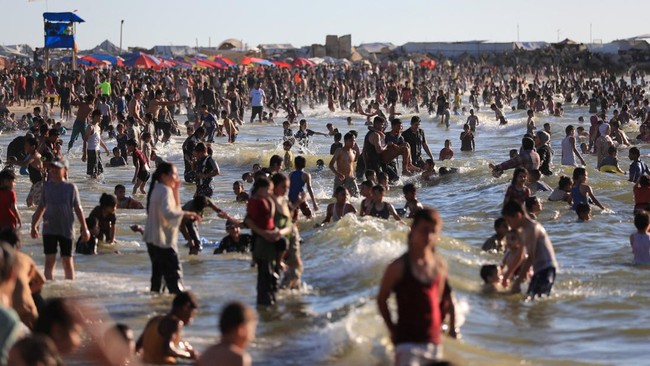
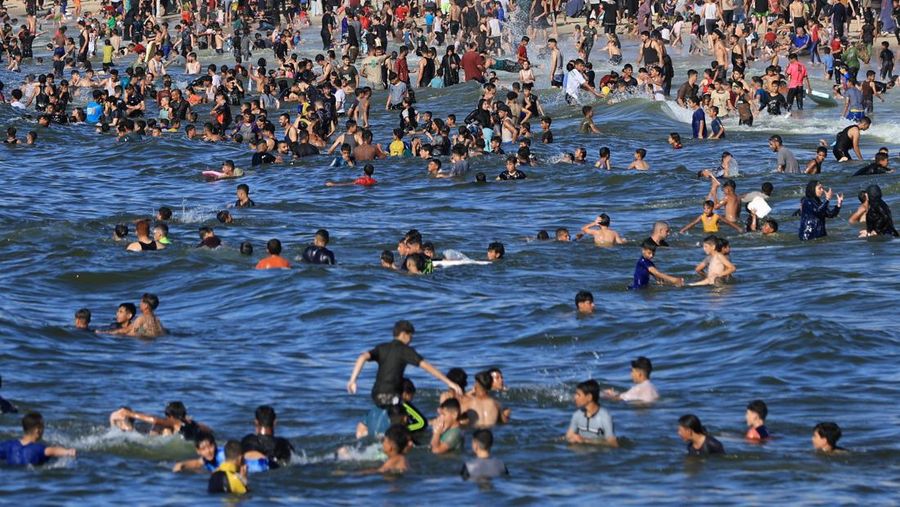
Gaza City, Gaza Strip – In a striking tableau that belies the persistent shadow of conflict, thousands of Palestinians converged upon the sun-drenched shores of Gaza City beach on a recent Monday, seeking desperately needed relief from the oppressive summer heat. The scene, captured in photographs from Sunday, June 21, 2026, showed a coastline teeming with life – families picnicking, children splashing in the Mediterranean waves, and even some individuals attempting to surf – creating an illusion of normalcy that starkly contrasted with the grim realities of life in the besieged Gaza Strip. This mass exodus to the sea underscores the profound human need for respite and recreation, even as the region remains entangled in a protracted humanitarian crisis and ongoing geopolitical tensions.
The phenomenon of Gazans flocking to the beach during peak summer months is not new, but its significance is amplified by the dire circumstances that define daily existence in the enclave. With temperatures soaring, often exceeding 35 degrees Celsius (95 degrees Fahrenheit) in July and August, and exacerbated by chronic electricity shortages that limit access to air conditioning and refrigeration, the cool embrace of the Mediterranean Sea offers one of the few accessible avenues for comfort. The imagery of the crowded beach, appearing "as if there is no war," serves as a powerful visual testament to the resilience of a population enduring immense hardship. It is a stark reminder that even amidst widespread devastation and psychological trauma, the yearning for simple pleasures and moments of peace persists.
The Unyielding Summer Heat and Gaza’s Plight
The Gaza Strip, a narrow coastal enclave home to over two million Palestinians, is one of the most densely populated areas in the world. Its Mediterranean climate means sweltering summers, which, under normal circumstances, would draw residents to its coastline for recreation. However, Gaza’s circumstances are far from normal. Decades of conflict and a stringent blockade, imposed by Israel and Egypt since 2007, have crippled its infrastructure, economy, and public services. This blockade has severely restricted the movement of goods and people, stifling economic development and exacerbating humanitarian needs.
In a typical summer, the lack of reliable electricity is a critical issue. Gazans experience daily power cuts, often lasting for hours, making it impossible to run fans or air conditioners consistently. This situation is particularly acute in residential areas and overcrowded refugee camps, where temporary shelters offer little protection from the intense heat. Water scarcity and quality are also major concerns; while the sea offers physical cooling, access to clean drinking water remains a challenge, with an estimated 97% of Gaza’s coastal aquifer being unfit for human consumption due to contamination from sewage and seawater intrusion. These factors collectively transform a natural seasonal discomfort into a significant public health and humanitarian challenge, driving people to seek any available relief, however temporary.
A Glimpse of Normalcy in a War-Torn Strip
The photographs depicting the bustling Gaza City beach convey a sense of vibrant life, featuring children playing in the shallows, adults congregating in groups, and even some adventurous individuals riding surfboards on the waves. This seemingly idyllic scene is often described by observers as "bak tak ada perang" (as if there’s no war), a phrase that encapsulates the striking contrast between the visible recreational activities and the underlying geopolitical reality. However, this normalcy is fragile and often fleeting.
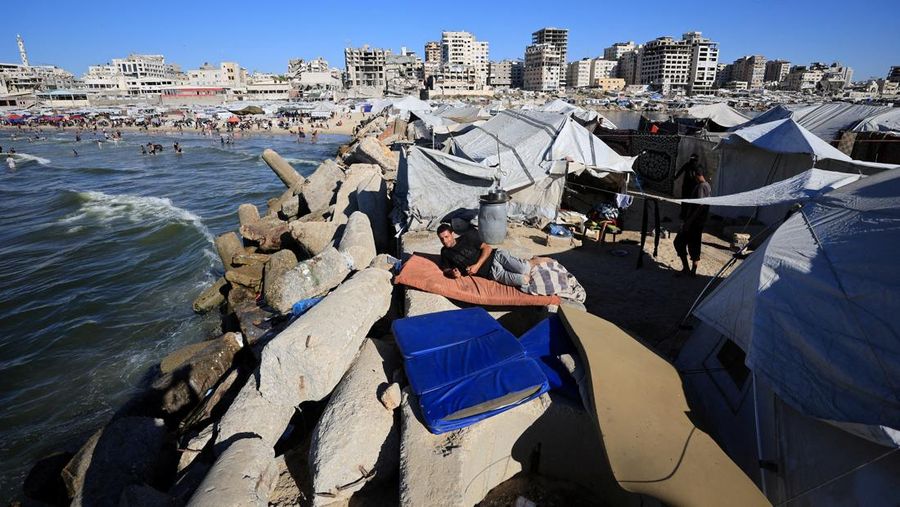
For many Gazans, the beach represents one of the very few remaining public spaces where families can gather and children can play relatively freely. Years of conflict have decimated much of Gaza’s civilian infrastructure, including parks, sports facilities, and other recreational areas. Bombardments have reduced buildings to rubble, and ongoing reconstruction efforts are hampered by the blockade’s restrictions on building materials. Consequently, the coastline becomes a vital, albeit limited, escape valve. It offers a psychological break from the cramped, often dilapidated conditions of homes and displacement camps, providing an open expanse where the immediate threat of conflict can, for a few hours, be momentarily forgotten. The sound of waves can temporarily drown out the distant hum of drones or the lingering anxieties of everyday life in a besieged territory.
The Broader Context of Gaza’s Humanitarian Crisis
Understanding the significance of these beach gatherings requires acknowledging the broader humanitarian context of the Gaza Strip. Since the intensification of the blockade in 2007 following Hamas’s takeover, the strip has faced severe restrictions on imports, exports, and the movement of people. This policy, cited by Israel as a security measure, has had devastating effects on the civilian population.
- Population Density and Displacement: With over two million residents in an area of just 365 square kilometers, Gaza is one of the most crowded places on Earth. Recurring conflicts have led to significant internal displacement, forcing many families to live in overcrowded shelters, temporary housing, or with relatives, further straining resources and increasing vulnerability to extreme weather conditions like summer heat.
- Economic Devastation: Unemployment rates in Gaza consistently hover around 50%, among the highest globally, with youth unemployment often exceeding 70%. The blockade has decimated industries, limited trade, and stifled private sector growth, pushing a large portion of the population into poverty. The World Bank reported in recent years that over 80% of Gazans are dependent on humanitarian aid.
- Infrastructure Collapse: Essential services like electricity, water, and sanitation are chronically underfunded and severely damaged. Power plants operate sporadically due to fuel shortages, leading to widespread blackouts. Wastewater treatment facilities are often non-functional, contributing to the pollution of the Mediterranean Sea, which, ironically, is also the primary source of recreation.
- Healthcare Strain: The healthcare system is perpetually on the brink of collapse, lacking essential medicines, equipment, and specialized personnel. The psychological toll of living under conflict and blockade is immense, with mental health services being critically inadequate to meet the widespread need for trauma support, especially among children.
Seeking Solace: Voices from the Shore
Among the throngs of people seeking refuge from the heat and the daily grind was Ahmed Mukbil, a resident quoted by Reuters. He explained that his family deliberately made the journey to the beach to temporarily escape the extreme temperatures and the "extremely limited living conditions" in their displacement camp. Mukbil’s sentiment resonates with countless others. For many Palestinian parents in Gaza, bringing their children to the beach is not merely a leisure activity; it is an act of defiance against despair, a conscious effort to carve out moments of childhood innocence and joy amidst adversity.
Children, in particular, bear the heaviest psychological burden of the conflict. Growing up in an environment marked by violence, displacement, and deprivation, opportunities for normal play and emotional development are severely restricted. The beach offers them a rare chance to experience freedom, to run and splash without the confines of overcrowded camps or the constant fear of airstrikes. Parents often express a profound desire to shield their children from the harsh realities, even if only for a few hours. "We just want our children to feel normal, to laugh and play like other children in the world," one mother might say, reflecting a common sentiment. These moments on the beach are crucial for mental well-being, providing a temporary escape from stress and trauma, fostering a sense of community, and allowing individuals to momentarily reclaim a semblance of control over their lives.
The Beach: A Scarce Haven for Recreation
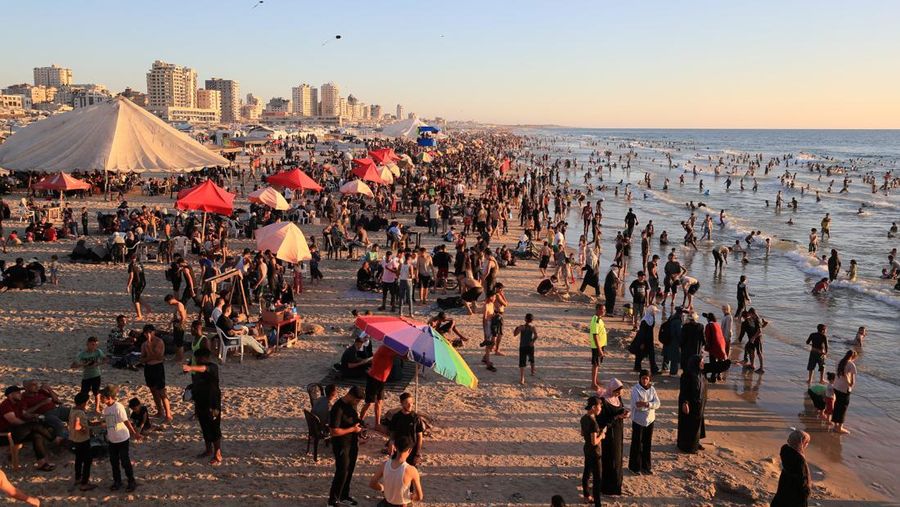
The Mediterranean coastline is a geographical blessing for Gaza, providing its primary natural resource and a crucial psychological outlet. In a territory where many man-made recreational facilities have been damaged or destroyed by successive military operations, the beach stands as a resilient, albeit imperfect, alternative. Public parks and playgrounds, if they exist, are often dilapidated or overcrowded. Private entertainment options are scarce and unaffordable for the majority of the population.
Consequently, the beach becomes a versatile space. It serves as a communal gathering point for families, a playground for children, and a contemplative space for adults. Observed activities typically include swimming, building sandcastles, playing soccer, and picnicking. The presence of individuals attempting to surf, as noted in the Reuters report, is particularly symbolic. Surfing requires a certain degree of freedom and access to equipment, highlighting the ingenuity and determination of Gazans to pursue normal activities despite the overwhelming constraints. These activities, while seemingly mundane, take on profound significance in Gaza, representing a steadfast commitment to life and hope against a backdrop of perpetual crisis.
Challenges and Limitations: Beyond the Horizon
While the scenes of joyous crowds on Gaza’s beaches offer a poignant glimpse into the human spirit’s resilience, it is crucial to recognize that this respite is inherently temporary and comes with its own set of challenges. The moments of normalcy are often fleeting, punctuated by the ever-present threat of renewed conflict. The underlying issues of the blockade, limited resources, and political instability persist beyond the horizon of the Mediterranean.
Moreover, the very environment offering relief is not without its perils. The severe pollution of Gaza’s coastal waters due to untreated sewage poses significant health risks to swimmers. Public health officials frequently issue warnings about high levels of bacterial contamination, which can lead to skin infections, gastrointestinal illnesses, and other health problems. Despite these warnings, the desperate need for cooling and recreation often outweighs the perceived risks for many residents. The lack of proper sanitation facilities, lifeguards, and emergency services along parts of the coastline also adds to the precariousness of these outings. The beach, while a haven, also reflects the broader systemic failures and humanitarian neglect that characterize life in the Gaza Strip.
International Perspective and Calls for Action
The images of a bustling Gaza beach serve as a stark reminder to the international community of the complex and often contradictory realities on the ground. While they showcase the undeniable resilience of the Palestinian people, they also underscore the urgent need for a lasting resolution to the Israeli-Palestinian conflict and an end to the blockade. Humanitarian organizations, including various UN agencies and human rights groups, have consistently called for improved access for humanitarian aid, the lifting of restrictions on goods and people, and investments in Gaza’s devastated infrastructure.
These organizations frequently issue reports detailing the deteriorating living conditions, the psychological impact of prolonged conflict, and the specific vulnerabilities of children. The sight of thousands seeking solace in the sea can amplify these calls, demonstrating the profound human cost of political stalemates and ongoing violence. It highlights that even basic human rights, such as the right to recreation and a safe environment, are severely compromised in Gaza. International observers often reiterate that such moments of apparent normalcy should not be mistaken for an improvement in overall conditions but rather as a testament to the extraordinary coping mechanisms of a population under immense pressure.
Resilience Amidst Adversity
The throngs of Palestinians on Gaza City beach, escaping the suffocating heat and the psychological burden of conflict, represent more than just a summer outing. It is a powerful testament to the enduring human need for hope, normalcy, and simple pleasures, even in the most challenging and restrictive circumstances. The collective act of seeking respite by the sea is a profound expression of resilience, a refusal to succumb entirely to despair. For a few hours, the Mediterranean offers a blue expanse of freedom, a space where the weight of blockade and conflict can be momentarily lifted, allowing families to reconnect and children to experience a fleeting sense of joy.
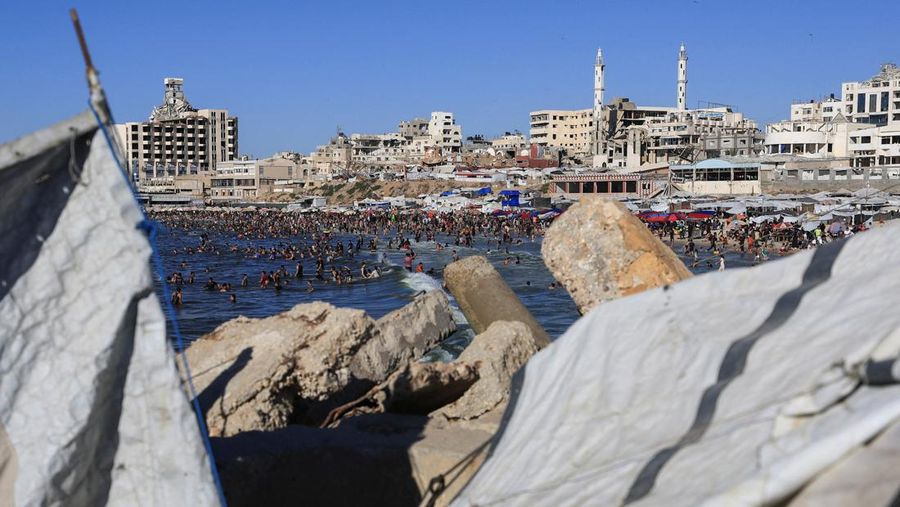
This scene, where the mundane act of swimming and playing on the beach takes on extraordinary significance, serves as a poignant reminder to the world: beneath the headlines of conflict and crisis, there exists a vibrant community striving to live, to find moments of peace, and to nurture the spirit of their children. It underscores the critical importance of addressing the root causes of the humanitarian crisis in Gaza, not only to alleviate immediate suffering but also to allow its people to build a future where such simple acts of recreation are not a desperate escape, but an unquestioned part of everyday life.