Paryono Ramadhan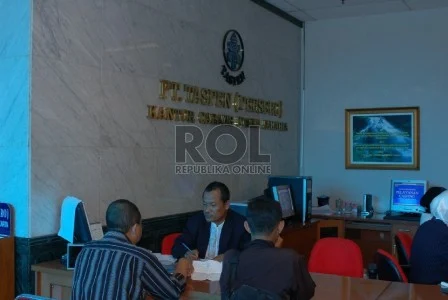
PT Taspen (Persero), the state-owned enterprise responsible for civil servant pensions and social security, announced a pivotal initiative to commence the refund of Civil Servant Housing Savings (Taperum PNS) starting June 1st. This move is specifically designed to benefit all civil servants who reach retirement age on or after this date, with the notable exception of personnel within the Ministry of Defense, the Indonesian National Armed Forces (TNI), and the Indonesian National Police (Polri). The announcement signals a significant step in the government’s ongoing efforts to streamline public housing programs and ensure the financial entitlements of its retiring workforce are met efficiently.
Understanding Taperum PNS: A Legacy Program for Civil Servant Housing
The Taperum PNS program was established decades ago with the noble objective of assisting civil servants in acquiring housing. It operated as a mandatory savings scheme, where a portion of a civil servant’s monthly salary was deducted and pooled into a fund. This fund was then managed by the Agency for the Consideration of Civil Servant Housing Savings (Bapertarum PNS), an entity specifically created to oversee and facilitate housing ownership for state employees. The program served as a crucial social safety net and a direct mechanism for the government to address the housing needs of its extensive civil service, recognizing the importance of stable housing for national development and employee welfare.
For decades, Bapertarum PNS played a vital role in providing various housing benefits, including down payment assistance, housing loans, and housing development support for eligible civil servants. The contributions, though modest, were a consistent feature of civil servant remuneration, embodying a long-term commitment to their well-being. The system, while effective in its time, faced challenges inherent in managing a vast and diverse pool of beneficiaries, leading to calls for modernization and greater efficiency in public housing provision.
The Evolution of Civil Servant Housing Schemes: From Bapertarum to BP Tapera
The decision to refund Taperum PNS contributions is inextricably linked to a broader reform in Indonesia’s public housing policy, marked by the establishment of the Public Housing Savings Management Agency (BP Tapera) and the subsequent dissolution of Bapertarum PNS. The journey towards this reform began with the enactment of Law No. 4 of 2016 concerning Public Housing Savings, which laid the legal groundwork for a more comprehensive and sustainable housing finance system for all Indonesian citizens, including civil servants.
This law mandated the creation of BP Tapera, an independent body tasked with managing a new national public housing savings program (Tapera). The core principle of Tapera is to accumulate long-term funds from mandatory contributions to finance affordable housing for participants. Following this, Presidential Regulation No. 25 of 2018 formally dissolved Bapertarum PNS, transferring its assets, liabilities, and functions to BP Tapera. This transition aimed to consolidate housing finance mechanisms, eliminate redundancies, and establish a single, robust platform for national housing savings.
As part of this comprehensive transition, the funds accumulated under the old Taperum PNS scheme needed to be managed and disbursed appropriately. For active civil servants, their Taperum funds were seamlessly transferred to BP Tapera. However, for those retiring, the mechanism for refunding their accumulated Taperum contributions became a critical administrative task. PT Taspen, with its extensive experience and infrastructure in managing civil servant pensions and benefits, was logically positioned to handle these refunds, ensuring a smooth and reliable process for retirees. The collaboration between Taspen and Bapertarum PNS, formalized through a cooperation agreement prior to Bapertarum’s dissolution, underscores the meticulous planning involved in this transition to ensure beneficiaries receive their due entitlements.
Detailed Payment Mechanism and Eligibility
The official announcement from Taspen, conveyed by its Corporate Secretary Iwan Soeroto in a press statement, clarified the operational details of the Taperum PNS refund. The payment process is designed for maximum convenience, integrated directly with the disbursement of the first pension payment and the Old Age Savings (Tabungan Hari Tua – THT). This bundled approach means that retiring civil servants will receive their Taperum refund, initial pension, and THT as a single package at their respective Taspen branch offices across the archipelago. This streamlined method minimizes the administrative burden on retirees, who would otherwise have to navigate multiple agencies or processes to claim their various entitlements.
The eligibility criteria are precise: the refund is specifically for all civil servants retiring on or after June 1st. The explicit exclusion of personnel from the Ministry of Defense, TNI, and Polri is due to their distinct social security and housing benefit systems, which operate independently of the general civil servant framework managed by Taspen. This differentiation reflects the specialized nature of military and police service benefits in Indonesia.
The payment process, facilitated by Taspen’s robust network of branch offices, ensures accessibility for retirees, many of whom reside in remote areas. Taspen’s long-standing role as the primary administrator for civil servant social security allows it to leverage existing infrastructure and expertise, ensuring that the refunds are processed accurately and disbursed promptly. This commitment to efficiency is a cornerstone of Taspen’s operational philosophy, aiming to provide seamless service to its millions of beneficiaries.
The Financial Landscape of Taperum Contributions
Historically, the contribution structure for Taperum PNS was based on fixed monthly amounts, differentiated by civil servant salary grades. As per Presidential Decree (Kepres) No. 46 of 1994, which governed the Taperum PNS program for non-TNI/Polri/Kemhan personnel, the monthly contributions were set as follows:

- Golongan I (Category I): Rp 3,000
- Golongan II (Category II): Rp 5,000
- Golongan III (Category III): Rp 7,000
- Golongan IV (Category IV): Rp 10,000
These fixed amounts, while simple to administer, did not proportionally adjust with increases in civil servant salaries or the rising cost of living and housing over the years. This disparity led to discussions and proposals for a more equitable and sustainable contribution model. Indeed, as Iwan Soeroto noted, Taspen had been actively advocating for a shift towards a contribution model based on a percentage of the civil servant’s total salary, specifically proposing 2.5 percent. This proposed change aimed to create a more dynamic and fair system, where contributions would automatically adjust with salary scales, reflecting a more realistic contribution towards housing savings.
This historical advocacy by Taspen for a percentage-based contribution system foreshadowed the eventual design of the new Tapera program under BP Tapera. The Tapera scheme, indeed, adopts a percentage-based contribution model, ensuring that contributions are proportional to income, thereby promoting greater equity and financial sustainability in the long run. The transition from fixed contributions under Taperum to percentage-based contributions under Tapera represents a fundamental policy shift aimed at strengthening the national housing finance framework.
Official Perspectives and Administrative Efficiency
Iwan Soeroto’s statements underscore the government’s commitment to transparency and efficiency in managing civil servant entitlements. The bundling of Taperum refunds with pension and THT payments is a direct outcome of this commitment, designed to simplify the administrative process for retirees. "The payment is done in one package for the convenience of civil servants in receiving their rights," Iwan reiterated, emphasizing the user-centric approach adopted by Taspen. This approach reflects a broader government strategy to enhance public service delivery and reduce bureaucratic hurdles.
Beyond the immediate operational details, the initiative aligns with the strategic objectives of the Ministry of State-Owned Enterprises (BUMN), which oversees Taspen. BUMN Minister Erick Thohir has consistently championed efficiency and good corporate governance within state-owned enterprises. Taspen’s role in executing this Taperum refund is an example of a BUMN effectively fulfilling its social mandate while adhering to principles of operational excellence. The smooth execution of such a large-scale refund operation, involving potentially hundreds of thousands of retirees annually, demonstrates Taspen’s robust administrative capacity and its critical role in the nation’s social security architecture.
Furthermore, the decision to proceed with these refunds signifies the final stages of winding down the Taperum PNS program, paving the way for the full operationalization of BP Tapera as the primary national entity for public housing savings. This strategic move ensures that civil servants, like other segments of the workforce, will benefit from a unified and more comprehensive housing savings system moving forward.
Broader Implications: Financial Security and National Housing Strategy
The refund of Taperum PNS contributions carries several significant implications, both for individual civil servants and for the broader national housing strategy. For retiring civil servants, the refund provides a direct financial injection at a crucial stage of their lives. While the individual amounts might vary based on years of service and salary grade, this lump sum can contribute significantly to their post-retirement financial security, potentially used for medical expenses, family support, or even investment in new ventures. It represents the realization of a long-term saving, providing tangible benefits as they transition from active service.
From a macroeconomic perspective, the periodic disbursement of these refunds, combined with pensions and THT, represents a substantial flow of funds into the economy. This injection can stimulate local economies as retirees utilize these funds for consumption, savings, or investment, contributing to overall economic activity.
More broadly, this initiative reinforces the government’s commitment to an equitable and accessible housing sector. By dissolving Bapertarum PNS and transitioning to BP Tapera, Indonesia is consolidating its efforts to address the persistent housing deficit. BP Tapera’s mandate extends beyond civil servants to all formal and informal workers, aiming to provide affordable housing solutions across the spectrum of society. The Taperum refund, therefore, is not just an administrative payout; it’s a symbolic step in a larger policy evolution aimed at creating a more inclusive and effective national housing finance ecosystem.
Looking Ahead: The Future of Civil Servant Housing Under BP Tapera
With the Taperum PNS refunds underway, the focus firmly shifts to BP Tapera and its role in shaping the future of housing for civil servants and the wider populace. BP Tapera operates on a mandatory contribution model, where participants contribute a percentage of their income, matched by employer contributions, to a collective fund. These funds are then utilized to provide various housing benefits, including housing ownership credits, housing renovation loans, and housing rental assistance, all designed to be affordable and accessible.
For civil servants who continue their service, their contributions now flow into the BP Tapera system, ensuring continuity in their housing savings journey under a more robust and expansive framework. The new system is designed to be more adaptable to economic changes and more equitable, reflecting current income levels rather than fixed historical rates.
The successful implementation of the Taperum PNS refund program by Taspen is a testament to the collaborative spirit among state entities and their shared commitment to public welfare. It marks the closure of one chapter in Indonesia’s civil servant housing policy and the opening of another, more comprehensive and integrated approach under BP Tapera. This transition is expected to foster greater financial security for civil servants in their retirement and contribute significantly to the national goal of providing adequate and affordable housing for all Indonesians. The ongoing efforts reflect a dynamic policy landscape, constantly adapting to better serve the needs of the nation’s dedicated public servants and its citizens at large.