Eko Sulistyo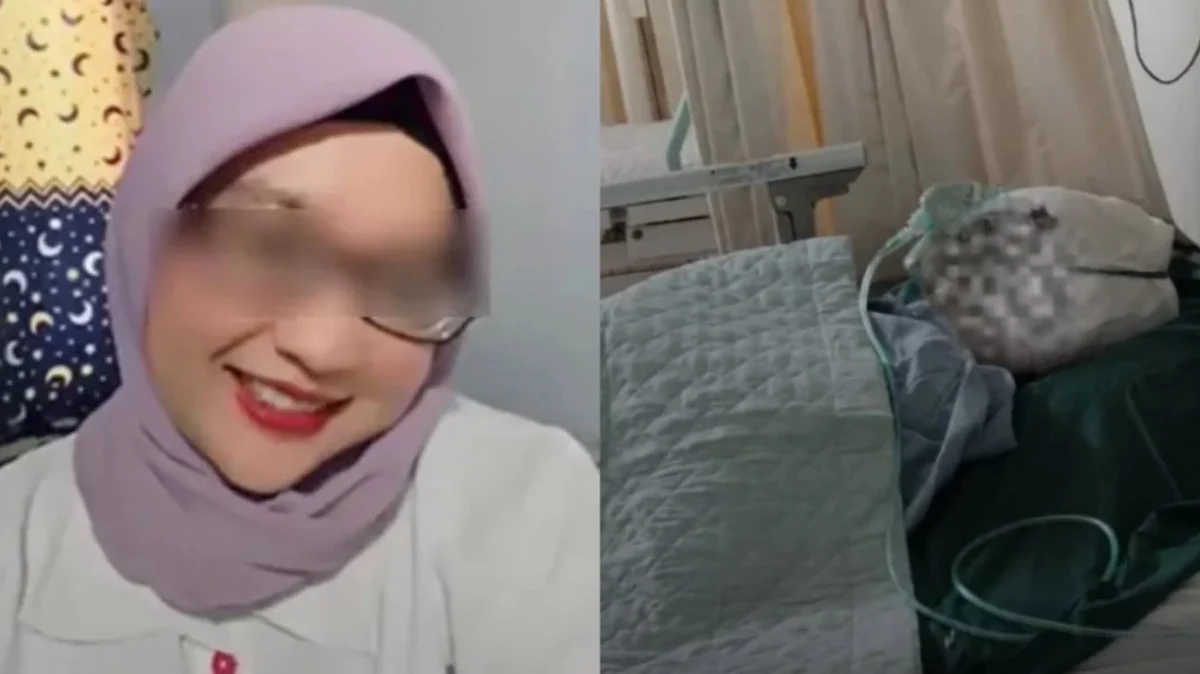
The harrowing details of a three-year ordeal involving the captivity and torture of a young woman in West Java have come to light following a deeply emotional testimony from her father, Irin, who described the catastrophic physical condition in which his daughter, identified by the initials YTR, was found. The case, which has shocked the nation, involves allegations of extreme domestic and physical abuse perpetrated by the victim’s boyfriend, Taufik Hidayat, who was recently apprehended by the West Java Regional Police (Polda Jabar). In a meeting with the former Governor of West Java and current public figure Dedi Mulyadi, Irin detailed the desperate measures he took to provide immediate relief to his daughter’s infected wounds, which included the discovery of maggots and severe abscesses on her scalp.
The testimony provided by Irin paints a grim picture of the neglect and brutality YTR endured during her disappearance. Upon her rescue and return to the family’s care, the father took it upon himself to begin the cleaning process of her injuries. He recounted that while gently clearing her hair and scalp to locate the source of her pain, he discovered live maggots emerging from the wounds. The presence of larvae indicates not only the severity of the lacerations but also a prolonged period of lack of medical attention and hygiene, common in cases of long-term captivity where victims are denied basic human rights and healthcare.
In an act born of parental desperation and the lack of immediate surgical equipment, Irin described how he had to manually extract large quantities of pus from his daughter’s head. He stated that the infection was so deep and the pressure so great that he used his own mouth to suck the purulent discharge out, ensuring he did not cause further trauma to the already fragile tissue. Irin estimated that the total volume of pus removed from her head alone was equivalent to five large glasses. This extraordinary detail highlights the life-threatening nature of the infections YTR was battling at the time of her rescue. The father further noted that the back of her head appeared to have "holes" or deep indentations, which he believes were caused by repeated blunt-force trauma or untreated necrotic tissue resulting from the suspect’s alleged violence.
A Timeline of Disappearance and Deception
The case of YTR began nearly three years ago in Rancaekek, Bandung Regency. According to family records and statements, the victim was a young woman with a promising future before she became involved with the suspect, Taufik Hidayat. Initially, the relationship appeared normal to the family; YTR had even introduced Hidayat to her parents. However, shortly after this introduction, the communication between YTR and her family began to dwindle before eventually being severed entirely. For three years, the family remained in a state of agonizing uncertainty, unable to locate her or receive any credible information regarding her whereabouts.
It is now understood that during this period, YTR was allegedly kept in a state of forced confinement. The suspect is believed to have moved her between various locations, eventually settling in a rented room where the most severe of the abuses took place. Captivity cases of this nature often involve psychological grooming and "gaslighting," where the perpetrator isolates the victim from their support network to exert total control. In YTR’s case, the physical confinement was matched by a complete digital and social blackout, preventing her from seeking help or alerting her family to her location.
The breakthrough in the case occurred in June 2026, when information regarding her whereabouts and her dire physical condition reached the authorities and her family. The subsequent rescue operation revealed the full extent of the horror. YTR was found in a state of severe malnutrition, showing signs of long-term psychological trauma and physical scarring that suggested a pattern of systematic torture.
Law Enforcement Response and the Arrest of Taufik Hidayat
The West Java Regional Police acted swiftly following the formal report of the discovery. On the evening of Tuesday, June 23, 2026, a joint task force from Polda Jabar tracked the suspect to a residential area in the Ciparay District of Bandung Regency. The arrest was confirmed by the West Java Police Chief, Inspector General (Irjen) Rudi Setiawan, who stated that the suspect was apprehended without significant resistance at approximately 6:30 PM WIB.
Taufik Hidayat now faces a series of severe criminal charges under the Indonesian Penal Code (KUHP) and the Law on Sexual Violence Crimes (UU TPKS), given the nature of the captivity and the alleged physical abuse. Legal experts suggest that the suspect could be charged under Article 333 of the KUHP regarding unlawful deprivation of liberty, which carries a maximum sentence of eight years, or up to twelve years if the act results in heavy biological injury. Furthermore, Article 351 regarding aggravated assault will likely be applied, considering the permanent scarring and the life-threatening infections the victim suffered.
The police are currently conducting a thorough forensic investigation of the site where YTR was held. Investigators are looking for evidence of the instruments used in the torture and are questioning witnesses in the neighborhood to determine if anyone was aware of the victim’s presence or the sounds of distress during the three-year period. The "silence" of the surrounding community in such cases is often a point of critical analysis for sociologists, highlighting the challenges of urban anonymity and the "bystander effect."
Medical Recovery and the Path to Facial Reconstruction
While the legal process against Hidayat moves forward, the primary focus for YTR’s family is her long-term medical and psychological recovery. Melanie, the victim’s sister-in-law, provided an update on the medical plan formulated by the team of doctors currently treating YTR. The injuries to her face are so extensive that a series of reconstructive surgeries will be required to restore both function and appearance.
However, these surgeries cannot proceed immediately. The first priority is the management of the massive infections that Irin described. Doctors must ensure that the sepsis risk is eliminated and that the necrotic tissue has been properly debrided. Melanie explained that the surgical intervention would be conducted in stages. The initial focus will be on the reconstruction of the lips, which suffered significant damage, followed by a recovery period before surgeons attempt to repair the nasal structure.
Facial reconstruction in trauma cases is a complex process that involves not only plastic surgeons but also maxillofacial specialists and psychologists. The goal is not merely aesthetic; it is to restore the victim’s ability to eat, speak, and breathe without pain, and to mitigate the daily visual reminder of the trauma she endured. The psychological toll of such visible injuries often requires intensive therapy to address Body Dysmorphic Disorder (BDD) and Post-Traumatic Stress Disorder (PTSD) that frequently follow prolonged captivity and torture.
Analysis of Gender-Based Violence and Societal Implications
The case of YTR is a harrowing reminder of the prevalence of extreme violence within intimate partner relationships in Indonesia. Data from the National Commission on Violence Against Women (Komnas Perempuan) suggests that cases of "dating violence" (Kekerasan Dalam Pacaran) are often underreported compared to domestic violence within marriages. The three-year duration of YTR’s disappearance highlights a critical gap in the social safety net and the monitoring of missing persons.
This incident also brings to light the role of public figures and social media in the Indonesian justice system. The involvement of Dedi Mulyadi and the subsequent viral nature of the father’s testimony have placed significant public pressure on law enforcement to ensure a rigorous prosecution. While "viral justice" can speed up administrative processes, it also reflects a public perception that high-profile advocacy is sometimes necessary to bring hidden crimes to the forefront of the national conversation.
Furthermore, the medical details shared by Irin—specifically the act of sucking out pus—underscore the lack of immediate psychological and medical crisis intervention for families of victims in rural or suburban areas. While Irin’s actions were driven by love and a desire to help, they also highlight the desperate state of those who find themselves as the first responders to horrific crimes without professional guidance.
Broader Impact and Future Outlook
As YTR begins her long journey toward healing, her case serves as a catalyst for discussions regarding community vigilance. Local authorities in Bandung and across West Java are being urged to strengthen neighborhood watch programs and to encourage residents to report suspicious behavior in rented accommodations (kost-kostan), which are often used by perpetrators to hide victims due to the transient nature of the residents.
The prosecution of Taufik Hidayat will be a landmark case in the application of the newer protections offered by the UU TPKS, which was designed to provide more comprehensive legal grounds for victims of physical and sexual abuse. The evidence provided by the medical reports, the father’s testimony, and the forensic analysis of the captivity site will be crucial in securing a conviction that reflects the gravity of the three-year nightmare YTR was forced to endure.
For the family, the road ahead is one of patience and resilience. The physical scars may eventually fade with advanced medical technology, but the psychological wounds of three years of isolation and pain will require a lifetime of support. The courage shown by Irin in speaking out and the resilience of YTR in surviving her ordeal have become a symbol of the fight against domestic horror, sparking a renewed commitment among regional leaders to ensure that such a tragedy is never repeated.