Nila Kartika Wati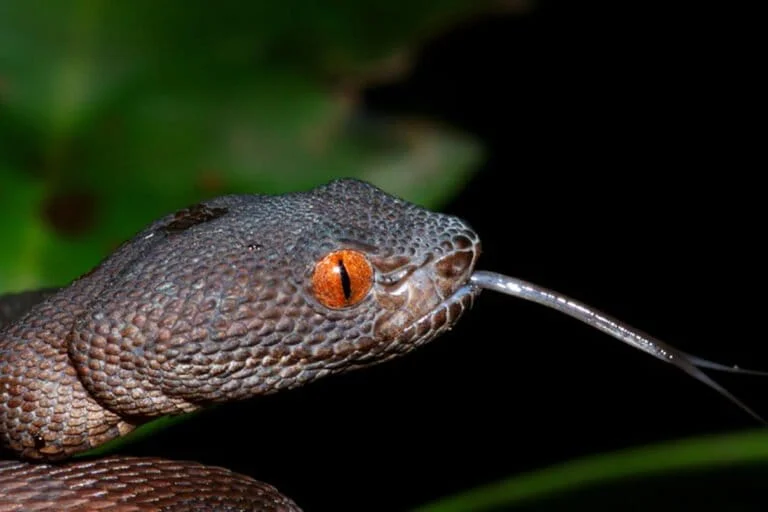
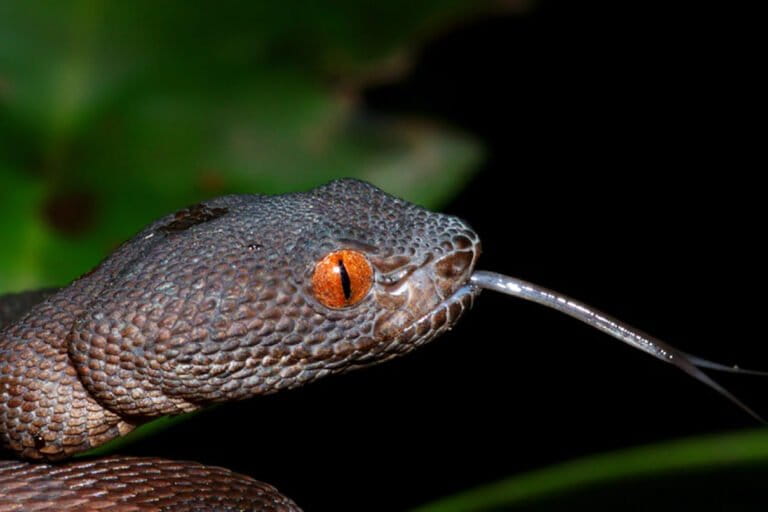
In the dense, brackish reaches of Southeast Asia’s mangrove forests, a master of camouflage resides within a dual existence, navigating both the low-hanging canopy and the treacherous mudflats below. The Mangrove Viper, scientifically known as Trimeresurus purpureomaculatus, represents one of the most specialized predators in the coastal ecosystem. Known for its remarkable ability to blend into the varying textures of the shoreline, its coloration spans a diverse spectrum—from jet black and deep olive green to slate gray and even a distinctive purplish-brown. This chromatic flexibility allows the viper to disappear against the gnarled roots of Rhizophora trees, the dark, anaerobic mud of the intertidal zone, and the high-contrast shadows cast by the tropical sun. During the daylight hours, the snake remains nearly statuesque, often coiled on branches just one to two meters above the water’s surface, embodying a level of patience that renders it virtually invisible to the untrained eye.
However, beneath this tranquil exterior lies a formidable biological machine equipped with sophisticated sensory organs and a potent chemical arsenal. As a member of the Pit Viper group within the Viperidae family, the Mangrove Viper is a subject of increasing interest for both herpetologists and medical professionals. Recent findings and clinical reports have begun to reshape the scientific understanding of this species, revealing it to be more dangerous and behaviorally flexible than previously documented.
Anatomical Sophistication and Sensory Capabilities
The Mangrove Viper typically reaches a maximum length of approximately 100 centimeters, a size that allows it to remain agile within the cluttered environment of a mangrove swamp. Its most defining physical characteristic, shared with other pit vipers, is the presence of loreal pits located between the eyes and the nostrils. These organs are highly sensitive infrared-sensing structures that function as a secondary pair of "eyes," allowing the snake to "see" heat signatures.
This thermoreceptive capability is crucial for a predator that transitions into an active hunter under the cover of darkness. In the absolute blackness of a coastal forest, the viper can detect the minute temperature differences between a warm-blooded mammal or bird and the cooler surrounding foliage. This biological "night vision" enables the Mangrove Viper to strike with unerring accuracy. While it remains stationary during the day, relying on its camouflage to avoid detection by both prey and larger predators, the night transforms it into a proactive seeker of sustenance.
The Clinical Reality of Mangrove Viper Envenomation
For decades, the bites of many arboreal vipers were colloquially dismissed by some as causing only localized, non-life-threatening symptoms. However, modern clinical evidence has debunked the myth that the Mangrove Viper’s venom is of minor concern. The venom is primarily hemotoxic, a complex cocktail of enzymes and proteins designed to destroy cellular tissue, rupture blood vessels, and catastrophically disrupt the body’s natural blood-clotting mechanisms.
A landmark case study published in the journal Wilderness & Environmental Medicine in 2016 provided a sobering look at the clinical impact of a T. purpureomaculatus strike. The report detailed the experience of a 40-year-old male in Singapore who was bitten on his right hand while navigating a mangrove area. Contrary to the "mild" reputation sometimes attributed to the species, the patient suffered from significant local effects, including massive swelling that extended up the arm and localized tissue necrosis (cell death).
The medical management of the case highlighted a critical gap in regional snakebite treatment: the lack of a species-specific antivenom for the Mangrove Viper. In this instance, physicians were forced to administer six vials of an Indian polyvalent antivenom. While not specifically designed for T. purpureomaculatus, the polyvalent serum provided enough cross-reactivity to stabilize the patient’s condition. Medical experts Mong and Tan, the authors of the study, emphasized that the Mangrove Viper should be treated as a high-risk species, noting that "the bite is severely venomous and can cause significant local effects, including extensive swelling and tissue necrosis." This case served as a catalyst for a re-evaluation of how coastal medical facilities stock antivenom and train staff for encounters with maritime reptiles.
Geographical Distribution and Habitat Specialization
The Mangrove Viper’s range is a testament to its success as a specialist. It is found throughout the coastal fringes of Myanmar, Thailand, Cambodia, Vietnam, Singapore, Peninsular Malaysia, and across the vast Indonesian archipelago. Its survival is intrinsically linked to the health of the mangrove ecosystem—a habitat characterized by high salinity, fluctuating tides, and a complex architecture of aerial roots.
The mangrove forest provides the perfect biological fortress. The intricate network of roots offers countless crevices for concealment, while the high productivity of these "sea forests" ensures a steady supply of prey, ranging from small rodents and nesting birds to frogs and fish. As human encroachment into these areas increases—through aquaculture, coastal development, and ecotourism—the frequency of human-viper interactions has risen, making the understanding of their distribution and behavior a matter of public safety as well as ecological study.
Behavioral Flexibility: The Shift to Ophiophagy
One of the most significant recent discoveries regarding the Mangrove Viper concerns its hunting behavior. Traditionally classified as a primarily arboreal (tree-dwelling) snake, it was long assumed that the species rarely descended to the ground except to move between trees. However, a 2021 observation published in the journal Herpetology Notes by researchers Figueroa and McCleary has fundamentally altered this perception.
In Pasir Ris Park, Singapore, researchers documented a juvenile Mangrove Viper descending from the canopy to the muddy forest floor. In a surprising display of opportunistic predation, the viper attacked and consumed a Crab-eating Water Snake (Fordonia leucobalia). This event provided the first formal documentation of ophiophagy—the act of eating other snakes—in the Mangrove Viper.
This discovery suggests that T. purpureomaculatus is a far more versatile hunter than previously believed. It does not merely wait for prey to pass its branch; it is capable of identifying opportunities on the ground and transitioning from an arboreal ambush predator to a terrestrial hunter. This flexibility likely allows the species to survive in environments where traditional prey might be seasonal or scarce, solidifying its role as an apex predator within the mangrove food web.
Chronology of Scientific Understanding
The scientific narrative of the Mangrove Viper has evolved through several distinct phases:
- Early Taxonomy and Identification: For much of the 19th and early 20th centuries, the Mangrove Viper was cataloged primarily based on its varied color morphs, leading to some initial confusion regarding its classification within the Trimeresurus genus.
- Habitat Association: Mid-20th-century studies firmly established the species as a mangrove specialist, noting its physiological adaptations to saline environments.
- Toxicological Re-evaluation (2010s): Following a series of severe bite reports in Singapore and Malaysia, researchers began to analyze the specific components of its hemotoxic venom, leading to the 2016 publication that warned of its necrotic potential.
- Behavioral Expansion (2021–Present): The documentation of ground-based hunting and ophiophagy has opened new avenues of research into the snake’s cognitive and predatory flexibility.
Ecological Implications and Conservation Status
The Mangrove Viper serves as a critical indicator of the health of coastal ecosystems. As a predator that sits at the top of the mangrove food chain, its presence suggests a robust population of lower-level prey species. By regulating the populations of rodents and other small animals, the viper helps maintain the delicate balance of the forest.
However, the Mangrove Viper faces significant threats from habitat loss. Southeast Asia has one of the highest rates of mangrove deforestation in the world, driven by the expansion of shrimp farming and urban development. When these forests are cleared, vipers lose their camouflage and hunting grounds, often forcing them into closer proximity to human settlements. This displacement increases the risk of "conflict" bites, which are often defensive in nature.
Environmental analysts suggest that the protection of the Mangrove Viper is inextricably linked to the protection of the mangroves themselves. "You cannot save the predator without saving the labyrinth it inhabits," noted one regional conservationist. "The viper is a silent guardian of the coast; its disappearance would signal a collapse of the complex biological interactions that make mangroves so resilient."
Safety and Public Awareness
Given the viper’s potent venom and its tendency to remain motionless, public awareness is the primary tool for preventing injury. In countries like Singapore and Thailand, where mangrove boardwalks are popular tourist attractions, authorities have begun installing clearer signage to warn visitors of the presence of venomous snakes.
Experts advise that when traversing mangrove areas, individuals should:
- Avoid touching or leaning on low-hanging branches without a thorough inspection.
- Wear sturdy, high-topped footwear if walking near mudflats.
- Maintain a respectful distance if a snake is spotted, as the Mangrove Viper is known for its lightning-fast strike when it perceives a threat.
Conclusion
The Mangrove Viper (Trimeresurus purpureomaculatus) remains one of the most enigmatic and misunderstood inhabitants of the Southeast Asian coast. From its sophisticated infrared sensing and complex venom chemistry to its newly discovered ability to hunt other snakes on the forest floor, it is a creature of immense biological complexity. As research continues to peel back the layers of its behavior, the Mangrove Viper stands as a reminder of the hidden dangers and wonders that exist within the world’s most vital coastal buffers. It is not merely a threat to be feared, but a vital component of the natural world that requires both respect and rigorous scientific study to ensure its continued role in the balance of the ecosystem.