Nila Kartika Wati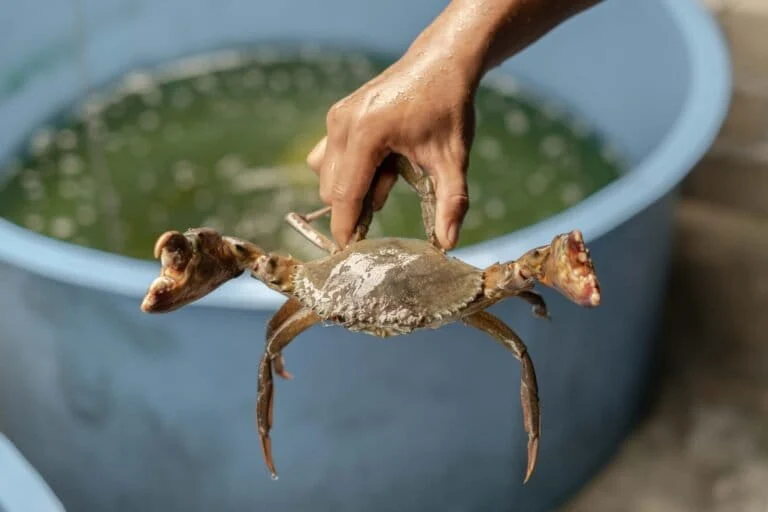
In the quiet coastal village of Sugian, located within the Sambelia District of East Lombok, Eli Ernawati begins her day not with the assistance of government-sponsored programs, but with the grit of a self-made entrepreneur. Eli has never received formal training from the state, nor has she been granted access to bank capital or technical guidance from the local agricultural office. Within the modest confines of her brick-walled home, she meticulously sorts through the mud crab harvest brought in by her husband. Some of the crabs are destined for middlemen, while others are reserved for a loyal base of private buyers. This domestic operation, though humble, serves as the financial backbone for her family, covering the costs of rice, electricity, and the education of her three children. When the season is favorable, the income is sufficient to meet all household needs, representing a vital but precarious lifeline in a region where formal employment is scarce.
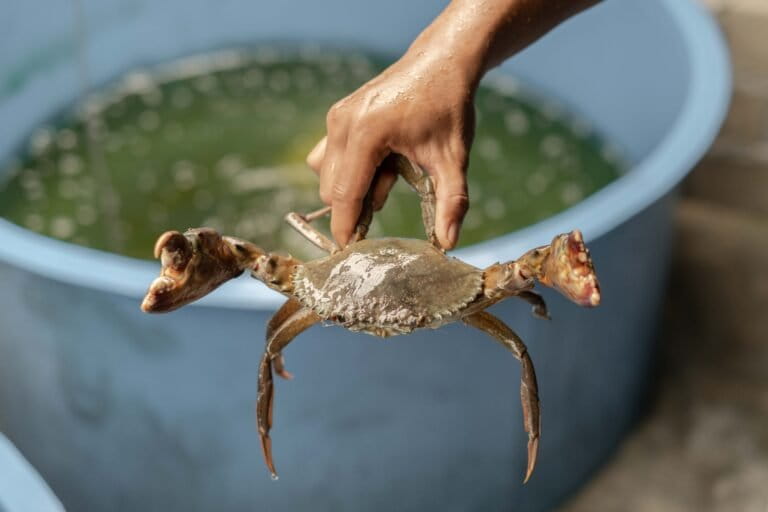
A short distance from Eli’s home, the landscape shifts toward the water’s edge where Jamil, a local pond operator, stands at the embankment of his farm. As the afternoon sun dips toward the horizon, he scatters a mixture of chopped trash fish and chicken heads into the corners of the pond. The water ripples as dark, greenish-brown carapaces and powerful pincers emerge—mud crabs (Scylla serrata) that have been raised from small, juvenile sizes. Jamil’s expertise is not the product of academic study or vocational workshops; it is the result of trial and error. He notes with a dry laugh that the community has had to learn everything independently, absorbing the financial losses of failed experiments without a safety net. This scene captures the broader reality of the mud crab sector in East Lombok: it is an industry that sustains hundreds of families while operating almost entirely in the shadows of official state support.
The Socio-Economic Foundation of Independent Aquaculture
The mud crab industry in East Lombok is a testament to the ingenuity of coastal communities in the face of institutional neglect. The model practiced by Jamil and his peers is both ecologically sound and economically strategic. Rather than harvesting juvenile crabs and selling them immediately for a pittance, farmers collect these undersized catches and house them in ponds for several months. During this "fattening" or grow-out phase, the crabs increase in weight and develop the firm meat quality demanded by high-end markets and export traders.
By delaying the sale, the value of the commodity increases significantly. A juvenile crab that might fetch a negligible price becomes a premium product once it reaches a weight of 300 to 500 grams. This method ensures that fishermen have a consistent market for their smaller catches, prevents the immediate depletion of wild stocks, and maximizes the local economic return. However, because this sector is largely informal, these farmers lack the bargaining power to influence market prices, leaving them vulnerable to the whims of large-scale collectors and fluctuating demand in distant urban centers like Mataram or Bali.
Ecological Synergy: The Role of Mangroves in Mud Crab Vitality
One of the most compelling aspects of the Sugian model is its intrinsic link to mangrove conservation. Unlike many forms of aquaculture that result in the clearing of coastal forests, mud crab farming thrives in the presence of healthy mangroves. Mud crabs are biologically adapted to the brackish, nutrient-rich environments of estuaries. They shun crystal-clear water, preferring the murky, organic-laden depths where they can hide and hunt.
Herman, the head of the local Community Surveillance Group (Pokmaswas) in Sugian, explains that the root systems of mangroves are essential for the crabs’ survival. The intricate "breathing" roots of the Avicennia and Rhizophora species provide shelter from predators, stabilize water temperatures, and increase dissolved oxygen levels. Furthermore, the leaf litter from the mangroves decomposes to support a complex food web of microorganisms and small crustaceans that serve as natural supplemental feed for the crabs. In ponds where mangroves are integrated, crabs are observed to be more active and less stressed, frequently huddling among the roots.
This synergy has given rise to the concept of silvofishery—a management system that integrates mangrove planting with pond aquaculture. This model is a prime example of the "Blue Economy" in practice: it fosters economic growth while simultaneously restoring degraded coastal ecosystems. By maintaining a healthy mangrove buffer, farmers not only protect their livelihoods but also contribute to carbon sequestration and coastal protection against erosion and storm surges.
The Legislative Labyrinth and the Governance Gap
Despite the clear potential for mud crab silvofishery to serve as a flagship for sustainable development in West Nusa Tenggara (NTB), it remains hampered by a complex regulatory environment. Mastur, the Head of the Marine Affairs and Fisheries Office (DKP) of East Lombok, acknowledges the immense potential of the sector but points to significant legal hurdles. Since the enactment of Law Number 23 of 2014 on Regional Government, the authority to manage coastal areas and sea territory up to 12 nautical miles has been transferred from regency-level governments to the provincial level.
This shift in jurisdiction has created an "intervention vacuum." Local regency offices, which are closest to the people, no longer have the legal mandate or the budget to implement direct infrastructure projects or management plans in the coastal zone. Conversely, provincial authorities often lack the granular, day-to-day presence required to manage small-scale village operations. As a result, the development of mud crab farming in Sugian continues without a formal roadmap, without designated cultivation centers, and without integration into broader mangrove rehabilitation programs. The farmers are effectively operating in a policy "no-man’s land," where their successes are ignored and their failures are their own to bear.
Market Vulnerability and the Dominance of Middlemen
The lack of government oversight extends to the commercial side of the industry. Currently, the supply chain is dominated by a handful of powerful collectors or "pengepul." These middlemen dictate the prices, often taking advantage of the farmers’ lack of access to cold storage or direct transportation to exporters.
In a typical cycle, when the harvest is abundant, the price at the village level can plummet as middlemen claim a market glut. However, the price for the end consumer in restaurants or international markets remains high. Without a cooperative structure or government-backed price stabilization mechanisms, farmers like Eli and Jamil remain at the bottom of the value chain. They provide the labor and the ecological stewardship but capture only a fraction of the final market value. The absence of a formal cooperative also means that these farmers cannot access the low-interest loans or insurance products that are typically available to more "recognized" agricultural sectors like rice or corn farming.
Provincial Targets and the International Cooperation Context
In response to the growing awareness of mangrove importance, the West Nusa Tenggara Provincial Government has set ambitious goals. Muslim, the Head of the NTB Marine Affairs and Fisheries Office, has stated that the province aims to rehabilitate 2,000 hectares of mangrove forest in collaboration with international partners, including agencies from Japan. The logic from the provincial level is clear: restoring the habitat will naturally lead to a recovery of the mud crab population.
While habitat restoration is a critical first step, the residents of Sugian argue that it is insufficient on its own. A "top-down" approach to planting trees does not address the immediate needs of the human population living alongside those trees. For the people of East Lombok, the restoration of the ecosystem must be coupled with the empowerment of the community. They require technical training to improve survival rates in the ponds, access to capital to expand their operations, and a policy framework that recognizes their role as the primary guardians of the coast.
Fact-Based Analysis of Implications and the Path Forward
The situation in East Lombok reflects a broader challenge facing Indonesia’s maritime policy. While the national government frequently promotes the "Blue Economy" at international summits, the implementation at the village level often remains stagnant. If the current trend of neglect continues, the mud crab industry in Sugian may remain a subsistence-level activity rather than the high-growth, sustainable industry it has the potential to become.
To bridge this gap, several key interventions are necessary. First, there must be a reconciliation of authority between the regency and provincial governments to allow for more flexible support for coastal communities. Second, the "silvofishery" model should be formalized and scaled, using the success of Sugian as a blueprint for other coastal regions in NTB. Third, the establishment of village-owned enterprises (BUMDes) or dedicated crab-farming cooperatives could help break the monopoly of middlemen, allowing farmers to pool their harvests and negotiate better prices.
The data suggests that mud crabs remain one of Indonesia’s top fishery export commodities, with demand in Singapore, China, and Taiwan showing steady growth. By failing to support the farmers in East Lombok, the state is essentially leaving potential foreign exchange revenue on the table while missing an opportunity to alleviate poverty in coastal areas.
For now, the survival of the mud crab industry in Sugian rests on the shoulders of individuals like Eli, Jamil, and Herman. They continue to work within the rhythm of the tides, feeding their ponds and sorting their harvests with the hope that their self-taught methods will be enough to sustain the next generation. Their story is one of remarkable resilience, but it is also a poignant reminder of the work that remains to be done to ensure that Indonesia’s coastal wealth benefits those who live closest to it. Without a concrete safety net and a clear policy direction, the future of these farmers remains as uncertain as the next tide, dependent entirely on their own strength and the natural bounty of the mangroves they protect.