Azin Asro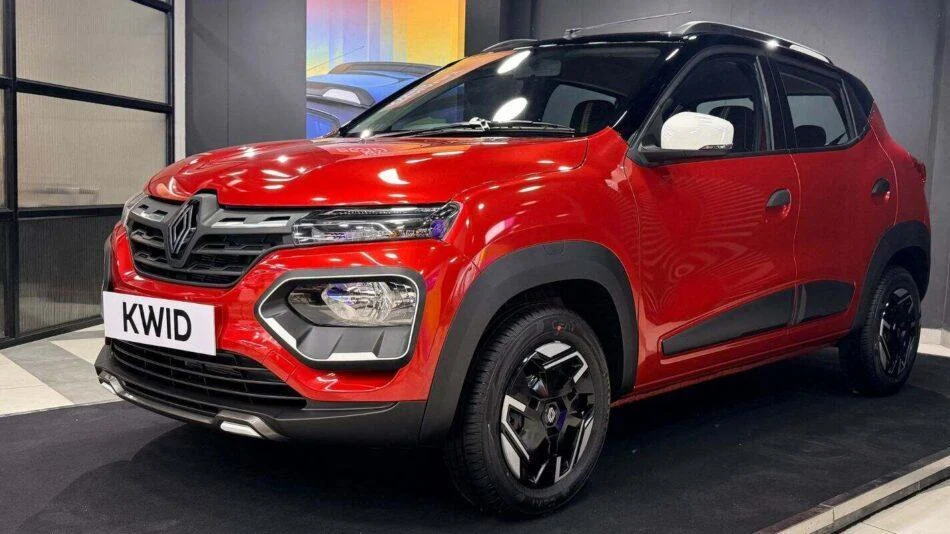
Renault India Private Limited (RIPL) has officially introduced the updated 2024 iteration of the Renault Kwid, strategically positioning the city car to capture a larger share of the entry-level automotive market in the subcontinent. The new model, which has been a cornerstone of Renault’s success in emerging markets, arrives with a refreshed visual identity, a streamlined variant lineup, and a price point designed to entice first-time car buyers who are navigating an increasingly expensive automotive landscape. Starting at an aggressive 4.52 lakh rupees, which converts to approximately IDR 85 million or roughly USD 5,400, the 2024 Kwid represents Renault’s commitment to providing high-value mobility solutions that do not compromise on modern aesthetics or essential technology.
The launch of this updated model comes at a critical juncture for the Indian automotive industry, where the entry-level hatchback segment is facing stiff competition from both the pre-owned market and the rising popularity of micro-SUVs. By emphasizing a "SUV-inspired" design and integrating premium features typically reserved for higher segments, Renault aims to maintain the Kwid’s relevance against formidable rivals such as the Maruti Suzuki Alto K10 and the S-Presso.
A Strategic Realignment: Simplifying the Consumer Choice
One of the most significant changes in the 2024 rollout is the radical simplification of the variant hierarchy. Recognizing that modern consumers often find themselves overwhelmed by an abundance of trim levels and optional packages, Renault has consolidated the Kwid range into two primary variants: Evolution and Climber. This move is intended to streamline the manufacturing process and, more importantly, make the decision-making journey easier for the customer.
The Evolution variant serves as the foundational offering, focusing on core value and essential amenities. Meanwhile, the Climber variant continues its role as the flagship "lifestyle" trim, catering to buyers who desire a more rugged, sporty appearance and a more comprehensive suite of interior comforts. By narrowing the focus to these two distinct identities, Renault is able to concentrate its marketing efforts on clear value propositions—practicality and affordability for the Evolution, and style and status for the Climber.
Aesthetic Refinements and SUV Heritage
The 2024 Renault Kwid retains the robust, high-riding silhouette that first revolutionized the budget hatchback segment when the model debuted in 2015. However, the latest update introduces the new Renault "Nouvel’R" logo, which is prominently displayed on the front grille. This branding update aligns the Kwid with Renault’s global design language, bridging the gap between the budget-friendly city car and the brand’s more premium offerings like the Megane E-Tech available in European markets.
Despite its compact dimensions, the Kwid maintains a commanding presence on the road. The vehicle boasts a ground clearance of 184 mm, a figure that rivals many sub-compact SUVs. This high clearance is not merely a stylistic choice; it is a functional necessity for the varied road conditions found across the Indian subcontinent and other emerging markets, where potholes, unpaved roads, and seasonal flooding are common challenges.
The Climber variant further distinguishes itself with specific exterior accents, including contrasting roof rails, distinctive wheel arch cladding, and specialized color schemes that emphasize its adventurous character. These visual cues are designed to appeal to younger demographics who prioritize "curb appeal" and a sense of individuality in their first vehicle purchase.
Powertrain and Performance Metrics
Under the hood, Renault has opted for mechanical consistency, retaining the tried-and-tested 1.0-liter, three-cylinder, naturally aspirated petrol engine. This power unit is engineered for urban efficiency and low maintenance costs rather than high-speed performance. It produces a maximum output of 69 horsepower (hp) and a peak torque of 91 Nm. While these figures may seem modest, they are well-suited for the Kwid’s lightweight chassis, which utilizes the CMF-A (Common Module Family – A segment) platform developed by the Renault-Nissan-Mitsubishi Alliance.
Buyers are offered a choice between two transmission types. The standard option is a five-speed manual gearbox, providing a traditional driving experience and maximum fuel economy. For those seeking convenience in heavy urban traffic, Renault offers a five-speed Automated Manual Transmission (AMT). A unique feature of the AMT-equipped Kwid is the "rotary gear selector"—a dial-based interface located on the center console that replaces the traditional gear lever, freeing up space and adding a touch of modern sophistication to the cabin.
Interior Innovation and Technological Integration
Despite its positioning as an entry-level vehicle, the 2024 Renault Kwid does not shy away from digital integration. The cabin is headlined by an 8-inch touchscreen infotainment system that supports wireless Apple CarPlay and Android Auto. This inclusion is a significant selling point, as wireless connectivity is a feature often omitted in vehicles twice the Kwid’s price.
The driver’s interface is further modernized with a fully digital instrument cluster, providing clear and concise information regarding vehicle speed, fuel levels, and trip data. Other interior highlights include:

- Rear Parking Camera: Assisting in tight urban maneuvers.
- Remote Keyless Entry: Enhancing convenience for the owner.
- Power Windows and Steering: Ensuring a standard level of comfort across the range.
- Connectivity: Multiple USB ports and Bluetooth synchronization for seamless media playback.
The interior of the Climber variant takes the experience a step further with a dual-tone color scheme and premium upholstery accents that mirror the exterior’s sporty theme. Despite its small footprint, the Kwid offers a respectable cargo capacity of 279 liters, which can be expanded by folding down the rear seats, making it a practical choice for small families or young professionals.
Safety Standards and Regulatory Compliance
In recent years, the Indian automotive market has seen a paradigm shift regarding safety, driven by both consumer demand and stricter government regulations. Renault has responded by equipping the 2024 Kwid with a comprehensive suite of safety features as standard across all variants. The vehicle includes a total of 17 safety-oriented features, ensuring that even the most affordable version provides a baseline of protection for its occupants.
Key safety components include:
- Dual Front Airbags: Protecting the driver and front passenger in the event of a collision.
- ABS with EBD: Anti-lock Braking System combined with Electronic Brakeforce Distribution to maintain stability during emergency braking.
- Seatbelt Reminders: For all occupants to ensure compliance with safety protocols.
- Rear Parking Sensors: To prevent low-speed collisions during reversing.
- Electronic Stability Program (ESP) and Traction Control: (In select configurations) to assist the driver in maintaining control under adverse conditions.
These additions are crucial for Renault as it seeks to improve the Kwid’s safety reputation, which has faced scrutiny in earlier iterations during Global NCAP crash testing. By standardizing 17 features, Renault is signaling a proactive approach to occupant safety.
Chronology of the Renault Kwid: A Global Success Story
To understand the significance of the 2024 update, one must look at the Kwid’s journey since its inception.
- 2015: Renault launches the Kwid in India as a "game-changer," introducing SUV styling to the budget hatchback segment.
- 2017-2018: The Kwid expands into international markets, including Brazil and South Africa, proving the viability of the CMF-A platform globally.
- 2019: A major facelift is introduced, featuring split headlamps and a more premium interior, alongside the introduction of the AMT variant.
- 2021: Renault celebrates the milestone of 400,000 units sold in India alone, cementing the car’s status as a volume driver.
- 2024: The latest update arrives with the new logo, simplified variants, and enhanced tech, preparing the model for the next phase of its lifecycle.
Market Analysis: The Competitive Landscape
The 2024 Renault Kwid operates in a highly price-sensitive environment. In India, the "A-segment" has historically been dominated by Maruti Suzuki. However, Renault’s strategy of offering "more car for the money" has allowed it to carve out a significant niche.
Industry analysts suggest that the Kwid’s primary appeal lies in its aspirational value. For many buyers, owning a car that looks like an SUV is more desirable than owning a traditional small hatchback. By keeping the starting price at 4.52 lakh rupees, Renault is directly challenging the Maruti Suzuki S-Presso, which follows a similar "tall-boy" or micro-SUV design philosophy.
Furthermore, the Kwid serves as an important "hook" for the Renault brand. By capturing customers at the entry-level, Renault creates a pipeline of buyers who may eventually upgrade to the Renault Triber (a compact MPV) or the Renault Kiger (a sub-compact SUV), both of which share DNA and platform elements with the Kwid.
Implications and Future Outlook
The launch of the 2024 Kwid is not just about maintaining sales; it is about brand sustainability in a transitioning market. While the world moves toward electrification, internal combustion engine (ICE) vehicles like the Kwid remain the backbone of mobility in developing nations due to the lack of charging infrastructure and the high cost of battery technology.
However, Renault is not ignoring the green transition. The Kwid’s platform already supports electrification, as seen in the Renault City K-ZE in China and the Dacia Spring in Europe. The updates seen in the 2024 Indian model—particularly the digital cabin and safety tech—set the stage for a potential electric version of the Kwid in the Indian market in the coming years.
For now, the 2024 Renault Kwid stands as a testament to the idea that an affordable car does not have to feel "cheap." With its updated branding, simplified lineup, and a robust feature list, Renault has ensured that its smallest offering continues to punch above its weight in one of the world’s most competitive automotive arenas. As the automotive landscape continues to evolve, the Kwid remains a vital piece of the puzzle for Renault’s growth strategy in Asia and beyond.