 Nila Kartika Wati
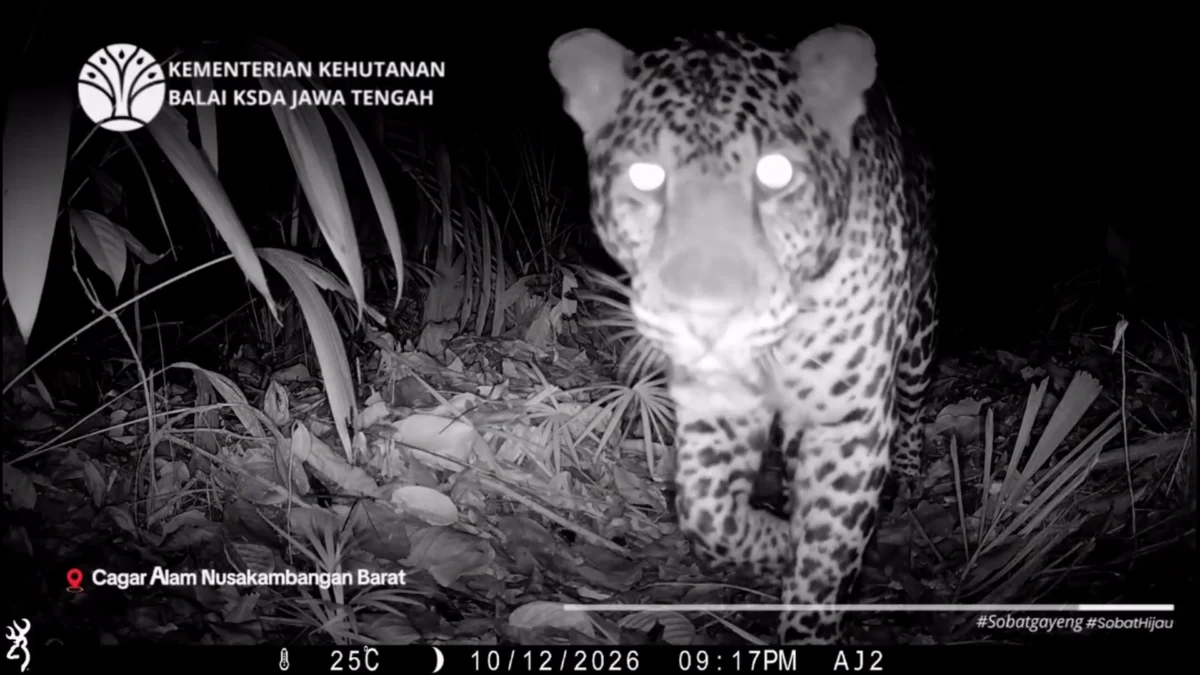
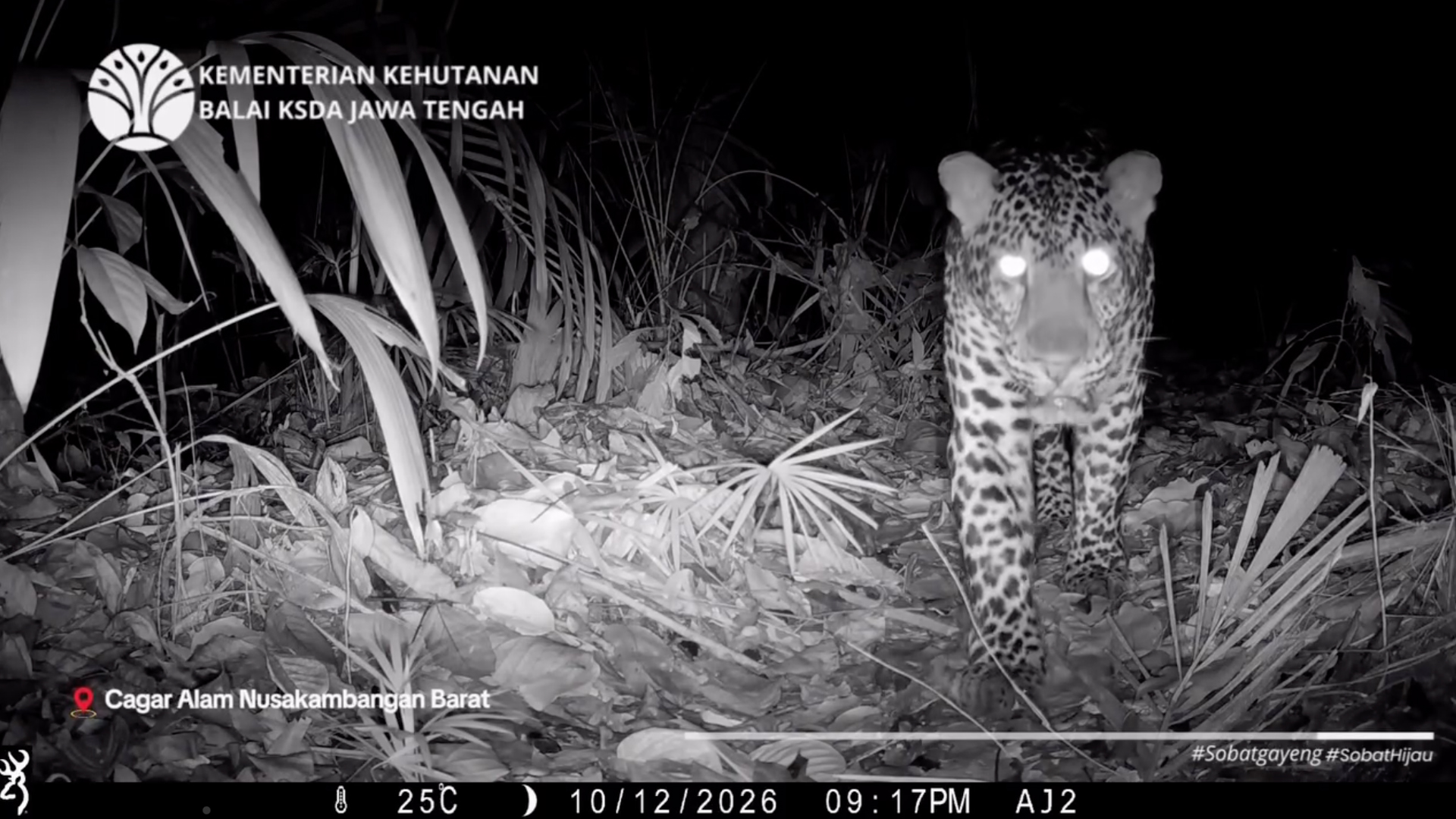
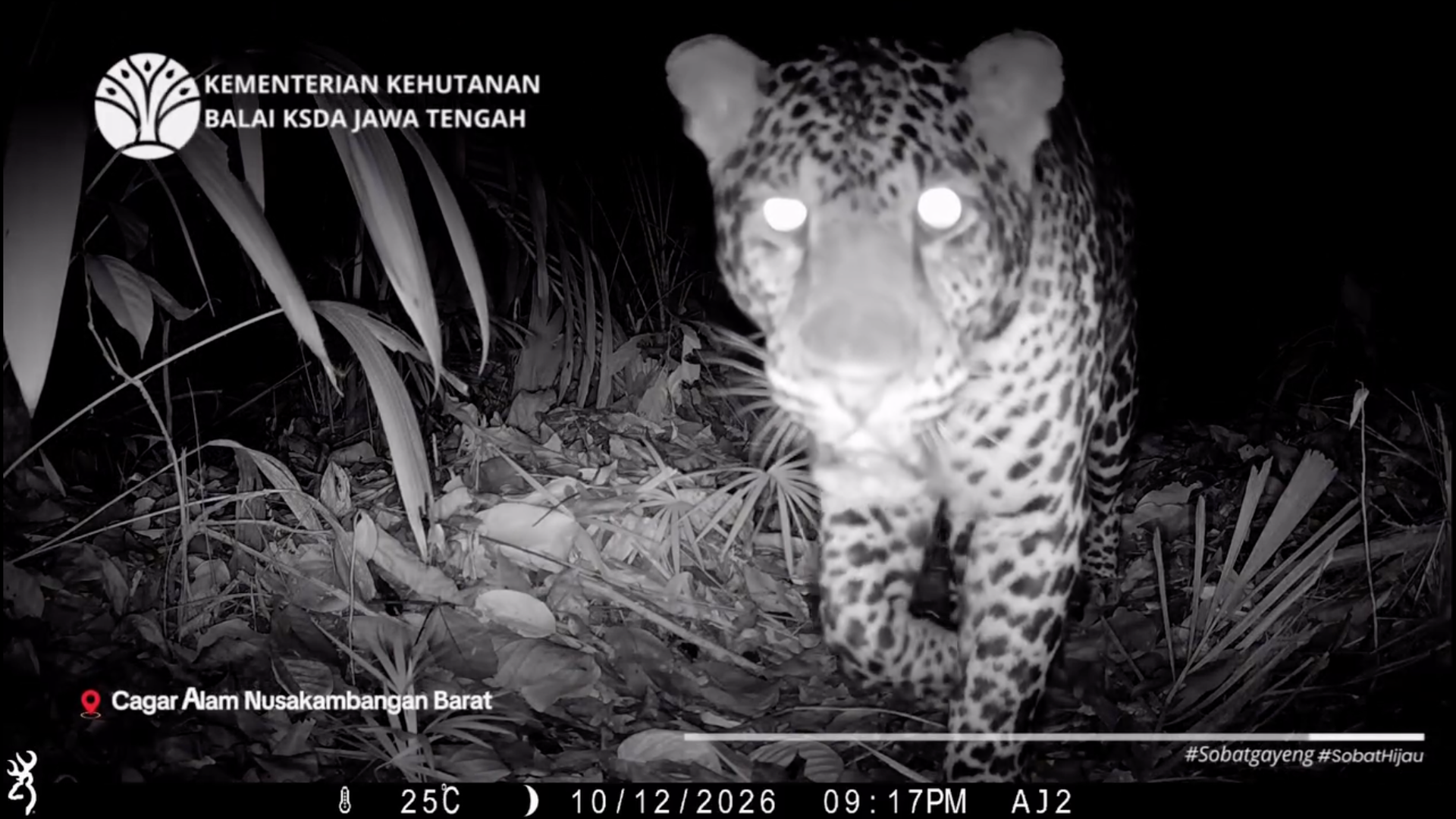
The dense, rugged forests of the West Nusakambangan Nature Reserve in Cilacap, Central Java, have once again confirmed their status as a vital sanctuary for one of the world’s most elusive predators. On October 12, 2026, at precisely 21:17 WIB, a camera trap deployed by the local Natural Resources Conservation Agency (KSDA) captured a high-definition image of a Javan leopard (Panthera pardus melas). This latest discovery provides empirical evidence of the continued presence of this endangered big cat, serving as a beacon of hope for conservationists striving to protect Indonesia’s dwindling wildlife populations.
Chronology of the Discovery and Field Operations
The identification of the leopard was the result of a coordinated monitoring effort led by Wahyono Restanto, the Head of the Cilacap KSDA Resort. Recognizing the importance of the Nusakambangan ecosystem, the agency deployed a network of six sophisticated camera traps strategically placed across the reserve. The objective was to move beyond anecdotal sightings and establish a data-driven baseline for the region’s biodiversity.

The breakthrough occurred when three of the six cameras successfully captured footage of a single male Javan leopard. Beyond the visual confirmation, field teams identified secondary evidence of the predator’s presence—including scat samples and claw marks—across four distinct observation trails. These findings were formally analyzed and reported by the KSDA on October 22, 2026, confirming that the individual observed is a recurring resident of the western sector of the island.
This is not the first time such evidence has surfaced. Previous longitudinal studies, notably the 2020 monitoring project conducted by Budi Santoso and Wahyono Restanto, utilized similar camera-trap methodology in the East Nusakambangan Nature Reserve. That study, which spanned from July to November 2020, yielded 97 video recordings of various wildlife, including six distinct instances of Javan leopards. While these findings confirmed the species’ range, researchers have cautioned that repeat sightings of individual animals can inflate population estimates if not rigorously cross-referenced through photographic pattern matching.
Historical Context and Legal Status of the Habitat
The Nusakambangan Nature Reserve is not merely a modern conservation area; it is a landscape steeped in historical protection efforts. The reserve was initially gazetted under the Dutch East Indies government on June 4, 1937, via the Governor General’s Decree No. 34 (Staatsblad No. 369).

In the modern era, the protection of this 656.06-hectare enclave has been bolstered by the Ministry of Forestry, most notably through Decree No. 359/Menhut-II/2004 and the subsequent formalization of the boundary in 2014 under Decree No. SK.2999/Menhut-VII/KUH/2014. These legal frameworks underscore the Indonesian government’s commitment to preserving a unique insular ecosystem that has remained relatively sequestered from the rapid urbanization occurring on the mainland of Java.
Biodiversity Beyond the Apex Predator
The KSDA’s monitoring efforts have extended far beyond the Javan leopard. Using the "SMART Patrol" methodology, rangers and biologists have surveyed 120 hectares of the reserve across 372 distinct observation points. The data collected reveals a thriving, if fragile, ecosystem.
The faunal inventory includes a variety of mammals, such as the plantain squirrel, common palm civet, and various otter species. Primates, including the Javan langur and long-tailed macaque, have also been frequently documented. The avian diversity is equally significant; researchers have recorded species such as the rhinoceros hornbill, the vibrant banded pitta, and several birds of prey, including the osprey. To enhance data collection, the team has integrated bioacoustic sensors—"song meters"—to capture the vocalizations of bird populations, alongside mist nets for bat research.
The flora of Nusakambangan is equally critical. The forest serves as a refuge for rare and endemic plant species, such as the Heritiera percoriacea (cerelang laut), the critically endangered Dipterocarpus littoralis (plalar Nusakambangan), and the Sindora javanica (sindur). These trees form the structural backbone of the habitat that the Javan leopard requires to thrive.
Expert Analysis: The Role of the Apex Predator
Aswi Andriasari Rofiqoh, an expert in animal ecology at the Faculty of Biology, Universitas Jenderal Soedirman (Unsoed), emphasizes that the Javan leopard is more than just a charismatic species; it is an ecological architect.
"The Javan leopard functions as an apex predator, which is essential for maintaining the trophic cascade," says Rofiqoh. "By regulating populations of wild boar, deer, and smaller rodents, they prevent overgrazing and over-browsing, which in turn allows the forest vegetation to regenerate naturally. Without these predators, the balance of the entire island ecosystem would be at risk."
Rofiqoh notes that while the island’s isolation provides a natural buffer, it also poses a risk of genetic bottlenecks. Furthermore, she argues that the common estimate of "around 20 individuals" on the island is based on dated information from 2017 and lacks the precision required for modern conservation planning. She stresses that the 2026–2031 National Strategy and Action Plan for Javan Leopard Conservation must explicitly incorporate the Nusakambangan population to ensure that the island is not overlooked in national policy.
Challenges and Future Directions in Conservation
Despite the positive news of the recent sighting, the path forward is fraught with challenges. The primary issue identified by researchers is the lack of a comprehensive, systematic census. Current monitoring, while effective at confirming presence, does not yet provide the density estimates necessary to determine if the population is stable, increasing, or declining.
"We need a more robust approach," Rofiqoh explains. "Future surveys must include genetic analysis using non-invasive samples, such as fecal matter, to determine the exact number of individuals and their genetic health. We must also monitor the health of their prey species and conduct rigorous patrols at the island’s coastal entry points to prevent illegal human encroachment, which remains the greatest threat to any nature reserve."

The KSDA is taking steps to address these concerns through proactive community engagement. Wahyono Restanto notes that the agency is actively conducting outreach programs with local schools, nearby communities, and partner organizations to foster a culture of stewardship. The goal is to move beyond policing and toward a collaborative model where the local population views the Javan leopard as a pride of the region rather than a threat or a target for poaching.
Global Significance
The Javan leopard is currently listed as "Endangered" (EN) on the IUCN Red List, and it is strictly protected under Appendix I of CITES, which prohibits international commercial trade. With the species facing intense pressure from habitat fragmentation across the main island of Java, the Nusakambangan population represents a critical insurance policy for the species’ long-term survival.
As the 2026 monitoring cycle continues, the data gathered from the camera traps will be instrumental in shaping the next five years of the national conservation strategy. The sighting on October 12 is a reminder that even in a world of rapid environmental change, dedicated conservation management can yield tangible, positive results. The survival of the Javan leopard in Nusakambangan is not guaranteed, but with continued scientific rigor, community support, and strict protection of its habitat, there is a tangible path toward ensuring this iconic predator remains the king of the island’s forests for generations to come.