 Bambang Pamungkas
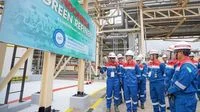
PT Pertamina (Persero), operating through its commercial subsidiary PT Pertamina Patra Niaga, has reaffirmed its unwavering commitment to accelerating Indonesia’s transition toward a sustainable energy ecosystem. This strategic environmental initiative gained high-level national momentum when Vice President of the Republic of Indonesia, Gibran Rakabuming Raka, conducted an official working visit to the Pertamina Patra Niaga Cilacap Refinery on Monday, October 26. The high-profile visit served as a direct inspection of Indonesia’s pioneering industrial infrastructure dedicated to transforming waste into high-value green energy, specifically focusing on the conversion of used cooking oil, locally known as minyak jelantah (mijel), into Bioavtur, internationally recognized as Sustainable Aviation Fuel (SAF).
The Vice President’s inspection highlights the critical intersection between national energy security, environmental stewardship, and grassroots economic empowerment. By turning discarded household waste into aviation-grade green fuel, Pertamina is bridging the gap between localized circular economy initiatives and cutting-edge industrial technology. As global aviation sectors face mounting regulatory pressures to decarbonize, Indonesia is positioning itself as a proactive player in the supply chain of alternative jet fuels, leveraging domestic resources to meet stringent international environmental standards.
The Integration of Grassroots Empowerment and High-Tech Refining
During his comprehensive tour of the Green Refinery facilities in Cilacap, Vice President Gibran Rakabuming Raka emphasized that technological advancements in the energy sector must not remain confined to industrial complexes; instead, they must translate into tangible, measurable benefits for local communities. The Vice President noted that the scaling up of SAF production must be intrinsically tied to the systematic empowerment of local citizens, ensuring that the collection of used cooking oil provides a reliable source of supplementary income while simultaneously safeguarding public health and local waterways from improper waste disposal.
"The development of Sustainable Aviation Fuel must walk hand-in-hand with community empowerment. This ensures that the used cooking oil managed by local residents through community-based waste banks acquires genuine economic value and remains seamlessly connected to the national industrial supply chain," stated the Vice President during his dialogue with refinery operators and local community representatives.
Echoing this sentiment, Taufik Aditiyawarman, Vice President Director I of Pertamina Patra Niaga, provided a detailed technical overview of the initiative. He explained that under the banner of the Pertamina SAF Project, used cooking oil is systematically funneled into the Green Refinery Cilacap to serve as a vital renewable feedstock. The production process leverages the facility’s advanced Thermal Distillate Hydro Treating (TDHT) unit through a sophisticated co-processing scheme. This methodology allows the refinery to blend used cooking oil alongside traditional fossil-derived components, optimizing existing infrastructure to produce cleaner fuels without requiring entirely new refinery construction from scratch.
"In the implementation of SAF production at the Green Refinery Cilacap, we have officially reached the commercialization stage. During this month of October alone, we successfully produced approximately 11 million liters of co-processed SAF. In this manufacturing process, used cooking oil is utilized at a maximum ratio of around 5 percent of the total production capacity within the TDHT unit. This remarkable achievement represents a cornerstone of our broader strategy to optimize existing refinery assets to manufacture sustainable energy products," Taufik elaborated.
Building a Robust Community-Based Supply Chain
To secure a steady and reliable stream of feedstock for the Green Refinery, Pertamina Patra Niaga has deployed its comprehensive Community Involvement and Development (CID) program. This initiative focuses heavily on establishing a decentralized, community-driven collection ecosystem for used cooking oil. By partnering with grassroots waste management groups and local civil society organizations residing in the immediate vicinity of the Cilacap Refinery operations, Pertamina has successfully formalized what was previously an informal, unregulated waste stream.
Taufik detailed that the collection framework heavily relies on the empowerment of designated local waste banks (bank sampah), complemented by strategic placement of public drop-off infrastructure designed for maximum community accessibility.
"We have successfully established a structured collection ecosystem for used cooking oil by actively collaborating with the community through three primary waste banks under the guidance of the Cilacap Refinery: Bank Sampah Beo Asri, Bank Sampah Abhipraya, and Bank Sampah Cahaya Asri. Furthermore, we have deployed specialized Jelantah Collection Boxes at public trading hubs, such as the Amarta Kutawaru Market, ensuring that the general public has convenient, decentralized alternatives to dispose of their spent cooking oil while turning waste into a monetized asset," Taufik explained.
Quantitative data from these community partnerships underscore the growing volume and efficacy of the program. The three designated waste banks handle substantial annual volumes, recording collections of 984 liters from Bank Sampah Abhipraya, 2,283 liters from Bank Sampah Beo Asri, and 717 liters from Bank Sampah Cahaya Asri. Residents who deposit their used cooking oil at these collection points receive direct financial compensation, effectively transforming everyday kitchen waste into a reliable micro-economy.
Expanding Nationwide Collection Networks and Digital Integration
Building upon the successful localized models in Cilacap, Pertamina Patra Niaga has aggressively scaled the collection infrastructure nationwide. The company has rolled out dedicated Jelantah Collection Boxes across numerous Public Fuel Filling Stations (SPBU) spanning various regions across the Indonesian archipelago. This nationwide expansion democratizes participation, allowing urban and suburban households alike to securely dispose of used cooking oil.
To align with modern financial habits and digital inclusion goals, contributions made through the SPBU Collection Boxes and partnered waste banks can be exchanged directly for cash or credited instantly as electronic wallet (e-wallet) balances.
"Through this structured program, our objective is to fundamentally shift public perception and behavioral attitudes toward used cooking oil. What was once treated as hazardous kitchen waste with the potential to pollute local water tables and soil ecosystems is now managed responsibly and transparently. Through active collaboration with the civilian population, we are confident that this collection ecosystem will continue to expand, yielding profound environmental benefits alongside sustained economic uplift," Taufik added.
Rigorous International Certification and Commercial Milestones
Beyond domestic collection networks and refining processes, Pertamina Patra Niaga has achieved critical regulatory milestones to ensure its sustainable products meet the rigorous demands of the global aviation market. The company has successfully secured the prestigious International Sustainability and Carbon Certification (ISCC). This certification complies strictly with the Carbon Offsetting and Reduction Scheme for International Aviation (CORSIA) established by the International Civil Aviation Organization (ICAO), as well as the stringent mandates set forth by the European Union (EU) for both SAF Refineries and SAF Traders.
With these international accreditations securely in place, Pertamina SAF is no longer merely an experimental product; it has transitioned into a commercially viable commodity. The green aviation fuel produced at the Cilacap facility has already been successfully marketed and supplied to a select group of prominent domestic and international commercial airlines, positioning Indonesia as an emerging regional exporter of sustainable aviation solutions.
In addition to its flagship SAF accomplishments, Pertamina Patra Niaga is actively diversifying its renewable product portfolio. The company has successfully conducted advanced trials exploring the integration of used cooking oil as an alternative feedstock for Green Gasoline. Through this continuous synergy between state-of-the-art refining technologies and grassroots community empowerment initiatives, Pertamina Patra Niaga continues to cement its vital role in advancing long-term environmental sustainability and accelerating the circular economy across Indonesia.
Broader Environmental and Economic Implications
The convergence of government oversight, technological adaptation, and grassroots mobilization at the Cilacap Refinery carries profound implications for Indonesia’s macroeconomic landscape and its international climate commitments. As global aviation authorities enforce stricter carbon emission caps under frameworks like CORSIA, airlines worldwide are under intense scrutiny to secure verified low-carbon fuel alternatives. By establishing a commercial-scale supply of SAF derived from domestic waste, Indonesia mitigates future import dependencies for green fuels while creating a lucrative export commodity.
From an environmental standpoint, the institutionalization of used cooking oil collection prevents the illegal dumping of rancid oils into municipal drainage systems—a practice that historically clogged public infrastructure and severely disrupted local aquatic ecosystems. Furthermore, converting waste oil into biofuel drastically reduces the life-cycle carbon footprint compared to conventional fossil-derived jet fuel, contributing directly to Indonesia’s Nationally Determined Contributions (NDC) under the Paris Agreement.
Economically, the decentralized collection model acts as a direct stimulus for household economies. By integrating local waste banks into the national industrial supply chain, low- and middle-income families gain a reliable supplementary revenue stream derived entirely from materials previously discarded as refuse. This social engineering aspect ensures that the energy transition remains inclusive, distributing economic dividends from high-tech industrial processes down to the neighborhood level.
As Pertamina Patra Niaga continues to refine its supply chains, expand its digital collection networks, and optimize its Green Refinery operations, the initiative serves as a blueprint for emerging economies seeking to harmonize industrial decarbonization with equitable community development.