Eko Sulistyo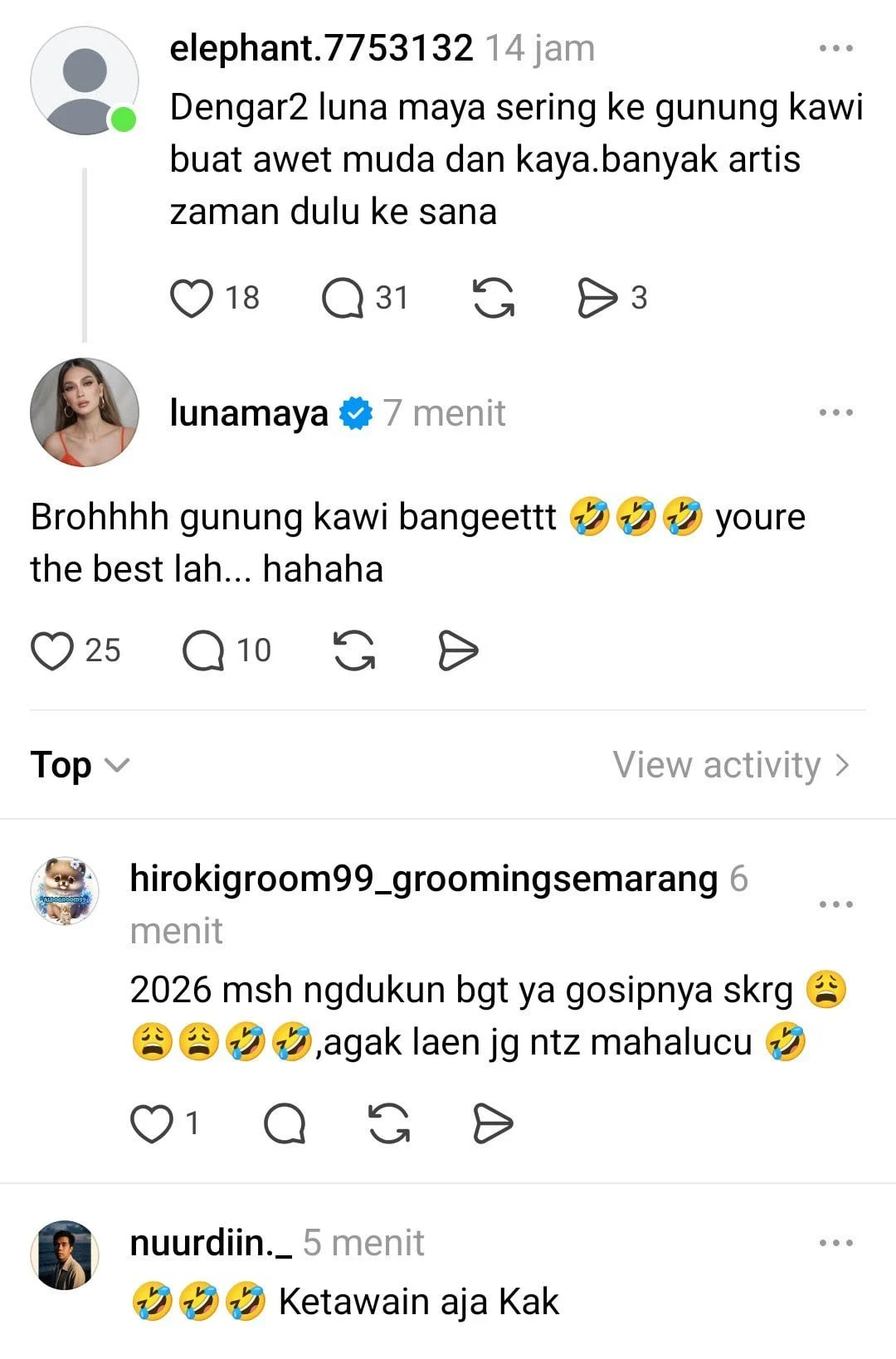
The landscape of Indonesian social media has been recently dominated by a resurgence of discussions surrounding Gunung Kawi, a location in East Java long shrouded in mystical folklore and rumors of ritualistic practices. While the site has historically been a point of interest for those studying local beliefs and pilgrimages, it has recently become the center of a digital firestorm involving high-profile entertainment figures. Following intense speculation regarding Sarwendah, the focus of online commentators has shifted toward actress and model Luna Maya. The allegations, which emerged without empirical evidence, suggest that the star’s enduring career and seemingly ageless appearance are the results of supernatural interventions sought at the mountain.
The controversy reached a boiling point on the social media platform Threads, where a segment of the digital community began circulating claims regarding Luna Maya’s alleged visits to the site. A specific post by a netizen, which quickly gained traction, asserted that the actress frequently visited Gunung Kawi to maintain her youthful looks and secure her financial status. The post claimed, "I heard Luna Maya often goes to Gunung Kawi for eternal youth and wealth. Many old-school celebrities used to go there." This statement, typical of the speculative nature of "blind items" or celebrity gossip in the region, triggered a wave of reactions ranging from skepticism to demands for a clarification from the actress herself.
Luna Maya’s Strategic Response to Digital Speculation
Rather than issuing a formal, stern legal rebuttal or a lengthy press release, Luna Maya opted for a more modern and casual approach to handle the rumors. On Wednesday, July 8, 2026, the actress responded directly to the allegations with a tone of pointed sarcasm. Her reply, "Brohhhh gunung kawi bangeettt youre the best lah… hahaha," was interpreted by many as an attempt to highlight the absurdity of the claims. By using humor and a dismissive tone, Luna Maya signaled to her followers and the broader public that she did not view the baseless accusations as a credible threat to her reputation, nor did she find them worthy of a serious defense.
This response reflects a growing trend among Indonesian A-list celebrities who are increasingly faced with "mystical" accusations. In a cultural environment where traditional beliefs often intersect with modern celebrity worship, the "pesugihan" (wealth ritual) narrative is a common trope used to explain the success of individuals, particularly women, who maintain high levels of visibility and wealth over several decades. Public relations experts note that for a figure like Luna Maya, who has built a brand around transparency and hard work in the fashion and beauty industries, engaging too seriously with such rumors can sometimes inadvertently grant them more legitimacy than they deserve.
The Catalyst: The Pesulap Merah Interview and the Role of the Juru Kunci
The current wave of interest in Gunung Kawi and its alleged celebrity visitors did not emerge in a vacuum. It was largely triggered by a viral video segment featuring Marcel Radhival, popularly known as Pesulap Merah (The Red Magician). Known for his mission to debunk supernatural claims and expose fraudulent shamans, Radhival conducted an interview with a "juru kunci" or traditional caretaker of the Gunung Kawi site. During the conversation, the caretaker vaguely alluded to the fact that various public figures, including celebrities and prominent entrepreneurs, had visited the location over the years.
While the caretaker did not explicitly name individuals or confirm that these visits were for the purpose of "pesugihan," the statement was enough to ignite the imaginations of social media users. In the digital age, where snippets of interviews are often taken out of context and repurposed for "clickbait" content on platforms like TikTok and Instagram, the caretaker’s comments were quickly transformed into a list of suspected practitioners. This led to a "witch hunt" of sorts, where netizens began scouring the past travel histories and social media archives of celebrities to find any connection to the mountain.
The Precedent Set by Sarwendah’s Legal Clarification
Before Luna Maya was targeted, the online discourse was primarily focused on Sarwendah, the singer and former member of the girl group Cherrybelle. Allegations against her were even more pointed, leading to a significant backlash that prompted a formal response from her legal team. Sarwendah’s attorney, Chris Sam Siwu, found it necessary to clarify that while Sarwendah had indeed visited Gunung Kawi, the purpose was strictly professional and entirely secular.
The defense explained that the visit occurred between 2021 and 2022 as part of a production for a horror-themed podcast and YouTube content titled "Misteri Terungkap." The production was intended to explore the history and urban legends of the site for entertainment purposes, a popular genre in the Indonesian digital landscape. By providing a clear timeline and a logical explanation for her presence at the site, Sarwendah’s team sought to dismantle the "pesugihan" narrative. The contrast between Sarwendah’s formal legal denial and Luna Maya’s sarcastic social media comment illustrates the different strategies celebrities employ when their personal integrity is questioned by the public.

Cultural Context: The Duality of Gunung Kawi
To understand why these allegations carry such weight in Indonesia, one must look at the historical and cultural significance of Gunung Kawi. Located in the Wonosari district of Malang, East Java, the site is home to the graves of two revered figures, Kanjeng Kyai Zakaria II (Eyang Jugo) and Raden Mas Iman Soedjono. For the vast majority of visitors, the site is a place of "ziarah" (pilgrimage) where people come to pray, reflect, and pay respects to these historical figures. It is a site of cultural syncretism, drawing visitors from various religious backgrounds, including those of Chinese descent, particularly during the Lunar New Year.
However, a parallel narrative has existed for decades, casting Gunung Kawi as a premier destination for those seeking "pesugihan." Local myths, such as the "Dewandaru" tree (the tree of the gods), suggest that if a leaf or fruit from the tree falls on a visitor, they will be blessed with immense wealth. These folk beliefs have been sensationalized over time, leading to the stigmatization of anyone who visits the site. For celebrities, whose wealth and physical appearance are under constant scrutiny, any association with Gunung Kawi is easily weaponized by critics to imply that their success is unearned or "dark" in nature.
Sociological Implications of "Mystical" Accusations in the Digital Era
The targeting of female celebrities like Luna Maya and Sarwendah with "pesugihan" rumors highlights a specific sociological phenomenon in Indonesia. Successful women often face a "tall poppy syndrome" where their achievements are rationalized through external or supernatural means rather than through their professional acumen, business investments, or rigorous health and beauty regimens. Luna Maya, for instance, is the founder of a successful cosmetics line, "Nama Beauty," and has been a staple of the Indonesian film industry for over twenty years. Despite this clear track record of professional activity, the "mystical" explanation remains a potent narrative for those seeking to diminish her agency.
Furthermore, the rise of platforms like Threads and TikTok has accelerated the spread of such rumors. The anonymity provided by these platforms, combined with algorithms that prioritize controversial or sensational content, allows baseless claims to reach millions within hours. This creates a challenging environment for public figures who must balance their right to privacy with the need to manage their public image in an era of "viral" misinformation.
Legal Ramifications and Digital Literacy
While Luna Maya has chosen a lighthearted response, the legal implications of such rumors are serious. Under Indonesia’s Electronic Information and Transactions Law (UU ITE), the dissemination of defamatory information or baseless accusations that harm a person’s reputation can lead to criminal charges. Legal experts often warn that while social media may feel like an informal space, the consequences of "digital finger-pointing" are real and can result in significant legal battles.
The ongoing controversy also serves as a case study for the importance of digital literacy. The fact that a single comment on Threads, devoid of any photographic or documentary evidence, could spark a national conversation involving multiple celebrities underscores the vulnerability of the public to misinformation. As of now, there is no verified evidence or credible testimony to suggest that Luna Maya has ever participated in ritualistic practices at Gunung Kawi for personal gain.
Conclusion: The Persistence of Myth in the Modern Age
The situation surrounding Luna Maya and Gunung Kawi is a testament to the enduring power of traditional myths in a modern, digital-first society. Even as Indonesia continues to modernize and its entertainment industry adopts global standards of production and branding, ancient folklore continues to provide a framework through which some members of the public interpret the lives of the elite.
Luna Maya’s decision to laugh off the allegations may temporarily quiet the noise, but the underlying cultural fascination with the intersection of wealth, beauty, and the supernatural remains. As the digital discourse continues to evolve, the challenge for public figures will remain the same: navigating a world where their every move is scrutinized, and where the line between historical fact and digital fiction is increasingly blurred. For now, the actress remains focused on her career, leaving the "mystical" debates to the confines of social media comment sections.