Nila Kartika Wati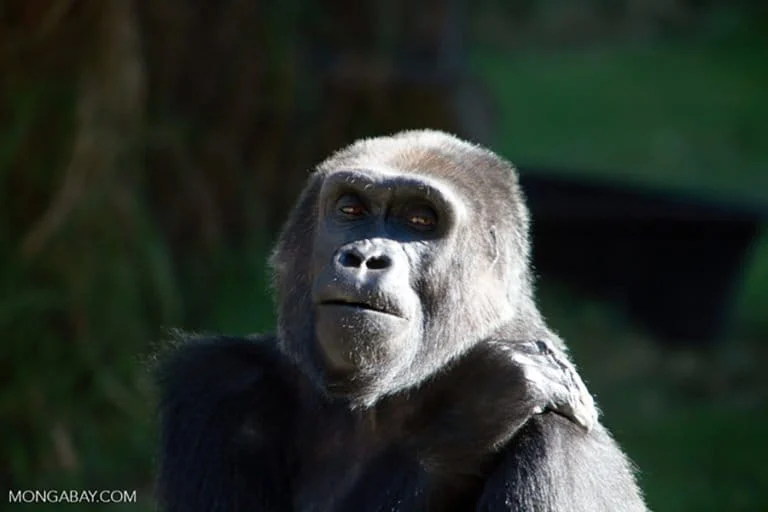
A groundbreaking scientific study has unveiled that the rhythmic patterns of human laughter are not a unique byproduct of modern civilization or complex language, but are instead a deeply rooted biological inheritance shared with our closest primate relatives. The research, published in the prestigious journal Nature Communications Biology in June 2026, suggests that the ability to produce rhythmic, vocalized laughter was passed down from a common ancestor that lived approximately 15 million years ago. This discovery provides a transformative perspective on the evolution of human vocalizations, offering a rare "vocal fossil" that helps scientists reconstruct the origins of human speech and social communication.
The study, led by a multidisciplinary team of evolutionary biologists and acousticians from the University of Warwick in the United Kingdom, demonstrates that the fundamental structure of a laugh—characterized by short, repetitive bursts of sound triggered by rapid breath cycles—is remarkably consistent across the Hominidae family. This family, known collectively as the great apes, includes humans, chimpanzees, bonobos, gorillas, and orangutans. By identifying these shared vocal traits, researchers have successfully pushed back the timeline for the emergence of proto-linguistic building blocks, suggesting that the foundations of human conversation were laid long before the first words were ever spoken.
The Biological Mechanics of Rhythmic Mirth
At its core, laughter is a complex physiological event. Whether in a human infant or a juvenile chimpanzee, the act of laughing involves a specific coordination of the diaphragm, the intercostal muscles, and the vocal cords. The Warwick study confirms that both humans and great apes produce laughter through a series of short, staccato breath cycles that trigger vibrations in the larynx. This process creates the iconic "ha-ha-ha" rhythm that is recognizable across species boundaries.
The researchers found that the timing and interval of these vocal bursts—the "rhythmic pulse" of the laugh—remain strikingly similar regardless of the species. This consistency suggests that the neurological pathways governing laughter have remained relatively stable over millions of years of evolution. While human laughter has become more refined and varied, the underlying "metronome" of the laugh is a biological constant that links us to the forest canopies of the Miocene epoch.
Beyond the physical mechanics, the study emphasizes the functional role of laughter. In both humans and apes, laughter serves as a vital social lubricant. It is an honest signal of playfulness and non-aggression, designed to strengthen social bonds and reduce tension within a group. Furthermore, the phenomenon of "contagious laughter"—where the sound of one individual laughing triggers a similar response in others—was observed across all great ape species, highlighting its role as a tool for collective emotional synchronization.
A Chronology of Discovery: Tracking the Vocal Fossil
The evolution of the human body can often be traced through the fossilized remains of bones and teeth, allowing paleoanthropologists to visualize how our ancestors walked or what they ate. However, vocalizations do not leave physical traces in the geological record. This "silence" in the fossil record has long made the study of the origins of language one of the most difficult challenges in evolutionary biology.
The University of Warwick team approached this problem by treating the vocal behaviors of living great apes as "living fossils." By comparing the vocalizations of extant species, they could use a method known as phylogenetic reconstruction to infer the traits of the common ancestors. The timeline established by the study suggests a clear evolutionary trajectory:
- 15 Million Years Ago: The common ancestor of all great apes likely possessed the ability to produce rhythmic, breath-controlled vocalizations during play, forming the ancestral "template" for laughter.
- 12–14 Million Years Ago: As the lineage leading to orangutans diverged, they maintained a more spontaneous, less rhythmic form of laughter, suited to their more solitary social structures.
- 8–10 Million Years Ago: The gorilla lineage branched off, exhibiting a deeper, more resonant play-sound that retained the core rhythmic intervals.
- 5–7 Million Years Ago: The divergence of the human and chimpanzee/bonobo lineages saw the refinement of vocal control.
- Modern Era: Humans developed the ability to decouple laughter from physical play, using it for complex social signaling, irony, and linguistic punctuation.
Methodology: From Tickles to Data Points
To validate their hypothesis, the researchers conducted an extensive comparative analysis involving a diverse group of subjects. The study included:
- Four Orangutans: Representing the most evolutionarily distant branch of the great ape family.
- Two Gorillas: Providing data on the vocalizations of the largest extant primates.
- Three Bonobos and Four Chimpanzees: Our closest genetic relatives, known for their highly social and playful nature.
- Four Human Infants: Ranging from six months to seven years of age, selected because their laughter is less influenced by cultural conditioning than that of adults.
The researchers focused on two primary contexts: "tickle laughter" and "play laughter." Tickle laughter, induced by physical stimulation, was found to have the most stable and consistent rhythm across all species. This suggests that the response to being tickled is the most primitive form of laughter, representing a baseline of vocal-respiratory coordination. In contrast, play laughter—which occurs during social interactions like chasing or wrestling—was more dynamic and varied, suggesting that as social complexity increases, so does the flexibility of the vocal output.
Comparative Findings: The Proximity of Chimpanzees and Bonobos
One of the most significant findings of the Warwick study is the correlation between genetic proximity and vocal rhythm. The analysis revealed that the laughter of chimpanzees and bonobos is much closer in speed and rhythmic structure to human laughter than that of gorillas or orangutans.

Chimpanzees and bonobos exhibit a "fast-paced" laughter that mirrors the rapid-fire nature of human mirth. This suggests that the evolutionary pressure for faster, more efficient communication began to intensify after the human-chimp ancestor split from the gorilla lineage. Furthermore, while orangutans and gorillas often laugh primarily on the inhalation or a mix of inhalation and exhalation, humans have evolved to laugh almost exclusively on the exhalation. This transition to exhalation-based vocalization is considered a critical precursor to the development of speech, as it allows for longer, more controlled strings of sound.
From Laughter to Language: The Evolutionary Leap
The implications of this research extend far beyond the study of humor. By identifying the shared rhythmic foundations of laughter, scientists are gaining insight into the "pre-adaptations" that allowed for the eventual emergence of human language.
The study posits that the ability to control the rhythm and timing of vocalizations—first seen in the context of laughter—provided the neurological scaffolding for the complex syntax and phonology of speech. While great apes generally laugh spontaneously in response to a stimulus, humans have developed the cognitive ability to modulate their laughter based on social context. We can "fake" a laugh, use a polite chuckle to smooth over an awkward moment, or use a sarcastic laugh to convey a specific meaning.
"Laughter is essentially a bridge," noted one of the researchers in a statement accompanying the report. "It bridges the gap between purely reflexive animal sounds and the highly controlled, intentional communication that we define as language. By studying how a gorilla or a bonobo laughs, we are looking at the raw materials that evolution used to build the human voice."
The Conservation Imperative: Protecting our Evolutionary Kin
The research also serves as a sobering reminder of the precarious state of the great apes. As the study highlights the profound biological links between humans and other members of the Hominidae family, it underscores the importance of preserving these species as a matter of scientific and ethical urgency.
In Indonesia, the situation is particularly critical. Indonesia is the only country in the world where orangutans live in the wild. The three distinct species—the Bornean orangutan (Pongo pygmaeus), the Sumatran orangutan (Pongo abelii), and the recently identified Tapanuli orangutan (Pongo tapanuliensis)—are all currently classified as Critically Endangered by the International Union for Conservation of Nature (IUCN).
The Tapanuli orangutan, found only in the Batang Toru forest of North Sumatra, is the most endangered great ape in the world, with fewer than 800 individuals remaining. The primary threats to these "vocal ancestors" include habitat loss due to palm oil expansion, infrastructure development, and illegal wildlife trafficking.
The Warwick study suggests that every time a great ape species moves closer to extinction, we lose a living chapter of our own history. The preservation of these primates is not merely an act of environmentalism; it is the protection of a biological archive that contains the secrets of human origin.
Conclusion: A Shared Heritage of Joy
The revelation that human laughter is a 15-million-year-old inheritance provides a powerful new lens through which to view our place in the natural world. It challenges the notion of human exceptionalism by demonstrating that our most "human" expressions of joy and social connection are shared with the apes of the African and Southeast Asian rainforests.
As researchers continue to decode the "vocal fossils" of our primate relatives, the link between the spontaneous hooting of a playing chimpanzee and the sophisticated dialogue of modern humans becomes increasingly clear. Laughter, it seems, was the first language of the hominids—a rhythmic, contagious, and enduring signal that has echoed through the millennia, reminding us of our deep and inextricable connection to the tree of life. The challenge now lies in ensuring that the forests continue to echo with these sounds for another 15 million years.