Nila Kartika Wati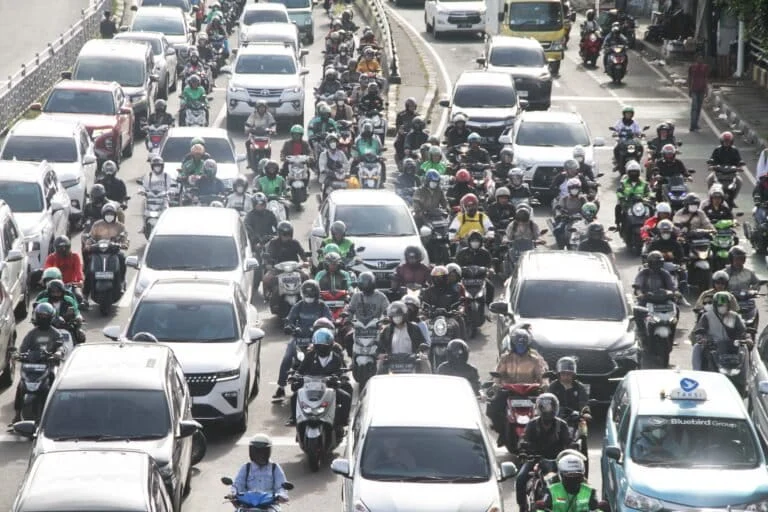
The sprawling metropolitan landscape of Greater Jakarta, encompassing the capital and its surrounding satellite cities, has long been characterized by a persistent and thickening shroud of smog that has transitioned from a seasonal nuisance to a permanent fixture of daily life. Among these urban centers, Tangerang Selatan in Banten has emerged as a primary epicenter of this environmental crisis, frequently recording air quality levels that fluctuate between "unhealthy" and "hazardous." The persistence of this pollution has prompted public health experts, environmental advocates, and urban planners to call for a fundamental shift in both individual behavior and government policy to mitigate a growing spectrum of physical and mental health risks that threaten the long-term viability of the region’s population.
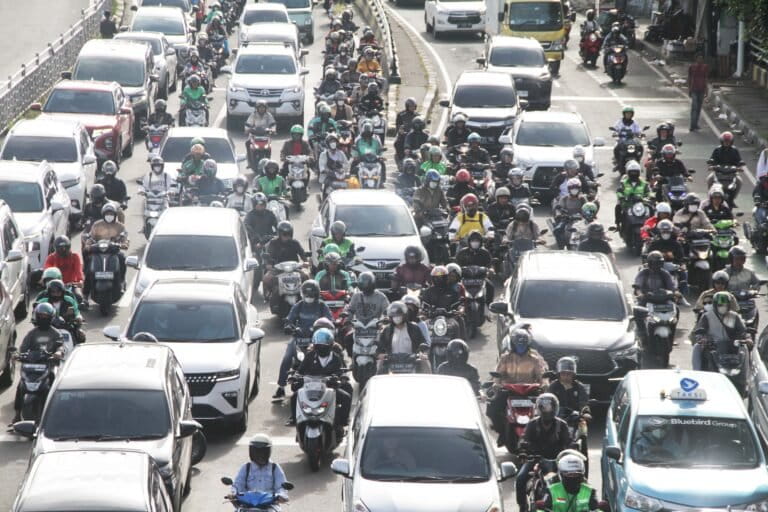
Wisya Aulia Prayudi, the Urban and Environmental Health Lead at the Center for Indonesia’s Strategic Development Initiatives (CISDI), highlighted during a recent forum titled "Breathing in the Satellite City: Living Amidst Tangerang Selatan’s Pollution" that the city now consistently ranks as one of the most polluted urban areas in Indonesia. This degradation of air quality is not an isolated phenomenon but is deeply intertwined with the rapid, often unregulated, urban expansion and the shifting mobility patterns of its residents. According to data from the Banten Province Central Bureau of Statistics (BPS), the number of motor vehicles in the region is projected to reach 1.3 million by 2025. This surge is driven largely by the ease of vehicle ownership through credit schemes, which, while increasing mobility, has simultaneously flooded the streets with internal combustion engines that serve as the primary source of local emissions.
The Multi-Layered Origins of Atmospheric Degradation
While the sheer volume of private vehicles forms the backbone of the pollution crisis, the sources of contamination are multifaceted. Beyond the exhaust pipes of millions of motorcycles and cars, Tangerang Selatan is geographically positioned near several major industrial zones. These industrial hubs contribute a significant volume of sulfur dioxide and nitrogen oxides to the atmosphere, which often drift into residential areas depending on wind patterns. However, experts point to a more localized and frequently overlooked factor: the rampant practice of open waste burning.
In many neighborhoods where formal waste management systems are either inadequate or non-existent, residents resort to burning household trash. This practice produces "super pollutants"—highly toxic compounds including dioxins and furans—that are far more hazardous than standard vehicle emissions. The visual of black smoke rising from residential backlots has become a common sight in Tangerang Selatan, signaling a breakdown in municipal services that directly compromises the air quality of the entire community. Furthermore, the regional air quality is exacerbated by large-scale coal-fired power plants (PLTU) located on the fringes of the metropolitan area. As environmental creator Nada Arini noted, the fine ash particles from coal combustion can travel hundreds of kilometers, meaning that even if Tangerang Selatan were to transition to electric vehicles tomorrow, it would still remain vulnerable to the "export" of pollution from regional energy production.
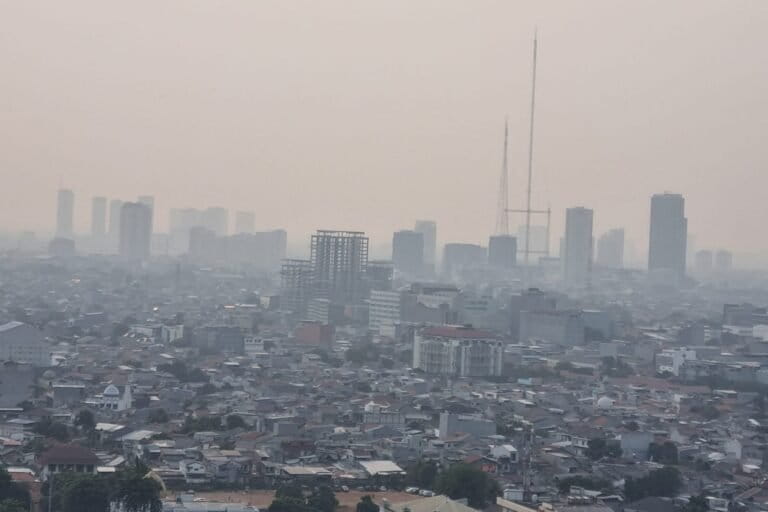
The role of meteorology also cannot be ignored. During the rainy season, precipitation acts as a natural "scrubbing" mechanism, washing pollutants out of the air and depositing them into the soil and waterways. Conversely, the dry season creates a stagnant atmospheric lid, often leading to temperature inversions where cool air is trapped near the ground by a layer of warm air above, effectively sealing the pollution within the breathing zone of the population.
The Psychological and Cognitive Toll of Living Under Grey Skies
The discourse surrounding air pollution has traditionally focused on respiratory ailments, yet a growing body of evidence suggests that the impact on mental health and cognitive function is equally devastating. Winona Lalita, a clinical psychologist from Noutrisi Jiwa, explains that the experience of waking up to a leaden, grey sky can trigger immediate physiological and psychological responses. This phenomenon is not merely a matter of "bad mood" but is a biological reaction to environmental stressors.
When an individual inhales polluted air, the concentration of pure oxygen reaching the brain is reduced. In response, the body enters a state of high alert, triggering a spike in cortisol, the primary stress hormone. Chronic exposure to these conditions keeps the nervous system in a state of perpetual "fight or flight," which over time leads to emotional instability, anxiety, and a loss of motivation. Lalita points out that the brain is a highly complex control center that requires optimal oxygenation to regulate mood and executive function. When this supply is compromised by particulate matter and toxic gases, the result is often a decline in mental clarity and a heightened susceptibility to depression.
Furthermore, the cognitive implications are alarming. Emerging research indicates that long-term exposure to poor air quality is linked to the accelerated decline of cognitive functions, particularly in aging populations. The inhalation of fine particulate matter—specifically PM2.5—has been associated with an increased risk of developing neurodegenerative diseases, including dementia and Alzheimer’s. This suggests that the current pollution crisis is not just a present-day health emergency but a ticking time bomb for the future of Indonesia’s public healthcare system.
The PM2.5 Threat: A Microscopic Invader
The primary culprit in the physical health crisis is PM2.5, particulate matter with a diameter of less than 2.5 micrometers—roughly 30 times smaller than a human hair. Because of their microscopic size, these particles bypass the natural filtration systems of the human nose and throat, traveling deep into the lungs and eventually entering the bloodstream. Once in the circulatory system, PM2.5 can be transported to every major organ in the body.
Wisya Aulia Prayudi emphasizes that the health impacts are divided into short-term and long-term categories. Short-term effects are often immediate and visible: skin irritation, redness of the eyes, persistent coughing, shortness of breath, and chronic headaches. However, it is the long-term cumulative damage that is most lethal. Continuous exposure to PM2.5 is a proven driver of cardiovascular diseases, chronic obstructive pulmonary disease (COPD), and the exacerbation of metabolic conditions like diabetes. By damaging the lining of blood vessels and promoting systemic inflammation, air pollution serves as a silent catalyst for heart attacks and strokes, often in individuals who may otherwise lead relatively healthy lifestyles.
The crisis also highlights a stark social divide. While wealthier residents may be able to retreat into air-conditioned homes and offices equipped with high-efficiency particulate air (HEPA) filters, lower-income workers and marginalized communities remain on the front lines. Street vendors, motorcycle taxi drivers, and outdoor laborers spend their entire working day exposed to the highest concentrations of pollutants. For these populations, the lack of "environmental privilege" translates directly into shorter life expectancies and higher medical costs, further entrenching the cycle of poverty.
Advocacy and the "First Mile, Last Mile" Challenge
In the face of government inertia, grassroots organizations and community advocates are stepping up to demand systemic change. Dimas Gilang, Program Director of Bike2Work (B2W) Indonesia, views the daily commute from Serpong to Jakarta not just as a routine, but as a battlefield for environmental advocacy. By combining cycling with the use of the KRL Commuter Line, Gilang demonstrates a model for sustainable urban mobility. However, he acknowledges that for the majority of the population, this transition is fraught with obstacles.
The primary barrier to the mass adoption of public transport and cycling is the "first mile, last mile" problem—the difficulty of getting from one’s home to a transit hub and from the final station to the destination. In Tangerang Selatan, the lack of safe sidewalks, the absence of dedicated bike lanes, and the scarcity of secure bicycle parking at train stations force many back into the perceived safety of private vehicles. "No matter how good the public transportation system is, if the access to it is neglected, people will return to their private cars and motorcycles," Gilang stated.
Bike2Work, in collaboration with the Pedestrian Coalition, continues to lobby the government for the construction of integrated infrastructure. They argue that a shift in behavior cannot be expected without a corresponding shift in urban design. This includes the implementation of "green corridors" that provide shade and safety for cyclists and pedestrians, as well as stricter regulations on industrial emissions and a total ban on the open burning of waste.
Individual Responsibility vs. Structural Reform
While systemic change is the ultimate goal, environmental creators like Nada Arini argue that individuals still hold significant power in the areas they can control: transportation and waste management. Simple actions, such as reducing the use of single-use plastics to decrease the volume of waste that might eventually be burned, or practicing energy conservation at home to reduce the demand on coal-fired power plants, are essential components of a broader solution.
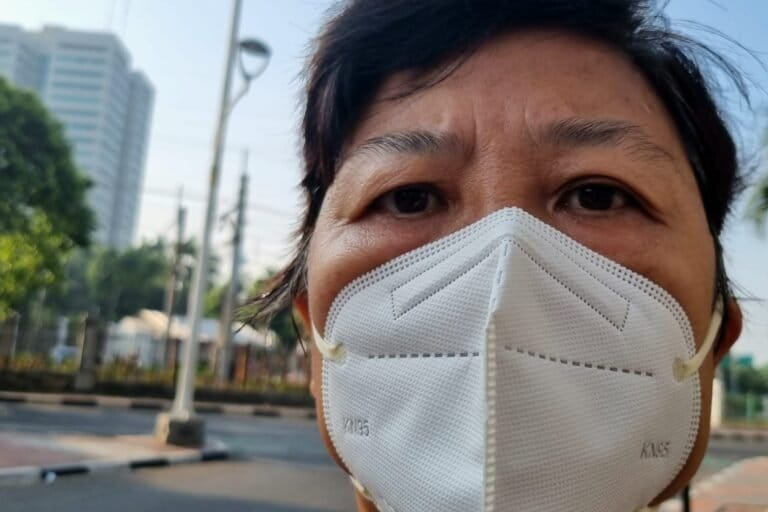
The use of high-quality masks, such as N95 or KF94 respirators, has also become a necessary survival tool for those navigating the streets of Tangerang Selatan. While masks provide a vital layer of personal protection, experts warn that they should not be viewed as a solution to the problem, but rather as a symptom of a failed environmental policy.
The path forward for Tangerang Selatan and the wider Jabodetabek region requires a multi-pronged approach that integrates health, urban planning, and environmental regulation. The 2021 citizen lawsuit against the Indonesian government regarding air quality, which resulted in a court ruling ordering officials to take more decisive action, serves as a legal precedent for accountability. However, as the skies over the satellite cities remain stubbornly grey, it is clear that the transition from judicial orders to breathable air will require an unprecedented level of political will and public mobilization. The health of millions—both physical and mental—depends on the region’s ability to decouple its economic growth from the toxic emissions that currently define its landscape.