Nila Kartika Wati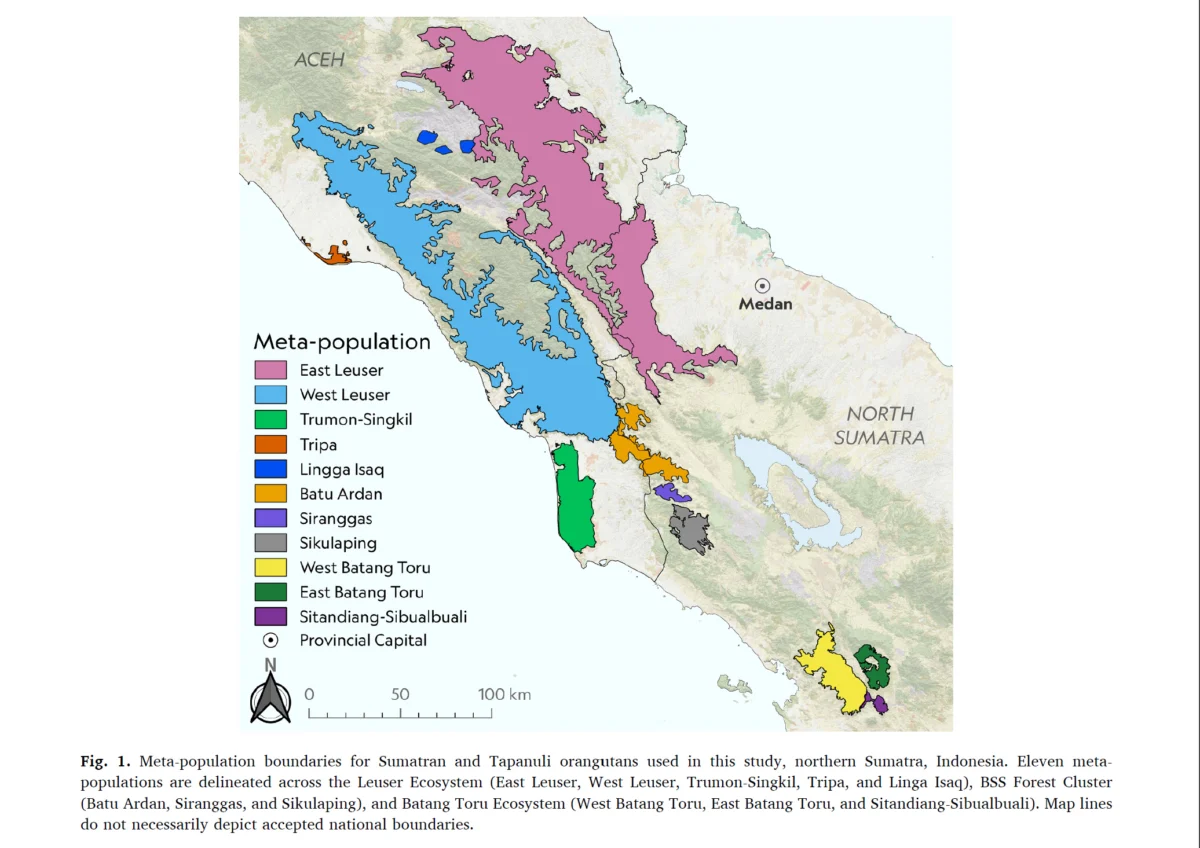
In a span of approximately ten years, the dense tropical rainforests of northern Sumatra have witnessed a devastating decline in the population of the Sumatran orangutan (Pongo abelii), with an estimated loss of 2,700 individuals. This figure represents nearly one-fifth of the total population of this endemic great ape, sounding an urgent alarm for international conservationists and the Indonesian government alike. The findings, derived from a comprehensive field survey conducted between 2021 and 2023, highlight a deepening crisis for a species already teetering on the edge of extinction.
The data, which emerged from the most extensive survey of its kind in recent years, involved researchers meticulously documenting 208 orangutan nesting sites across almost the entirety of the species’ remaining habitat on the island of Sumatra. The results of this exhaustive study were published on June 20, 2026, in the prestigious international scientific journal Global Ecology and Conservation, under the title "Population Status of Sumatran and Tapanuli Orangutans: A Comprehensive Assessment 2021–2023." The research was spearheaded by Adhi N. Hadi and Julius P. Siregar, supported by a multidisciplinary team of over a dozen experts from Indonesia, the United Kingdom, and Germany.
By employing the same rigorous methodology used in a landmark 2011 survey, the research team was able to provide a direct longitudinal comparison. They discovered that the Sumatran orangutan population has plummeted by approximately 19.5 percent over the last decade, marking an average annual decline of 1.8 percent. In comparable survey areas, the estimated number of Sumatran orangutans fell from 13,846 individuals in 2011 to just 11,146 in 2023. This means that, on average, at least 225 orangutans disappeared every year during this period.

The Leuser Ecosystem: A Fragile Stronghold
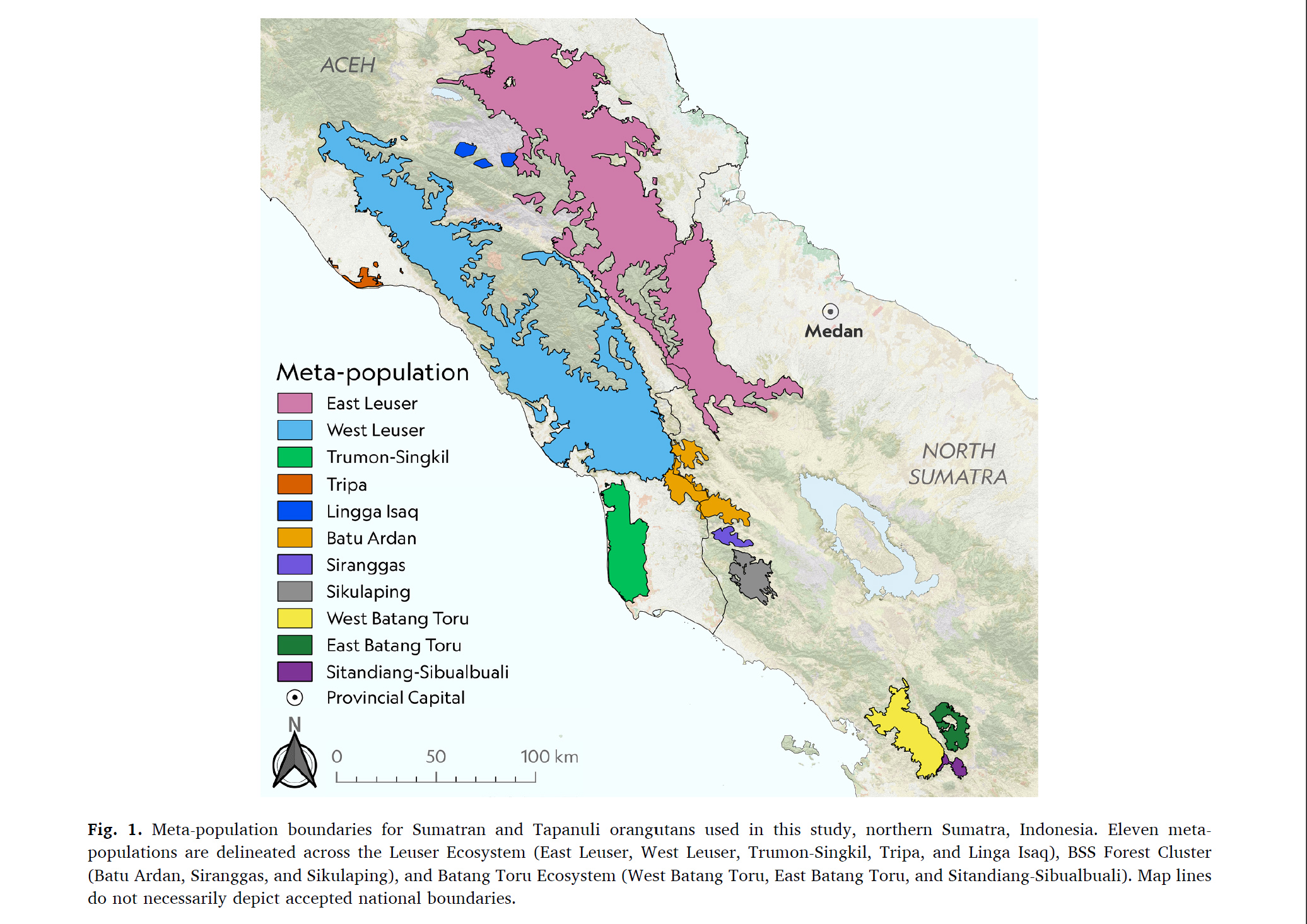
Despite the grim overarching trend, the Leuser Ecosystem (KEL) continues to serve as the primary bastion for the survival of the Sumatran orangutan. According to the report, roughly 84 percent of the total population is concentrated within the West Leuser and East Leuser regions. These two areas are estimated to harbor 4,935 and 4,926 individuals, respectively.
The highest population density recorded during the study was found in the Trumon-Singkil peat swamp forest, where researchers observed an average of 1.18 individuals per square kilometer. This specific landscape currently holds the title of the highest-density Sumatran orangutan habitat in the world. The importance of these peatlands cannot be overstated; they are not only critical for biodiversity but also serve as massive carbon sinks. However, their proximity to agricultural expansion makes them particularly vulnerable to drainage and fire.
Drivers of Decline: Beyond Deforestation
The research underscores that forest loss remains the primary catalyst for the dwindling orangutan numbers. Between 2011 and 2023, approximately 94,399 hectares of forest were lost within the orangutan’s known habitats in Sumatra. Statistical analysis suggests that habitat loss accounts for roughly 76 percent of the population decline across the various orangutan metapopulations.
However, the study clarifies that habitat destruction is not the only threat. In several regions, the rate of population decline significantly exceeded the rate of forest loss, suggesting that other anthropogenic factors are at play. These include illegal hunting, the domestic and international wildlife trade, and retaliatory killings resulting from human-orangutan conflict.

"Habitat loss alone does not explain the entirety of the population decline," the researchers noted in their report. This indicates a "silent thinning" of the population, where orangutans are removed from standing forests due to poaching or conflict.
Government data analyzed in the study further supports this harrowing conclusion. Between 2012 and 2024, there were 319 recorded cases of orangutan rescues or conflicts in the provinces of Aceh and North Sumatra. From these incidents, 57 individuals were confiscated from private ownership. Alarmingly, 60 percent of these confiscated animals were infants under the age of four. Scientists emphasize that the presence of an infant in the illegal trade almost invariably means the mother was killed, as female orangutans are fiercely protective and will not voluntarily surrender their offspring.
The Legal Gap and Fragmented Landscapes
One of the most concerning revelations of the 2021–2023 assessment is the high percentage of orangutans living outside protected areas. The study estimates that approximately 18 percent of the Sumatran orangutan population resides in production forests or areas designated for "Other Use" (Areal Penggunaan Lain or APL). These areas lack formal conservation status and are often slated for conversion into palm oil plantations, timber concessions, or infrastructure projects.
The Rawa Tripa peat swamp is cited as a prime example of this protection gap. The entire orangutan population in Rawa Tripa lives in a landscape without formal protection, leaving them at the mercy of land-clearing activities and forest fires. The researchers asserted that merely designating a region as a "protected area" on a map is insufficient to halt the decline. Effective enforcement, the restoration of connectivity between fragmented metapopulations, and targeted interventions in non-protected landscapes are now considered urgent priorities.
Expert Perspectives and the Climate Connection
Serge Wich, a prominent orangutan researcher and Professor of Primate Biology at Liverpool John Moores University, who co-authored the study, expressed deep concern over the magnitude of the findings. Speaking to the media, Wich noted that the population drop over the 12-year period was "exceptionally sharp" and showed no signs of slowing down.
Wich, who has been studying Sumatran orangutans since 1994, emphasized that the protection of peat swamp forests like Trumon-Singkil is a dual-purpose necessity. "Peat swamps store significantly more carbon than mineral soil forests," Wich explained. "Protecting these habitats is not only vital for the orangutans but is also a critical component of global efforts to mitigate the climate crisis."
He called on the Indonesian government to prioritize two immediate actions: a total halt to forest conversion in orangutan habitats and a zero-tolerance policy toward the killing of the species. Despite the dire statistics, Wich remains cautiously optimistic. He believes that both the Sumatran orangutan and the recently discovered Tapanuli orangutan (Pongo tapanuliensis) can be saved if there is a unified commitment from the government, private corporations, local communities, and the international scientific body.
Case Study: The Rescue at Rawa Tripa
The theoretical data of the study is mirrored by recent events on the ground. On June 19, 2026, an eight-year-old male Sumatran orangutan was evacuated from a palm oil concession (HGU) owned by PT SPS in the Rawa Tripa area of Nagan Raya Regency, Aceh. The animal was found in a severely weakened state—dehydrated, emaciated, and suffering from an injury to its left leg.
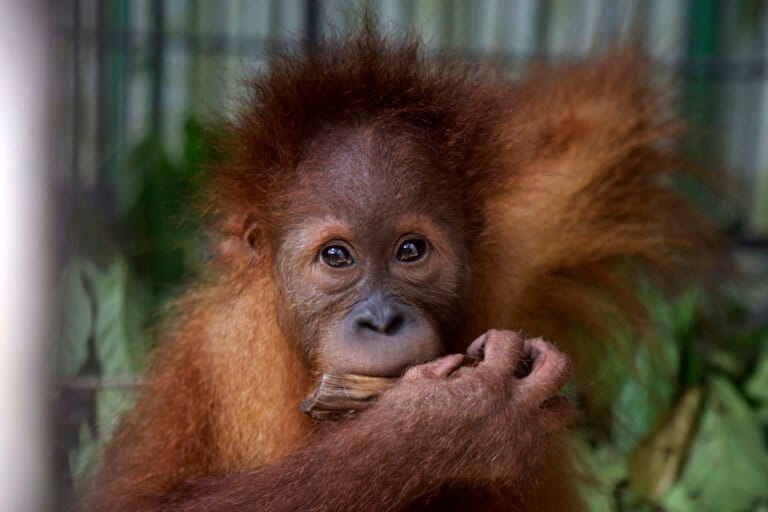
Ujang Wisnu Barata, the Head of the Aceh Natural Resources Conservation Agency (BKSDA), stated that the orangutan’s condition was likely linked to recent forest fires that had ravaged the area, isolating the animal from food sources and safety. "It appears he was trapped in a fragment of forest and was suffering from malnutrition while trying to escape the fires," Barata explained.
The rescued orangutan is currently undergoing intensive care at the Sibolangit Orangutan Quarantine and Rehabilitation Center in North Sumatra. Once recovered, he will likely be released into the Jantho Pine Forest Nature Reserve rather than being returned to Rawa Tripa, where the habitat is considered too degraded to support him. BKSDA estimates that only 10 to 15 adult orangutans remain in the Rawa Tripa peat swamps, a stark decline for an area that was once a primary habitat.
Implications and the Path Forward
The 19.5 percent decline in the Sumatran orangutan population is more than just a biological loss; it is an indicator of the failing health of Sumatra’s ecosystem. As "gardeners of the forest," orangutans play a vital role in seed dispersal, maintaining the diversity and density of the rainforest. Their disappearance triggers a cascade effect that reduces forest regeneration and impacts other species.
The study’s authors and independent analysts suggest that the next five years will be a "make or break" period for the species. Recommendations for the Indonesian government include:
- Moratorium on Land Clearing: Implementing a stricter moratorium on forest conversion within the Leuser Ecosystem and identified APL areas that host orangutan metapopulations.
- Wildlife Corridors: Investing in the creation of wildlife corridors to reconnect isolated populations, preventing the genetic bottlenecking that occurs when small groups are cut off from one another.
- Enhanced Law Enforcement: Increasing the budget and personnel for forest rangers to combat poaching and the illegal pet trade, particularly focusing on the "middlemen" in the supply chain.
- Community-Based Conservation: Engaging local communities in sustainable agroforestry that provides economic benefits without requiring the destruction of orangutan habitats.
As the international community looks toward the 2030 biodiversity targets, the plight of the Sumatran orangutan serves as a reminder that even well-known "flagship" species are not safe from the pressures of modern development. The comprehensive assessment of 2021–2023 provides the data necessary for action; the question remains whether the political and corporate will exists to implement the changes required to save Sumatra’s iconic great ape from extinction.