Tyo Susilo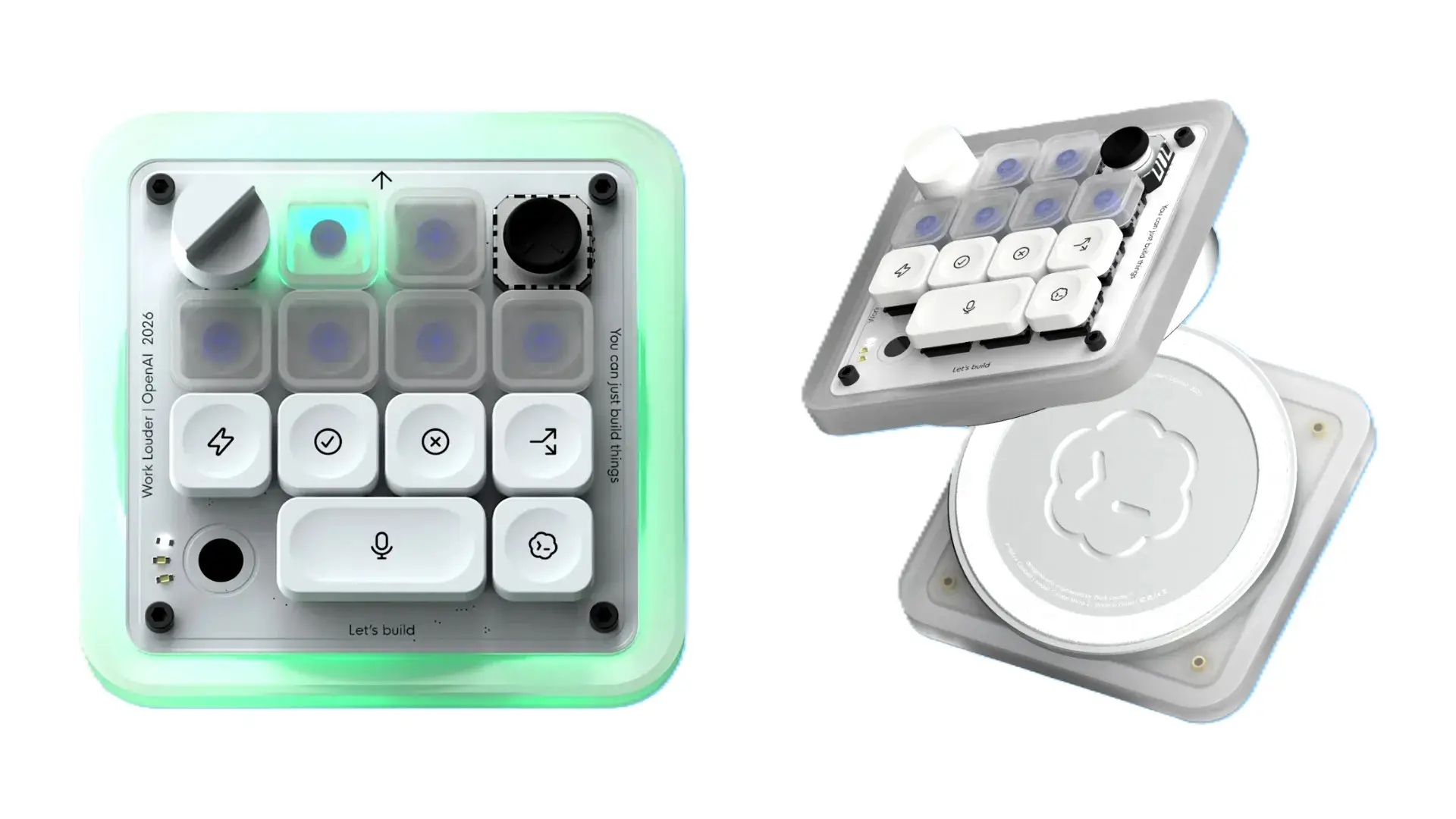
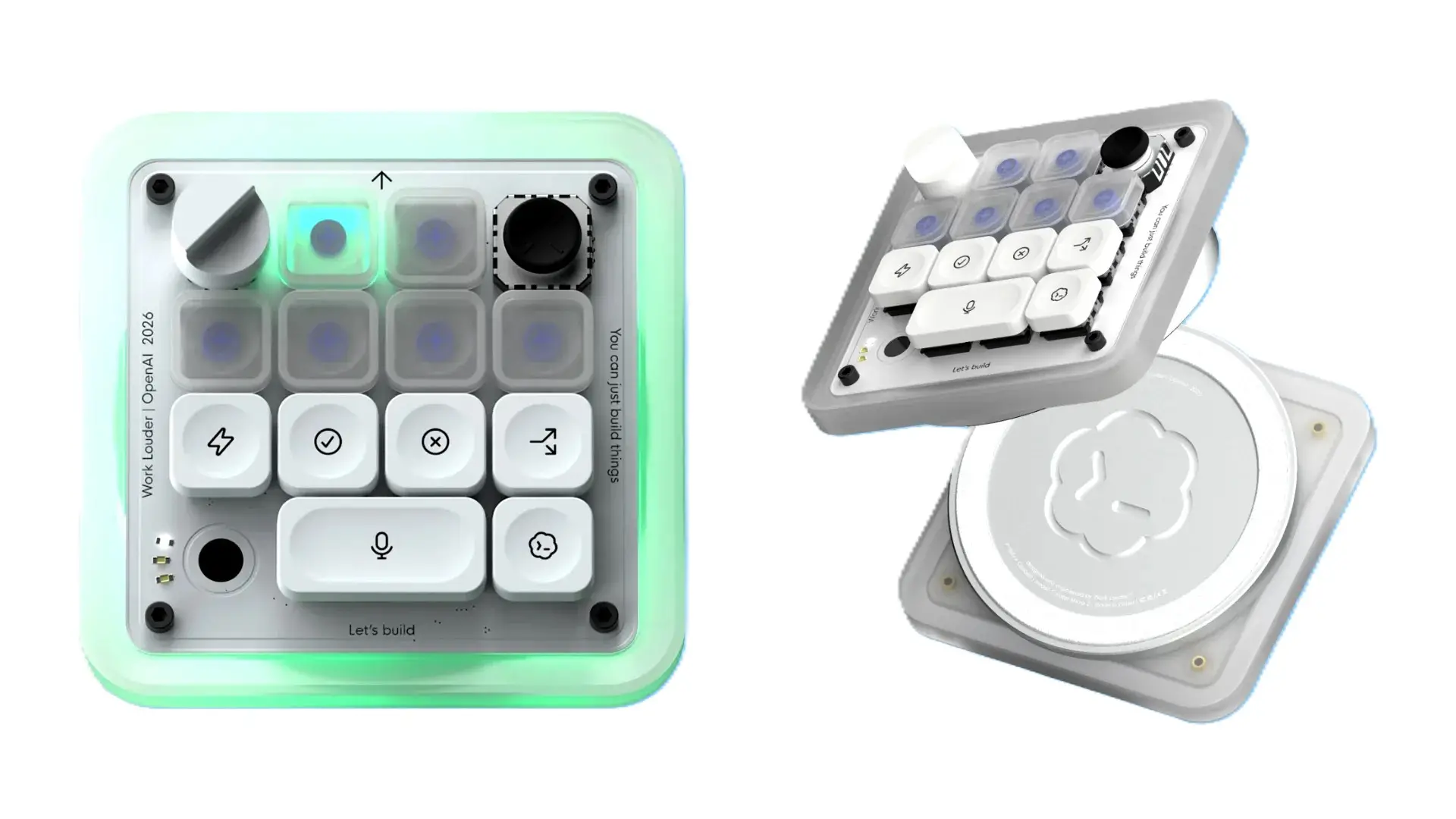
OpenAI has unveiled a groundbreaking new hardware concept, the Codex Micro, a limited-edition physical keyboard designed to serve as a dedicated control center for AI agents. This innovative device signals a significant shift in how humans might interact with the burgeoning landscape of artificial intelligence, moving beyond traditional screen-based interfaces and voice commands to offer a more tactile and integrated experience. The Codex Micro represents OpenAI’s vision for a future where managing multiple AI agents becomes as intuitive and direct as operating a physical control panel.
The development of the Codex Micro arrives at a pivotal moment in AI’s evolution. As artificial intelligence moves from single-task chatbots to sophisticated, multi-agent systems capable of handling complex workflows, the need for efficient and intuitive management tools becomes paramount. The current paradigm, often involving numerous browser tabs, applications, and command lines, can quickly become overwhelming. OpenAI’s exploration with the Codex Micro suggests a proactive approach to solving this impending challenge, anticipating the user experience needs of a more complex AI-driven future.
The Rationale Behind a Dedicated AI Agent Keyboard
OpenAI’s rationale for developing a specialized keyboard like the Codex Micro stems from a forward-thinking projection of AI usage. The company anticipates a future where individuals will not be limited to interacting with a single AI chatbot or a solitary virtual assistant. Instead, users are expected to actively manage and deploy multiple AI agents simultaneously, each potentially tasked with distinct responsibilities. This scenario necessitates a more streamlined and efficient method for monitoring, directing, and coordinating these autonomous entities, moving beyond the limitations of current digital interfaces.
The Codex Micro is engineered to address this emerging need by offering dedicated physical keys. These keys are envisioned as shortcuts, allowing users to manage their AI agents without the constant need to open multiple applications or navigate complex graphical user interfaces. This physical interaction aims to provide a tangible sense of control that is currently absent in purely screen-based or voice-controlled AI interactions. Such a design philosophy suggests a desire to bridge the gap between the abstract nature of AI and the user’s desire for direct, physical command.
Unpacking the Features and Design Philosophy of Codex Micro
OpenAI has described the Codex Micro as a means to control an "AI fleet" with enhanced intuitiveness. While specific technical specifications for this limited-edition hardware have not been fully detailed, the core concept revolves around a keyboard form factor that prioritizes AI agent management. This likely translates to keys programmed for specific AI functions, such as initiating tasks, pausing agents, switching between different AI personas, or even adjusting parameters for individual AI agents.
The company has emphasized that the Codex Micro is currently an experimental device, not intended for widespread commercial release in its current iteration. This experimental status is crucial, as it allows OpenAI to explore novel interaction paradigms and gather user feedback without the constraints of a mass-market product. The development process itself is a form of research, providing valuable insights into human-AI interaction design.
Despite its experimental nature, the emergence of the Codex Micro sends a clear signal: the advancement of artificial intelligence is not solely confined to software development. OpenAI’s foray into hardware signifies a recognition that the physical interface plays a critical role in shaping the user’s experience with AI. The goal is to make AI interactions faster, more practical, and more natural. If this conceptual direction proves successful, specialized hardware designed for managing AI agents could become a commonplace fixture on future workstations, much like specialized controllers for gaming or creative software are today.
Contextualizing the Development: A Timeline of AI Interaction
The concept of specialized hardware for computing tasks is not new. In the early days of computing, dedicated terminals and control panels were standard. As personal computing evolved, the keyboard and mouse became the primary input devices, with graphical user interfaces (GUIs) abstracting away much of the underlying complexity. However, with the rise of AI, particularly large language models and generative AI, we are witnessing a potential paradigm shift back towards more direct, albeit differently conceived, forms of control.
- Early Computing Eras: Users interacted with machines through punch cards, command-line interfaces, and specialized control panels. Physical switches and dials were common.
- The Personal Computer Revolution: The advent of the GUI, mice, and standardized keyboards (like the QWERTY layout) made computing accessible to a broader audience.
- The Internet Age: Web browsers and applications became the primary interfaces for accessing information and services, with keyboards and mice remaining dominant input methods.
- The AI Awakening (circa 2010s onwards): The development of sophisticated AI models, particularly deep learning, led to the rise of chatbots and virtual assistants. Voice interfaces (e.g., Siri, Alexa, Google Assistant) gained traction, offering a hands-free alternative.
- The Generative AI Boom (Early 2020s): Models like GPT-3, DALL-E, and Midjourney demonstrated unprecedented capabilities in text generation, image creation, and more. This fueled the concept of "AI agents" – entities that can perform complex tasks autonomously or semi-autonomously.
- The Need for Agent Management (Mid-2020s): As users began experimenting with multiple AI models and workflows, the limitations of existing interfaces for managing these agents became apparent. This created a market opportunity for more specialized control mechanisms.
- OpenAI’s Codex Micro (2026 – conceptual): The introduction of the Codex Micro represents a concrete step towards addressing the agent management challenge through dedicated hardware.
This timeline highlights a cyclical progression: from direct physical control to abstract digital interfaces, and now potentially back to a blend of both, tailored for the unique demands of advanced AI.
Supporting Data and Industry Trends
The development of the Codex Micro aligns with several observable trends within the AI industry:
- The Rise of AI Agents: Companies across the tech spectrum are investing heavily in AI agents that can perform tasks ranging from scheduling meetings to complex data analysis and software development. Startups are emerging with specialized agent platforms, indicating a growing market for AI-driven automation. For example, projects like Auto-GPT and BabyAGI, while open-source and experimental, demonstrated the potential for autonomous AI agents to perform multi-step tasks, sparking widespread interest and development in this area.
- Human-AI Collaboration: The focus is shifting from AI replacing humans to AI augmenting human capabilities. This necessitates tools that facilitate seamless collaboration. According to a report by McKinsey & Company, "Generative AI is poised to transform work across industries by augmenting human capabilities, rather than fully automating tasks." This augmentation requires effective interfaces.
- The Hardware-Software Symbiosis: While much of the AI revolution has been software-driven, there’s a growing recognition of the role hardware plays in optimizing performance and user experience. NVIDIA’s continued dominance in AI chip manufacturing, and the development of specialized AI accelerators by companies like Google (TPUs) and Intel, underscore this trend. OpenAI’s foray into a physical input device can be seen as an extension of this symbiotic relationship, focusing on the output side of the human-AI interaction.
- User Experience as a Differentiator: As AI capabilities become more commoditized, the user experience will increasingly become a key differentiator. Companies are investing in making AI more accessible and intuitive, moving beyond technical jargon and complex commands. The Codex Micro’s emphasis on tactile control and dedicated shortcuts directly addresses this UX imperative.
Potential Implications and Broader Impact
The Codex Micro, even as an experimental device, has several potential implications for the future of human-AI interaction:
- Increased Productivity: By offering dedicated controls for AI agents, the Codex Micro could significantly streamline workflows, allowing users to manage multiple AI tasks more efficiently and with less cognitive load. This could translate into substantial productivity gains for professionals in fields ranging from software development and content creation to research and data analysis.
- Enhanced Control and Precision: Physical buttons offer a level of tactile feedback and precision that can be difficult to replicate with a mouse and keyboard alone, especially when dealing with numerous agents or complex command sequences. This could lead to more precise control over AI outputs and behaviors.
- Democratization of Advanced AI: If the concept proves viable and eventually leads to more accessible hardware, it could democratize the use of advanced AI agents. Users who are not deeply technical might find it easier to leverage the power of multiple AI agents with a more intuitive control surface.
- Shaping Future Hardware Design: The success of the Codex Micro could inspire other hardware manufacturers to develop similar specialized input devices for AI. We might see a future where desks are equipped with a standard keyboard, a mouse, and a dedicated AI control panel, each optimized for different aspects of digital interaction.
- Ethical Considerations and User Agency: As AI agents become more autonomous, the interface through which users control them becomes critical for maintaining user agency and ensuring ethical AI deployment. A dedicated control panel could provide clearer oversight and enable users to intervene more readily when necessary.
Reactions from Related Parties (Inferred)
While official statements beyond OpenAI’s initial announcement are scarce for an experimental product, one can infer potential reactions from various stakeholders:
- AI Researchers and Developers: Many in the AI research community are likely to view the Codex Micro as an intriguing exploration into HCI (Human-Computer Interaction) for AI. They may be eager to see how such hardware impacts user efficiency and the effectiveness of AI agent deployment in real-world scenarios.
- Productivity Software Companies: Competitors and collaborators in the productivity software space might view this move with interest, potentially seeing it as a signal to integrate their offerings more deeply with hardware-based AI control or to develop their own complementary solutions.
- Hardware Manufacturers: Traditional keyboard and peripheral manufacturers may see this as a new frontier, potentially prompting them to explore similar innovations or to partner with AI companies to develop next-generation input devices.
- End-Users (Enthusiasts and Professionals): Early adopters and tech enthusiasts are likely to be excited by the prospect of a dedicated AI control device, seeing it as a way to stay at the cutting edge of AI interaction. Professionals who heavily rely on AI for their work might be cautiously optimistic, awaiting evidence of its practical benefits.
The Ongoing Debate: Hardware vs. Software
The introduction of the Codex Micro reignites a discussion about the optimal interface for interacting with artificial intelligence. While software-based solutions have long been the default, the limitations of screens and voice commands in managing complex AI ecosystems are becoming increasingly apparent.
The argument for dedicated hardware like the Codex Micro centers on several points:
- Tactile Feedback: Physical buttons provide a direct, sensory connection to the system, offering immediate confirmation of actions and reducing the ambiguity sometimes present in touch or voice interfaces.
- Dedicated Functionality: Keys programmed for specific AI tasks can bypass the need for menu navigation or complex command syntax, making operations faster and more intuitive.
- Reduced Cognitive Load: By offloading repetitive or complex AI management tasks to dedicated hardware, users can free up mental resources to focus on higher-level problem-solving and creative endeavors.
- Ergonomics: A well-designed control surface can potentially improve the ergonomics of interacting with AI, reducing strain and fatigue associated with prolonged screen use.
Conversely, proponents of purely software-based solutions emphasize:
- Flexibility and Adaptability: Software interfaces can be easily updated and reconfigured to accommodate new AI models and functionalities without requiring hardware changes.
- Ubiquity: Software solutions can be accessed on virtually any device with a screen, offering greater accessibility and portability.
- Cost-Effectiveness: Developing and distributing software is generally less expensive than designing and manufacturing specialized hardware, especially for limited-run products.
- Innovation in Software: Advancements in UI/UX design for software interfaces continue to make them more powerful and user-friendly, potentially negating the need for dedicated hardware.
The Codex Micro represents a bold step towards the hardware-centric approach. Its success, or even its impact as an experimental concept, will undoubtedly influence the direction of future human-AI interaction design, potentially leading to a richer, more integrated, and more intuitive relationship between humans and the intelligent machines they create. The question remains: will this physical gateway to AI become an indispensable tool, or a niche accessory in the ever-evolving digital landscape?