Chalifah Fatihah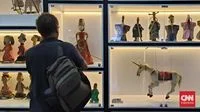
Jakarta, CNN Indonesia – Museums, often perceived as repositories of the past, can sometimes carry an aura of dimness, stuffiness, and even eeriness. However, the Museum Wayang in Jakarta is actively challenging this stereotype, inviting visitors to explore the rich world of wayang, Indonesia’s traditional puppet art, not through archaic methods, but with a contemporary touch. This institution is transforming its image, offering an engaging and educational experience that bridges the gap between deeply rooted tradition and modern accessibility.
Located in the historic Kota Tua (Old Town) area of Jakarta, a stone’s throw from the Jakarta History Museum (Museum Fatahillah), the Museum Wayang offers a journey into a vital aspect of Indonesian cultural heritage. It showcases wayang not merely as a form of entertainment but as a powerful medium for transmitting values, teachings, and profound narratives. The museum is thoughtfully organized into several zones, guiding visitors through the multifaceted history of wayang, its diverse local and international variations, and the captivating stories it brings to life.
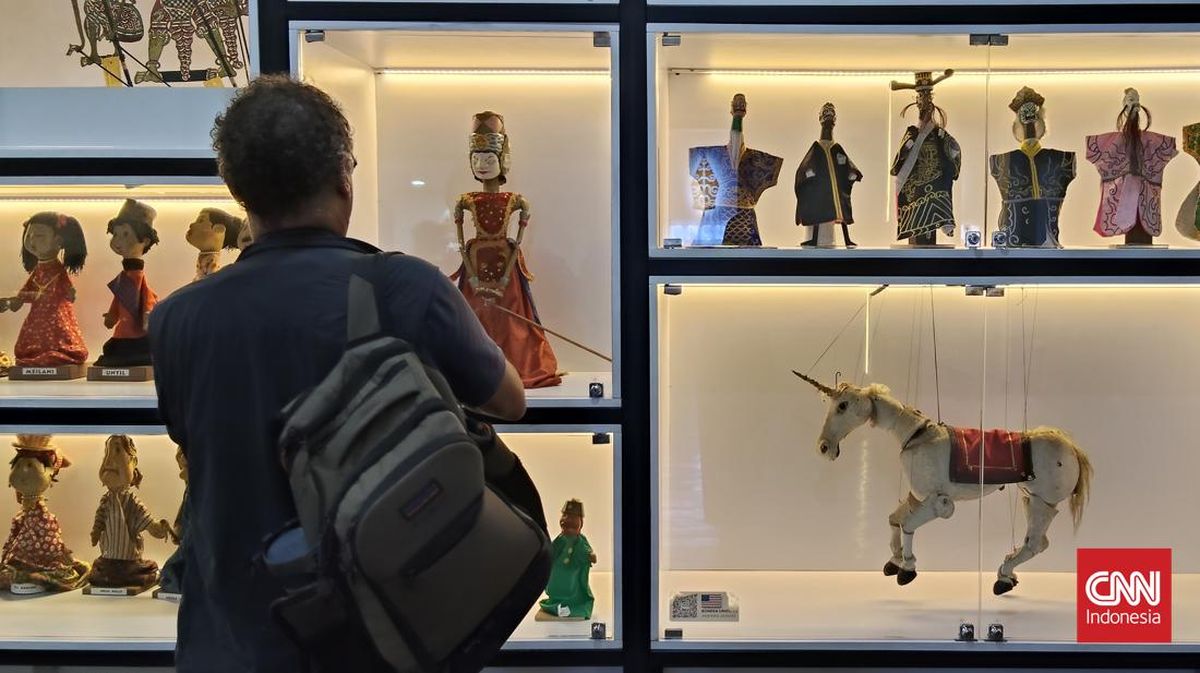
Upon entering the museum’s initial corridor, visitors are greeted by imposing figures of three large-scale wayang golek puppets: Ramawijaya, Rahwana, and Duryudana, standing guard on the left. To the right, a historical narrative unfolds, detailing the establishment of the Museum Wayang itself. This architectural space holds a significant past, predating its current function.
A Site Steeped in History: From Church to Cultural Hub
The building that now houses the Museum Wayang was once the site of a Dutch Reformed Church known as the oude hollandsche kerk or Kruiskerk, constructed in 1632. Following damage, a new church was erected and consecrated in 1736. However, the structure’s destiny shifted dramatically in 1808 when the church was dismantled and sold after suffering damage from an earthquake. Subsequently, the building underwent various transformations, serving as a warehouse before eventually being repurposed as a museum. It first functioned as the Museum of the City (Stedelijk Museum) in 1939, then as the Old Jakarta Museum (Museum Jakarta Lama) in 1962, before finally being inaugurated as the Museum Wayang on August 13, 1975. This historical layering adds a unique dimension to the visitor experience, where the very walls resonate with centuries of Jakarta’s evolving narrative.
Unveiling the Diversity of Wayang
As visitors venture deeper into the museum, they discover the widespread presence of wayang golek beyond its commonly known origins in West Java. The museum proudly exhibits Wayang Golek Menak Kebumen and Wayang Golek Menak Pekalongan, alongside West Javanese varieties like Wayang Golek Pakuan Bogor and Wayang Golek Cepak Cirebon. Adjacent to these, an exhibit showcases Wayang Klithik, puppets crafted from thin layers of wood. The name "Klithik" itself is derived from the distinctive "klithik klithik" sound produced by these thin wooden pieces as they strike against each other during a performance.
The initial zone might also present a curious sight: a tombstone and an empty garden space. This serves as a poignant reminder of the area’s past. Within the former church complex, a Dutch cemetery once existed, interring notable VOC figures, their families, and soldiers. Among them lies the tomb of Governor-General Jan Pieterszoon Coen, who served from 1627 to 1629, adding a layer of historical depth to the museum’s physical footprint.
Wayang Across Nusantara and the Globe
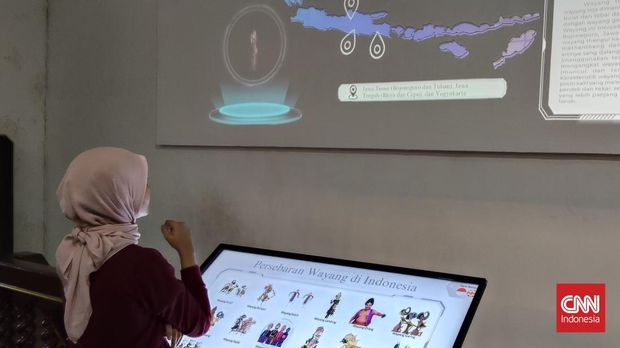
Moving to the second floor, visitors are presented with an interactive touch screen experience, offering both audio and visual information about wayang from across the Indonesian archipelago and beyond. This digital interface allows exploration of diverse forms such as Wayang Potehi, Wayang Palembang, Wayang Papua, and Wayang Sasak. While the visual component currently consists of location maps and text accompanying the audio, the potential for richer engagement exists. Introducing video clips showcasing actual wayang performances from their regions of origin would undoubtedly enhance the immersive experience, providing a more dynamic and captivating presentation of these distinct traditions.
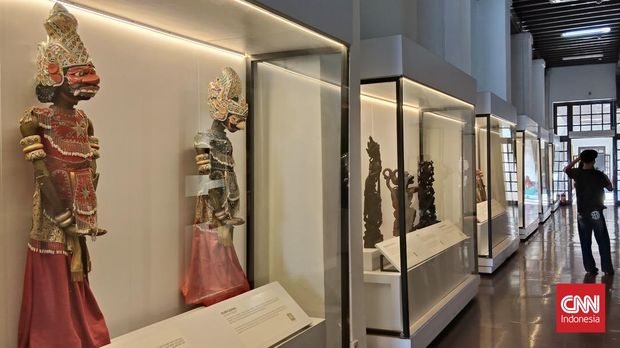
The museum also features a fascinating collection of wayang and puppet traditions from various countries, many of which have been influenced by Indonesian wayang and adapted to local cultural contexts. These international exhibits include examples from India, the Czech Republic, Suriname, Cambodia, Sweden, the United States, South Korea, Sri Lanka, the United Kingdom, France, Russia, Vietnam, Thailand, and Malaysia. This global perspective underscores the far-reaching influence of Indonesian puppetry and its role in fostering cross-cultural dialogue.
Specialized Wayang Forms and Their Narratives
Among the unique exhibits is Wayang Wahyu, a form of shadow puppetry created by Brother Timotheus Wignyosubroto in Surakarta in 1959, with its puppets later made by puppeteer Rusradi in 1960. This wayang form is notably used to disseminate Catholic teachings, illustrating how traditional art forms can be adapted to serve diverse spiritual and educational purposes.
Another compelling collection is the Wayang Revolusi or Wayang Perjuangan (Revolutionary Wayang or Struggle Wayang). These puppets depict prominent figures from Indonesia’s struggle for independence, such as Soekarno and Mohammad Hatta. Their attire often reflects modern clothing styles, signifying their association with the nation’s modern era and the fight for self-determination.
Embracing Technology: The Immersive Experience
Beyond its extensive collection of puppets and historical artifacts, the Museum Wayang distinguishes itself by integrating cutting-edge technology as a pedagogical tool. The Immersive Room is a particularly unmissable attraction, designed to transport visitors directly into the narratives of wayang performances through a captivating blend of visuals and audio. This 360-degree immersive cinema offers an engaging way to experience wayang stories, complemented by interactive zones that allow visitors to actively participate and explore. Remarkably, access to these advanced facilities is included in the general admission fee; visitors simply need to register and adhere to the scheduled entry times.
The Immersive Room offers multiple viewing sessions throughout the week. From Tuesday to Friday, sessions run from 09:30 to 15:00 WIB, while on Saturdays and Sundays, the hours extend to 09:30 to 18:00 WIB. These sessions are organized in batches, with new entries admitted every 30 minutes, ensuring a consistent flow of visitors and an optimal viewing experience.
For enthusiasts of museum exploration, the Museum Wayang also participates in the "Museum Passport" program. Visitors can collect three distinct stamps, each with a unique design, from museum staff, adding a collectible element to their visit.
Contextualizing the Museum Wayang’s Role
The Museum Wayang’s strategic positioning within Kota Tua, a UNESCO World Heritage tentative list site, places it at the heart of Jakarta’s historical and cultural tourism circuit. The area, once the epicenter of Dutch colonial administration, now serves as a vibrant hub for cultural activities, attracting both local residents and international tourists. The museum’s revitalization efforts, particularly its embrace of modern technology, are crucial for several reasons:
- Relevance in the Digital Age: In an era dominated by digital content, traditional institutions must innovate to remain relevant to younger generations. The Museum Wayang’s immersive technologies provide an engaging alternative to passive viewing, catering to the expectations of contemporary audiences accustomed to interactive experiences.
- Preservation and Promotion: By showcasing the diversity of wayang from across Indonesia and internationally, the museum plays a vital role in preserving this intangible cultural heritage. The use of audio-visual aids and interactive displays helps to disseminate knowledge and foster appreciation for wayang as a living tradition.
- Economic Impact: As a key attraction in Kota Tua, the museum contributes to the local economy by drawing visitors who then patronize other businesses in the area, such as cafes, restaurants, and souvenir shops. Its successful operation can bolster the overall appeal and economic viability of the heritage district.
- Educational Value: The museum’s focus on transferring values and teachings through wayang underscores its significant educational role. By making complex narratives and historical contexts accessible, it provides a unique learning environment that goes beyond traditional classroom settings.
The success of the Museum Wayang in transforming its image from a potentially staid institution to a dynamic cultural hub offers a model for other heritage sites. Its commitment to blending tradition with innovation ensures that wayang, a cornerstone of Indonesian identity, continues to resonate with audiences today and for generations to come. The ongoing efforts to enhance the visitor experience, such as the potential integration of more video content for regional wayang forms, signal a forward-looking approach that bodes well for the future of cultural heritage preservation and promotion in Indonesia.