
 Paryono Ramadhan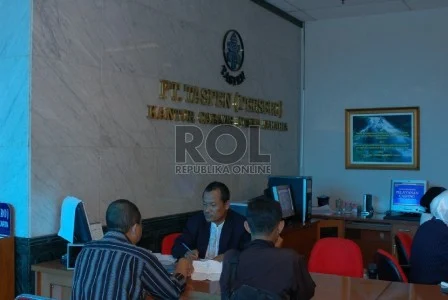
PT Taspen (Persero), the state-owned enterprise entrusted with managing social insurance programs for civil servants, is set to commence the repayment of Tabungan Perumahan Pegawai Negeri Sipil (Taperum PNS), or Civil Servant Housing Savings, starting June 1st. This significant initiative will benefit all civil servants who reach retirement age on or after this date, with the exception of personnel within the Ministry of Defense, the Indonesian National Armed Forces (TNI), and the Indonesian National Police (Polri), who are covered by separate welfare schemes. The repayment process is designed for efficiency, with beneficiaries receiving their Taperum funds concurrently with their initial pension payments and Old Age Savings (Tabungan Hari Tua/THT) at designated Taspen branch offices across the archipelago.
According to Iwan Soeroto, Corporate Secretary of PT Taspen, this systematic repayment is a direct result of a collaborative agreement between PT Taspen and the Badan Pertimbangan Tabungan Perumahan Pegawai Negeri Sipil (Bapertarum-PNS), the former body responsible for managing the housing savings fund. The integrated payment approach aims to streamline the process, ensuring that retiring civil servants receive all their entitled benefits in a single, convenient transaction. "The payment is bundled to facilitate ease for civil servants in receiving their rights," Iwan Soeroto stated, as quoted by Antara. This move underscores PT Taspen’s commitment to enhancing the welfare of retired civil servants by providing seamless access to their accumulated savings, which are crucial for post-employment financial security.
Historical Context: The Genesis of Taperum PNS and Bapertarum-PNS
The Taperum PNS program was established with the noble objective of assisting civil servants in acquiring suitable housing, recognizing the critical role housing plays in the overall welfare and productivity of the state apparatus. For decades, civil servants contributed a portion of their salaries to this dedicated fund, which was managed by Bapertarum-PNS. Bapertarum-PNS, established under Presidential Decree No. 14 of 1994, served as the advisory board responsible for formulating policies and managing the Taperum funds, ensuring their proper utilization for housing development and assistance programs.
The contributions to Taperum PNS have historically been modest but consistent. Based on Presidential Decree (Kepres) No. 46 of 1994, which standardized the contribution rates, civil servants (excluding TNI/Polri/Kemhan personnel) were mandated to contribute a fixed monthly amount from their salaries. Specifically, civil servants in Golongan I (Category I) contributed Rp 3,000; Golongan II (Category II) contributed Rp 5,000; Golongan III (Category III) contributed Rp 7,000; and Golongan IV (Category IV) contributed Rp 10,000. These rates, while seemingly small by today’s standards, were significant at the time of their establishment and were intended to accumulate over a civil servant’s career to provide a lump sum upon retirement or to assist with housing down payments during active service.
Over the years, the Indonesian government has continuously sought to refine and improve welfare programs for its civil servants. This commitment led to a significant policy shift, culminating in the dissolution of Bapertarum-PNS. Through Government Regulation No. 25 of 2018, the management and all associated functions of Taperum PNS were officially transferred to PT Taspen. This strategic move was aimed at consolidating the management of civil servant social security and welfare programs under a single, specialized state-owned entity, thereby enhancing efficiency, transparency, and accountability. The current repayment initiative is a direct consequence of this regulatory transition, signifying the finalization of the handover and the activation of Taspen’s mandate to process accumulated Taperum funds for retiring civil servants.
PT Taspen’s Expanded Mandate and Operational Framework
PT Taspen, established in 1963, has long been a cornerstone of Indonesia’s civil servant welfare system. Its primary mandate revolves around managing pension funds and old-age savings for civil servants, including death benefits and work accident insurance. The integration of Taperum PNS into its portfolio represents a logical expansion of its responsibilities, leveraging its extensive network of branch offices and established operational infrastructure. With approximately 4.2 million active civil servants across Indonesia and a significant number of retirees, Taspen manages substantial funds and processes millions of transactions annually.
The operational framework for the Taperum repayment is meticulously planned. Retiring civil servants, upon submitting their pension claims, will automatically have their Taperum funds calculated and disbursed alongside their first pension payment and THT. This integrated system eliminates the need for separate applications or visits, minimizing bureaucratic hurdles for retirees. Taspen’s nationwide network of over 50 branch offices plays a crucial role in facilitating these transactions, ensuring accessibility for civil servants in various regions. The digital infrastructure supporting Taspen’s operations also plays a part in ensuring accurate and timely disbursements, reflecting the company’s continuous efforts to modernize its services.
Proposed Changes: Towards a New Contribution Model
Beyond the immediate repayment initiative, PT Taspen is also actively working on a significant reform regarding the contribution structure for civil servant housing savings. Iwan Soeroto indicated that Taspen is advocating for a new model where the Taperum contribution would be set at 2.5 percent of the civil servant’s total salary, a substantial departure from the current fixed nominal amounts stipulated in Kepres No. 46 of 1994.
This proposed change is driven by several factors. Firstly, the existing fixed contributions, which have remained largely unchanged for decades, have been eroded by inflation and no longer adequately reflect the increasing costs of housing in Indonesia. A percentage-based contribution ensures fairness and equity, as higher-earning civil servants would contribute more, proportionally to their income, thereby accumulating a more substantial fund over their careers. Secondly, a percentage-based system would create a more robust and sustainable fund, capable of providing more meaningful housing assistance or larger lump-sum repayments upon retirement. This approach aligns with modern social security and welfare schemes globally, which often link contributions to a percentage of income rather than fixed amounts.

The implications of such a change would be far-reaching. For instance, a civil servant in Golongan IV with a basic salary of, for example, Rp 5 million (excluding allowances) currently contributes Rp 10,000. Under the proposed 2.5% model, their contribution would increase to Rp 125,000 per month. While this represents a significant increase in individual contributions, it would also lead to a much larger accumulated saving, potentially offering greater financial flexibility for housing needs during active service or a more substantial retirement payout. This reform, if enacted, would require careful legislative consideration and robust communication to all civil servants to ensure understanding and acceptance. It would likely involve revisions to existing government regulations and presidential decrees, reflecting a proactive approach by the government and Taspen to ensure the long-term viability and relevance of civil servant welfare programs.
Implications for Civil Servants and the National Economy
The commencement of Taperum PNS repayment carries significant implications for various stakeholders. For the approximately 4.2 million active civil servants and the hundreds of thousands who retire annually, this initiative brings clarity and financial certainty. Retirees can now confidently expect the return of their accumulated housing savings, which can serve as a valuable supplement to their pension, aiding in post-retirement expenses, health care, or even contributing to home renovations or relocation. This financial injection can enhance the quality of life for senior citizens who have dedicated their careers to public service.
From an economic perspective, the regular disbursement of Taperum funds to retirees represents a consistent, albeit localized, injection of capital into the economy. While individual amounts may vary, the aggregate sum distributed across the country can stimulate local economies, particularly in areas with higher concentrations of retirees. This could lead to increased consumer spending, demand for services, and potentially even investment in small businesses or personal projects.
For PT Taspen, this expanded mandate solidifies its position as the central pillar of civil servant welfare. It requires robust administrative capacity, sophisticated fund management, and efficient customer service. The successful execution of this program will reinforce public trust in state-owned enterprises responsible for social security.
On a broader policy level, this move signifies the Indonesian government’s continued commitment to the welfare of its civil servants. By streamlining the Taperum program and ensuring timely repayments, the government demonstrates its dedication to providing comprehensive social security benefits. The proposed shift to a percentage-based contribution model further illustrates a forward-thinking approach, aiming to create a more equitable and sustainable housing savings scheme for the future generation of civil servants. This could also serve as a model for other state-run welfare programs, promoting greater efficiency and responsiveness to the evolving economic landscape.
Statements from Related Parties and Broader Impact
While Iwan Soeroto’s statements provide the official stance from PT Taspen, the implications of this initiative resonate across various government ministries and civil servant representative bodies. The Ministry of Finance, which oversees state finances and state-owned enterprises, would likely view this as a positive step towards rationalizing and modernizing public sector welfare programs. The Ministry of Administrative and Bureaucratic Reform (PAN-RB), responsible for civil service policy, would also support measures that enhance civil servant welfare and administrative efficiency.
Civil servant associations and unions would undoubtedly welcome the clarity and efficiency of the repayment process. Their long-standing advocacy for the welfare of their members would see this as a fulfillment of promises and a commitment to retirees’ financial security. While the immediate focus is on repayment, the proposed change to a 2.5% contribution model would likely spark discussions among these groups, balancing the need for higher future savings with the current financial burden on active civil servants. However, the long-term benefits of a more substantial housing fund are likely to be seen as a positive development.
The integration of Taperum management into Taspen’s existing framework also reduces fragmentation in the management of civil servant funds, which can lead to better oversight, reduced administrative costs, and improved investment strategies for the collective funds. This centralization aligns with broader government efforts to consolidate public services and enhance governance. The successful implementation of this repayment scheme is a critical step in building confidence in the reformed system and preparing for the potential transition to a new contribution model that will shape the future of civil servant housing welfare in Indonesia.
Looking Ahead: The Future of Civil Servant Housing Schemes
The initiation of Taperum PNS repayment on June 1st marks not an end, but a new chapter in Indonesia’s civil servant housing welfare program. It signals the complete integration of Taperum functions into PT Taspen’s comprehensive social security services, reinforcing the principle of a unified and efficient welfare system. The ongoing efforts to transition to a 2.5 percent salary-based contribution model underscore a commitment to long-term sustainability and equity, ensuring that future generations of civil servants benefit from a robust housing savings scheme that keeps pace with economic realities.
This evolution reflects a broader trend within the Indonesian government to modernize its public administration and welfare provisions. By streamlining processes, enhancing transparency, and adopting more financially sustainable models, the government aims to provide better support for its civil servants, from recruitment through retirement. The Taperum repayment is a tangible manifestation of these efforts, offering a practical benefit to thousands of retirees and setting a precedent for future enhancements in civil servant welfare programs across the nation. The successful implementation of these changes will be crucial in fostering a motivated and secure civil service, vital for the continued development and progress of Indonesia.








