Eko Sulistyo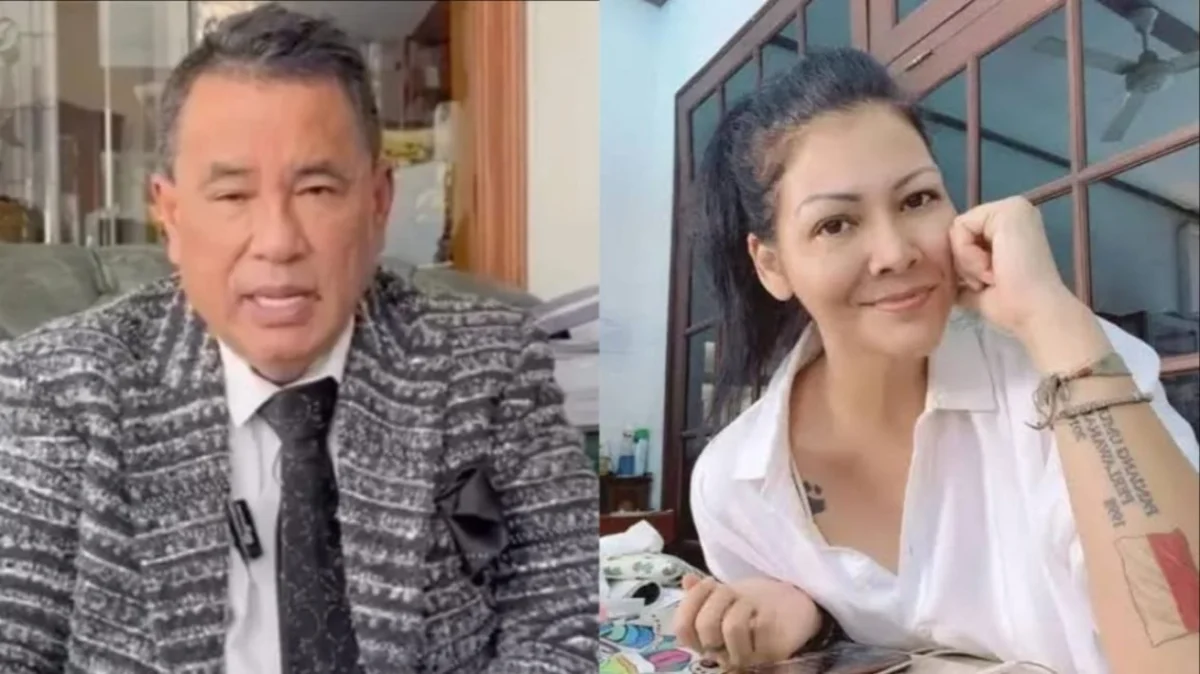
The Indonesian digital landscape has been ignited by a series of candid statements from activist and musician Melanie Subono, who recently took to social media to express her long-standing grievances against a high-profile attorney. While the activist did not explicitly name the individual in her initial post, the descriptions provided—ranging from the attorney’s television presence to his specific style of legal advocacy—led a vast majority of netizens to conclude that the target of her criticism is the flamboyant legal practitioner Hotman Paris Hutapea. The discourse, which began on Tuesday, July 21, 2026, has since evolved into a broader conversation regarding the intersection of entertainment, legal ethics, and the treatment of women within the Indonesian media industry.
Melanie Subono, the daughter of renowned music promoter Adrie Subono and a grand-niece of Indonesia’s third president, B.J. Habibie, has long been a vocal figure in social justice movements. Her recent critique centers on what she describes as a pattern of behavior that undermines the dignity of women. In her Instagram post, Melanie recounted a specific instance when she was invited to appear as a guest on a talk show hosted by the attorney in question. According to her account, the experience left her feeling "demeaned" as a woman, a sentiment she claims has only been reinforced by the attorney’s subsequent public behavior.
The Catalyst of the Critique
The friction between Subono and the unnamed attorney appears to be rooted in two distinct areas: professional conduct during media appearances and a perceived lack of sincerity in social advocacy. Melanie revealed that her distaste for the lawyer is not a new development. She noted that during her stint as a talk show guest, the atmosphere and the line of questioning made her feel uncomfortable and disrespected. This experience, she suggests, was a microcosm of a larger issue regarding how the attorney interacts with female guests and colleagues, often prioritizing sensationalism over professional decorum.
Furthermore, Melanie disclosed that she had once reached out to the attorney for assistance regarding a social issue or a case involving public interest. Despite the attorney’s public persona as a "champion of the people" who frequently offers pro bono legal aid via social media, Melanie claimed her request was met with total silence. This perceived inconsistency between the attorney’s public "hero" narrative and his private responsiveness served as a secondary catalyst for her public venting.
"Never liked that lawyer. Once became a guest on his talk show and felt demeaned as a woman," Melanie wrote in her social media update. She further elaborated that her request for help was ignored, but emphasized that the most lasting impact was the feeling of being belittled. "Especially that ‘demeaning women’ vibe. It’s getting more and more unclear (geje) as time goes on," she added, using the Indonesian slang term "geje" to describe erratic or nonsensical behavior.
The Rise of "Justice by Viral" and the Gimmick Culture
One of the more poignant aspects of Melanie’s critique was her assessment of the attorney’s legal strategy. She characterized him as an "expert in viral offenses (Delik Viral) and gimmick clauses." This terminology refers to a growing trend in the Indonesian legal system where cases only receive significant attention from authorities or the public once they have gained massive traction on social media platforms like Instagram or TikTok.
In recent years, the Indonesian public has witnessed a shift in how legal grievances are handled. The "Justice for Viral" phenomenon has seen several high-profile lawyers, including the one suspected to be the subject of Melanie’s post, leverage their massive social media followings to pressure law enforcement into action. While this has undoubtedly helped some victims who were previously ignored by the system, critics like Melanie Subono argue that it turns the pursuit of justice into a media spectacle.
By calling him an expert in "gimmicks," Melanie suggests that the attorney’s actions are motivated more by the desire for public attention and personal branding than by a commitment to the rule of law. This sentiment resonates with a segment of the population that views the attorney’s penchant for appearing with "personal assistants" and displaying extreme wealth as a distraction from serious legal discourse.
Background and Context: Melanie Subono’s Advocacy
To understand the weight of these accusations, one must look at Melanie Subono’s own history as an activist. Unlike many celebrities who engage in surface-level philanthropy, Subono has a documented history of grassroots involvement. Through her movement, "Rumah Harapan Indonesia" (Indonesian House of Hope), she has provided tangible aid to thousands of people, ranging from medical supplies to disaster relief.
Her advocacy often focuses on human rights, animal welfare, and the empowerment of marginalized groups. Because her approach to social work is often described as "quiet and consistent," her frustration with what she perceives as "performative activism" from a high-profile lawyer is a natural extension of her values. As a member of the extended Habibie family, she also carries a legacy of intellectualism and public service that often clashes with the more populist, entertainment-heavy legal culture that has emerged in the last decade.
Public and Social Media Reactions
The reaction to Melanie’s post was immediate and polarized. On one side, supporters of the activist praised her for having the courage to speak out against a powerful figure. Many women shared similar sentiments, noting that the "entertainment-style" legal shows often utilize female presence as mere "ornaments" rather than as intellectual contributors. This has sparked a renewed debate on the ethics of television production in Indonesia, specifically regarding the "talk show" format that blends legal advice with variety-show antics.
On the other hand, defenders of the attorney—assuming the public’s identification of him is correct—point to his "Hotman 911" initiative. This program has been credited with helping dozens of low-income individuals navigate the legal system, from victims of domestic violence to employees facing unfair dismissal. Supporters argue that even if his methods are "gimmicky," the results are real and provide a service that the state often fails to deliver.
Netizens on platforms like X (formerly Twitter) and Instagram have analyzed Melanie’s words meticulously. The phrase "Maybe I’m just not ‘cool’ enough, as someone once said," which concluded her post, was interpreted by many as a direct rebuttal to the attorney’s frequent dismissals of his critics as being "boring" or "envious" of his success and lifestyle.
Chronology of the Discontent
The tension between the two figures can be traced back through several years of shifting media dynamics in Indonesia:
- Early 2020s: The attorney’s talk shows become a staple of Indonesian television, characterized by high energy, flamboyant fashion, and the presence of numerous female "personal assistants."
- 2022-2024: The "Justice for Viral" movement gains momentum. The attorney begins taking on cases that have already trended on social media, cementing his status as a "people’s lawyer."
- The Talk Show Incident: Melanie Subono appears as a guest on one of these programs. While the exact date of the episode was not specified in her recent post, she indicates that the experience was the origin of her discomfort.
- The Ignored Plea: Melanie reaches out for assistance on a social cause. The lack of response creates a rift, highlighting a perceived discrepancy in the attorney’s willingness to help when there is no immediate "viral" potential.
- July 21, 2026: Melanie posts her critique on Instagram, citing a recent increase in "unclear" (geje) behavior from the attorney, leading to the current public discourse.
Legal and Ethical Implications
From a journalistic and legal perspective, Melanie Subono’s critique touches upon the ethical boundaries of the legal profession. In Indonesia, the Advocate’s Code of Ethics (Kode Etik Advokat Indonesia) mandates that a lawyer must maintain the dignity of the profession. Critics argue that the "gimmickry" mentioned by Melanie—such as publicizing luxury lifestyles or engaging in public spats with other celebrities—borders on a violation of professional decorum.
Furthermore, the "demeaning of women" mentioned by Subono is a sensitive topic in a country currently grappling with the implementation of the Sexual Violence Crime Law (UU TPKS). If a prominent legal figure is perceived to be normalizing the objectification of women for entertainment purposes, it can be seen as a setback for gender equality movements.
Broader Societal Impact
The controversy serves as a reflection of the current state of the Indonesian justice system and its relationship with the media. When citizens feel they must turn to a celebrity lawyer and make their tragedies "viral" to receive a police response, it indicates a systemic failure. Melanie Subono’s critique is not just about one man; it is a critique of a system that rewards "delik viral" over the quiet, steady application of the law.
As the discussion continues to unfold, it remains to be seen whether the attorney in question will issue a formal response. Historically, such figures have responded by doubling down on their achievements or dismissing the critics. However, given Melanie Subono’s standing in the activist community and her family’s prestige, this particular critique may carry more weight than the usual social media banter.
For now, the incident stands as a significant moment in Indonesian pop culture—a clash between two different philosophies of public service. One is rooted in traditional activism and the protection of dignity, while the other is fueled by the power of the digital lens and the mechanics of modern fame. The outcome of this discourse could influence how future legal advocacy is conducted and how women are portrayed in the intersection of law and entertainment.