Nila Kartika Wati
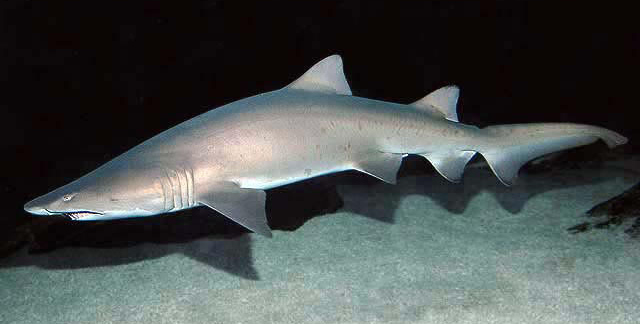
The sand tiger shark (Carcharias taurus) possesses one of the most extraordinary and harrowing reproductive strategies in the animal kingdom, characterized by a prenatal struggle for existence that begins long before birth. While most vertebrate embryos rely on yolk sacs or placental connections for nourishment, the sand tiger shark engages in a phenomenon known as intrauterine cannibalism. This process is categorized into two distinct technical phases: embryophagy and adelphophagy—terms derived from Greek that literally translate to "eating embryos" and "eating one’s brother." This biological imperative ensures that only the strongest and most aggressive offspring survive the confines of the womb, emerging into the ocean as formidable predators from their very first breath.
The scientific community first encountered this phenomenon by accident in 1948. Stewart Springer, a renowned marine biologist and shark expert, was conducting a routine examination of a pregnant sand tiger shark that appeared to be near term. As he reached into the shark’s oviduct to examine the developing young, he was shocked when a vigorous embryo bit his hand. This startling event revealed that sand tiger shark embryos are not passive occupants of the womb but are active, mobile, and equipped with functional teeth and hunting instincts well before they are born. To date, this extreme form of sibling-on-sibling predation is unique to Carcharias taurus, although a milder form of intrauterine cannibalism called oophagy—where embryos consume unfertilized eggs—is found in several other shark species within the order Lamniformes, including the Great White and the Shortfin Mako.
The Biological Mechanism of the Uterine Race
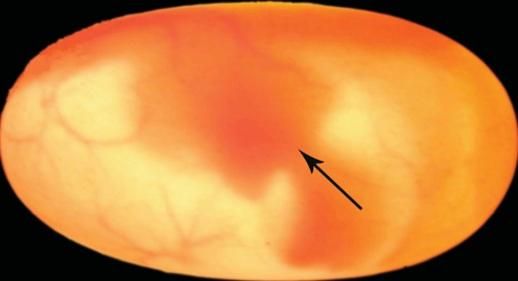
The reproductive anatomy of a female sand tiger shark is composed of two separate uteri. Throughout the mating season, the female produces eggs in stages over several months. Consequently, during the early stages of pregnancy, each uterus may contain multiple fertilized embryos, often originating from different egg capsules and potentially different fathers. However, these embryos do not develop at a synchronized rate. The embryo that hatches first from its egg capsule gains a significant developmental advantage, utilizing its head start to grow faster and develop its sensory organs and dental structures ahead of its siblings.
By the time the lead embryo reaches a length of approximately 10 centimeters, its jaws and needle-like teeth are sufficiently developed to begin the hunt. In a process known as adelphophagy, the dominant embryo systematically tracks, attacks, and consumes its smaller, less-developed siblings within the same uterus. This internal "survival of the fittest" continues until only one embryo remains in each of the two uteri. This phase is a definitive turning point in the pregnancy; the competition for space and initial protein is resolved through total elimination.

Once the siblings have been consumed, the surviving embryo transitions to a different nutritional strategy known as oophagy. The mother shark continues to produce and "pump" unfertilized "nurse eggs" into the uteri for the remainder of the gestation period. The lone survivor feeds exclusively on these nutrient-rich eggs, allowing it to reach a massive size before birth. Unlike the brief, violent window of adelphophagy, oophagy is a sustained process that fuels the embryo’s growth for several months, ensuring the pup is born with significant energy reserves.
Evolutionary Advantages of High-Investment Reproduction
The culmination of this 8-to-12-month gestation period is the birth of two pups—one from each uterus. These newborns are remarkably large, measuring between 95 and 105 centimeters in length. To put this into perspective, a newborn sand tiger shark is nearly one-third the size of its mother. This strategy of producing fewer, larger offspring is a stark contrast to many other marine species that release thousands of small eggs or give birth to dozens of small, vulnerable pups.
The primary evolutionary advantage of this "quality over quantity" approach is the immediate fitness of the offspring. Because they are born at such a substantial size, sand tiger shark pups are less vulnerable to the wide array of meso-predators that typically prey on juvenile sharks. From the moment of birth, they are capable of swimming at high speeds, hunting small fish and crustaceans, and navigating complex coastal environments. By bypassing the "vulnerable hatchling" phase common in other species, the sand tiger shark increases the probability that its few offspring will survive to reproductive maturity.
However, this advantage comes with a heavy demographic cost. After giving birth, the female sand tiger shark typically enters a period of reproductive rest lasting at least one year to recover her physiological reserves. This means a full reproductive cycle takes approximately two years. When combined with their late onset of sexual maturity—6 to 7 years for males and 9 to 10 years for females—the sand tiger shark has one of the lowest reproductive rates of any shark species, making it exceptionally slow to recover from population declines.
Genetic Warfare and the Legacy of Paternity
The implications of intrauterine cannibalism extend beyond mere nutrition; it appears to be a mechanism for post-copulatory sexual selection. Female sand tiger sharks are known to be polyandrous, meaning they mate with multiple males during a single season. This behavior often results in "multiple paternity," where the initial batch of embryos in a single uterus belongs to different fathers.
A landmark study conducted by researchers at Stony Brook University between 2008 and 2012 sought to determine if the cannibalistic process influenced which male’s genes were ultimately passed on. By analyzing DNA samples from pregnant females and their embryos using ten microsatellite genetic markers, the team—led by Dr. Demian Chapman—was able to track the paternity of embryos at various stages of development with over 99 percent accuracy.
The findings, published in the journal Biology Letters, revealed a consistent pattern: while early-stage pregnancies often featured embryos from multiple fathers, late-stage pregnancies almost exclusively contained a single survivor sired by one male. This suggests that the "battle in the womb" serves as a final filter for male fitness. If a male’s sperm fertilizes an egg earlier, or if his offspring possess superior growth genes, his genetic line is more likely to eliminate the competition. In this species, the competition for reproductive success does not end with the act of mating; it continues as a biological proxy war inside the female, where the most "successful" male is the one whose offspring consumes the rest.
Conservation Status and Human Impact
Despite their formidable nature, sand tiger sharks are currently facing a global population crisis. The very reproductive strategy that allowed them to thrive for millions of years—slow growth and low fecundity—now makes them incredibly vulnerable to modern human pressures. The International Union for Conservation of Nature (IUCN) currently lists the sand tiger shark as Critically Endangered.
The species has seen a staggering decline of more than 80 percent over the last three generations. This collapse is driven by several factors:
- Overfishing: Sand tiger sharks are often caught as bycatch in commercial trawling and longline operations. Their preference for coastal habitats brings them into frequent contact with human fishing activity.
- Slow Recovery: Because they produce only two pups every two years, their "rebound potential" is minimal. Even if all fishing were to stop immediately, it would take decades for populations to stabilize.
- Habitat Degradation: Sand tiger sharks frequent shallow coastal waters, estuaries, and rocky reefs for mating and nursery grounds. These areas are under constant threat from coastal development, pollution, and climate change.
- Targeted Fishing: In some regions, they have historically been targeted for their fins, liver oil, and skin, or culled due to their fearsome appearance, despite being generally docile toward humans unless provoked.
Implications for Marine Management
The realization that sand tiger shark survival is dictated by a complex interplay of genetic competition and extreme physiological investment has shifted how conservationists approach the species. Traditional fisheries management often assumes that a species can "bounce back" if fishing pressure is reduced. For the sand tiger shark, this is a dangerous assumption.
Management strategies are now focusing on the protection of "aggregation sites"—specific locations where these sharks gather to mate or give birth. By establishing Marine Protected Areas (MPAs) in these critical habitats, authorities hope to provide the females with the undisturbed environment they need to complete their lengthy and energy-intensive gestation.
In conclusion, the sand tiger shark represents a fascinating peak of evolutionary specialization. Its journey from a cannibalistic embryo to a keystone coastal predator is a testament to the brutal efficiency of nature. However, the very traits that make it a biological marvel also place it at the brink of extinction. Understanding the intricacies of its birth—the struggle, the genetic selection, and the slow pace of life—is essential if we are to prevent this ancient lineage from disappearing from our oceans. The battle inside the womb is a race for survival that the species, as a whole, is currently losing against the pressures of the modern world.