Nila Kartika Wati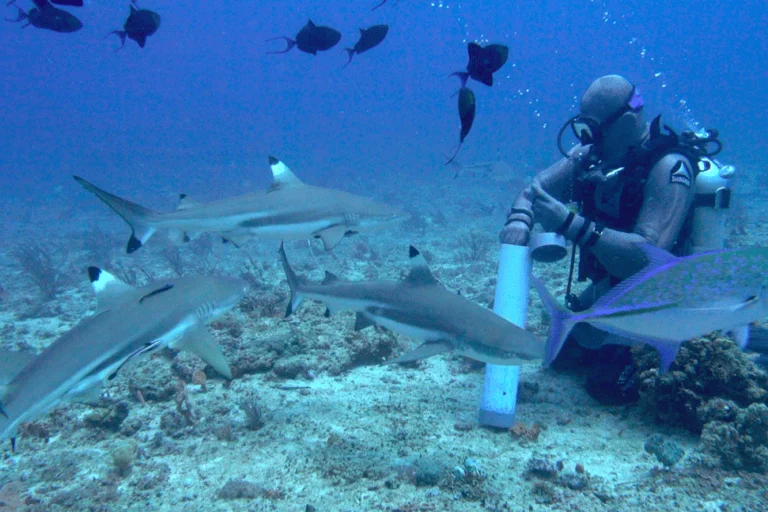
The narrative of shark conservation in Indonesia is undergoing a profound transformation, led by individuals who bridge the gap between rigorous scientific inquiry and sustainable economic models. At the forefront of this movement is Darmawan Ahmad Mukharror, widely known by his nickname Gharonk, a man whose unconventional path from chemical engineering to marine biology has become a beacon for modern environmentalism. While most professional divers begin their journey in their youth, Darmawan’s immersion into the world of scuba diving began at the age of 34, a late start that did not hinder his rise to becoming one of the country’s most influential advocates for shark protection. His transition was fueled not just by a love for the ocean, but by a realization that the public’s perception of sharks was dangerously skewed by media tropes and a lack of ecological literacy.
The genesis of Darmawan’s obsession with sharks can be traced back to the documentary film The Sharkman, which offered a starkly different portrayal of the ocean’s apex predators compared to the sensationalized "man-eater" narratives popularized by Hollywood. For decades, sharks have been vilified, leading to a global culture of fear that has often justified overfishing and neglect. In Indonesia, the world’s largest exporter of shark fins, this cultural stigma is compounded by economic pressures. Darmawan recognized that to save the species, he first had to understand them in their natural habitat and then translate that knowledge into a language that local communities, tourists, and policymakers could understand.
A Career Pivoted Toward the Ocean
Darmawan’s background is rooted in the hard sciences, having graduated with a degree in Chemical Engineering from the prestigious Bandung Institute of Technology (ITB). This analytical foundation provided him with the systemic thinking required to tackle complex ecological issues. However, his true calling lay beneath the waves. In 2014, he achieved a milestone by becoming the first and only Indonesian to hold the PADI AWARE Shark Conservation Diver Instructor certification. This specialized credential allowed him to teach divers not just how to navigate the water, but how to act as citizen scientists and advocates for shark health.
Understanding that passion alone was insufficient for large-scale policy influence, Darmawan furthered his academic credentials by pursuing a Master’s degree in Marine Science at the University of Indonesia (UI). It was during this period that he identified a significant "blind spot" in Indonesian marine research. He observed that the vast majority of shark-related studies in the archipelago were "ex-situ" or based on dead specimens. Researchers typically gathered data at landing ports, measuring the carcasses of sharks caught by fishermen to study their biology, diet, and morphology. While this data is valuable for tracking population decline, it offers almost no insight into the living behavior, migratory patterns, or social interactions of sharks in the wild.
Bridging the Gap in Behavioral Research
The scarcity of behavioral research is largely due to the logistical and financial hurdles associated with long-term underwater observation. Studying sharks in their natural habitat requires decades of consistent monitoring, expensive equipment, and a presence in remote locations. To address this, Darmawan adopted a methodology that is both cost-effective and minimally invasive: the use of Baited Remote Underwater Video (BRUV) and underwater video censuses.
BRUV technology involves a camera mounted on a frame with a bait arm that attracts fish into the field of view. This method allows researchers to record the diversity, abundance, and behavior of sharks without the presence of a human diver, which might otherwise alter the animals’ natural actions. By deploying these systems across the waters of Morotai and Halmahera in North Maluku, Darmawan began building a comprehensive database of shark activity. His research has documented a wide array of species, including the Blacktip Reef Shark (Carcharhinus melanopterus), Whitetip Reef Shark (Triaenodon obesus), and the endemic Halmahera Walking Shark (Hemiscyllium halmahera). His observations have also recorded sightings of Grey Reef Sharks, Whale Sharks, Hammerheads, and the formidable Bull Shark.
The Economic Engine of Conservation: Shark Diving Indonesia
One of the most significant challenges in conservation is financial sustainability. Relying solely on government grants or NGO funding often leads to intermittent research cycles. To solve this, Darmawan founded Shark Diving Indonesia, a social enterprise based in Morotai. This venture serves a dual purpose: it operates as a premium dive tourism business and as a funding mechanism for his scientific research.
The business model is built on the principle that a living shark is worth significantly more to the local economy than a dead one. While a shark sold at a market might bring in a one-time profit of a few hundred dollars for its fins and meat, a single shark in a healthy reef system can generate hundreds of thousands of dollars in tourism revenue over its lifetime. By bringing tourists to Morotai, Darmawan provides a direct economic incentive for the local community to protect their marine resources.
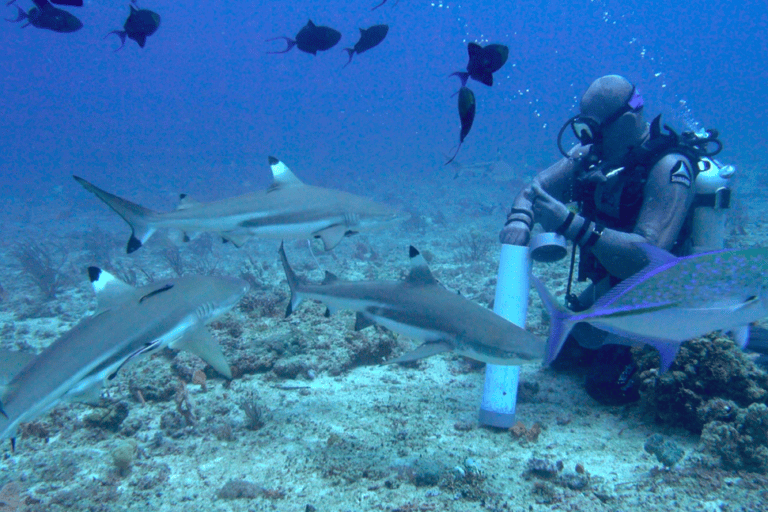
Tourists who visit Shark Diving Indonesia are not merely passive observers; they are integrated into the conservation narrative. Under Darmawan’s guidance, they learn to identify different species and understand the nuances of shark behavior. This educational component is vital for debunking myths. When a tourist watches a Blacktip Reef Shark glide peacefully past them, the "Jaws" narrative is replaced by a sense of awe and a desire to protect.
Educational Outreach and Academic Collaboration
Darmawan’s impact extends beyond the tourism sector and into the halls of academia. Recognizing that the future of Indonesian marine science depends on the next generation, he has actively involved university students in his field research. To date, nine students from the University of Padjadjaran (Unpad) and Diponegoro University (Undip) have completed their undergraduate theses under his mentorship.
These students are given the rare opportunity to conduct field research in Morotai, gaining hands-on experience with BRUV technology and data analysis. By fostering this academic pipeline, Darmawan is ensuring that Indonesia develops a homegrown cadre of marine biologists who are equipped with the skills to manage the country’s vast maritime territory. This collaboration also ensures that the data collected through Shark Diving Indonesia is peer-reviewed and contributes to the broader scientific community’s understanding of Indo-Pacific shark populations.
The Broader Impact on Coastal Communities and Policy
The work being done in Morotai serves as a scalable model for other regions in Indonesia. By demonstrating that pariwisata (tourism), pendidikan (education), penelitian (research), and the ekonomi masyarakat (local economy) can function in a symbiotic circle, Darmawan is providing a blueprint for sustainable development.
From a policy perspective, the behavioral data collected by Darmawan is essential for the creation of Marine Protected Areas (MPAs). Effective conservation requires more than just drawing lines on a map; it requires an understanding of "critical habitats"—the specific areas where sharks feed, mate, and nurse their young. Without behavioral data, MPAs may fail to protect the most vulnerable stages of a shark’s life cycle. Darmawan’s research provides the empirical evidence needed to advocate for specific regulations, such as seasonal fishing bans or restricted zones for high-traffic tourism.
Furthermore, his work addresses the safety aspect of shark-human interaction. By studying how sharks react to human presence, Darmawan can develop protocols that ensure both the safety of divers and the well-being of the sharks. This "responsible interaction" is the cornerstone of sustainable wildlife tourism, preventing the habituation or stress that can occur when animals are improperly managed.
Indonesia’s Role in Global Shark Conservation
As the world’s largest archipelagic nation, Indonesia holds a disproportionate responsibility for the health of the world’s oceans. The country sits at the heart of the Coral Triangle, the global epicenter of marine biodiversity. However, this biodiversity is under constant threat from climate change, plastic pollution, and destructive fishing practices.
The shift in perspective championed by Darmawan Ahmad Mukharror reflects a growing global trend toward "blue economy" initiatives—economic models that seek to improve human well-being and social equity while significantly reducing environmental risks. In the context of sharks, this means moving away from extractive industries and toward regenerative ones.
The challenges remain significant. Shark finning continues in many parts of the archipelago, driven by international demand. However, the success of Shark Diving Indonesia in Morotai proves that there is a viable alternative. When local fishermen see that they can earn a stable living as boat captains, dive guides, or lodge staff, the economic pressure to hunt sharks diminishes.
Conclusion: A Legacy in the Making
Darmawan Ahmad Mukharror’s journey is a testament to the power of interdisciplinary thinking. His background in engineering provided the logic, his master’s degree provided the scientific rigor, and his passion for diving provided the medium for change. Through his efforts, the sharks of Morotai are no longer seen as monsters to be feared or commodities to be harvested, but as essential components of a thriving ecosystem and a vibrant economy.
By integrating tourism with high-level research and community involvement, "Gharonk" has created a holistic approach to conservation that addresses the root causes of environmental degradation. His work ensures that the apex predators of the Indonesian seas will continue to patrol the reefs for generations to come, maintaining the delicate balance of the underwater world while supporting the livelihoods of the people who live along its shores. Through the lens of his cameras and the eyes of his students, the true nature of the shark is finally being revealed—not as a threat, but as a vital guardian of the deep.