Bambang Pamungkas
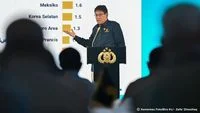
Jakarta, CNBC Indonesia — Indonesia has successfully established a robust architecture of energy cushions, rendering the nation remarkably resilient and nearly immune to severe global energy crises. In a comprehensive international assessment titled Pandora’s Bog: The Global Energy Shock of 2026, Indonesia has been ranked among the countries best protected against extreme volatility in global oil and gas prices. Measured by the total protection factor, Southeast Asia’s largest economy secured the second position globally, trailing only South Africa.
This formidable standing is not a stroke of mere fortune, but rather the deliberate culmination of synchronized fiscal instruments, strategic import diversifications, and an aggressive push toward domestic energy self-sufficiency. As geopolitical tensions and supply chain bottlenecks continue to threaten international energy stability, Indonesia’s proactive policy frameworks have insulated its domestic economy from the bruising impact of fluctuating commodity markets.
The Anatomy of Protection: Fiscal Shock Absorbers and Market Interventions
At the heart of Indonesia’s defensive posture is the government’s direct intervention capability, designed to absorb external shocks before they cascade down to households and industries. Central to this strategy is the strategic deployment of the State Budget (APBN) as a primary shock absorber. When international crude prices experienced sudden surges, the government deliberately restrained from passing the full cost burden onto domestic consumers. Subsidized fuel variants, notably Pertalite and solar diesel, alongside subsidized electricity tariffs, have remained shielded from immediate upward price revisions.
Furthermore, regulatory mechanisms such as the Domestic Market Obligation (DMO) for coal play a pivotal role in anchoring domestic energy costs. By mandating that a specific percentage of local coal production be allocated for domestic consumption at capped prices, the government ensures that power generation remains affordable and stable. This directly protects the broader manufacturing and industrial sectors from erratic overhead cost explosions.
According to the latest energy mix data, Indonesia’s primary energy landscape provides a naturally diversified foundation. Coal continues to anchor the domestic baseload at 40.37%, followed by petroleum at 28.82%, natural gas at 16.17%, and New and Renewable Energy (NRE) at 14.65%. While fossil fuels still dominate the aggregate figures, the structural integration of domestic resource availability guarantees that baseline energy security remains firmly within national control.
Chronology of Strategic Energy Diplomacy and Supply Diversification
The blueprint for Indonesia’s current energy security did not materialize overnight. It represents a multi-layered diplomatic and logistical campaign executed by the administration of President Prabowo Subianto, alongside state-owned energy giant PT Pertamina.
The timeline of these defensive maneuvers accelerated significantly following high-level diplomatic engagements. A watershed moment occurred on Monday, April 13, 2026, when President Prabowo Subianto traveled to Moscow for a strategic summit with Russian President Vladimir Putin at the Kremlin. The diplomatic outreach yielded monumental economic agreements aimed at fortifying Indonesia’s strategic reserves.
Elaborating on the outcomes of this historic meeting, Hashim Djojohadikusumo, the Special Envoy of the President for Energy and Environment, revealed critical details during the Economic Briefing 2026 event held at the Patra Jasa Tower in Jakarta. Hashim disclosed that Indonesia successfully secured a commitment from the Russian government for a massive supply of 150 million barrels of crude oil, acquired under special preferential pricing terms.
"Indonesia now has a commitment from the Russian government, 150 million barrels we can store in Indonesia to face economic turbulence problems," Hashim stated during the briefing. This substantial reserve accumulation acts as a formidable buffer against sudden supply disruptions or prolonged geopolitical embargoes that typically paralyze importing nations.
Concurrently, state-owned energy enterprise PT Pertamina has actively broadened its procurement horizons. Moving away from heavy reliance on traditional Middle Eastern supply routes, Pertamina has aggressively diversified its crude oil import portfolio, securing alternative shipments from the United States and other global energy hubs to minimize regional supply vulnerabilities.
Accelerating Downstream Energy Independence: The Biofuel Revolution
Beyond securing external crude reserves, Indonesia has heavily prioritized internal substitution policies to structurally diminish its long-term reliance on imported fossil fuels. The vanguard of this transition is the government’s ambitious biodiesel roadmap, which integrates domestically abundant palm oil derivatives into the national diesel supply.
The phased implementation of the biofuel policy began with lower blending rates and has rapidly progressed toward advanced mixtures. The rollout of the B40 program—featuring a 40% palm oil-based biodiesel blend—successfully curbed the nation’s historical dependency on imported diesel by replacing significant volumes of fossil diesel with sustainable, home-grown agricultural output.
Building rapidly upon this momentum, PT Pertamina Patra Niaga established aggressive operational targets to scale up the program even further. The rollout of B50, which mandates a 50% palm oil biodiesel blend across all public fueling stations (SPBU), has seen remarkable execution. Official operational milestones confirm that by July 1, 2026, the nationwide implementation of B50 officially commenced, with an impressive 82% of Pertamina gas stations immediately distributing the higher-blend fuel. The corporate target remains firmly fixed on achieving 100% nationwide B50 distribution by September 2026.
This rapid transition not only shields the country from diesel import price volatility but also provides a vital structural stabilizer for the domestic agricultural sector, simultaneously fulfilling national carbon emission reduction commitments under international climate frameworks.
Economic Implications and Broader Market Analysis
The implications of Indonesia’s multi-pronged energy strategy are profound for both macroeconomic stability and investor sentiment. By successfully neutralizing the transmission of global energy shocks into domestic inflation, the government has preserved consumer purchasing power and stabilized operational expenditures for micro, small, and medium enterprises (MSMEs).
Economists note that maintaining stable energy tariffs during global commodity price spikes prevents runaway inflation spirals, thereby allowing Bank Indonesia to maintain balanced monetary policies without being forced into aggressive, growth-stifling interest rate hikes solely to combat imported inflation.
Furthermore, the integration of extensive strategic reserves—such as the 150-million-barrel Russian crude agreement—provides foreign investors with a high degree of predictability. Energy security is frequently cited by multinational manufacturers as a primary determinant for long-term capital allocation. Indonesia’s proactive stance signals to global supply chains that the country is insulated from systemic energy paralysis.
However, analysts also emphasize the importance of continuous fiscal discipline. While utilizing the State Budget as a shock absorber has proven highly effective in the short-to-medium term, policymakers must meticulously balance subsidy expenditures against fiscal deficit boundaries to maintain sovereign credit ratings. The rapid scaling of renewable energy investments and the operational success of the B50 program are viewed as critical components that will eventually reduce the fiscal burden of energy subsidies over the long haul.
Conclusion
Indonesia’s strategic navigation through the treacherous waters of the global energy landscape in 2026 serves as a textbook study in proactive economic resilience. Through a combination of fiscal cushioning, diversified international diplomacy, strategic reserve accumulation, and aggressive domestic biofuel substitution, the nation has successfully insulated itself from external turbulence.
Ranking second globally in protection against energy shocks, Indonesia stands as a testament to how emerging economies can leverage domestic resources and strategic foresight to turn global vulnerabilities into national strengths. As the implementation of advanced fuel blending and reserve storage reaches completion later this year, the nation’s energy sovereignty is more secure than ever before.