Azin Asro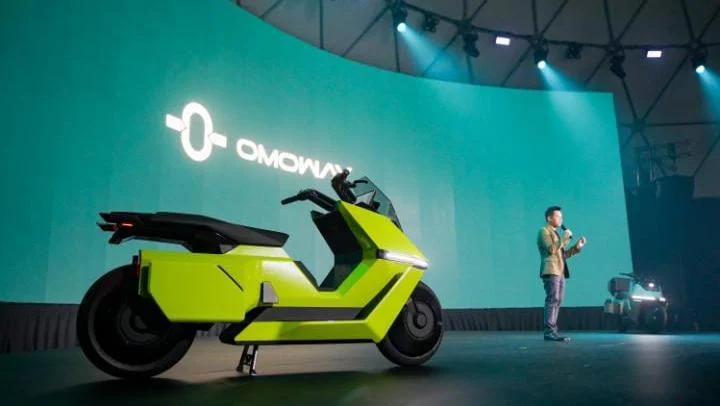
The Republic of Indonesia has officially cemented its position as a burgeoning hub for cutting-edge urban mobility by becoming the very first country in the world to launch and commence the commercial distribution of the Omo X, a groundbreaking self-balancing electric scooter. Introduced to the market by the prominent Chinese personal mobility manufacturer Omoway during a high-profile launch event in Tangerang, this milestone marks a significant shift in how personal electric vehicles are conceptualized, engineered, and deployed for mass-market consumption on a global scale.
The debut of the Omo X is not merely a regional product rollout; it represents a strategic prioritization of the Southeast Asian market by international tech developers. By selecting Indonesia as the inaugural baseline for global distribution, Omoway has underscored the country’s increasing strategic importance in the adoption of advanced transportation technologies, sustainable energy initiatives, and smart mobility solutions.
The Genesis of Omo X: A Visionary Leap in Smart Mobility
At its core, the Omo X is designed to challenge conventional paradigms of two-wheeled transportation. Billed by its creators as the world’s first smart, luxury self-balancing motor scooter, the vehicle introduces a fusion of advanced gyroscopic stabilization and modern electric powertrain engineering. While the concept of self-balancing technology is not entirely unprecedented—having been explored in experimental laboratories and concept vehicles by legacy Japanese automotive giants such as Honda and Yamaha over the past decade—Omoway has achieved what few others have successfully managed: translating this complex technology into a commercially viable, mass-produced consumer vehicle.
During the official launch ceremony, General Manager of Omoway Indonesia, Yulong Chen, emphasized that the decision to debut the Omo X in Indonesia was rooted in the vehicle’s unique market positioning. According to Chen, the product transcends standard categories of electric bikes or traditional motorcycles, offering a completely distinct technological ecosystem tailored for modern urban environments.
"Indonesia is the first country in the world where we officially commence the delivery and distribution of the Omo X, the world’s first smart luxury motor scooter," Chen stated during the launch event. He further elaborated on the company’s philosophy regarding technological integration, noting that innovation must serve a practical purpose rather than remaining an abstract concept. "We believe that innovation is not just something to be seen and then forgotten. Innovation must truly exist and be usable in everyday life. The Omo X is our expression of trust and commitment toward the future of mobility."
A Multi-Year Chronology of Research and Development
The arrival of the Omo X in Indonesian showrooms is the culmination of a rigorous, multi-year developmental journey characterized by extensive field research, consumer behavioral analysis, and heavy financial investment. Omoway did not simply adapt an existing model for the Indonesian market; rather, the vehicle was conceptualized with the specific nuances of local riding habits deeply embedded in its design framework.
The chronology of the Omo X project dates back approximately two years, when a specialized delegation from Omoway embarked on an extensive exploratory expedition across the island of Java. The objective was to immerse themselves in the daily realities of Indonesian commuters, observing traffic patterns, road conditions, and the practical utility demands placed on motorcycles and scooters in densely populated urban and suburban landscapes.
"Two years ago, we traveled across the island of Java to understand how Indonesian people use motorcycles in their daily lives," Chen recounted, reflecting on the arduous journey from conceptualization to commercialization. "Following our observational research, we returned last year to host a pre-launching event for Omoway in Jakarta to gauge initial public and industry responses."
This iterative process of prototyping, testing, and refinement culminated in the finalized commercial iteration of the Omo X. To bring this ambitious project to fruition, Omoway reportedly poured an estimated USD 10 million—translating to approximately IDR 177 billion—exclusively into the research, development, and industrial scaling of the electric scooter.
"At that time, it was still just an idea, a prototype," Chen recalled, pointing to the evolutionary gap between the early concept models and the final showroom-ready units. "And today, we return with that exact same machine, fully optimized and ready to be delivered straight to consumers. The idea has officially become a reality."
Financial Commitment and Capital Allocation
The allocation of USD 10 million toward the development of the Omo X underscores the high stakes involved in the electric vehicle (EV) sector, particularly within emerging markets. In the context of the global automotive industry, mid-sized firms venturing into proprietary technologies like self-balancing mechanisms often face substantial financial hurdles. Omoway’s significant capital injection reflects not only the cost of mechanical and software engineering but also the complexities of regulatory compliance, safety testing, and supply chain establishment in overseas territories.
Industry analysts note that self-balancing technology requires sophisticated sensor integration, real-time data processing units, and high-tolerance mechanical actuators to maintain equilibrium under varying load capacities and road conditions. The substantial financial backing directed toward the Omo X suggests that Omoway has invested heavily in proprietary software algorithms capable of adapting to erratic road surfaces, potholes, and variable incline gradients commonly found across Southeast Asian urban centers.
Market Strategy and Product Lineup in Indonesia
As part of its commercial entry strategy, Omoway has structured the Indonesian rollout to cater to a diverse consumer base. The Omo X is introduced to the market in four distinct variants, providing buyers with options tailored to different aesthetic preferences, performance requirements, and budgetary considerations. To streamline the purchasing process for early adopters, all listed retail prices carry an on-the-road (OTR) status covering the Greater Jakarta area—commonly known as Jabodetabek (Jakarta, Bogor, Depok, Tangerang, and Bekasi).
By targeting Jabodetabek as the primary micro-market, Omoway aims to capture the attention of tech-savvy urban commuters, early adopters of green technology, and professionals navigating heavy traffic congestion on a daily basis. The Greater Jakarta region represents a crucial proving ground, given its high density of two-wheeled vehicle users and its ongoing transition toward electrified public and private transportation.
Broader Implications for the Electric Vehicle Ecosystem
The introduction of the Omo X into Indonesia carries several broader implications for the nation’s rapidly evolving electric vehicle landscape. For one, it aligns closely with the Indonesian government’s broader strategic initiatives to accelerate the adoption of battery-based electric vehicles, reduce carbon emissions, and position the country as a regional manufacturing and technology hub.
While government policies have primarily focused on electric cars and standard electric motorcycles through various subsidization and tax incentive programs, the arrival of niche, high-tech products like the Omo X diversifies the market. It demonstrates that international manufacturers view Indonesia not merely as a dumping ground for older technologies, but as an active, discerning consumer base capable of absorbing advanced, premium-tier innovations.
Furthermore, the integration of self-balancing technology addresses one of the primary psychological barriers to two-wheeled vehicle adoption among novice riders: stability and safety concerns. By utilizing automated stabilization systems, the Omo X has the potential to attract a broader demographic of commuters who might otherwise hesitate to ride traditional motorcycles due to balance apprehension, particularly during adverse weather conditions such as heavy tropical downpours.
Challenges and Future Outlook
Despite the enthusiastic reception at the Tangerang launch and the meticulous market research conducted across Java, the commercial success of the Omo X will ultimately depend on several critical operational factors. Chief among these are the establishment of robust after-sales service networks, the availability of specialized spare parts, and the readiness of technical support teams to handle sophisticated self-balancing software and hardware systems.
Consumers investing in high-end, technologically complex vehicles naturally demand reliable maintenance infrastructure. Omoway’s ability to scale its service operations in tandem with its distribution network will be a decisive factor in sustaining consumer confidence over the long term. Moreover, educating the market on the operational nuances and maintenance requirements of a luxury self-balancing scooter will require sustained marketing and customer engagement efforts.
As the first units of the Omo X begin making their way from distribution centers into the hands of Indonesian consumers, all eyes within the global personal mobility sector will be fixed on this market. If Omoway’s gamble pays off, the successful commercialization of the Omo X in Indonesia could pave the way for its expansion into other regional markets, fundamentally altering consumer expectations of what a two-wheeled urban vehicle can achieve in the twenty-first century.