Nila Kartika Wati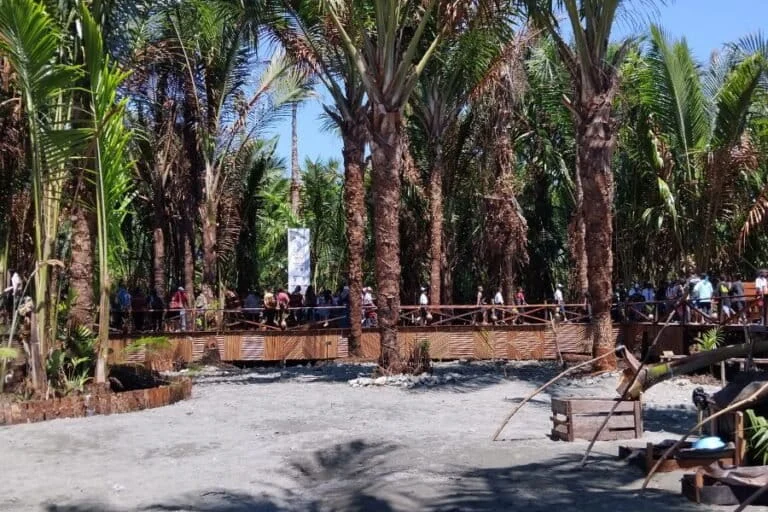
The towering canopy of the sago palm forests in Kampung Yoboi, located in the Sentani District of Jayapura Regency, Papua, serves as more than just a landscape feature; it is the lifeblood of a civilization. Stretching across 1,600 hectares, these forests represent one of the largest remaining sago ecosystems in the region. However, this ecological and cultural stronghold is currently facing an existential crisis. The encroachment of modern industrial tools, rapid urbanization, and shifting land-use policies are threatening to dismantle centuries of traditional ecological wisdom, potentially stripping the indigenous community of their primary food security and cultural identity.
A Cultural and Ecological Tapestry
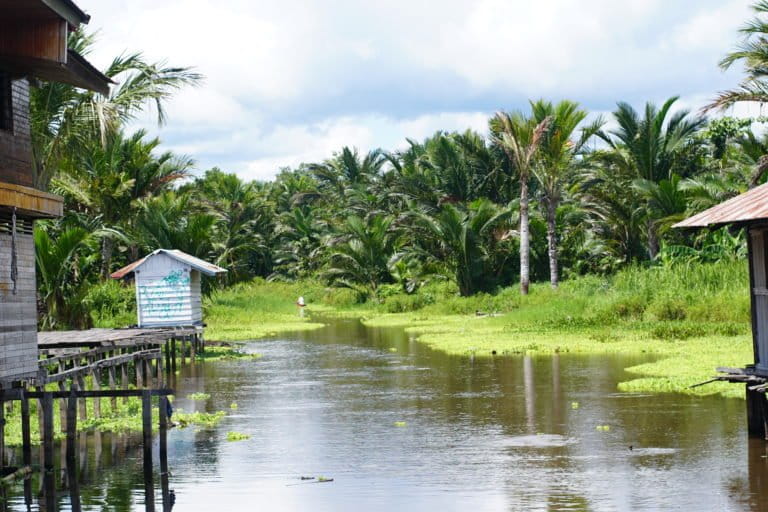
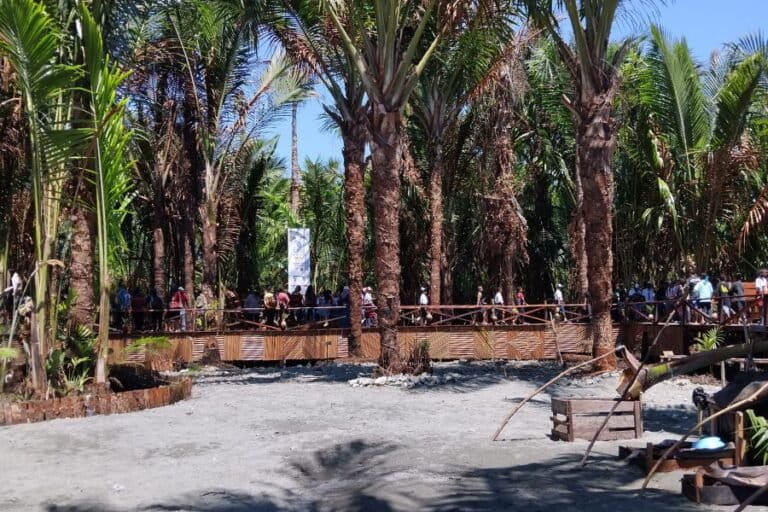
Kampung Yoboi is a unique settlement where the architecture is intrinsically linked to the environment. Most of the village is built on stilts above the waters of Lake Sentani, connected by intricate wooden bridges that wind through the dense, verdant groves of sago palms. For the indigenous people of the region, the sago palm is not merely a commodity; it is a sacred element of their heritage.
Since its recognition in September 2021 as one of the best tourism villages in the Indonesian Ministry of Tourism and Creative Economy’s Anugerah Desa Wisata Indonesia (ADWI) awards, Kampung Yoboi has gained international attention. The village offers a blend of natural beauty, artistic expression, and educational tourism. Yet, the very attraction that brings visitors—the sprawling, well-managed sago forest—is under duress from the pressures of modern, profit-oriented agricultural practices.
The Traditional Process: A Sustainable Legacy
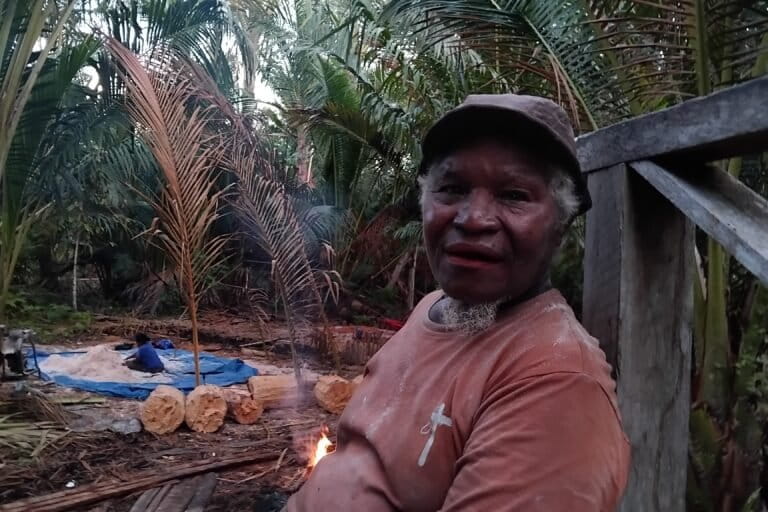
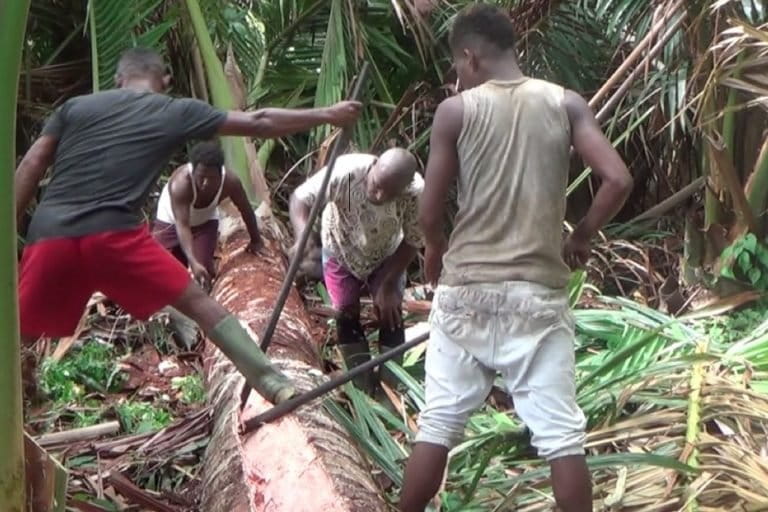
For generations, the people of Yoboi have maintained a sophisticated, low-impact method of harvesting. Yohanes Tokoro, a 64-year-old resident, spends his days in the forest, treating the palms with the care of a gardener. The traditional process is labor-intensive and collaborative, involving the felling of mature trees with axes or machetes, followed by the careful peeling and pulverizing of the inner pith using a wooden tool known as an oyo.
The resulting coarse powder is washed with clean water over a filtration basin made from sago palm fronds or fine fabric. The starch is then separated from the fiber, left to settle, and eventually dried into flour. This cycle—carefully planting, nurturing, and selectively harvesting—has allowed the community to maintain the forest’s density and health for centuries. It is a system of reciprocal relationship with nature, where the forest ensures the community’s survival, and the community ensures the forest’s regeneration.
The Shift Toward Industrialization
The stability of this system began to fracture in the 1990s as mechanized tools for felling and processing sago were introduced to the region. While intended to increase efficiency, these machines have fundamentally altered the forest’s capacity to recover. Yohanes notes a stark shift: where a family once harvested at a pace that allowed for natural regrowth, modern machinery allows for the clearing of 10 to 20 trees in a single day.
Billy Tokoro, a local indigenous youth and advocate for the village’s ecotourism, highlights a paradox in development assistance. "Various NGOs and government agencies have brought in sago processing machines, offering them to the community with the best of intentions," he explains. "However, they fail to recognize that these machines are a direct threat to the forest. When you make harvesting exponentially easier, the incentive to over-extract becomes overwhelming."
Historical Context and Institutional Failure
The decline of the sago forests is not an isolated event but part of a broader trend of land conversion in Jayapura. Historically, the region’s sago forests covered a much larger expanse. Hans Tokoro, the head of the Tokoro clan, recalls that thousands of hectares have been lost to infrastructure development, residential expansion, and, in earlier decades, government-led agricultural initiatives like rice farming.
The ownership of these sago groves is rooted in hak ulayat (customary land rights), passed down through clans in Kampung Yoboi, Simporo, Babrongko, and Towari. In the 1980s and 1990s, the community formed an organization called "Cinta Pohon Sagu" (Cipos) to formalize their commitment to reforestation and sustainable harvesting. Despite these efforts, the pressure from industrial expansion and the lack of robust legal protection for customary forest zones have led to the fragmentation of these ecosystems into isolated, vulnerable patches.
The Expert Perspective: A Warning of Inevitability
Professor Fredrik Sokoy, an anthropologist at Cenderawasih University, characterizes the current situation as a failure of development planning. He argues that government and private sectors have largely ignored the need for "food-sovereign" landscapes. "If we do not map and protect these areas with a focus on indigenous rights, we are witnessing the gradual death of the Sentani people’s traditional way of life," Professor Sokoy asserts.
He warns that if the sago forest disappears, the community will be forced into total dependency on imported staples like rice. "For the people of the lake, this is not just an economic transition; it is a cultural death sentence. They will look back and say, ‘We were once the people of the papeda,’ but they will no longer have the forest to provide it."
The Regulatory Struggle
While the Jayapura Regency established Regional Regulation (Perda) Number 8 in 2016 regarding Customary Villages, its implementation remains inconsistent. The regulation provides a legal framework for the protection of local customs and lands, but it often struggles against the weight of competing interests in infrastructure development and urban expansion.
Solmon Telenggen, the Head of the Environmental Agency (DLH) for Jayapura Regency, confirms that the remaining sago forests—which still harbor 34 distinct varieties of sago—are becoming increasingly isolated. He notes that the degradation is compounded by environmental factors: pollution from urban runoff, sedimentation in Lake Sentani, and the loss of natural vegetation buffers. When asked about specific enforcement measures or sanctions against illegal clearing, local authorities have remained largely silent, highlighting a significant gap between policy rhetoric and on-the-ground enforcement.
Economic Implications and Ecotourism
The challenge for Kampung Yoboi is to reconcile its role as a tourism destination with the need to protect its natural resources. Billy Tokoro and other local leaders are pushing for a model of "sustainable ecotourism" that prioritizes education over mass consumption. The goal is to make the preservation of the sago forest more economically viable than its destruction.
"We want visitors to understand the value of the sago palm," Billy explains. "If they see it as a sacred part of our heritage, rather than just a source of starch, it creates a new layer of protection." However, this approach faces a steep uphill battle against the encroachment of modern, large-scale development projects that view the land primarily in terms of its spatial capacity for construction.
Looking Toward the Future
The survival of the sago forests of Kampung Yoboi serves as a litmus test for the sustainability of indigenous landscapes in modern Indonesia. The forest is not just a collection of trees; it is a complex infrastructure of water management, food security, and cultural identity. As climate change intensifies the volatility of the water levels in Lake Sentani—alternating between flooding during the rainy season and drying out during droughts—the integrity of the sago forest acts as the primary shield for the community.
The path forward requires a multi-faceted intervention:
- Rigorous Land Mapping: A comprehensive, government-backed survey to demarcate and legally protect all remaining customary sago groves.
- Infrastructure Realignment: A moratorium on further land conversion in the vicinity of the Sentani lakefront, with strict environmental impact assessments for any future development.
- Community-Led Management: Empowering traditional authorities and local organizations like Cipos to enforce sustainable harvesting practices, perhaps by restricting the use of industrial machinery in favor of traditional, high-quality, low-impact methods.
- Economic Diversification: Supporting the transition toward a tourism model that actively funds the reforestation and protection of sago, rather than simply profiting from the aesthetics of the landscape.
The people of Yoboi continue to stand guard over their groves, knowing that every tree saved is a bridge to the next generation. As Hans Tokoro poignantly observes, the rules of the ancestors—to plant what you harvest and protect the source of your life—remain the most reliable guide for survival. Whether the state will support this traditional wisdom or allow it to be subsumed by the relentless march of industrial development remains the defining question for the future of the Sentani region. The loss of the sago forest would be an irreparable blow, not only to the biodiversity of Papua but to the very soul of the people who call the banks of Lake Sentani home.