Nila Kartika Wati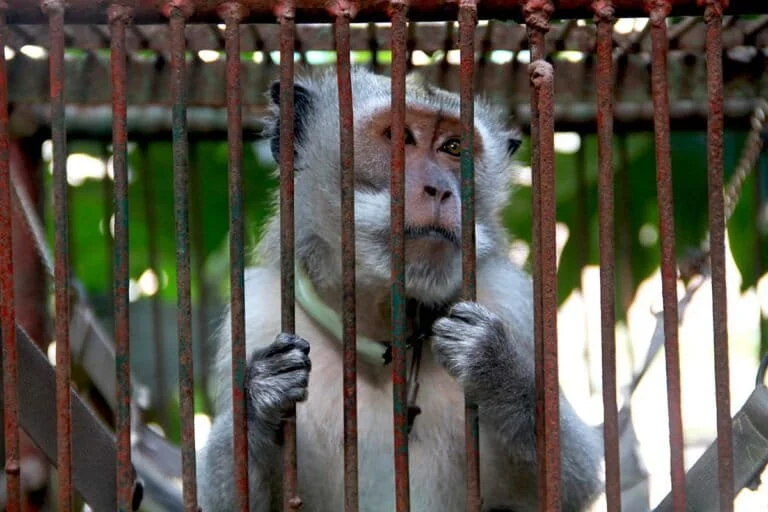
The Indonesian government’s renewed interest in facilitating the export of long-tailed macaques (Macaca fascicularis) for international biomedical research has ignited a firestorm of controversy among conservationists, scientists, and animal welfare organizations. While the government maintains that the initiative relies on captive-breeding schemes designed to support scientific progress, critics argue that the policy risks severe welfare abuses, the depletion of wild populations, and the potential for illegal laundering of poached wildlife. As the debate intensifies, the intersection of economic opportunity and ethical responsibility remains a focal point for environmental policymakers.
A History of Conflict: The Macaque Trade in Indonesia
The long-tailed macaque, often referred to as the crab-eating macaque, has long been a subject of international demand due to its biological proximity to humans. Their physiological, anatomical, and genetic similarities make them a gold standard in toxicology, vaccine development, and neuroscientific research. However, Indonesia’s history with the macaque trade has been marked by significant regulatory shifts.
In the early 2000s, Indonesia was a primary exporter of macaques to global laboratories. Following mounting pressure from international animal rights groups and concerns over the sustainability of harvesting wild populations, the government imposed various moratoriums on the trade. These restrictions were intended to prioritize conservation efforts and prevent the rapid decline of local macaque populations. However, the recent push to reopen export pathways suggests a shift in priorities, framing the trade as a regulated commercial activity that can provide economic benefits while allegedly maintaining strict oversight.
The Welfare Crisis: Beyond the Laboratory Walls
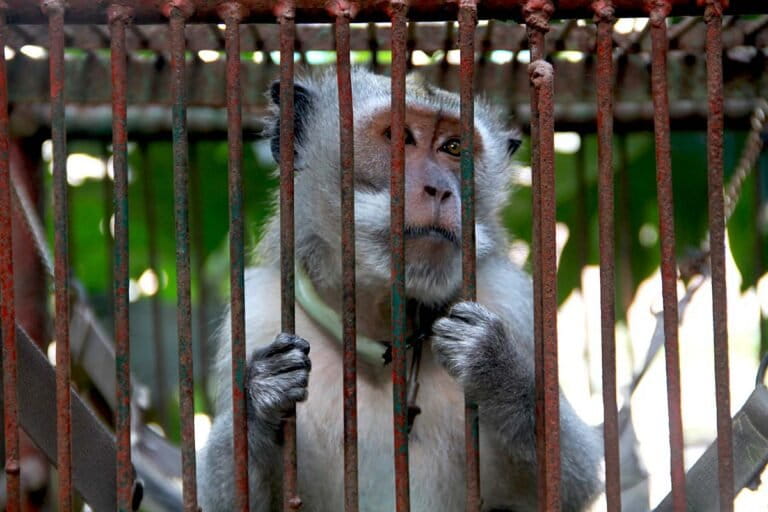
The ethical concerns surrounding the export of macaques begin long before the animals reach a laboratory facility. According to the Jakarta Animal Aid Network (JAAN), the entire supply chain—from the point of capture or breeding to the final destination—is fraught with welfare challenges.
Benvika, Co-Founder and National Director of JAAN, has been a vocal opponent of the policy. "We consistently reject the utilization of long-tailed macaques in any capacity," he stated. For organizations like JAAN, the fundamental issue is the inherent nature of these primates as highly social, intelligent, and wide-ranging animals. When these creatures are confined to intensive breeding facilities or small, sterile laboratory cages, the psychological toll is immense. Primatologists note that macaque societies are defined by complex hierarchies and intricate social bonds. Forcing these animals into artificial, confined settings disrupts their natural behavior, leading to chronic stress, self-mutilation, and severe immune system suppression, which ultimately compromises the validity of the scientific data derived from them.
The Question of Traceability and Illegal Harvesting
A primary justification for the government’s export scheme is the reliance on captive-breeding facilities. The premise is that if exports are limited to animals bred in captivity, the impact on wild populations will be neutralized. However, experts remain deeply skeptical about the feasibility and transparency of such a system.
The "laundering" of wild-caught animals into the legal trade remains a significant risk. As international demand for macaques—particularly in the context of global health research—remains high, the financial incentives for local communities to capture wild individuals are substantial. Once a wild macaque is introduced into a breeding facility, it becomes nearly impossible for authorities to distinguish between a captive-born animal and one snatched from a forest. Without rigorous DNA testing and an incorruptible tracking system, there is no guarantee that export shipments do not contain individuals taken directly from protected areas.
Ecological Assessment: Is the Species Overpopulated?
Central to the government’s defense of the export program is the claim that long-tailed macaques have reached "overpopulation" levels, often labeling them as pests that cause conflict with human settlements. However, scientific consensus on this categorization is far from settled.
Fahma Wijayanti, a lecturer in Primatology at UIN Jakarta, cautions against the simplistic labeling of these primates as "pests." Recent research conducted between 2024 and 2026 across various regions in Sumatra revealed population densities ranging from five to nine individuals per hectare. While these numbers might seem high, Wijayanti argues that they do not equate to a healthy, stable population.
"A high total count can be deceptive," Wijayanti explains. "These numbers are often composed of fragmented, isolated groups that are highly vulnerable to localized extinction. Furthermore, the presence of macaques in human-dominated landscapes is rarely a sign of ‘overpopulation.’ Instead, it is almost always a direct consequence of habitat loss. As forests are cleared for agriculture or urban expansion, the natural food sources of these animals disappear, forcing them to enter human settlements in search of sustenance."
The "pest" label, therefore, acts as a political convenience that masks the underlying issues of deforestation and poor land-use planning. If the habitat were restored and protected, the macaques would naturally remain in the forest, reducing human-wildlife conflict without the need for extraction or export.
The Shift Toward Non-Animal Alternatives
As the debate rages, the international scientific community is increasingly pivoting toward "3R" principles: Replacement, Reduction, and Refinement. The development of non-animal models, such as organ-on-a-chip technology, computer modeling, and human-cell-based assays, is gaining traction as a more ethical and often more accurate approach to biomedical research.
The European Union and several North American research institutions have invested heavily in these New Approach Methodologies (NAMs). Critics of the Indonesian export plan argue that by continuing to supply primates for research, the country is clinging to an outdated paradigm of science. Instead of becoming a hub for primate exports, advocates suggest that Indonesia could instead invest in local capacity for modern, non-animal research techniques, which would align the nation with global ethical standards and future-proof its scientific infrastructure.
Implications and Policy Recommendations
The potential impact of continued exports is twofold: a long-term threat to regional biodiversity and a reputational risk for Indonesia’s commitment to wildlife conservation. If the government proceeds with the export initiative, the following measures are considered essential by conservationists to mitigate potential harm:
- Independent Verification: The implementation of a strictly audited, third-party traceability system that uses genetic profiling for every single animal destined for export to ensure they are, in fact, captive-bred.
- Strict Quotas: The establishment of scientifically determined, non-negotiable export quotas based on long-term ecological impact studies rather than economic demand.
- Habitat Protection: A policy shift that addresses the root cause of human-macaque conflict through habitat restoration and corridor creation, rather than treating the animals themselves as a commodity to be exported.
- Transparency: Full disclosure of the destination laboratories and the nature of the research being conducted, allowing for international oversight regarding the treatment of these animals in foreign jurisdictions.
Conclusion
The debate over the export of long-tailed macaques is a microcosm of the broader struggle between economic development and environmental stewardship. While the demand for primate research remains a reality in the global medical field, the cost of meeting that demand—in terms of animal suffering and ecological instability—must be weighed with extreme care.
As the Indonesian government navigates this complex issue, it faces a critical choice: to continue as a supplier in a controversial global trade, or to lead by example in prioritizing the conservation of its biodiversity and embracing the future of ethical, non-animal-based scientific innovation. Without a fundamental change in how the government perceives and manages its primate populations, the current policy risks doing more harm than good, both to the macaques and to the country’s standing in the international conservation community.