Nila Kartika Wati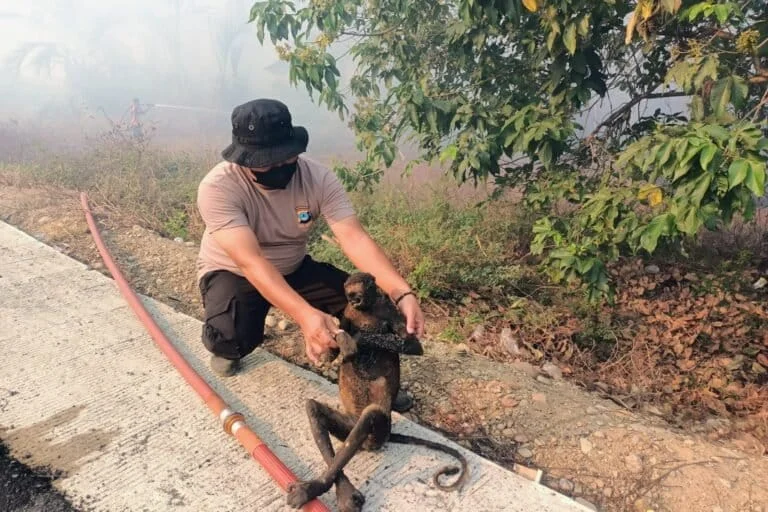
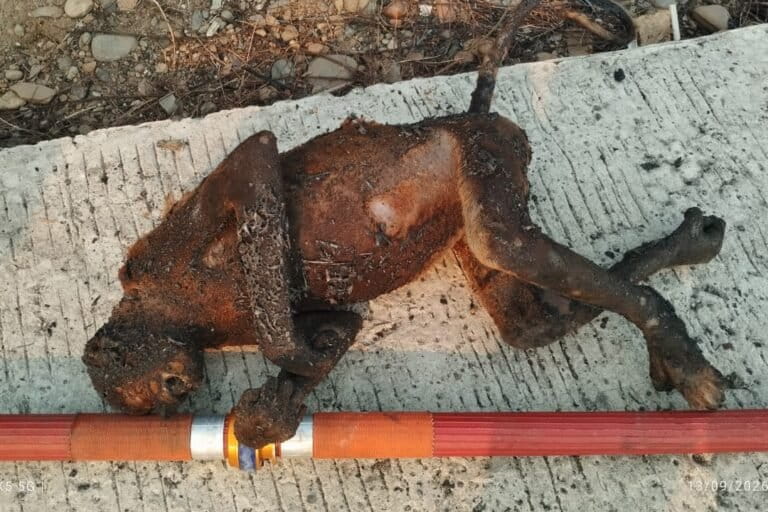
The escalating crisis of forest and land fires in South Kalimantan, Indonesia, has reached a harrowing humanitarian and ecological breaking point. Beyond the destruction of thousands of hectares of peatland and the choking smog affecting local communities, a catastrophic event occurred in Balimau Village, Hulu Sungai Selatan (HSS) Regency, on Sunday, September 13, 2026. Local authorities and firefighting teams confirmed the deaths of at least 11 proboscis monkeys (Nasalis larvatus), an endangered primate species endemic to Borneo, as flames swept through their primary habitat.
This incident marks a grim milestone in the region’s ongoing struggle with wildfires. As of mid-September 2026, the provincial Disaster Management Agency (BPBD) has recorded over 3,200 fire incidents, affecting more than 21,000 hectares of land. The loss of these primates—comprising 10 adults and one infant—has sparked urgent discussions regarding the inadequacy of wildlife protection protocols during environmental emergencies.
A Chronology of Destruction in Balimau
The fire that claimed the lives of the bekantan, as they are locally known, is believed to have originated in the neighboring village of Karangpaci. According to Alamsyah, the Head of Balimau Village, the blaze was fueled by extreme weather conditions and high winds. The fire jumped across a river that traditionally serves as a natural barrier between the two villages. Airborne embers, known locally as kelelatu, ignited dry vegetation in Balimau, specifically targeting the rumbia (sago palm) fields that form the core of the local ecosystem.
As the fire spread rapidly, the primates—creatures that typically shy away from human contact—found themselves trapped. Caught between the wall of fire and the presence of human responders working to suppress the blaze, the troop became disoriented. Unable to navigate a clear path to safety, they succumbed to the intense heat and smoke. By the time the village fire brigade and local volunteers managed to contain the most immediate threats, the damage was already done. The recovery of the remains of these primates served as a somber reminder of the hidden toll of the regional wildfire crisis.
Escalating Fire Intensity and Environmental Stressors
The disaster in Balimau is not an isolated event. Across South Kalimantan, other critical habitats for the Nasalis larvatus are under constant threat. In the neighboring district of Tapin, residents in the Sungai Rutas area have spent weeks fighting fires that have encroached upon the habitat of approximately 300 individuals distributed across nine colonies. While local intervention prevented direct mortality in that specific instance, the loss of food sources and the destruction of the canopy will have long-term consequences for the survival of these groups.
Data from the International Union for Conservation of Nature (IUCN) highlights that the proboscis monkey is severely threatened by habitat fragmentation and loss. While illegal logging and agricultural expansion are the primary drivers, wildfires are increasingly becoming the catalyst for rapid population decline. Historical data, such as the catastrophic fires of 1997-1998 and 2015, serve as dark precedents. During the 2015 fires, it is estimated that dozens of bekantan perished or suffered from severe respiratory distress, underscoring the extreme sensitivity of these primates to smoke and particulate matter.
Scientific Implications of Smoke Exposure
The impact of these fires extends far beyond direct mortality. Research published in journals such as Scientific Reports and iScience has documented the behavioral and physiological changes in primates exposed to prolonged wildfire smoke. For species like the Bornean gibbon and the orangutan, smoke inhalation is linked to diminished vocalization, altered movement patterns, and severe respiratory illness.
The physiological toll is equally concerning. Studies on Rhesus macaques have shown that high concentrations of fine particulate matter (PM2.5) can lead to increased rates of miscarriage, long-term lung capacity reduction, and compromised immune systems in surviving offspring. Experts suggest that the bekantan, already living in a state of constant environmental stress due to habitat loss, are likely experiencing similar, if not more severe, health impacts.

The Governance Gap: Where Does Responsibility Lie?
The incident in Balimau has ignited a debate regarding the responsibilities of the Natural Resources Conservation Agency (BKSDA) versus local administrative bodies. While the BKSDA claims to have established protocols for wildlife rescue during fires, these mechanisms are primarily designed for designated conservation areas.
The reality, however, is that nearly two-thirds of the proboscis monkey population in South Kalimantan resides outside of these protected zones. They inhabit production forests, community lands, and areas managed by private companies—territories where conservation oversight is often fragmented or non-existent.
Agus Ngurah, Head of BKSDA South Kalimantan, acknowledged the complexity of the situation, noting that the agency’s reach is limited by the legal classification of the land. "When fires occur outside of conservation areas, the burden of protection falls on the land managers and local government," Ngurah stated. This jurisdictional ambiguity often results in a "wait-and-see" approach, where wildlife rescue operations are only initiated once a disaster has already reached a critical level.

A Call for Radical Reform in Fire Management
Academic experts, including Professor Muhammad Arief Soendjoto of Lambung Mangkurat University, have voiced strong criticism regarding the current fire management strategy. "The government is fixated on firefighting as a mechanical process—just putting out the flames," Professor Soendjoto argued. "There is no integrated wildlife protection strategy. We are losing our biodiversity because we treat forest fires as a logistical problem rather than an ecological catastrophe."
Professor Soendjoto suggests that the solution must involve a multi-faceted approach. This includes:
- Community-Based Conservation: Leveraging the influence of local religious leaders and elders to discourage the use of fire in land clearing, especially during the dry season.
- Stricter Law Enforcement: Increasing accountability for entities, including private corporations, that use fire as a cheap method for land preparation.
- Proactive Wildlife Evacuation: Developing rapid-response teams specifically tasked with identifying wildlife in the path of fire and facilitating their movement to safe zones before the situation becomes lethal.
- Buffer Zone Expansion: Creating "Areal Preservasi" (preservation zones) that connect existing habitats, allowing wildlife to migrate when fires break out.
Looking Toward the Future
The death of the 11 bekantan in Balimau is a tragic indictment of the current environmental management status quo. As the dry season persists and climate change continues to exacerbate the duration and intensity of droughts, the threat to Borneo’s endemic species will only intensify.

For the residents of Balimau, the loss is not just biological; it is personal. Alamsyah, who has lived alongside these primates for years, expressed a profound sense of grief. "It is not just about the numbers," he said. "It is about the loss of a part of our heritage."
The challenge for the South Kalimantan government is now clear. Without a shift from reactive firefighting to proactive, landscape-scale conservation, the region risks losing its most iconic wildlife to the rising tide of smoke and flame. The death of these primates should serve as the final warning that the status quo is no longer sufficient to protect the fragile ecosystems of Kalimantan. The time for bureaucratic shifting of responsibility has passed; the time for comprehensive, enforceable, and wildlife-centric environmental policy has arrived.