Lusiana Hamidun
The intersection of optical engineering and high-fashion aesthetics reached a new milestone with the introduction of Transitions Color Touch by Ray-Ban, a revolutionary lens technology that challenges the traditional boundaries of eyewear. Unveiled during an exclusive private launch event at Optik Seis Signature in Grand Indonesia West Mall, Jakarta, late last August, the product line represents a paradigm shift in how consumers perceive photochromic lenses. While conventional photochromic technology has historically prioritized the transition from dark to clear, the Color Touch series introduces a permanent chromatic identity that persists even in indoor environments, effectively merging functional light management with deliberate style statements.
A New Chapter in Optical Evolution
Historically, photochromic lenses—often referred to as transition lenses—have been categorized by their ability to neutralize tint in indoor conditions. Products such as the Transitions GEN S and XTRActive lines were engineered for maximum transparency in low-light settings. However, the market demand for "fashion-forward" optical solutions has prompted a shift. Ray-Ban and Transitions have responded to this trend by developing lenses that maintain a subtle, personalized hue regardless of the lighting environment.
The Color Touch technology operates on a sophisticated molecular level. When exposed to ultraviolet (UV) radiation, the lens pigments rearrange their structure to increase light absorption, transitioning from a soft tint to a more intense, sunglass-like darkness. In indoor settings, the lenses retain their chosen base color, serving as a subtle accessory rather than a purely utility-based optical device. This development signifies a broader movement in the fashion industry where functional accessories are increasingly scrutinized for their contribution to a wearer’s overall visual narrative.
The Aesthetic Spectrum: Ruby, Emerald, Sapphire, Amethyst, and Amber
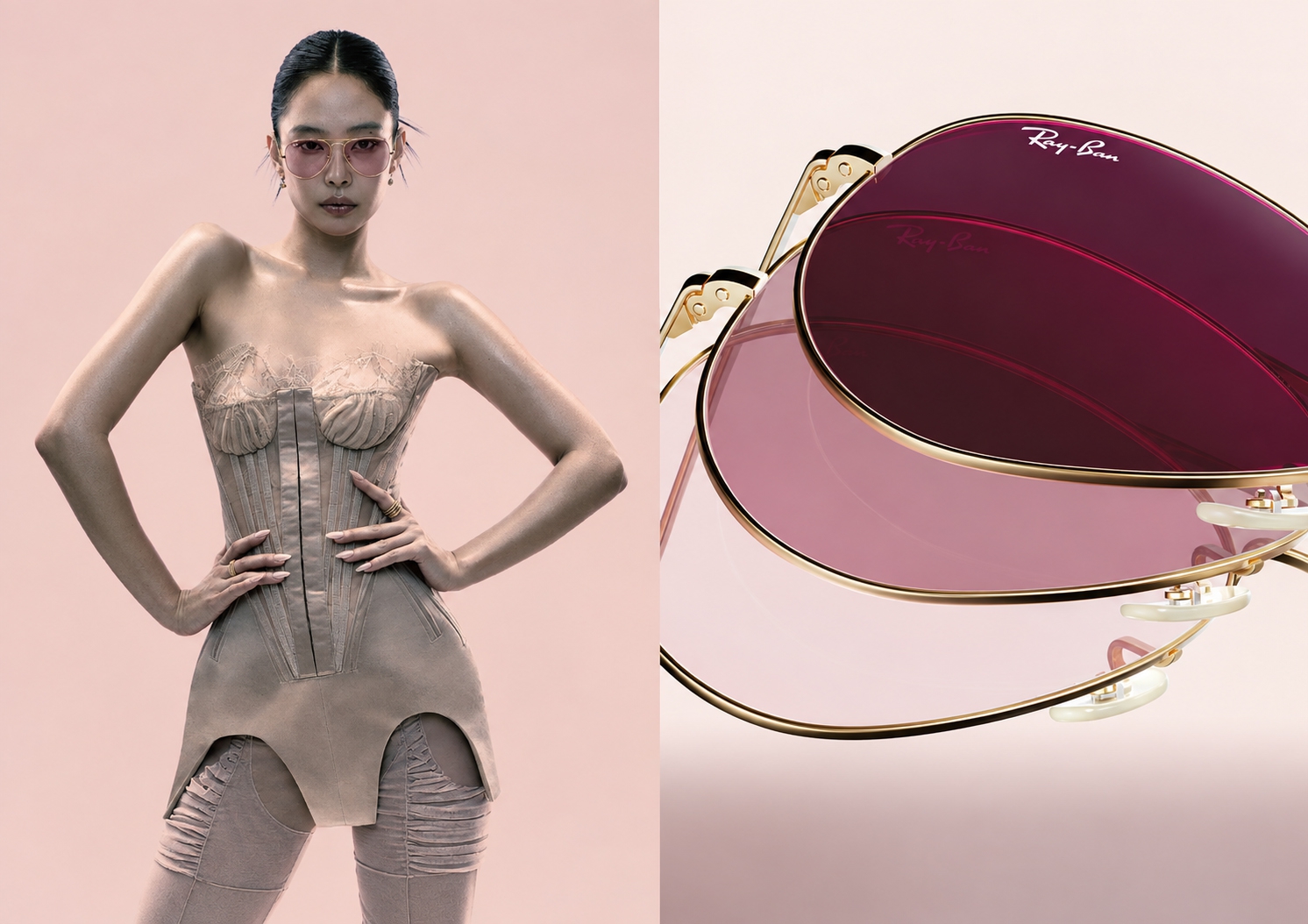
The collection offers a palette of five distinct colors: Ruby, Emerald, Sapphire, Amethyst, and Amber. Beyond the color selection, users can choose between two specific tint effects: Gradient and Washed. The Gradient effect provides a contemporary aesthetic with a transition of intensity from the top of the lens to the bottom, while the Washed effect offers a consistent, diffused saturation across the entire surface.
This level of customization addresses the growing desire for hyper-personalization in the luxury goods market. By allowing consumers to match lens tint to frame material and face shape, Ray-Ban is positioning its eyewear not merely as a medical necessity for vision correction, but as a critical element of personal branding. The choice of Ruby, in particular, has become the focal point of the collection’s global marketing campaign, which prominently features brand ambassador Jennie. This strategic alignment underscores the role of celebrity influence in translating complex optical technology into accessible, aspirational lifestyle choices.
Chronology of the Launch and Market Integration
The August launch at Optik Seis Signature was a multi-phased event designed to educate the consumer base on the technical capabilities of the lenses. The launch sequence proceeded as follows:
- Pre-Launch Phase: Teaser campaigns and social media outreach focused on the collaboration between Ray-Ban and Jennie, creating anticipation around the "Color of Personality" narrative.
- Private Launch Event: Held in late August at the Optik Seis flagship store, the event served as an immersive experience where industry stakeholders, opticians, and fashion influencers engaged with the product firsthand.
- Pop-Up Installation: Following the launch, a specialized pop-up area was established at Optik Seis. This area allowed customers to test the lenses under various simulated light conditions, from low-intensity indoor lighting to high-intensity outdoor UV exposure.
- Digital Integration: The launch was supported by the introduction of the Transitions Color Match tool, a digital interface that allows users to visualize how different lens colors and effects would appear on their own faces.
This phased approach highlights the importance of experiential retail. By providing a "try-before-you-buy" digital environment, the company mitigates the uncertainty associated with purchasing premium, non-traditional lens colors.
The Science and Strategic Implications
The underlying technology behind Transitions Color Touch is the result of years of research into light-sensitive dyes and their reaction to electromagnetic radiation. Unlike standard lenses, these utilize specialized molecules that respond with greater sensitivity to the entire visible light spectrum.
From an industry perspective, this innovation has significant implications. The global eyewear market, valued at over $150 billion, is currently witnessing a trend toward "lifestyle-integrated eyewear." Consumers are increasingly opting for frames that transition seamlessly from the office to social environments. The ability of Color Touch to maintain a base tint while adapting to sunlight addresses a long-standing "dead zone" in the market—the period where a wearer moves between environments and needs both eye protection and aesthetic continuity.
Furthermore, the integration of these lenses into the Ray-Ban x Jennie collection suggests that the brand is targeting a younger, style-conscious demographic. For this cohort, glasses are an extension of the self, akin to jewelry or footwear. By turning the lens into a color-coordinated accessory, Ray-Ban is successfully disrupting the "clinical" perception of prescription glasses.
Official Stance and Consumer Feedback
While specific financial figures regarding the launch remain proprietary, early feedback from the retail sector suggests high levels of interest in the "Washed" effect, which is perceived as more versatile for everyday wear. Representatives from Optik Seis noted during the launch that the ability to offer a customized, color-tinted lens within a professional optical frame has been the most requested feature from clients over the past three fiscal quarters.
The collaboration represents a synergistic partnership: Ray-Ban provides the design heritage and global reach, while Transitions provides the technical intellectual property. The result is a product that satisfies both the rational need for vision protection and the irrational, emotional desire for self-expression.
The Future of Adaptive Eyewear
As the industry looks toward the next decade, the trajectory of eyewear development is clearly moving toward increased "smart" capabilities. Transitions Color Touch is a bridge between static, traditional eyewear and the future of dynamic, responsive technology.
The broader impact of this shift is the normalization of personalized optics. We are moving away from the "one size fits all" approach to lens manufacturing. Future iterations may include even faster transition speeds or a wider range of color-shifting capabilities that can be toggled via smartphone applications.
For the modern consumer, the availability of these lenses at high-end retailers like Optik Seis means that the barrier to entry for high-fashion, high-function eyewear has been lowered. The narrative provided by the Ruby-tinted lenses seen in the campaign suggests that the future of eyewear is not just about what you see, but how the world sees you.
In conclusion, the Ray-Ban x Transitions Color Touch initiative is more than a product release; it is a strategic repositioning of the lens as an active participant in human fashion. By integrating technology that mirrors the dynamism of modern life, the brands have set a new standard for what it means to wear glasses. As individuals continue to seek unique ways to define their personal aesthetic, the marriage of color, comfort, and optical performance will undoubtedly remain a cornerstone of the premium eyewear market. Whether through the bold statement of a Ruby gradient or the subtle elegance of a Washed Amber, the technology ensures that the wearer is always prepared, both for the sunlight and for the spotlight.