Bambang Pamungkas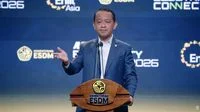
The Indonesian government is aggressively overhauling its regulatory framework to accelerate the realization of the massive 100 Gigawatt-peak (GWp) Solar Power Plant (PLTS) initiative. Spearheaded by Minister of Energy and Mineral Resources (ESDM) Bahlil Lahadalia, the administration is actively simplifying tender procedures, specifically targeting companies equipped with competitive edge and advanced technological capabilities. This strategic bureaucratic streamlining aims to compress project timelines, ensuring the monumental green energy target is fully operational within the ambitious three-year timeframe mandated by President Prabowo Subianto.
The announcement was officially made during the prominent MKI Electricity Connect 2026 conference held at ICE BSD in Tangerang, Banten. Minister Bahlil emphasized that lengthy bureaucratic red tape historically associated with energy infrastructure procurement must be dismantled. By removing administrative bottlenecks, the Ministry of Energy and Mineral Resources seeks to attract high-caliber global and domestic investors capable of delivering large-scale renewable energy assets efficiently without compromising financial and technical viability.
Background and Strategic Genesis of the 100 GWp Megaproject
The origin of this ambitious renewable energy drive traces back to a decisive national policy shift led by President Prabowo Subianto. The Indonesian government views accelerated green transition not merely as an environmental obligation, but as an absolute cornerstone for achieving national energy sovereignty, self-sufficiency, and economic resilience.
For decades, Indonesia has remained heavily reliant on fossil fuels, particularly imported Petroleum and derivative fuels, which place a substantial fiscal burden on the state budget through heavy energy subsidies. To mitigate this macroeconomic vulnerability, President Prabowo officially inaugurated the 100 GWp solar photovoltaic megaproyek on Tuesday, August 25, 2026, at the Monumen Operasi Gilimanuk in Jembrana Regency, Bali.
This initiative represents an unprecedented scale in Southeast Asia’s renewable energy landscape. To put the magnitude into perspective, Indonesia’s total existing national electricity grid capacity across all generation types stood at approximately 88 Gigawatts prior to this initiative. Consequently, the addition of 100 GWp exclusively from solar energy effectively doubles the nation’s power generation capacity, signaling a paradigm shift toward zero-emission power generation.
Chronology and Implementation Timeline
The roadmap for the 100 GWp solar development is structured into carefully planned execution phases designed to maintain momentum while testing logistical, financial, and technical readiness.
The initial phase commenced immediately following the presidential launch in August 2026. According to the Ministry of ESDM, the early rollout comprises 14 priority projects representing a combined capacity of approximately 5,216 Megawatt-peak (MWp) distributed across strategic locations nationwide.
Building upon this initial foundation, the Ministry is preparing the subsequent tender wave. Bahlil confirmed that approximately 25 to 30 Gigawatts of solar projects are slated to enter the formal procurement and bidding pipeline in the immediate term. The overarching government objective remains steadfast: the entire 100 GWp infrastructure must achieve commercial operation within a compressed window of roughly two to three years, targeting full deployment no later than 2029.
Demonstrating his signature hands-on management style, President Prabowo humorously challenged the economic and energy bureaucracy during the Bali launch ceremony, comparing the energy timeline to previous agricultural achievements. Noting that targets initially set for four years were achieved within a single year in the agricultural sector, the President remarked that if the energy team successfully compresses the three-year target down to two years, additional state honors and commendations would follow.
Regulatory Restructuring and Streamlining Tenders
To meet these tight deadlines, Minister Bahlil outlined specific regulatory adjustments currently being finalized by the Ministry of ESDM. The primary focus is the elimination of protracted, multi-layered administrative evaluations for entities that demonstrate proven technological prowess and financial robustness.
Under the traditional procurement paradigm, independent power producer (IPP) tenders often encounter extended delays due to exhaustive administrative vetting, permitting hurdles, and prolonged power purchase agreement (PPA) negotiations with state utility PT Perusahaan Listrik Negara (Persero) or PLN. Under the new framework, the government will fast-track compliant proposals that satisfy strict economic feasibility thresholds.
"We are currently adjusting regulations for companies that are genuinely competitive and possess superior technological capabilities. We are considering shortening the tender process so that it does not drag on," Bahlil stated during his address in Tangerang.
This regulatory agility is designed to signal to international capital markets that Indonesia is open for business, offering a transparent, accelerated, and frictionless investment climate for energy transition projects.
Economic Impact, Investment Value, and Job Creation
Beyond its environmental imperatives, the 100 GWp solar megaproyek is engineered to serve as a massive macroeconomic stimulus for Indonesia. Financial projections released by the government indicate that the cumulative capital expenditure required to complete the infrastructure will reach a staggering Rp 1,140 trillion.
This immense capital injection is expected to generate profound multiplier effects throughout the domestic economy. Most notably, the construction, manufacturing, maintenance, and supply chain operations associated with deploying 100 GWp of solar panels are projected to absorb approximately 5.5 million direct and indirect jobs. This massive labor absorption aligns with national priorities to reduce unemployment and upskill the domestic workforce in advanced green technologies.
Furthermore, the fiscal implications for the state budget are substantial. Government simulations estimate that substituting fossil fuel-fired generation with utility-scale solar power will yield direct savings on national energy subsidies of up to Rp 73.9 trillion annually. These fiscal savings can be redirected toward infrastructure development, education, healthcare, and other productivity-enhancing public expenditures.
Broader Implications and Strategic Challenges
While the strategic vision is clear and political backing is absolute, energy analysts and industry stakeholders emphasize that executing a 100 GWp solar rollout within a three-year window entails significant logistical and technical hurdles.
Grid modernization and intermittency management represent primary technical challenges. Integrating 100 Gigawatts of intermittent solar generation into Indonesia’s archipelagic grid infrastructure requires massive parallel investments in smart grid technologies, high-voltage transmission lines, and utility-scale energy storage systems (BESS). Without adequate grid reinforcement and storage capabilities, sudden fluctuations in solar generation could destabilize regional grids, leading to curtailment or reliability issues.
Additionally, local content requirement (LDR) regulations, commonly known as TKDN (Tingkat Komponen Dalam Negeri), will require careful navigation. Balancing the imperative for rapid deployment—which often relies on globally sourced, cost-effective photovoltaic modules and inverters—with the mandate to foster domestic manufacturing capabilities remains a delicate policy balancing act for the Ministry of ESDM.
Nevertheless, with high-level political commitment, ongoing regulatory deregulation, and strong investor interest, Indonesia’s 100 GWp solar initiative stands as one of the most ambitious renewable energy transformations globally, poised to fundamentally reshape the nation’s energy landscape for decades to come.