Nila Kartika Wati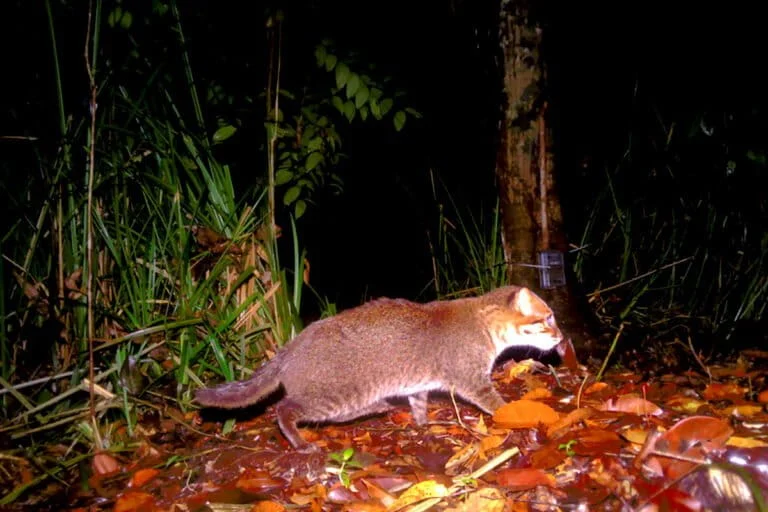
The flat-headed cat, a mysterious and diminutive predator, had been officially absent from the Thai wildlife records since 1995, leading many researchers to fear that local populations had been extirpated. This breakthrough is the direct result of a collaborative, multi-year monitoring initiative led by the Thailand Department of National Parks, Wildlife and Plant Conservation (DNP) and the global wild cat conservation organization, Panthera. The project’s systematic survey efforts yielded 13 distinct recordings throughout 2024, followed by an additional 16 in 2025, confirming that the initial sightings were not mere anomalies but indicative of a stable, albeit hidden, population.
A Legacy of Rarity: The Biology of the Flat-Headed Cat
To understand the magnitude of this discovery, one must look at the biological distinctiveness of the Prionailurus planiceps. Weighing a mere 1.5 to 2.5 kilograms, this feline is among the smallest and least understood of the world’s wild cats. Its nomenclature is derived from its unique morphological features: a remarkably flat, elongated skull that gives the animal a distinct profile, paired with large, forward-facing eyes set closer together than those of most other felids.
Unlike the common domestic cat or its larger cousins like the leopard, the flat-headed cat has evolved to lead a semi-aquatic existence. Its physiology is highly specialized for life near water; it possesses partially webbed toes that aid in navigating muddy, riparian environments and flattened, needle-sharp teeth specifically adapted for securing slippery prey such as fish, crustaceans, and frogs. Their primary habitat—the peat swamp forests and mangrove fringes of Southeast Asia—is as specialized as the animal itself. These environments are notoriously difficult for human researchers to access, which has historically contributed to the significant data gaps surrounding the species’ behavior and population density.
Chronology of Conservation Efforts
The 30-year silence surrounding the flat-headed cat in Thailand was not necessarily an indicator of extinction, but rather a reflection of the species’ extreme shyness and the difficulty of detecting them using conventional wildlife survey methods.
- 1995: The last verified record of a flat-headed cat in Thailand. For three decades, the species was largely considered "lost" to the region’s biodiversity records.
- 2023: Recognizing the potential for hidden populations, the DNP and Panthera initiated an intensive camera-trapping survey targeting the specific micro-habitats of Southern Thailand’s peat swamps.
- 2024: The survey yields its first success. Researchers begin collecting high-quality images and video, documenting 13 instances of the species appearing on motion-activated sensors.
- 2025: The effort intensifies, resulting in 16 additional records. The footage of the female with her offspring serves as a "holy grail" for the research team, confirming the viability of the local population.
Global Conservation Status and Distribution
The International Union for Conservation of Nature (IUCN) currently classifies the flat-headed cat as "Endangered," with global population estimates suggesting that fewer than 2,500 mature individuals remain in the wild. The species is further protected under Appendix I of the Convention on International Trade in Endangered Species of Wild Fauna and Flora (CITES), which strictly prohibits international commercial trade in the species or its parts.
Its range is historically fragmented across the Malay Peninsula, Sumatra, and Borneo. While researchers previously believed Borneo to be the primary "stronghold" for the species, the findings in Thailand necessitate a reassessment of the conservation importance of the northern reaches of its range. In Indonesia, the species has been documented in protected areas such as Way Kambas National Park, Gunung Leuser, and the peat swamps of Berbak and Sungai Merang. However, scientific data on these populations remains sporadic and limited, leaving a void in the comprehensive management plans required to prevent the species’ decline.
The Challenges of Monitoring and Habitat Fragmentation
The low detection rate of the flat-headed cat is a subject of ongoing academic debate. Some researchers suggest that the historical failure to capture these animals on camera traps was largely due to the placement of equipment. Because these cats rarely venture far from water, cameras placed on terrestrial game trails—the industry standard for monitoring leopards or tigers—are largely ineffective. The success of the recent Thailand survey is attributed to a refined strategy that focused exclusively on the muddy banks of rivers, swamps, and canals.
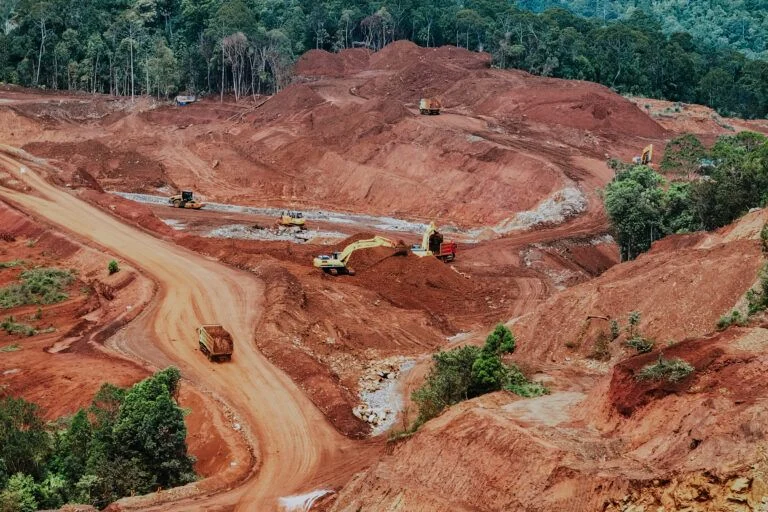
The primary threat to the survival of the flat-headed cat is the rapid degradation of its specialized habitat. Peat swamp forests are frequently targeted for conversion into industrial-scale oil palm plantations, timber estates, and agricultural land. Unlike more adaptable feline species that can migrate to higher elevations when lowland habitats are disturbed, the flat-headed cat is physiologically tethered to wetlands. Their dependency on these specific aquatic ecosystems makes them hypersensitive to hydrological changes, such as the construction of drainage canals that dry out peat soils, as well as water pollution from agricultural runoff.
Implications for Indonesia and Future Strategies
For Indonesia, which hosts significant portions of the flat-headed cat’s range in Kalimantan and Sumatra, the Thailand rediscovery serves as a vital call to action. The loss of wetlands through deforestation, peatland fires, and illegal logging poses an existential threat to the species. If these habitats are destroyed, the cats have nowhere to go.
Kritsana Kaewplang, Director of Panthera Thailand, underscored the broader implications of the findings, stating, "This rediscovery shows what is possible when robust science and strong protection are combined." This sentiment is echoed by conservationists globally, who argue that the flat-headed cat represents a "flagship species" for the protection of peat swamp forests—ecosystems that are also essential for carbon sequestration and climate change mitigation.
The challenge ahead lies in integrating the cat’s habitat requirements into broader land-use planning. Conservationists are calling for:
- Targeted Surveys: Expansion of water-centric camera-trapping programs across Kalimantan and Sumatra to establish accurate population baselines.
- Wetland Protection: Stricter enforcement of laws prohibiting the draining of peat swamp forests and the pollution of riparian corridors.
- Connectivity: Protecting corridors that allow for movement between remaining patches of high-quality habitat, ensuring genetic diversity is maintained.
- Community Engagement: Working with local communities near swamp forests to mitigate human-wildlife conflict and incentivize the preservation of natural water flows.
A Fragile Future
The return of the flat-headed cat to the public consciousness is a reminder that the natural world still holds many secrets, and that species thought to be on the brink of disappearance may still find ways to survive if afforded the chance. However, this success story is tempered by the reality of the threats they face. The flat-headed cat is a silent witness to the state of the region’s wetlands; their presence signifies a healthy, functioning ecosystem, while their absence is a warning of environmental collapse.
As the international community reflects on the Thailand breakthrough, the consensus among biologists is clear: the window of opportunity to protect the flat-headed cat is narrowing. Without immediate, site-specific interventions that prioritize the integrity of the lowland swamps, this unique feline may disappear once again—this time, perhaps, for good. The rediscovery is not an endpoint, but rather a catalyst for a more rigorous and sustained commitment to the conservation of one of the planet’s most overlooked and specialized predators. By focusing on the protection of these "forgotten" habitats, conservationists hope to secure a future for the flat-headed cat, ensuring that this enigmatic creature continues to prowl the shadows of Southeast Asia’s swamps for generations to come.