Nila Kartika Wati

The administrative struggle for transparency in Indonesia’s natural resource management reached a significant milestone on September 14, 2026. The Jakarta Administrative Court (PTUN) issued a landmark ruling in case number 242/G/KI/2026/PTUN.Jkt, upholding a previous decision by the Central Information Commission (KIP) that mandates the Ministry of Investment and the Investment Coordinating Board (BKPM) to disclose official documents regarding the revocation of four nickel mining business licenses (IUP) in the Raja Ampat archipelago. This judicial decision serves as a pivotal correction to the government’s attempt to classify administrative environmental decisions as confidential, reinforcing the public’s right to access information concerning the governance of sensitive ecological zones.
The court’s verdict decisively rejected the objections raised by the Ministry of Investment/BKPM, which had persistently argued that the documentation surrounding the revocation of mining permits—specifically those covering thousands of hectares of forest and coastal land in Raja Ampat—constituted state secrets. By dismissing these claims, the judiciary has affirmed that information related to the termination of industrial activities in protected areas is inherently a matter of public interest, not a restricted executive privilege.
Chronology of the Legal and Administrative Dispute
The origin of this conflict traces back to June 2025, when the Indonesian government, under mounting public pressure and advocacy from civil society organizations, announced the revocation of four mining licenses in Raja Ampat. The licenses involved included:
- PT Kawai Sejahtera Mining (KSM), covering 5,922 hectares on Kawei Island.
- PT Mulia Raymond Perkasa (MRP), spanning 2,193 hectares on Manyaifun Batang Pele Island.
- PT Anugerah Surya Pratama (ASP), covering 1,173 hectares on Manuran Island.
- PT Nurham, controlling 3,000 hectares in the Yesner region of East Waigeo.
Following the initial announcement, Greenpeace Indonesia sought formal access to the administrative records and the specific decrees (SK) detailing the revocation. When the Ministry of Energy and Mineral Resources (KESDM) redirected inquiries to the BKPM, and the BKPM failed to provide the requested documents, the environmental group initiated a formal information dispute with the Central Information Commission (KIP).
The KIP proceedings, which spanned from October 2025 to June 2026, concluded with a decision in favor of transparency. The Commission ruled that the documents, excluding personal data of company owners, were public information. Despite this, the BKPM opted to challenge the KIP ruling at the PTUN, further delaying the release of information. The September 2026 court decision now requires the government to comply with the original order, pay legal costs amounting to Rp419,000, and provide the public with the legal basis for the permit cancellations.

The Ecological Stakes of Raja Ampat
Raja Ampat is globally recognized as the "last paradise" and a critical center of marine biodiversity, serving as the epicenter of the Coral Triangle. The region is home to the largest concentration of marine life species on the planet, making any industrial extraction, particularly nickel mining, a significant threat to its structural integrity.
Government officials, including the Minister of Environment, have previously cited Law No. 1/2014 regarding the Management of Coastal Areas and Small Islands as the legal justification for the mining bans. This law, bolstered by the Constitutional Court’s ruling (Number 35/PUU-XXI/2023), imposes an absolute prohibition on mining activities on small islands, defined as those under 2,000 square kilometers. Since the islands in the Raja Ampat archipelago fall well below this size threshold, the presence of mining operations has been fundamentally illegal under national conservation mandates.
However, the revocation of permits has been criticized as being purely performative. Critics point to the case of PT Gag Nikel (GN), which was granted an exemption from the revocation, ostensibly due to its long-standing operations since 1972. This selective application of the law has fueled public distrust, as the government has failed to provide a transparent account of the criteria used for exemptions or the roadmap for post-mining environmental remediation.

Implications of Administrative Secrecy
Anggi Putra Prayoga, a Forest Campaigner at Greenpeace Indonesia, emphasized that the court’s decision is not merely about documents; it is about accountability. "The revocation of a permit is not the end of the problem," Prayoga stated. "We are concerned with the state of the land after the machines stop. Without access to the revocation decrees, the public cannot verify whether the companies are being held responsible for the environmental degradation they caused, or if the government has a comprehensive plan for ecological restoration."
The lack of transparency hides critical details, such as:
- Liability for Remediation: Whether the revocation decrees mandate specific reforestation or water treatment responsibilities for the companies involved.
- Environmental Impact Assessment (AMDAL) Integrity: How the original permits were granted in the first place, given the strict legal prohibitions against mining on small islands.
- Governance Precedent: Whether the opaque process of permit revocation is being mirrored in other regions of the country, potentially endangering other fragile ecosystems.
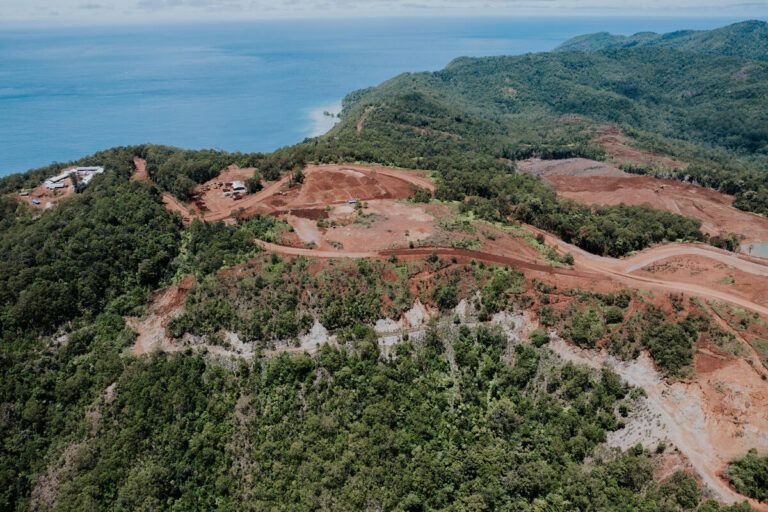
The environmental impact of these operations—deforestation, sedimentation of coral reefs, and chemical runoff—has already caused significant distress to local indigenous communities and traditional fishers. When forest cover is removed to make way for open-pit nickel mining, the resulting soil erosion smothers the surrounding reefs, decimating the fish stocks that are the lifeblood of the local economy. For the people of Raja Ampat, the "secret" nature of these administrative documents is not just a bureaucratic hurdle; it is a direct obstacle to justice for their livelihood and heritage.

Broader Policy Analysis and Future Outlook
The September 2026 PTUN ruling signals a shift in the judicial climate regarding environmental information. It reinforces the principle that when the government makes decisions regarding the use and protection of natural resources, the administrative process must be subject to public scrutiny. If the government continues to treat such matters as confidential, it risks violating the spirit of the Freedom of Information Act and undermining the nation’s commitment to sustainable development.
As of mid-September 2026, stakeholders are waiting to see if the Ministry of Investment/BKPM will attempt a final appeal through a cassation at the Supreme Court. Such a move would further prolong the legal uncertainty and continue to keep the affected communities in the dark. Legal experts suggest that the government’s persistence in fighting these transparency cases may reflect a broader desire to protect the industrial mining sector from the scrutiny of environmental groups.
Moving forward, the implementation of the court’s decision will be a litmus test for the administration’s commitment to transparency. Providing the documents will allow independent auditors and local communities to assess the damage caused by mining and monitor whether the government is truly prioritizing the "last paradise" over short-term mineral extraction.

The case of Raja Ampat stands as a microcosm of the tension between industrial expansion and ecological preservation in Indonesia. The victory for information disclosure ensures that the governance of these islands remains under the watchful eye of the public, serving as a reminder that in matters of environmental health, secrecy is the enemy of sustainability. As the nation grapples with its role in the global energy transition—which is heavily dependent on nickel—the necessity for clear, transparent, and legally sound management of mining activities has never been more urgent. The PTUN decision provides the legal framework for this transparency, but the ultimate success of the movement to protect Raja Ampat will depend on the public’s continued vigilance and the government’s willingness to move beyond performative policy toward genuine, transparent environmental stewardship.