
 Azin Asro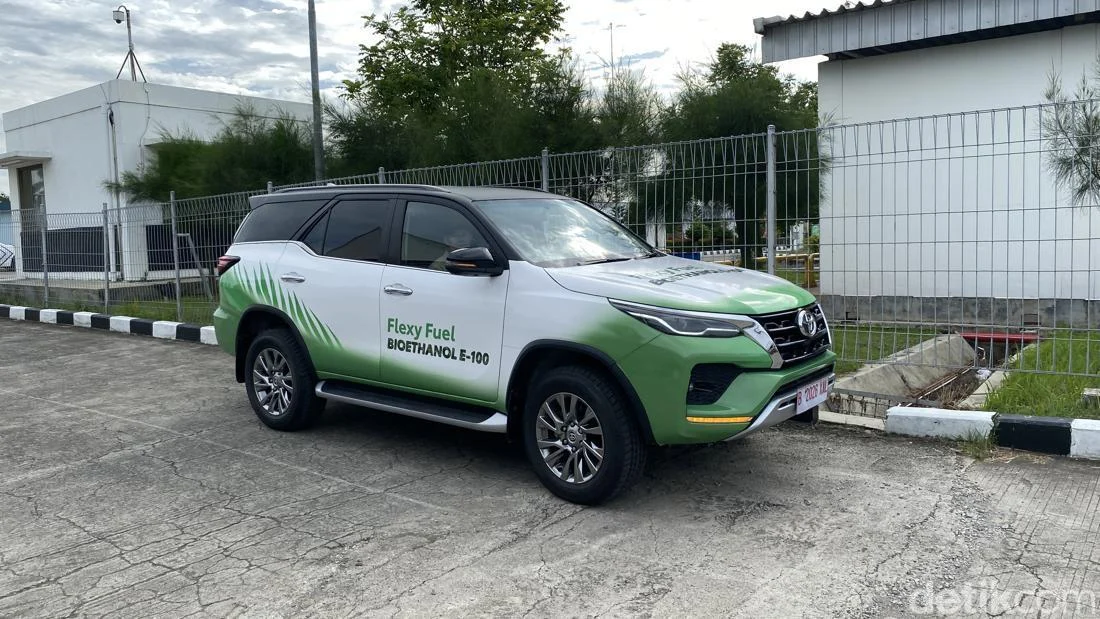
JAKARTA — Indonesia has embarked on a transformative journey toward absolute energy independence, driven by a decisive directive from President Prabowo Subianto instructing Minister of Energy and Mineral Resources (ESDM) Bahlil Lahadalia to accelerate the development and implementation of high-blend bioethanol fuels. The core of this ambitious national strategy centers on an aggressive roadmap culminating in a 50 percent bioethanol blend, commonly designated as E50, for gasoline-powered vehicles. If successfully realized, this policy stands to fundamentally reshape Southeast Asia’s largest economy, permanently insulating the nation from the volatility of global petroleum markets and eliminating the reliance on refined gasoline imports.
The government’s strategic optimism regarding the E50 initiative is largely anchored in the unprecedented success and operational validation of the nation’s biodiesel sector. Indonesia has firmly established itself as a global pioneer in renewable fuel integration through the implementation of the B50 program—a national mandate requiring diesel fuel to be blended with 50 percent Fatty Acid Methyl Ester (FAME) derived domestically from palm oil. Enforced nationwide, this milestone marks the first time any country globally has successfully commercialized and mandated a biodiesel blend of this magnitude on a national scale. Building upon the technical and economic framework established by the B50 program, policymakers believe that a parallel transition in the gasoline sector is not only feasible but represents the logical next step in securing total national energy sovereignty.
Addressing the broader strategic implications of the policy, Minister Bahlil Lahadalia emphasized that achieving an E50 standard would effectively close the chapter on Indonesia’s historical dependence on imported finished gasoline products. For decades, the nation has grappled with a structural deficit in domestic refining capacity, forcing state energy enterprises and private traders to import substantial volumes of refined gasoline to meet surging domestic demand. By substituting half of the conventional gasoline pool with domestically produced bioethanol, Indonesia aims to dramatically curtail its foreign exchange outflows and fortify its macroeconomic stability against geopolitical shocks.
The Strategic Imperative of Ending Gasoline Imports
"Now, if we are able to implement this up to E50, God willing, our target is that we will no longer need to import finished gasoline products," Bahlil stated during a recent briefing on national energy policies. "If we can accomplish this, our energy security will no longer be heavily dependent on external sources. That is fundamentally the rationale behind this policy."
Despite the visionary scope of the directive, the Ministry of Energy and Mineral Resources maintains a pragmatic approach regarding the implementation timeline. Bahlil noted that a definitive deadline for the absolute cessation of refined gasoline imports under the E50 banner cannot yet be rigidly fixed, given the intricate technical, agricultural, and industrial prerequisites required. Currently, the ministry is actively collaborating with the Directorate General of Oil and Gas to formulate a comprehensive, step-by-step roadmap that bridges current capabilities with future mandates.
This structural roadmap was formally endorsed during recent deliberations by the National Energy Council (DEN). Rather than enforcing an abrupt, high-risk transition directly to E50, the government has charted a measured, incremental trajectory. The phased integration is formally codified under Ministerial Decree Number 113.K/EK.05/MEM.E/2026, which outlines the systematic timeline for the utilization of Biofuels (BBN).
The Phased Implementation Timeline: From E5 to E50
The transition toward high-blend bioethanol is structured as a multi-year chronological rollout designed to give both the automotive industry and agricultural feedstock producers adequate time to adapt:
- 2007–Present (Voluntary Commercial Phase): The introduction of low-blend bioethanol began on a voluntary commercial basis, most notably through state-owned energy giant PT Pertamina (Persero) with the introduction of Pertamax Green 95, which features a 5 percent bioethanol blend (E5). While commercially available at select service stations, it has historically operated without a nationwide mandatory framework.
- 2026 (Mandatory Transition and Testing Phase): The year 2026 marks a pivotal turning point. The government is formalizing the transition of E5 from a purely voluntary commercial product into an official regulatory mandate, alongside rigorous technical testing for higher blends.
- 2027 (Introduction of E10): The official nationwide rollout is scheduled to advance to a 10 percent bioethanol blend (E10), requiring standard vehicle engines to process higher oxygenate levels while testing infrastructure compatibility.
- 2028 (Progression to E20): The mandate will scale up to a 20 percent blend (E20). This phase requires extensive collaboration with automotive manufacturers to ensure vehicle warranties, fuel system materials, and engine management systems can seamlessly handle increased ethanol concentrations without degrading performance.
- Post-2028 Toward E50 (The Ultimate Goal): Following the successful stabilization of the E20 mandate, the government will incrementally scale blending ratios upward, targeting the ultimate destination of E50.
Guarding Against Import Dependency in Feedstocks
A critical pillar of Minister Bahlil’s policy directives is the absolute insistence on domestic self-sufficiency across the entire supply chain. While the ambition to eliminate refined fuel imports is paramount, the government remains acutely aware of the risk of simply replacing one form of import dependency with another. Specifically, policymakers are determined to avoid a scenario where the domestic market is flooded with bioethanol mandates, only for the country to import the raw ethanol itself due to insufficient domestic agricultural production capacity.
"We must align this with our domestic industrial capacity," Bahlil asserted. "We do not want to implement E10, E20, or E50 only to find out that the ethanol itself is being imported from abroad—that would be utterly pointless. Therefore, our core objective is to harness and maximize our own domestic production."
This prerequisite places immense pressure on the domestic agricultural sector, particularly regarding the expansion of feedstock crops utilized for bioethanol production, such as sugarcane, cassava, and sorghum. Agronomists and industrial planners must scale up plantation yields, modernize milling facilities, and invest heavily in second-generation cellulosic ethanol technologies to ensure that feedstock supply scales in tandem with the fuel blending mandates.
Current Market Realities and Regulatory Shifts
While high-blend mandates are systematically charted for the coming years, low-blend bioethanol has already established a commercial footprint in the Indonesian market. Eniya Listiani Dewi, Director General of New, Renewable Energy and Energy Conservation (EBTKE) at the Ministry of Energy and Mineral Resources, provided operational clarity during a formal Hearing Meeting (RDP) with Commission XII of the House of Representatives (DPR).
"Currently, Pertamina has been voluntarily selling E5 through its Pertamax Green 95 product, which is fully in line with the directives stemming from the decision of the Minister of Energy and Mineral Resources," Eniya explained.
Eniya elaborated that while Pertamax Green 95 has served as an exploratory commercial benchmark, the regulatory landscape is shifting from voluntary adoption to mandatory enforcement. Concurrently, technical laboratories and research institutions are conducting rigorous compatibility tests for E10 and E20 formulations to ensure that standard passenger vehicles currently operating on Indonesian roadways will not experience adverse mechanical wear, fuel system corrosion, or electronic calibration failures.
"Furthermore, during this year 2026, the implementation is planned to be elevated into a formal mandate, and we are actively preparing comprehensive technical testing for both E10 and E20 standards, paving the way for subsequent phases," Eniya added.
Broader Economic and Environmental Implications
The transition toward high-blend bioethanol carries profound macroeconomic and environmental ramifications for Indonesia. From an ecological standpoint, scaling up bioethanol utilization aligns seamlessly with Indonesia’s enhanced Nationally Determined Contributions (NDC) under the Paris Agreement. Bioethanol acts as an oxygenate that improves combustion efficiency and significantly reduces tailpipe emissions of carbon monoxide, unburned hydrocarbons, and greenhouse gases compared to fossil-derived methyl tert-butyl ether (MTBE) or pure gasoline.
Economically, the policy serves as a powerful stimulus for the rural economy. By anchoring the renewable energy supply chain in domestic agriculture, millions of smallholder farmers engaged in sugarcane and cassava cultivation stand to benefit from guaranteed, long-term industrial demand. This decentralized economic boost helps distribute wealth beyond major industrial centers and fosters regional development.
However, analysts also point out potential challenges that require meticulous management. The diversion of agricultural land from food crops to energy feedstock crops must be carefully regulated to prevent inflationary pressures on food prices or unintended land-use changes that could counteract environmental objectives. Furthermore, automotive manufacturers operating in Indonesia will need to accelerate the introduction of ethanol-compatible engines, particularly as the market approaches the E20 and E50 thresholds.
As the Ministry of Energy and Mineral Resources finalizes the definitive roadmap alongside industry stakeholders, Indonesia stands at the precipice of a new energy paradigm. By systematically marrying agricultural abundance with industrial policy, the nation is poised to redefine its energy future, turning a visionary presidential directive into a tangible reality of enduring national self-reliance.









