
 Azin Asro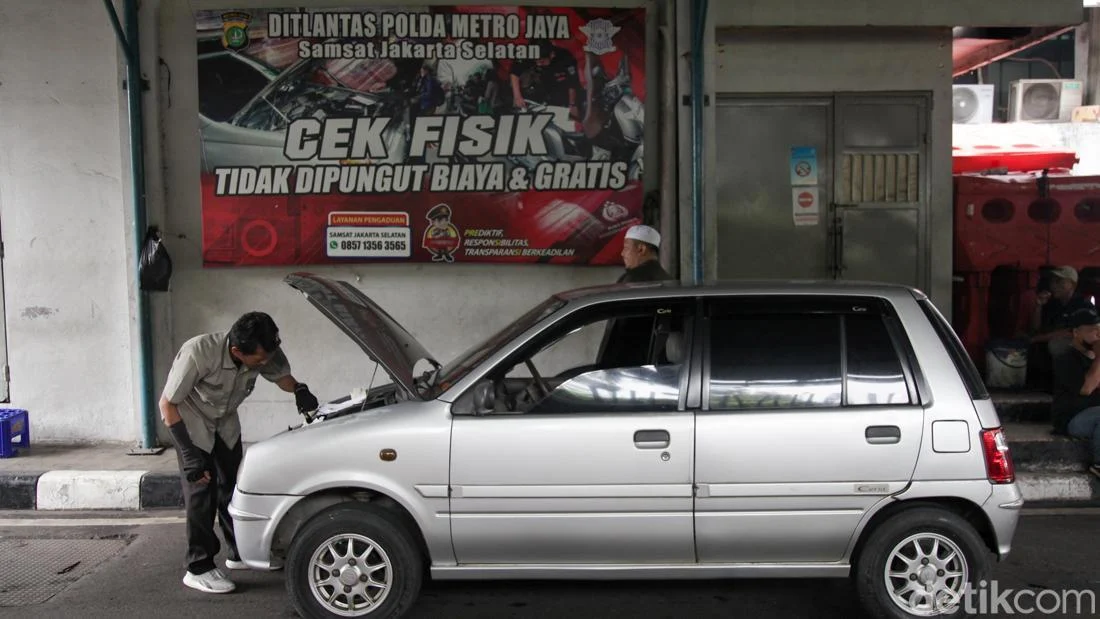
Vehicle ownership in Indonesia comes with a continuous set of legal and administrative responsibilities, chief among them being the regular renewal and validation of the Surat Tanda Nomor Kendaraan (STNK), or Vehicle Registration Certificate. For millions of motorists across the archipelago, navigating the bureaucracy of the Sistem Administrasi Manunggal Satu Atap (Samsat)—the one-stop administrative office for vehicle registration involving the police, local tax agencies, and state-owned insurance—is a routine part of vehicle stewardship. However, a common point of confusion among vehicle owners persists regarding the dual-tier system of vehicle administration: why vehicle owners must undergo both an annual endorsement process and a comprehensive five-year renewal, given that both involve the payment of vehicle taxes.
To the average motorist, paying taxes annually can sometimes blur the lines between a simple administrative stamp and a full registration overhaul. While both processes require financial contributions from the vehicle owner, their underlying legal objectives, procedural requirements, and operational scopes are fundamentally distinct. The annual validation is primarily a fiscal and basic compliance check, whereas the five-year renewal is an intensive regulatory mechanism designed to ensure structural roadworthiness, security validation, and accurate national data synchronization.
Examining the structural framework of Indonesian vehicle registration laws reveals why the five-year renewal remains an irreplaceable pillar of traffic safety and law enforcement, despite the increasing digitization of annual tax payments through platforms like Samsat Digital.
The Core Mechanics of Annual STNK Validation
The annual STNK endorsement, commonly referred to in Indonesia as pengesahan STNK tahunan, is a mandatory yearly obligation for all registered motor vehicle owners. Structurally, this process is designed to ensure continuous tax compliance and mandatory social insurance contributions without demanding the physical presence of the vehicle at a Samsat facility.
During the annual validation, vehicle owners are primarily required to settle two main financial obligations: the Pajak Kendaraan Bermotor (PKB), or Motor Vehicle Tax, and the Sumbangan Wajib Dana Kecelakaan Lalu Lintas Jalan (SWDKLLJ), which is the mandatory road traffic accident fund managed by state insurer PT Jasa Raharja. Once these financial obligations are fulfilled through designated banking channels, mobile applications, or physical payment counters, the STNK is officially endorsed for another year of legal operation.
The procedure is deliberately streamlined. Because the vehicle’s data is already recorded in the national database and is presumed unchanged from the previous year, there is no requirement for physical vehicle inspection. The absence of a physical check accelerates the process, allowing motorists to secure their annual tax stamps swiftly. In recent years, the integration of digital platforms such as Signal (Samsat Digital Nasional) has further reduced friction, enabling vehicle owners to complete the annual tax payment process entirely online for vehicles with unchanging ownership data.
The Comprehensive Scope of the Five-Year STNK Renewal
In stark contrast to the annual administrative formality, the five-year STNK renewal—formally known as perpanjangan STNK lima tahunan—is a comprehensive bureaucratic milestone. Every five years, vehicle owners face a significantly more rigorous procedure that extends far beyond the simple settlement of annual taxes.
When a vehicle reaches its five-year registration milestone, the administrative process requires not only the payment of recurring taxes like the PKB and SWDKLLJ but also the issuance of completely new physical documents and vehicle registration plates (Tanda Nomor Kendaraan Bermotor, or TNKB). This physical refresh is necessary to update the vehicle’s visual identification markers, ensure the legibility of license plates, and refresh the security features of the STNK document itself to prevent forgery and maintain accurate state records.
Crucially, the five-year renewal cannot be completed remotely or online. It mandates the direct physical presence of both the vehicle and its owner at a regional Samsat office. This requirement is driven by a non-negotiable statutory mandate: the physical inspection of the vehicle, universally known as cek fisik.
Regulatory Foundations and the Physical Inspection Protocol
The legal basis for the mandatory physical inspection during the five-year renewal is firmly rooted in national legislation. Specifically, Peraturan Kepolisian (Perpol) No. 7 Tahun 2021 concerning the Registration and Identification (Regident) of Motor Vehicles outlines the legal parameters for vehicle checks. According to this regulation, physical inspection is defined as a systematic examination of the completeness, safety functions, and general identity of a motor vehicle (Ranmor).
The scope of this inspection is detailed and comprehensive. For automobiles and four-wheeled vehicles, the examination covers a wide array of technical and structural components. Inspectors check the integrity and design of the vehicle bodywork or chassis structure to ensure it matches the permitted specifications for its intended use. Lighting systems—including headlights, taillights, brake lights, and turn signals—are tested for operational readiness. External visibility components such as rearview mirrors and safety equipment like seat belts and emergency warning triangles are rigorously evaluated. Furthermore, the condition of the tires and the overall dimensions of the vehicle, including its height, width, and length, are measured to verify conformity with official registration data.
For motorcycles, while certain structural checks differ due to the vehicle class, the core focus on safety lighting, braking systems, and overall structural integrity remains paramount.
Beyond structural and safety components, the physical inspection serves as a critical verification tool for vehicle identity. Samsat officers cross-reference the physical vehicle against accompanying documentation, meticulously verifying the engine number and chassis number through physical rubbings or digital scanning. This step is vital for law enforcement and vehicle administration, ensuring that the vehicle presented matches the historical records and has not been subjected to illegal modifications, cloning, or identity tampering.
Official Rationales: Why STNK Can Never Be Valid for Life
Periodically, public discussions emerge proposing that vehicle registration certificates should remain valid for the entire operational lifespan of a vehicle, eliminating the need for recurring five-year renewals and physical inspections. However, traffic authorities, including the Korps Lalu Lintas (Korlantas) Polri—the Indonesian National Police Traffic Corps—have consistently rejected such proposals, maintaining that STNK validity cannot and should not be extended indefinitely.
The primary rationale behind this firm institutional stance centers on road safety and the dynamic nature of machine wear and tear. Automobiles and motorcycles are complex mechanical assets that degrade over time. Components fail, modifications are made, and structural integrity diminishes due to age, environmental exposure, and usage intensity. By enforcing a strict five-year renewal cycle backed by mandatory physical inspections, the state establishes a regulatory checkpoint that filters out critically unroadworthy vehicles from public thoroughfares.
Without this mandatory five-year intervention, authorities argue that millions of vehicles operating with compromised braking systems, failing structural frames, or obscured identification numbers would continue to circulate unchecked, exponentially increasing the risk of traffic accidents and complicating criminal investigations involving stolen or modified vehicles. The five-year cycle acts as a vital institutional safeguard for public safety, ensuring that mechanical deterioration is caught and addressed before it results in catastrophic road failures.
Economic and Administrative Implications for Vehicle Owners
The duality of the Indonesian vehicle registration system carries distinct economic and administrative implications for the motoring public. Financially, vehicle owners must budget beyond standard annual operational costs when a vehicle approaches its five-year milestone. In addition to regular taxes and insurance contributions, motorists must pay non-tax state revenue (PNBP) fees associated with the production and issuance of new license plates and physical STNK documents.
Administratively, the requirement for physical presence means that vehicle owners must allocate time to visit a Samsat facility, often facing long queues despite ongoing bureaucratic reforms aimed at improving service efficiency. For commercial fleet operators or individuals with multiple vehicles, managing staggered five-year renewal schedules requires careful logistical planning to avoid administrative penalties, legal sanctions, or the risk of driving with expired credentials, which can lead to traffic citations and vehicle impoundment during police operations.
Despite these minor operational hurdles, the separation of annual tax validation and five-year structural inspections serves a balanced purpose. It marries digital convenience for recurring fiscal obligations with rigorous, tactile oversight for long-term safety assurance. As Indonesia continues to modernize its public administrative infrastructure through initiatives like Samsat Digital, the core requirement of physical verification remains an unyielding anchor, reinforcing the principle that vehicle ownership is not merely a matter of tax remittance, but a continuous commitment to public safety, legal transparency, and mechanical accountability on the nation’s roads.








